Russian ASAT debris creating “squalls” of close approaches with satellitesby Jeff Foust — February 18, 2022 [SN]
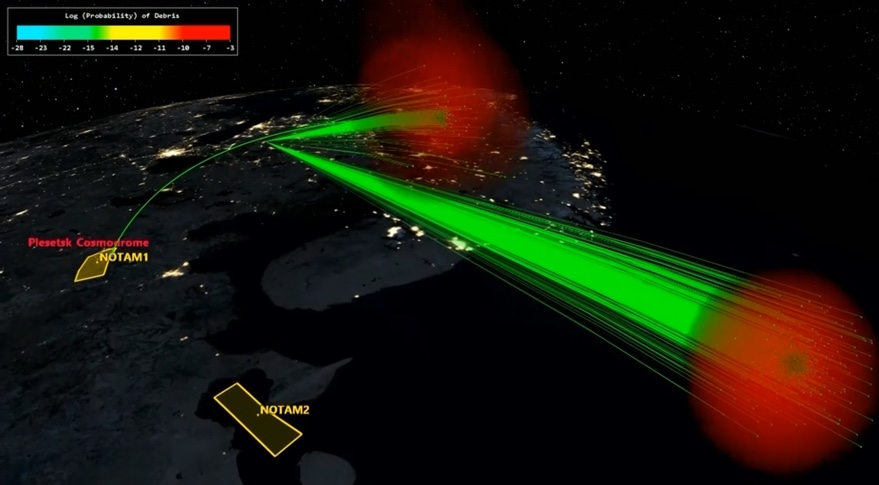 A simulation of the Russian ASAT demonstration in November 2021. Much of the debris from that event is in an orbit that periodically lines up with satellites in sun-synchronous orbits. Credit: COMSPOC
WASHINGTON — Debris from a Russian antisatellite weapon demonstration in November are creating surges of close approaches, in some cases tens of thousands in a week, with active satellites in low Earth orbit.
Such events, dubbed “conjunction squalls” by space situational awareness company COMSPOC, were first noticed in January and stem from the unique circumstances of the Nov. 15 Russian ASAT test that destroyed the Cosmos 1408 satellite and created thousands of pieces of debris.
Source:
https://spacenews.com/russian-asat-debris-creating-squalls-of-close-approaches-with-satellites/Russian ASAT Demo Tested US Space Command’s Nascent Domain AwarenessMarch 10, 2022 | By Shaun Waterman [airforcemag.com]
 Army Gen. James H. Dickinson, commander of U.S. Space Command, provides testimony at a Senate Armed Services Committee, March 8, 2022. DOD Photo by Air Force Tech. Sgt. Jack Sanders.
 The Russian test of an anti-satellite weapon system in 2021 gave the newly relaunched U.S. Space Command the chance to showcase its growing ability to perceive and understand the space domain, its commander Army Gen. James H. Dickinson said.
When the Russians launched a maneuverable kill vehicle atop a Nudol missile Nov. 15 and destroyed one of their own defunct spy satellites, “I was very pleased with how the command responded,” Dickinson told an audience online and in person at the Atlantic Council.
Source:
https://www.airforcemag.com/russian-asat-demo-tested-us-space-commands-nascent-domain-awareness/South Korea “welcomes” U.S. moratorium on anti-satellite missile tests; China skepticalby Park Si-soo — April 22, 2022 [SN]
 South Korea’s foreign ministry headquarters in Seoul. Credit: The Ministry of Foreign AffairsRussia's deputy foreign minister calls self-imposed U.S. ban "a step in the right direction."
SEOUL, South Korea — South Korea “welcomed” America’s self-imposed ban on direct-ascent anti-satellite (ASAT) missile tests that create orbital debris.
https://spacenews.com/south-korea-welcomes-u-s-moratorium-on-anti-satellite-missile-tests-china-skeptical/U.S. ASAT ban meant to support U.N. discussions on space threatsby Jeff Foust — April 25, 2022 [SN]
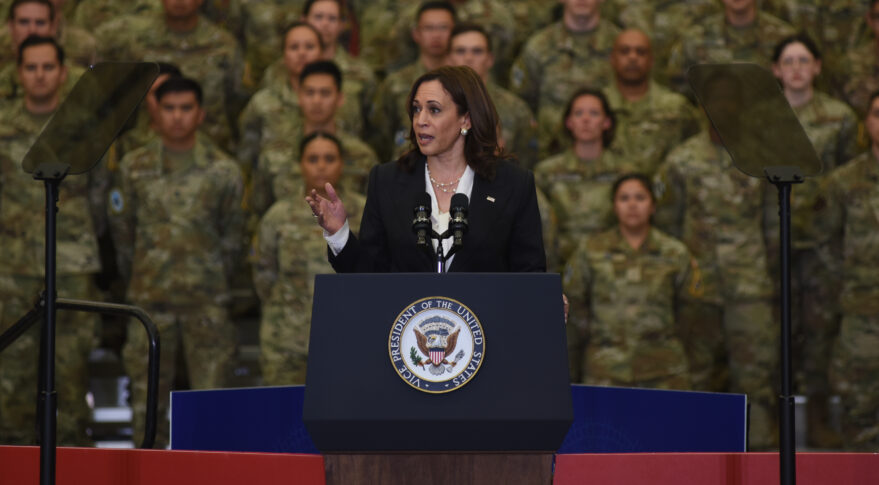 Vice President Kamala Harris announced the ASAT testing ban in an April 18 speech, a few weeks before the first meeting of a U.N. working group on space threats. Credit: Space Launch Delta 30
WASHINGTON — A State Department official said the Biden administration’s announcement of a ban of one kind of antisatellite (ASAT) weapon tests was timed to support discussions at an upcoming United Nations forum on norms of behavior in space.
Vice President Kamala Harris announced April 18 that the United States would ban tests of destructive direct-ascent ASATs because of the large amounts of debris they create. “These tests are dangerous and we will not conduct them,” she said in a speech at Vandenberg Space Force Base in California.
https://spacenews.com/u-s-asat-ban-meant-to-support-u-n-discussions-on-space-threats/Kelly plays down Russian ASAT threatby Jeff Foust — May 2, 2022 [SN]
 Sen. Mark Kelly (D-Ariz.) said he did not consider Russia's ASAT capabilities tested last year to be something "that I would be too worried about." Credit: McCain Institute webcast
WASHINGTON — A senator and former astronaut said he did not expect Russia to perform another test of an antisatellite weapon because of the debris that posed a risk to that country’s own satellites as well as others.
At a panel session of the McCain Institute’s Sedona Forum April 30, Sen. Mark Kelly (D-Ariz.), chair of the emerging threats subcommittee of the Senate Armed Services Committee, said he did not consider ASATs a threat to either government or commercial satellites in the near term even during Russia’s invasion of Ukraine.
https://spacenews.com/kelly-plays-down-russian-asat-threat/Canada joins U.S. in ASAT testing banby Jeff Foust — May 9, 2022 [SN]
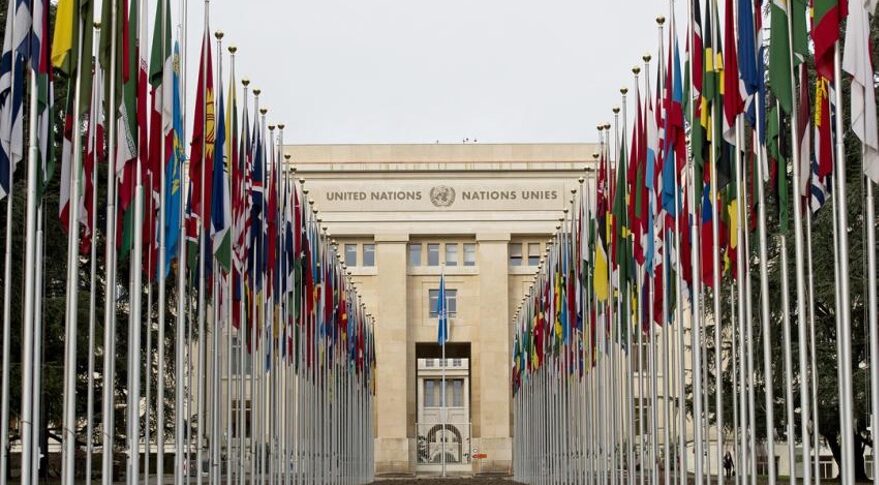 Canada’s announcement of the ASAT testing ban came on the first day of meetings of a U.N. working group on reducing space threats in Geneva, Switzerland. Credit: UN
WASHINGTON — The Canadian government announced May 9 that it is joining the United States in banning tests of destructive direct-ascent antisatellite weapons as a step toward norms of responsible behavior in space.
In a tweet, the Permanent Mission of Canada to the United Nations in Geneva announced that Canada would abide by the non-binding ban on such ASAT tests announced by Vice President Kamala Harris April 18. Such tests, Harris said at the time, create dangerous amounts of debris in orbit, and she called on other nations to join the United States in the ban.
https://spacenews.com/canada-joins-u-s-in-asat-testing-ban/Op-ed | U.S. Antisatellite Test Ban Reveals a New Approach for Security and Sustainability in Spaceby Brian G. Chow and Brandon W. Kelley — May 12, 2022 [SN]
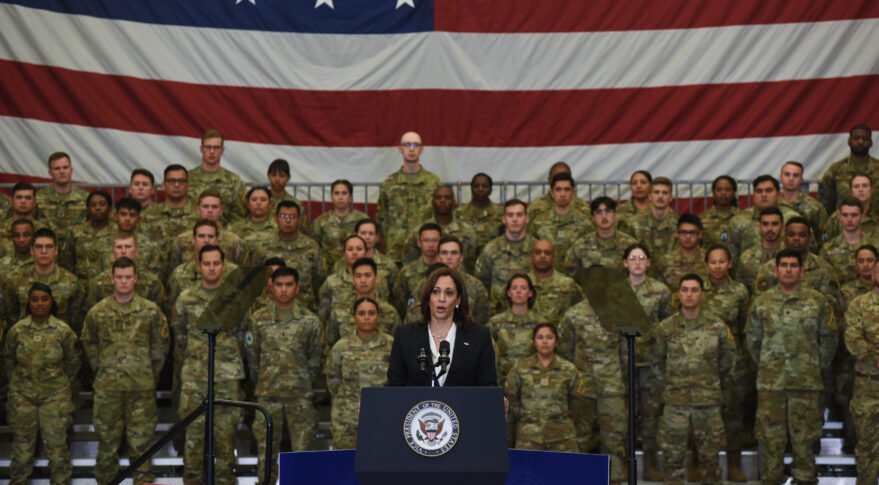 U.S. Vice President Kamala Harris announced a U.S. ban on “destructive direct-ascent anti-satellite missile testing" during her April 18, 2022 visit to Vandenberg Space Force Base, California. Credit: U.S. Space Force photo by Michael Peterson
On April 18, Vice President Kamala Harris announced a U.S. commitment to forgo “destructive direct-ascent anti-satellite missile testing.” This carefully designed ban has the potential to be the first step in a new approach to security and sustainability in space. If so, the United States will be well-positioned to ensure peace and prosperity in space in the emerging era. However, if the U.S. continues its present course, it is unlikely to counter the range of space threats emerging over this decade and beyond.
To succeed, the new U.S. approach must be characterized by three elements.
https://spacenews.com/op-ed-u-s-antisatellite-test-ban-reveals-a-new-approach-for-security-and-sustainability-in-space/Parallel Paths for Space Sustainabilityby Jeff Foust — June 24, 2022 [SN]
 U.S. Vice President Kamala Harris speaking April 18 at Vandenberg Space Force Base, California, where she announced a ban on destructive, direct-ascent antisatellite weapons testing. Credit: U.S. Space Force photo by Michael Peterson
When U.S. Vice President Kamala Harris announced in an April 18 speech at Vandenberg Space Force Base that the United States would ban the testing of destructive, direct-ascent antisatellite (ASAT) weapons, it was not entirely surprising.
Like many other Western governments, the Biden administration was sharply critical of last November’s Russian ASAT test that destroyed the Cosmos 1408 satellite and created more than 1,500 pieces of debris large enough to be tracked, and likely many more smaller pieces. Kathleen Hicks, deputy secretary of defense, said at a meeting of the National Space Council just a couple weeks later that the Pentagon “would like to see all nations agree to refrain from antisatellite weapons testing that creates debris.”
https://spacenews.com/parallel-paths-for-space-sustainability/New Zealand joins ASAT testing banby Jeff Foust — July 3, 2022 [SN]
Space security experts warn ASAT tests like the one Russia conducted in November 2021 threaten the sustainability of satellite operations in low Earth orbit. Credit: COMSPOCWASHINGTON — The government of New Zealand has formally joined a U.S.-led ban on testing of destructive direct-ascent antisatellite (ASAT) weapons in an effort to build momentum for a global prohibition on such tests.
In a July 1 speech at the University of Otago, New Zealand Foreign Minister Nanaia Mahuta announced that the government would join the declaration by the United States in April that it would not conduct such “irresponsible” ASAT tests because of the debris they produce, increasing the risk of collisions with satellites.
https://spacenews.com/new-zealand-joins-asat-testing-ban/
 Wątek: Artykuły o ASAT (Przeczytany 7405 razy)