« Odpowiedź #1 dnia: Grudnia 23, 2018, 17:06 »
Został pierwszym Amerykaninem, który oddał głos w wyborach z kosmosu.The First American to Vote From Space
By Marina Koren November 8, 2016
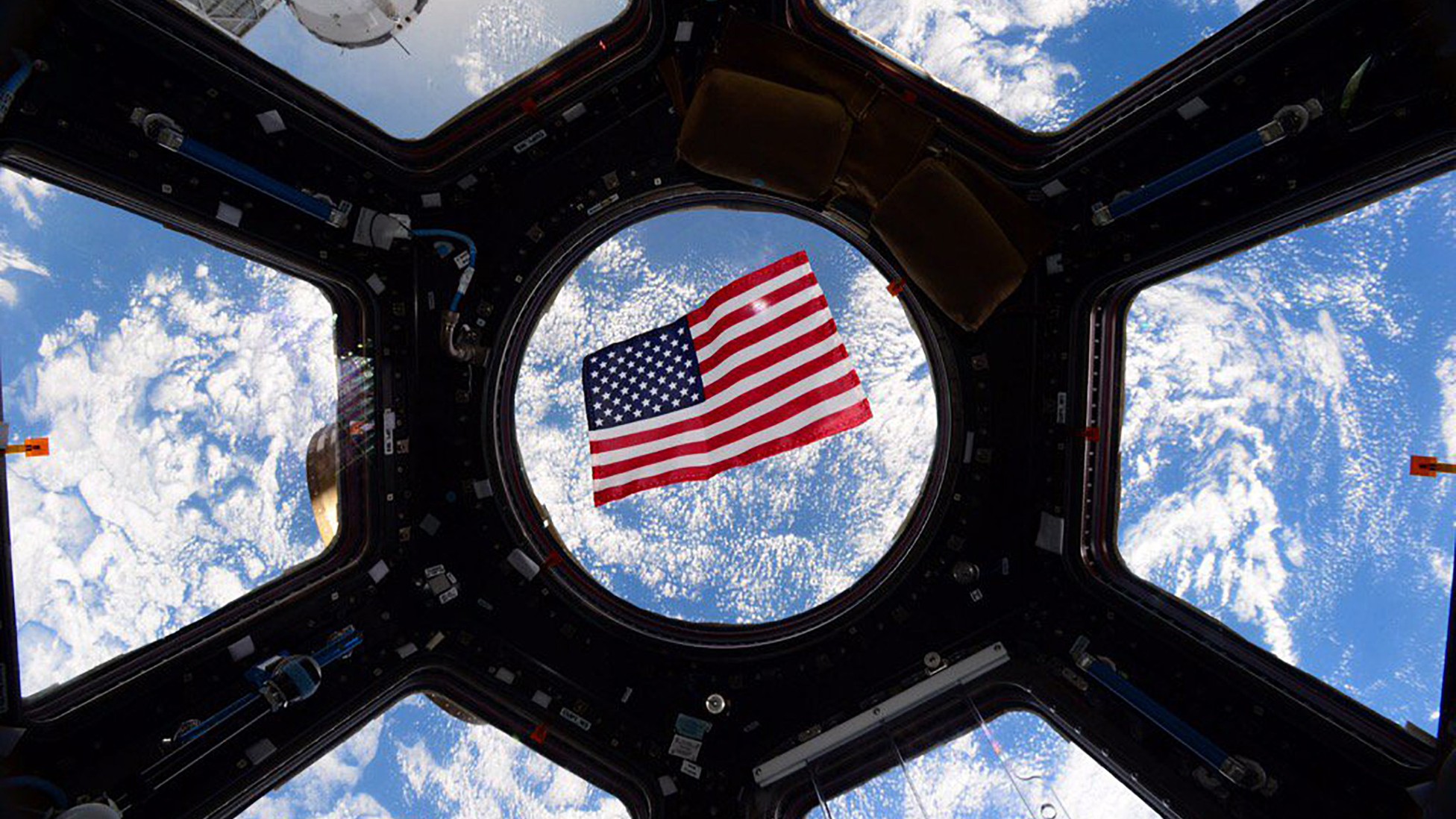
In 1997, David Wolf cast his ballot in microgravity. This year, he’s happy to wait in line on Earth.
NASA / Reuters
David Wolf won’t mind waiting in a long line to cast his ballot today.
In 1997, the retired NASA astronaut voted in a local Texas election while he was more than 200 miles above Earth, on the Russian space station Mir. At the time, humans were still trying to figure out how to stay alive in low-Earth orbit; earlier that year, a fire had erupted inside the Mir during a routine procedure, and a cargo probe collided with station when it tried to dock, causing significant damage. Communications from mission control could sometimes take hours to reach the station. There was little time for anything but work.
Wolf doesn’t recall what was on the ballot that year, but he remembers how moved he felt.
“I voted alone up in space, very alone, the only English speaker up there, and it was nice to have an English ballot, something from America,” Wolf told me recently. “It made me feel closer to the Earth and like the people of earth actually cared about me up there.”
Wolf became the first American to vote from space, thanks to legislation in Texas, where most astronauts live, that was signed into law in 1997. Nearly 20 years later, the process for voting from orbit remains the same—and it’s pretty easy. Mission control sends astronauts an encrypted email with an absentee ballot inside. Astronauts fill it out and email it back to Earth, where it reaches a county clerk, who opens the file and writes in the selections on a paper ballot. Only that clerk knows how an astronaut voted. Shane Kimbrough, the only American in space right now, has already voted from the International Space Station (ISS).
Wolf is glad to do it on Earth this year.
“The lesson most astronauts learn is how wonderful something is when you step away and look back on it,” he said. “Now I appreciate my backyard like a Caribbean vacation.”
The process for voting from space emerged after John Blaha, who launched on the Shuttle to Mir in September 1996, missed out on voting in the presidential contest between Bill Clinton and Bob Dole. When Texas State Senator Mike Jackson heard about this, he went to NASA and told them he wanted to introduce a bill. Jackson had won his election in 1989 by seven votes out of 26,000, “so I was all in favor of letting more people vote,” he told me.
Other legislators in both parties quickly signed on to the legislation. “The initial reaction was, ‘You want to do what?’” said Jackson, who is now retired. “Then they were saying, ‘Why didn’t we think of this before?’”
There was little reason to before Blaha launched. In the early 1990s, shuttle missions lasted less than two weeks. Crews launched into low-Earth orbit, conducted experiments and spacewalks, and came back. But in 1995, American astronauts began visiting the Mir and staying for nearly six months. The United States entered the era of long-duration spaceflight, and NASA had to figure out how to keep astronauts healthy and happy in an extreme environment. Some Mir cosmonauts, the Russians had learned, had struggled with depression and anxiety because of the isolation of the space station. So NASA brought in a group of psychologists to help develop support systems for its own astronauts on Mir.
Wolf said he watched movies on Mir to help him feel connected to Earth during his five-month stay; Apollo 13 brought him to tears, while Alien felt surreal. Casting a ballot, he said, gave him similar comfort.
“After a few months in space and only hearing crackling voices on a radio, you lose your sense of attachment to Earth, and doing things like watching movies or voting, you feel much more intensely about them than when you do it as a routine act on Earth,” he said.
Technology has since helped erase the distance between Earth and orbiting astronauts, who now regularly spend six months on the ISS, which succeeded Mir. In 2004, Leroy Chiao not only voted in the presidential election from the station, he also beamed down a public service announcement encouraging Americans to go to the polls. In 2010, ISS astronauts got personal access to the internet. They can email, tweet, Instagram, and buy stuff on Amazon. And when they vote, their experience is not quite like the one Wolf had—in a dank, aging space station, with limited communication with family and friends.
Perhaps the next astronauts who will experience voting as Wolf did will be the ones NASA sends to Mars. Wolf pointed to the Mars explorer most people are familiar with: Mark Watney, the fictional character in The Martian. Watney tried to grow potatoes on Mars because he was stranded there and had to survive, but the act was a source of comfort, too, Wolf said.
“These connections are exceptionally powerful and effective at making a person feel like part of a civilization somewhere,” he said.
https://www.theatlantic.com/science/archive/2016/11/voting-from-space/506960/NASA Astronaut David Wolf Leaves AgencyPress Release by SpaceRef December 19, 2012
HOUSTON — NASA astronaut David Wolf has left the agency to return to private industry. Wolf is a veteran of five space shuttle flights and a long-duration mission on the Russian Space Station Mir.
“I had the pleasure of working with Dave for years,” said Bob Behnken, chief of the Astronaut Office at NASA’s Johnson Space Center in Houston. “His leadership and expertise within our spacewalking community was critical to the success of many shuttle and station missions. We wish him the best in this new phase of his career, and we will miss him greatly.”
Wolf earned a Bachelor of Science degree in electrical engineering from Purdue University and a doctor of medicine from Indiana University. He joined NASA in 1983, and was selected to the astronaut corps in 1990. Before flying in space, he served in multiple technical roles supporting Johnson Space Center’s Medical Services Division.
In 2011, Wolf was inducted into the Space Foundation’s Space Technology Hall of Fame for his work in developing the bioreactor, a device that enables the growth of tissue, cancer tumors and virus cultures outside the body in space and on Earth.
Wolf flew on five separate shuttle flights and spent 128 days aboard Mir during NASA-MIR 6 in 1996. During NASA-MIR 6, he conducted one spacewalk during the mission, using the Russian Orlan spacesuit.
He ends his NASA career after completing seven spacewalks, using both the American and Russian spacesuits, and having logged 47 hours, 5 minutes of extravehicular activity.
For Wolf’s complete biography, visit: http://www.jsc.nasa.gov/Bios/htmlbios/wolf.htmlhttps://spacenews.com/nasa-astronaut-david-wolf-leaves-agency/David Wolf Speaker Biography
David Alexander Wolf is an American astronaut, medical doctor, electrical engineer. Considered the “father” of the Space Bioreactor, he led the team developing this tissue engineering methodology now used for state of the art cancer research and regenerative medicine on Earth as well as demonstrating the further advantages when conducted in microgravity. He is also a Russian Cosmonaut conducting all training and a long duration (128 day) mission on the Russian MIR Space Station in the Russian language. Wolf has been to space four times. Three of his spaceflights were Space Shuttle missions, the first of which was STS-58 in 1993, a Spacelab mission to research the effects of low gravity on the human body. His most recent spaceflight was STS-127 in 2009 in which he led the Spacewalk team in 5 EVA’s (matching the record) for ISS assembly. Wolf also took part in a long-duration mission aboard the Russian MIR Space Station lasting 128 days (NASA-MIR 6, Mir EO-24). Along with a broad scientific program, they overcame several serious emergencies including total power failure, loss of attitude control, main computer failure, and a life threatening airlock failure nearly prohibiting re-entry into the spacecraft. He was brought to Mir aboard STS-86 in September 1997, and landed aboard STS-89 in January 1998. In total Wolf has logged more than 4,040 hours in space. He is a veteran of 7 spacewalks totaling 41hrs 17min in both Russian and American spacesuits and was chief of the Astronaut Office EVA Branch during the main construction of the ISS. He is a specialist in space medicine, EVA, rendezvous navigation, re-entry, and space sciences. He has led ground teams developing systems now operating on orbit.
David Wolf has received numerous awards and honors. He is a recipient of the NASA Exceptional Engineering Achievement Medal in 1990 and NASA Inventor of the Year in 1992. Wolf received an Academic Achievement Award upon graduation from medical school. He received the Carl R. Ruddell scholarship award for pioneering research in medical ultrasonic digital signal and image processing. He is a member of Eta Kappa Nu and Phi Eta Sigma honorary societies. Wolf has received 17 U.S. Patents and over 20 Space Act Awards primarily for 3-dimensional tissue engineering technologies, earning the Texas State Bar Patent of the Year in 1994. He has published over 40 technical papers.
David Wolf has been a member of the Institute of Electrical and Electronics Engineers, the Aerospace Medical Association, the Experimental Aircraft Association, the International Aerobatic Club, and the Air National Guard (retired).
Perhaps it’s no accident that his dog was named “Star”
The City of Indianapolis honored Wolf by naming a bridge on 82nd Street in the Castleton area the “David Wolf Bridge.”
David Wolf is currently a consultant in Biotechnology, Aerospace, Medical Delivery, and Bio-instrumentation.
To book David Wolf call Executive Speakers Bureau at 901-625-4497.
https://www.executivespeakers.com/speaker/david-wolfhttps://www.us.mensa.org/read/bulletin/features/astronaut-david-wolf-touches-down-at-annual-gathering-2018/https://www.nationalgeographic.com/science/article/110706-shuttle-launch-astronaut-moments-space-atlantis-sciencehttps://www.wbaa.org/science-medicine/2012-11-26/astronaut-david-wolf-on-nasa-research-and-purdue
« Ostatnia zmiana: Sierpnia 16, 2025, 18:42 wysłana przez Orionid »

Zapisane
 Wątek: DA Wolf - 23.08.1956 (Przeczytany 110 razy)