Satellite supply chains coming under increasing scrutinyby Jason Rainbow — March 22, 2022 [SN]
 Space executives discussed how changes in the geopolitical climate are affecting their businesses at Satellite 2022 in Washington D.C.
WASHINGTON — Changes in the geopolitical landscape following Russia’s war in Ukraine are pushing space companies to tighten international supply chains amid a renewed focus on security.
Source:
https://spacenews.com/satellite-supply-chains-coming-under-increasing-scrutiny/Arianespace and SpaceX work to adjust launch manifestsby Jeff Foust — March 24, 2022 [SN]
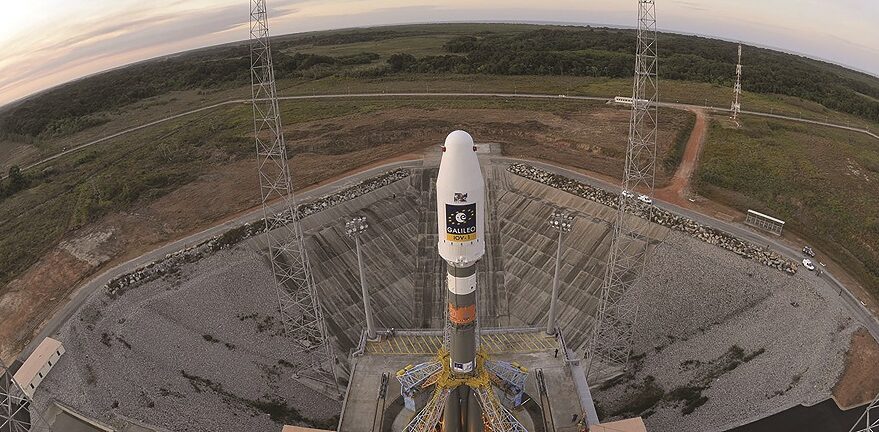 Arianespace says that Galileo satellites that were to launch on Soyuz rockets from French Guiana could instead go on Ariane 6 in 2023. Credit: ESA - S. Corvaja
WASHINGTON — Arianespace says it is working to remanifest payloads that were to launch on Soyuz rockets while SpaceX says it’s finding ways to accommodate new customers on its vehicles.
During a panel at the Satellite 2022 conference March 22, Stéphane Israël, chief executive of Arianespace, acknowledged the company’s plans had been upended by Russia’s invasion of Ukraine and subsequent suspension of both Soyuz launches from French Guiana and those from the Baikonur Cosmodrome carrying satellites for OneWeb.
Source:
https://spacenews.com/nasa-to-support-development-of-second-artemis-lunar-lander/Op-ed | Russian aggression underscores need for greater U.S. space leadershipby Christian Zur and Scott Kordella — April 4, 2022 [SN]
 A simulation of the Russian ASAT demonstration in November 2021. Much of the debris from that event is in an orbit that periodically lines up with satellites in sun-synchronous orbits. Credit: COMSPOC
With the fracturing of America’s longtime civil space partnership with Russia over the war in Ukraine, commercial space companies are adjusting to this new reality, as OneWeb recently experienced first-hand at the Baikonur Cosmodrome in Kazakhstan.
During this period of uncertainty, the space sector should surely abide by the same behaviors as all industries by pulling back from Russian economic participation until events allow for normalization. However, even before invading Ukraine, Russia’s commitment to the good of the order was questionable. NASA recently noted there are approximately 25,000 objects tracked on-orbit, of which 6,100 have a perigee below 600 kilometers, which puts them at risk of debris generating collisions with the majority of all operating satellites and human spacecraft. Disturbingly, debris from a November 2021 Russian weapons test has created what Dan Oltrogge of COMSPOC calls “conjunction squalls,” which further threaten these systems rotating in the same altitude bands and occasional orbital plane.
https://spacenews.com/op-ed-russian-aggression-underscores-need-for-greater-u-s-space-leadership/To counter threats, U.S. intelligence community leans on partnersby Debra Werner — April 5, 2022 [SN]
 Stacey Dixon, U.S. principal deputy director of national intelligence, highlighted the importance of partnerships during an April 5 speech at the 37th Space Symposium. Credit: Tom Kimmell Photography
COLORADO SPRINGS – Partnerships with industry, academia and government agencies around the world are supporting the U.S. intelligence community’s campaign to counter threats to democracy like Russia’s invasion of Ukraine, said Stacey Dixon, U.S. principal deputy director of national intelligence.
“This constellation of independent and incredibly innovative partnerships and the values that sustain them is something autocracies cannot match,” Dixon said April 5 at the 37th Space Symposium. “You are our invaluable partners in today’s strategic competition in space and on Earth, a competition between democracy and autocracy.”
https://spacenews.com/partnerships-to-counter-threats/Path to sustainable space unclear after Russia’s Ukraine invasionby Jason Rainbow — April 7, 2022 [SN]
 Walther Pelzer, head of German space agency DLR, called for more unified space sustainability regulation at the 37th Space Symposium’s annual heads of agencies panel discussion in Colorado Springs. Credit: Tom Kimmell Photography
COLORADO SPRINGS — Before Russia invaded Ukraine, many considered international space cooperation safely insulated from geopolitical strife.
“This has drastically changed now,” European Space Agency Director General Josef Aschbacher said April 6, pointing to the “very serious sanctions” imposed by Europe and other space powers against Russia.
https://spacenews.com/path-to-sustainable-space-unclear-after-russias-ukraine-invasion/Russian invasion of Ukraine exposes cybersecurity threat to commercial satellitesby Debra Werner — April 14, 2022 [SN]
 Credit: Adobe Stock
Months before Russian armored vehicles rolled into Ukraine on Feb. 24, companies monitoring satellite networks noticed an uptick in activity.
Hackers were trying to penetrate Ukraine’s communications satellite infrastructure, including networks that relay commands to Ukrainian military drones. Meanwhile, Earth observation satellites detected intensifying GPS interference in the region.
When the invasion began, cyberattacks escalated. SpaceX CEO Elon Musk reported jamming of Starlink communications near Ukrainian conflict areas. And hackers infiltrated Viasat’s KA-SAT satellite internet network, disabling modems that provide tens of thousands of customers in Ukraine and nearby countries with internet links.
https://spacenews.com/russian-invasion-of-ukraine-exposes-cybersecurity-threat-to-commercial-satellites/Op-ed | How Russia’s war with Ukraine jams NASAby William Bianco — April 14, 2022 [SN]
 The French, Russian and U.S. flags are seen during an ISS crew press conference at the Cosmonaut Hotel in Baikonur, Kazakhstan in 2016. Credit: NASA/Bill IngallsInternational cooperation and the future of the International Space Station
Russia’s war with Ukraine has created an existential crisis for NASA. Three decades ago, NASA embraced international cooperation as a rationale for the International Space Station (ISS). Now, the same argument that saved the station at the end of the last Cold War may produce its demise at the start of a new one.
For decades, NASA has highlighted the ISS as an exemplar of a productive international partnership, a sign that the U.S. and Russia have moved beyond conflict, and a guide to how rivals can learn to peacefully work together. Its accounts of station operations emphasize how much each side has learned from the other and how they have persevered through disagreements, emergencies, and close calls. NASA photos show happy astronauts and cosmonauts living and working together in close quarters. Former NASA Administrator Charles Bolden cheered efforts to nominate the ISS program for the Nobel Peace Prize.
Russia’s invasion of Ukraine may bring the ISS program to an abrupt end. The problem is not that an extended military conflict will disrupt ISS operations. Rather, with arguments about international cooperation taken off the table, NASA must address a fundamental question it has always struggled to answer: why do we have an Earth-orbiting space station in the first place?
https://spacenews.com/op-ed-how-russias-war-with-ukraine-jams-nasa/NRO plans for immediate and long-term acquisition of commercial satellite databy Debra Werner — April 26, 2022 [SN]
 Maxar published a series of images April 22 showing new 40-meter-long trenches expected to serve as graves at a cemetery near Vynohradne, Ukraine, about 12 kilometers east of Mariupol. This is the second time Maxar has revealed cemetery expansion. Similar trenches were discovered near the Manhush cemetery on the northwest outskirts of Mariupol. Credit: Maxar
DENVER – Since Russian forces began mobilizing to invade Ukraine, commercial satellite operators have supplied U.S. intelligence agencies with extensive electro-optical, synthetic aperture radar and radio frequency data.
BlackSky, Maxar Technologies and Planet, for example, have shared “millions and millions of square kilometers of imagery” over Ukraine and Russia, specifically, Peter Muend, director of the National Reconnaissance Office Commercial Systems Program Office, said April 25 at the GEOINT Symposium.
https://spacenews.com/nro-short-long-term-commercial-data-strategy/Space companies donate funds for humanitarian efforts in Ukraineby Sandra Erwin — April 26, 2022 [SN]
 U.S. State Department and Defense Department leaders visited Kyiv, Ukraine, on April 24, 2022. Credit: U.S. State DepartmentThe project called “Space Industry for Ukraine” was started by HawkEye 360 and the National Security Space Association
DENVER – Several firms in the commercial space industry have each pledged $50,000 to finance humanitarian efforts in Ukraine, the companies announced April 26.
https://spacenews.com/space-companies-donate-funds-for-humanitarian-efforts-in-ukraine/DoD intelligence chief: U.S. made ‘gutsy decision’ to release sensitive imagery to counter Russia’s deception opsby Sandra Erwin — April 27, 2022 [SN]
 Ronald Moultrie, undersecretary of defense for intelligence and security, speaks April 26 iat the 2022 GEOINT Symposium. Credit: USGIF
Moultrie: The decision to release satellite imagery and other intelligence on Russia’s movements 'was not taken lightly'
DENVER – In the weeks and months before Russia invaded Ukraine, the U.S. government came to the conclusion that it needed to publicly release sensitive intelligence to counter Russia’s “false flag” operations – a deception tactic designed to give them an excuse to intervene in Ukraine.
https://spacenews.com/dod-intelligence-chief-u-s-made-gutsy-decision-to-release-sensitive-imagery-to-counter-russias-deception-ops/Connecting the Dots | Freeing speech from space: Satellite operators under pressure to squelch propagandaby Jason Rainbow — May 11, 2022 [SN]
As Elon Musk’s plan to take over Twitter ignites free speech debates on and off the social media hub, satellite operators face similar editorial questions amid Russia’s war in Ukraine.
Musk describes himself as a “free speech absolutist” and has put social media next on the list of markets to disrupt after transforming launch with reusable SpaceX rockets and — more recently — setting sights on satellite internet with Starlink, the world’s largest megaconstellation.
Although he has yet to detail specific changes to Twitter’s policies, some activists and civil rights leaders fear he could reverse years of efforts to reduce misinformation, hate speech and harassment on the platform.
https://spacenews.com/connecting-the-dots-freeing-speech-from-space-satellite-operators-under-pressure-to-squelch-propaganda/U.S. Space Force to step up protection of satellite ground systems in the wake of Russia’s cyber attacksby Sandra Erwin — May 19, 2022 [SN]
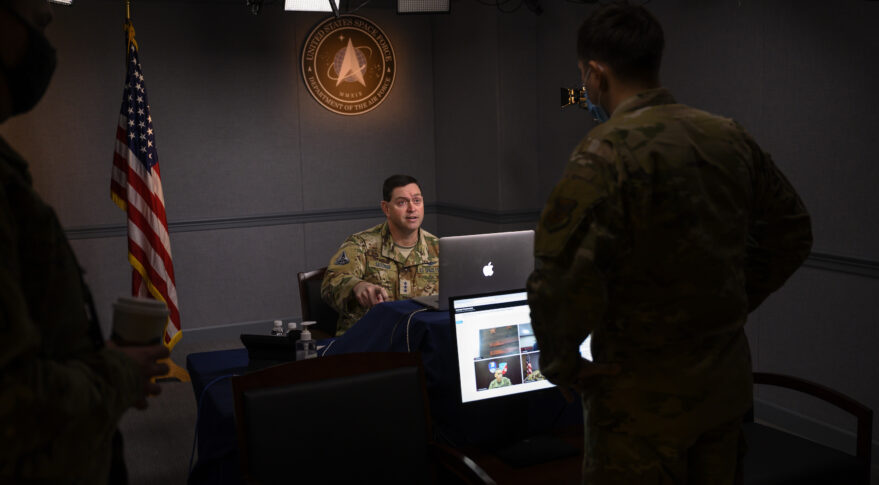 Deputy Chief of Space Operations for Operations, Cyber and Nuclear, Lt. Gen. B. Chance Saltzman, participates in virtual panel discussion hosted by the American Institute of Aeronautics and Astronautics. Credit: DoDLt. Gen. Saltzman said one lesson from the cyber attacks in Ukraine is that the main targets are not the satellites but the ground systems
WASHINGTON — Almost three months into the war in Ukraine, it’s still too early to draw conclusions about Russia’s capabilities to disrupt satellite-based communications but one clear takeaway is the importance of protecting the ground systems and network user equipment that provide many entry points for cyber attackers, a senior U.S. Space Force official said May 19.
https://spacenews.com/u-s-space-force-to-step-up-protection-of-satellite-ground-systems-in-the-wake-of-russias-cyber-attacks/On National Security | Drawing lessons from the first ‘commercial space war’by Sandra Erwin — May 20, 2022 [SN]
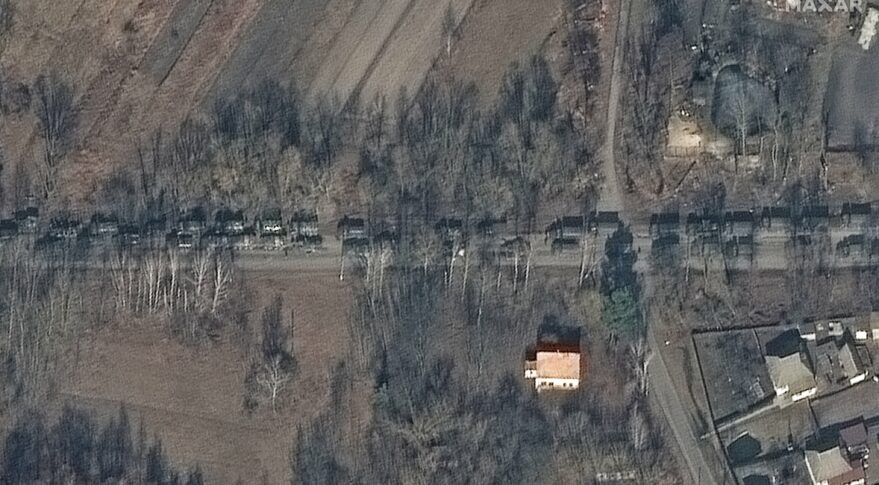 Maxar satellite images show a 3.25-mile convoy of Russian ground forces with 100s of military vehicles NE of Ivankiv, Ukraine and moving toward Kyiv (40 miles away). Contains fuel, logistics, armored vehicles (tanks, infantry fighting vehicles, self-propelled artillery).
Throughout Russia’s invasion and offensive in Ukraine, some of the most compelling images of the war have come from satellites in space operated by private companies.
“For many of us who have been tirelessly watching this conflict from our TVs or smartphones, some of the most iconic scenes which come to mind are those of a huge Russian military convoy, stretching more than 60 kilometers northwest of Kyiv,” commented tech industry consultant Chetan Woodun.
https://spacenews.com/on-national-security-drawing-lessons-from-the-first-commercial-space-war/Op-ed | Protecting Space Assets Above to Assert Geopolitical Dominance Belowby Chris Bogdan and Jim Reilly — May 23, 2022 [SN]
 Maxar commercial satellite imagery collected May 12, 2022, shows the aftermath of recent Russian attacks that damaged the Grande Pettine hotel, located on the beach by the Black Sea. Additional damage is seen at several buildings at the Odesa airport reportedly caused by Russian missile strikes. Credit: Maxar Technologies
Jim Reilly is a former NASA astronaut and current executive adviser at Booz Allen Hamilton. Chris Bogdan is Booz Allen’s senior vice president for the firm’s aerospace business.
While our space assets orbit the Earth hundreds of miles above, the invasion of Ukraine has shown that the space domain is not above deteriorating geopolitical conditions. In fact, the ongoing conflict has further solidified the critical role of space in modern warfighting and national security, highlighting that data collected from space assets is mission-critical for U.S. intelligence and defense operations—in addition to its ability to illustrate a clear picture of the situation to the public. In the past, most space-based overhead imagery, communications and data related to national security were provided by U.S. government or allied government systems. However, over the last two decades, commercial providers have expanded their capabilities to now provide services and data to the government that was, in the past, only provided by national systems. The conflict in Ukraine has shown us that we must now protect and make both our government and commercial space assets more resilient.
https://spacenews.com/op-ed-protecting-space-assets-above-to-assert-geopolitical-dominance-below/
 Wątek: [SN] Biden: Sanctions will “degrade” Russian space program (Przeczytany 7907 razy)