Autor Wątek: Artykuły o Relativity Space  (Przeczytany 3635 razy)

0 użytkowników i 1 Gość przegląda ten wątek.

Offline Orionid

  • Weteran
  • *****
  • Wiadomości: 28812
  • Very easy - Harrison Schmitt
Artykuły o Relativity Space
« dnia: Czerwca 08, 2021, 19:48 »
Relativity reaches deal to use Stennis test stand
by Jeff Foust — March 21, 2018 [SN]


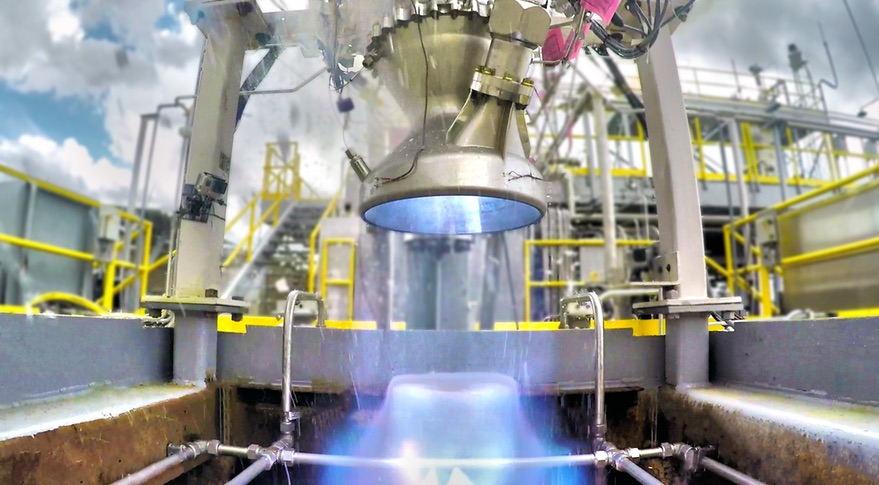
An Aeon 1 engine undergoes test at a Stennis Space Center test stand. Relativity is taking over another test complex at Stennis to support development of its Terran small launch vehicle. Credit: Relativity

WASHINGTON — Relativity, the startup company developing small launch vehicles using additive manufacturing technologies, announced March 21 an agreement with NASA’s Stennis Space Center to take over one of its test stands.

The company said it reached a Commercial Space Launch Act agreement with Stennis that gives the company exclusive use of the E-4 Test Complex at the Mississippi center for the next 20 years. That complex includes four cells for engine tests as well as 15,000 square feet of office space over 25 acres, with an option to expand to 250 acres.
https://spacenews.com/relativity-reaches-deal-to-use-stennis-test-stand/

Relativity closes $35 million Series B round
by Jeff Foust — March 27, 2018 [SN]


Relativity Space is developing large 3D printers to produce launch vehicles, promising much lower costs. Credit: Relativity Space

WASHINGTON — Relativity Space, a startup developing small launch vehicles using 3D-printing technologies, announced March 27 a $35 million funding round led by a venture fund making its first space investment.

The Series B funding round is led by Playground Global, a venture fund established in 2015 by a group that includes Andy Rubin, a former Google executive that led development of the Android mobile operating system. The fund is focused on “software-based” hardware startups.
https://spacenews.com/relativity-closes-35-million-series-b-round/

Veteran aerospace executive joins Relativity Space
by Jeff Foust — August 20, 2018 [SN]


Relativity Space, which is developing a small launch vehicle using 3D printing technologies, has hired a former SpaceX and Virgin Orbit executive as an advisor. Credit: Relativity Space

WASHINGTON — Relativity Space, the startup developing a small launch vehicle making extensive use of 3D-printing technologies, has brought on board a former SpaceX and Virgin Orbit executive to help grow the company.

Relativity announced Aug. 20 that Tim Buzza was joining the company as an advisor, spending several days a week at the Los Angeles-based company to support its work in a wide range of areas, from technology to regulations.
https://spacenews.com/veteran-aerospace-executive-joins-relativity-space/

Relativity to build launch site at Cape Canaveral
by Jeff Foust — January 17, 2019 [SN]


An artist's concept of Launch Complex 16 at Cape Canaveral, where Relativity will conduct launches of its Terran 1 rocket starting in late 2020. Credit: Relativity

WASHINGTON — Relativity, the startup developing a small launch vehicle using additive manufacturing technologies, announced Jan. 17 it has won approval from the U.S. Air Force to build a launch site at Cape Canaveral.

The company said it had received a “Statement of Capability” from the 45th Space Wing, which operates Cape Canaveral Air Force Station in Florida, allowing the company to develop a launch facility on the site of Launch Complex (LC) 16. The agreement gives Relativity exclusive access to the site for a 20-year term.
https://spacenews.com/relativity-to-build-launch-site-at-cape-canaveral/

Relativity adds former SpaceX executives to leadership team
by Jeff Foust — February 14, 2019 [SN]


An artist's concept of Launch Complex 16 at Cape Canaveral, where Relativity will conduct launches of its Terran 1 rocket starting in late 2020. Credit: Relativity

WASHINGTON — Small launch vehicle developer Relativity has added three people, all of whom previously held key positions at SpaceX, to its leadership team as it refines the technologies it will use on its rockets.

Relativity announced Feb. 14 that it has hired Tim Buzza as a distinguished engineer. Buzza joined SpaceX months after its founding in 2002 and stayed there for 12 years before joining Virgin Galactic and, later, Virgin Orbit, working on its air-launch system. Buzza initially joined Relativity in August as an advisor, spending a few days a week with the company before taking this full-time position.
https://spacenews.com/relativity-adds-former-spacex-executives-to-leadership-team/

Relativity signs contract with Telesat for launching LEO constellation
by Jeff Foust — April 5, 2019 [SN]


Relativity's contract with Telesat covers launches of an unspecified number of Telesat LEO satellites on Terran 1 rockets starting no earlier than 2021. Credit: Relativity

WASHINGTON — Small launch vehicle developer Relativity announced April 5 a contract with Telesat to launch a portion of that company’s low Earth orbit broadband satellite constellation.

The contract covers the launch of an unspecified number of Telesat LEO satellites on Relativity’s Terran 1 launch vehicle, starting no earlier than 2021. The companies declined to disclose the terms of the contract.
https://spacenews.com/relativity-signs-contract-with-telesat-for-launching-leo-constellation/

Relativity to launch LEO satellite for mu Space
by Jeff Foust — April 23, 2019 [SN]


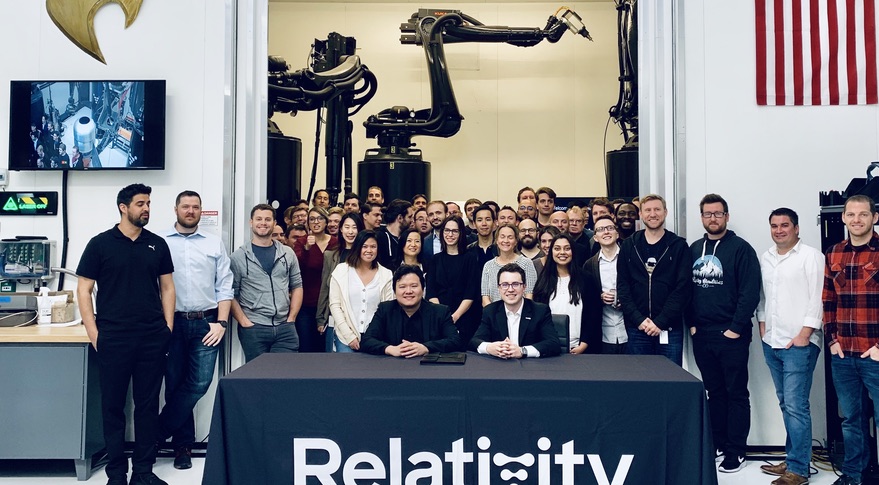
James Yenbamroong, CEO of mu Space, and Tim Ellis, CEO of Relativity, pose with employees upon signing a contract to launch a mu Space satellite on Relativity's Terran 1 rocket in 2022. Credit: Relativity

WASHINGTON — Relativity announced April 23 it has secured a contract to launch a low Earth orbit satellite for Thai startup mu Space.

In a statement, Relativity said it will launch the unnamed satellite as a “primary, dedicated payload” to LEO on its Terran 1 rocket in 2022. The companies did not disclose the terms of the deal.

“We’re excited to partner with mu Space, a disruptive innovator in the Asia-Pacific region, to launch their satellite and space technologies with our 3D printed Terran 1 rocket,” Tim Ellis, chief executive of Relativity, said in a statement announcing the deal.
https://spacenews.com/relativity-to-launch-leo-satellite-for-mu-space/

Spaceflight signs contract with Relativity for launches
by Jeff Foust — May 6, 2019 [SN]


Relativity announced a launch services agreement with Spaceflight May 6 that includes a contract for one Terran 1 launch and options for additional launches. Credit: Relativity

WASHINGTON — Small launch vehicle developer Relativity announced May 6 it has signed an agreement with Spaceflight for a series of smallsat rideshare launches.

The launch services agreement between the two companies includes an order for one launch of Relativity’s Terran 1 rocket in the third quarter of 2021, with an option for an unspecified number of additional launches. Terms of the deal were not disclosed, although Relativity has publicized a list price of $10 million for the rocket.
https://spacenews.com/spaceflight-signs-contract-with-relativity-for-launches/

Relativity to build rocket factory at Stennis
by Jeff Foust — June 11, 2019 [SN]


Relativity plans to convert an existing 20,000-square-meter building at Stennis into a factory capable or producing 1 to 24 Terran 1 rockets a year. Credit: Relativity

WASHINGTON — Small launch vehicle developer Relativity announced June 11 it will establish a production facility for its Terran 1 rocket at NASA’s Stennis Space Center.

Under an agreement with NASA and the Mississippi Development Authority, Relativity will lease the 20,000-square-meter Building 9101 at Stennis for nine years, with an option to extend the lease 10 years. The lease comes at what the company calls “significantly discounted terms,” the specifics of which it did not disclose.
https://spacenews.com/relativity-to-build-rocket-factory-at-stennis/

Relativity signs launch agreement with Momentus
by Jeff Foust — September 11, 2019 [SN]


Relativity said its agreement with Momentus covers one launch of a Terran 1 rocket in 2021, with options for up to five more. Credit: Relativity

PARIS — Small launch vehicle developer Relativity Space announced Sept. 11 a contract with Momentus to carry a set of small satellites to geostationary orbit.

The launch agreement, announced during Euroconsult’s World Satellite Business Week here, covers one launch of Relativity’s Terran 1 rocket in 2021 with an option for up to five additional launches. The companies did not disclose the terms of the agreement, but Relativity offers the Terran 1 for a list price of $10 million.
https://spacenews.com/relativity-signs-launch-agreement-with-momentus/

Smallsat launch services feel pricing pressure
by Jeff Foust — September 12, 2019 [SN]


Executives with Relativity, Virgin Orbit, Arianespace and GK Launch Services discuss the state of the smallsat launch market at World Satellite Business Week Sept. 11. Credit: SpaceNews/Brian Berger

PARIS — Companies that provide both dedicated and rideshare launch services for small satellites say that price remains a major factor for their customers, with pressure from growing competition to lower them.

Companies working on many of the dozens of small launch vehicles currently under development have argued that the flexibility they provide, including giving smallsat operators control over when to launch and to what orbit, is worth the higher price such vehicles have over rideshare services, where smallsats are secondary payloads on larger rockets.
https://spacenews.com/smallsat-launch-services-feel-pricing-pressure/

Relativity Space raises $140 million
by Jeff Foust — October 1, 2019 [SN]


Relativity Space, which uses 3-D printing for launch vehicle manufacturing, like this second stage, raised $185 million to take the company into commercial operations. Credit: Relativity Space

WASHINGTON — Small launch vehicle company Relativity Space announced Oct. 1 it has raised a new round of $140 million, a sign of investor confidence despite strong competition and setbacks suffered by other vehicle developers.

The company said the Series C round was led by two new investors, Bond and Tribe Capital, along with existing inevstors Playground Global, Y Combinator, Social Capital and Mark Cuban. A number of individual investors also participated, including former Disney president Michael Ovitz and entertainer Jared Leto.
https://spacenews.com/relativity-space-raises-140-million/
« Ostatnia zmiana: Maja 23, 2022, 15:32 wysłana przez Orionid »

Offline Orionid

  • Weteran
  • *****
  • Wiadomości: 28812
  • Very easy - Harrison Schmitt
Odp: Artykuły o Relativity Space
« Odpowiedź #1 dnia: Czerwca 09, 2021, 00:58 »
Relativity to move headquarters to Long Beach
by Jeff Foust — February 28, 2020 [SN]


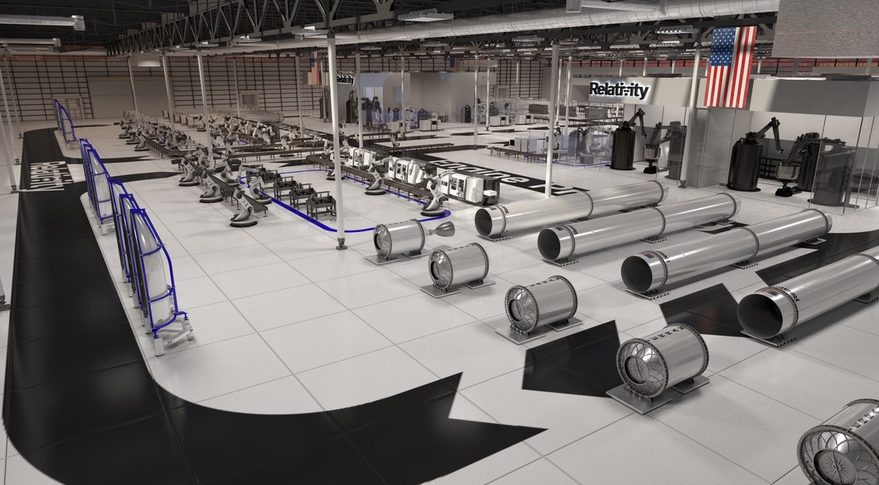
The proposed interior of Relativity's new factory in Long Beach, California, which will use 3D-printing to manufacture its Terran 1 rockets. Credit: Relativity Space

WASHINGTON — Relativity Space, a startup using 3-D printing to manufacture small launch vehicles, will move its headquarters to Long Beach, joining several other launch vehicle companies in that Southern California city.

Relativity announced Feb. 28 that it is moving into a 120,000-square-foot facility in Long Beach that will serve as its new headquarters and launch vehicle manufacturing facility. Company officials had said for months that they were looking for a larger facility as they outgrew existing space in Los Angeles.
https://spacenews.com/relativity-to-move-headquarters-to-long-beach/

Space executive: Government can’t save every startup but can do a lot
by Sandra Erwin — April 30, 2020 [SN]


Relativity Space, which uses 3-D printing for launch vehicle manufacturing, like this second stage, raised $185 million to take the company into commercial operations. Credit: Relativity Space

Relativity Space VP Josh Brost: “The most impactful thing that government can do is actually go out and buy services from startups."

WASHINGTON — As space investors become more conservative during the current economic downturn, they are less inclined to fund long-shot ventures and more likely to support companies that have a government contract.

Even in today’s environment “there are still investors out there with capital that they’re looking to deploy toward great ideas,” said Josh Brost, vice president of business development and government affairs at Relativity Space.
https://spacenews.com/space-executive-government-cant-save-every-startup-but-can-do-a-lot/

Relativity Space hires SpaceX executive to lead launch vehicle factory development
by Jeff Foust — May 18, 2020 [SN]


The proposed interior of Relativity's new factory in Long Beach, California, which will use 3D-printing to manufacture its Terran 1 rockets. Credit: Relativity Space

WASHINGTON — Relativity Space has hired a longtime SpaceX executive to help the startup scale up production of its small launch vehicle.

Relativity said May 18 that it is hiring Zachary Dunn as its new vice president of factory development. He will lead a team with an initial focus on delivering the first Terran 1, the company’s launch vehicle, and then scale up production of the rocket using the company’s 3D-printing technologies.

Dunn was a summer intern at SpaceX in 2006, according to his LinkedIn profile, and then started full-time at the company in 2007 as a propulsion engineer. He became the company’s senior vice president of propulsion and launch in 2018.
https://spacenews.com/relativity-space-hires-spacex-executive-to-lead-launch-vehicle-factory-development/

Relativity wins Iridium contract, selects West Coast launch site
by Jeff Foust — June 24, 2020 [SN]


Relativity proposes to develop a launch site at Vandenberg Air Force Base to support launches to polar and sun-synchronous orbits, including for Iridium. Credit: Relativity

WASHINGTON — Small launch vehicle developer Relativity Space has won a contract to launch six Iridium replacement satellites, which it plans to carry out from a new launch site it proposes to develop at Vandenberg Air Force Base.

Relativity announced June 24 that it won a contract from Iridium for “on-demand” launches of six replacement satellites using its Terran 1 rocket. Those launches would take place starting no earlier than 2023.

Each mission would carry a single Iridium Next satellite, launched as needed to fill in any gaps in Iridium’s constellation. The six satellites, built alongside the 75 launched on eight Falcon 9 flights between January 2017 and January 2019, are currently in ground storage.
https://spacenews.com/relativity-wins-iridium-contract-selects-west-coast-launch-site/

Relativity co-founder steps aside
by Jeff Foust — September 10, 2020 [SN]


Relativity Space co-founder Jordan Noone, seen here with one of the company's 3-D printers used to produce launch vehicle components, is stepping down as the CTO as he prepares to launch a new startup. Credit: Relativity Space

WASHINGTON — One of the two co-founders of launch vehicle company Relativity Space is stepping down as the company’s chief technology officer to create a new startup.

In a series of tweets Sept. 9, Jordan Noone announced he was transitioning from chief technology officer to “executive advisor” at Relativity “in preparation for starting my next venture.” He did not disclose what that new venture was.

Noone and Tim Ellis founded Relativity in 2015 to enter the burgeoning small launch vehicle market. What set the company apart was its embrace of additive manufacturing technologies to produce nearly all the components of the launch vehicle, which the company believes will enable it to produce vehicles more quickly and with less labor than more traditional manufacturing approaches.
https://spacenews.com/relativity-co-founder-steps-aside/

Relativity Space raises $500 million
by Jeff Foust — November 23, 2020 [SN]


Relativity Space says the $500 million Series D round will allow the company to accelerate its long-term plans beyond the development of its Terran 1 rocket. Credit: Relativity

WASHINGTON — Small launch vehicle startup Relativity Space has raised a $500 million funding round that the company says will enable it to accelerate its long-term vision of reshaping aerospace manufacturing.

Relativity announced Nov. 23 that it raised the $500 million Series D round, led by hedge fund Tiger Global Management. Several new investors joined the round, including Fidelity, Baillie Gifford, ICONIQ Capital, General Catalyst, XN, Senator Investment Group, and Elad Gil. The company’s existing investors also participated in the round, which valued the company at more than $2 billion.
https://spacenews.com/relativity-space-raises-500-million/

TriSept purchases Relativity launch for rideshare mission
by Jeff Foust — December 10, 2020 [SN]


TriSept has purchased a launch of Relativity's Terran 1 rocket for a rideshare mission as soon as 2022. Credit: Relativity

WASHINGTON — Launch integration company TriSept has purchased a launch from Relativity Space that it plans to use for a smallsat rideshare mission as soon as 2022.

TriSept announced the contract Dec. 10 for a launch of Relativity’s Terran 1 rocket no earlier than 2022. The launch will take place either from Cape Canaveral Space Force Station or Vandenberg Air Force Base, depending on the requirements of the mission.
https://spacenews.com/trisept-purchases-relativity-launch-for-rideshare-mission/

Three companies win NASA small launch contracts
by Jeff Foust — December 12, 2020 [SN]


Astra, whose Rocket 3.1 vehicle failed to reach orbit in a September launch, is the only one of the three NASA contract winners to have yet attempted an orbital launch. Credit: Astra/John Kraus

WASHINGTON — Three small launch vehicle developers won a combined $16.7 million in NASA contracts as part of an effort to support the development of new launch vehicles.

Astra Space, Firefly Aerospace and Relativity Space won the contracts through NASA’s Venture Class Launch Services (VCLS) 2 program, the agency announced Dec. 11. The companies will launch cubesats provided by NASA on those missions, with launches required by the end of June 2022.
https://spacenews.com/three-companies-win-nasa-small-launch-contracts/

Ten companies bid for NASA small launch vehicle contract
by Jeff Foust — January 3, 2021 [SN]


Relativity Space edged out Phantom Space Corporation for one of the VCLS Demo 2 contracts because its slightly higher price was "more than offset" by reduced technical risk. Credit: Relativity

WASHINGTON — A NASA small launch vehicle competition attracted bids from 10 companies, but half of them were effectively disqualified because of deficiencies or other problems.

NASA announced Dec. 11 it was awarding contracts to Astra Space, Firefly Aerospace and Relativity Space for its Venture Class Launch Services (VCLS) Demo 2 program. The contracts, with a combined value of $16.7 million, include one launch by each company carrying clusters of cubesats as part of a NASA effort to help demonstrate new small launch vehicles.
https://spacenews.com/ten-companies-bid-for-nasa-small-launch-vehicle-contract/

Relativity Space wins U.S. military contract for 2023 launch
by Sandra Erwin — March 15, 2021 [SN]


Relativity Space is building the Terran 1 rocket with 3D printed components. Credit: Relativity

The Defense Innovation Unit picked Relativity to become a launch services provider for DoD's Space Test Program.
WASHINGTON — Relativity Space was selected to launch a small U.S. military payload to orbit in 2023 using a 3D-printed rocket.

The company in a statement March 15 said it received its first Defense Department contract to launch a DoD Space Test Program mission. The award was first announced March 9 by Relativity’s CEO Tim Ellis in an interview with CNBC.

The Defense Innovation Unit — an organization that works with commercial companies and startups — picked Relativity to become a launch services provider for the DoD Space Test Program’s Rapid Agile Launch Initiative. RALI is a program managed by the Space Force’s Space and Missile Systems Center Launch Enterprise to identify viable commercial launch systems with capacity between 450 to 1,200 kilograms to low Earth orbit.
https://spacenews.com/relativity-space-to-launch-a-u-s-military-mission-to-low-orbit-in-2023/

Launch executives see booming demand despite gloomy forecasts
by Sandra Erwin — June 2, 2021 [SN]


Astra conducts a test launch. Credit: Astra/John Kraus

Chris Kemp: 'Listen to customers, don't listen to pundits and market analysts'

WASHINGTON — Demand for satellite launches likely will surge despite assertions to the contrary, industry executives said June 2.

“There’s a diverse and growing customer base for putting things into low-Earth orbit” and that trend will continue, said Chris Kemp, founder and CEO of small rocket startup Astra.

Kemp’s advice to launch providers: “Listen to customers, don’t listen to pundits and market analysts,” he said.
https://spacenews.com/launch-executives-see-booming-demand-despite-gloomy-forecasts/
« Ostatnia zmiana: Maja 23, 2022, 16:08 wysłana przez Orionid »

Offline Orionid

  • Weteran
  • *****
  • Wiadomości: 28812
  • Very easy - Harrison Schmitt
Odp: Artykuły o Relativity Space
« Odpowiedź #2 dnia: Czerwca 09, 2021, 10:07 »
Relativity raises $650 million round, announces Terran R rocket
by Jeff Foust — June 8, 2021 [SN]


Relativity says the $650 million Series E funding round will allow it to accelerate development of Terran R, a vehicle designed to be fully reusable and carry payloads of more than 20,000 kilograms into orbit. Credit: Relativity Space

WASHINGTON — Relativity Space announced June 8 it has raised $650 million in a new funding round to support development of a fully reusable launch vehicle far larger than its original Terran 1 rocket.

Relativity said Fidelity led its Series E round with participation from new investors BlackRock, Centricus, Coatue and Soroban Capital. Existing investors also contributed to the round, including Ballie Gifford, K5 Global, Tiger Global, Tribe Capital, XN and a number of individuals. The company did not disclose its valuation after the round, but an industry source familiar with the deal estimated it at $4.2 billion.

Source: https://spacenews.com/relativity-raises-650-million-round-announces-terran-r-rocket/

Relativity Space unveils 3D-printed Terran R rocket, raises $650 million
EMRE KELLY   | Florida Today  June 8, 2021 [FT]


Relativity Space's Terran R vehicle, at right, is seen compared to the Terran 1 rocket that's slated to launch before the end of 2021.  RELATIVITY SPACE

Relativity Space, the company aiming to use 3D printers to manufacture rockets and launch them from Florida, unveiled new details on its larger Terran R vehicle Tuesday. (...)

Relativity aims to fully produce Terran Rs at an existing factory in California using its Stargate 3D printers, then transport them to the Cape for liftoff. The company operates the largest metal printers in the world.

Powered by seven 3D-printed Aeon engines and a mixture of liquid methane and oxygen, the 16-foot diameter rocket is expected to produce some 2.1 million pounds of thrust at liftoff. That's generally comparable – in thrust and overall size of the rocket – to other offerings like SpaceX's Falcon 9 and United Launch Alliance's Atlas V.

Source: https://eu.floridatoday.com/story/tech/science/space/2021/06/08/relativity-space-unveils-3-d-printed-terran-rocket-raises-650-million/7597584002/

Relativity announces plans for fully reusable Terran R rocket
June 8, 2021 Stephen Clark [SFN]


Relativity Space announced plans Tuesday for a fully reusable two-stage rocket named the Terran R, a 3D-printed vehicle designed to haul more than 20 metric tons of cargo to low Earth orbit from a launch pad at Cape Canaveral (...)

Like the Terran 1, the Terran R will be built using innovative 3D printers at Relativity’s factory. The company says it aims to produce an entire Terran 1 or Terran R rocket in 60 days.

Source: https://spaceflightnow.com/2021/06/08/relativity-announces-plans-for-fully-reusable-terran-r-rocket/

Relativity to open new headquarters and factory in Long Beach
by Jeff Foust — June 30, 2021 [SN]


Relativity Space will open a new factory and headquarters, with one million square feet of space, in a former Boeing C-17 production facility in Long Beach, California. Credit: Relativity Space

WASHINGTON — Relativity Space, the launch vehicle company that has raised more than $1 billion in private capital since late last year, announced it will move into a giant new headquarters and production facility in Southern California.

Relativity said June 30 it signed a deal to move into a one-million-square-foot factory in Long Beach, California, part of a 93-acre plant formerly used by Boeing for producing C-17 cargo aircraft. Relativity is working with architectural and design firm Gensler to renovate the building so that it can move into the building starting in January 2022.
https://spacenews.com/relativity-to-open-new-headquarters-and-factory-in-long-beach/

Small launch vehicles grow up
by Jeff Foust — August 30, 2021 [SN]


Relativity Space’s Terran R, while similar in performance to the Falcon 9, looks more like SpaceX’s Starship vehicle, from its metallic finish to the aerodynamic design of the upper stage. And, like Starship, both stages of Terran R are intended to be reusable. Credit: Relativity Space

WASHINGTON — For years after Boeing and Lockheed Martin combined their launch vehicle businesses into a joint venture, United Launch Alliance had a lock on the medium- to heavy-lift launch market in the United States. SpaceX would eventually challenge that, but it would take years of effort, including a lawsuit, for that company to win national security launch business. That created a SpaceX/ULA duopoly that survived competition from Blue Origin and Northrop Grumman to win National Security Space Launch Phase 2 contracts last year.

The next time around, SpaceX and ULA may face even more competition. Besides the prospect of Blue Origin and perhaps Northrop Grumman bidding on future contracts, startups that originally focused on small launch vehicles are looking to move into larger markets. In recent months, both Relativity Space and Rocket Lab have unveiled plans for rockets that can serve medium-class payloads for commercial and government customers. The two companies, while sharing similar ambitions, are taking different approaches to developing larger vehicles.
https://spacenews.com/small-launch-vehicles-grow-up/
« Ostatnia zmiana: Czerwca 10, 2022, 20:21 wysłana przez Orionid »

Offline Orionid

  • Weteran
  • *****
  • Wiadomości: 28812
  • Very easy - Harrison Schmitt
Odp: Artykuły o Relativity Space
« Odpowiedź #3 dnia: Czerwca 02, 2022, 22:10 »
Wywiad ze współzałożycielem i dyrektorem generalnym Relativity Space Timem Ellisem.
Stopnie rakiety Terran 1 już są na Cape Canaveral. Start z LC-16 być może już przed końcem roku.


How an ex-Blue Origin intern got a $500,000 check from Mark Cuban to build a major SpaceX rival
Published Sat, May 7 2022 9:00 AM EDTUpdated Sat, May 7 20229:00 AM EDT [cnbc]


Seven years ago, Tim Ellis sent Mark Cuban a life-changing cold email.

Ellis was an engineer at Jeff Bezos’ space startup, Blue Origin, and he dreamed of launching his own rival company. His cold email to Cuban was an investment pitch that called space “sexy” and teased the idea of 3D printing an entire rocket.

The pitch worked – almost immediately. “A few minutes after cold emailing Mark Cuban, we had a half a million dollar commitment,” Ellis, 31, tells CNBC Make It.

Today, Ellis is the co-founder and CEO of Los Angeles-based Relativity Space, which is months away from launching the world’s first 3D-printed rocket into space. Along the way, Ellis and his co-founder Jordan Noone – who interned with Ellis at Blue Origin before landing an engineering job at SpaceX – have raised more than $1.3 billion from investors like BlackRock and Tiger Global.

That money has given Relativity Space a valuation of $4.2 billion, while funding its mission of 3D-printing rockets to compete in a private aerospace industry expected to be worth well over $1 trillion by the end of the decade.

Ellis’ penchant for rockets started early: After studying at the University of Southern California’s Rocket Propulsion Lab and landing summer internships at Blue Origin for three consecutive years, Ellis landed a full-time engineering job at Bezos’ company.

At Blue Origin, Ellis 3D-printed individual rocket parts, and became fascinated by the idea of using mega-sized 3D printers to create entire rockets. It could reduce costs, he reasoned, and potentially even pave the way for the sort of multiplanetary society that SpaceX CEO Elon Musk has often discussed.

“I realized, for that future to exist, someone was going to have to found a company somewhere that built an industrial base on Mars,” says Ellis. “You need a small, lightweight factory that you can launch on a rocket to another planet that can build a wide range of products with very little human involvement.”

Ellis figured that someone might as well be him. He and Noone say they’ve built the world’s largest metal 3D printer, the 24-foot-tall Stargate — and used it to build their first 3D-printed rocket, called the Terran 1. Last month, Ellis told Florida Today that the Terran 1 is on track to launch from the Cape Canaveral Space Force Station for its first space flight later this year.

“I’m now realizing a lot of the things that I got made fun of for [while] growing up – whether it was researching every topic under the sun, and following all of these threads, and being hyper-curious, and pattern-matching information – all of those skills have let me scale and run Relativity,” Ellis says.

To learn how Ellis built Relativity Space into a $4.2 billion company competing with the likes of Jeff Bezos and Elon Musk, watch the video above.

https://www.cnbc.com/2022/05/07/this-4-billion-space-start-up-began-with-a-cold-email-to-mark-cuban.html
https://www.forum.kosmonauta.net/index.php?topic=4665.msg166158#msg166158

Additive manufacturing has progressed far beyond brackets
by Debra Werner — May 26, 2022 [SN]


3D printer manufacturer EOS and Hyperganic, an engineering design software specialist, additively manufactured a rocket engine. The engine designed with the help of artificial intelligence was printed on EOS’ laser powder bed fusion machines. Credit: SpaceNews/Debra Werner

LONG BEACH, Calif. — When space companies began adopting additive manufacturing, the process was deemed high risk and reserved for relatively straightforward parts like satellite brackets.

Now, spacecraft developers are more likely to print sophisticated engine nozzles and other complex spacecraft components.

“Additive manufacturing opens the window to make very complex parts very rapidly,” Stan Bouslog, NASA Johnson Space Center Entry Descent & Landing and Thermal Protection System discipline lead, said May 25 at the Space Tech Expo here.
https://spacenews.com/additive-space-tech-expo/

Exclusive: 3D printer Relativity Space ready for first Terran rocket at Cape Canaveral
EMRE KELLY May 27, 2022  | Florida Today


Relativity Space's launch control center is located just a few miles away from Launch Complex 16 at Cape Canaveral Space Force Station's industrial area. EMRE KELLY / FLORIDA TODAY

Lorenzo Locante has become something of an expert on the history behind Launch Complex 16, a Space Race-era pad that sits a few miles north of the tip of Cape Canaveral Space Force Station.

But his real expertise lies with its future as the complex that hosts Relativity Space, a California-based company breaking into the launch provider business, and its upcoming family of 3D-printed Terran rockets.

The pad itself, flanked by brand new lightning mitigation towers, propellant storage tanks, a hangar for horizontal processing, and support buildings, is ready for the next piece of the puzzle: receiving Terran 1 rocket hardware after it makes the trek to from California to Cape Canaveral. If everything checks out, Relativity hopes to fly its first mission before the end of this year.
https://eu.floridatoday.com/story/tech/science/space/2022/05/27/cape-canaveral-rocket-printer-relativity-space-ready-terran-mission-florida/7318869001/

https://twitter.com/mashable/status/1529825175885127684
https://twitter.com/relativityspace/status/1532435970221518848
https://twitter.com/relativityspace/status/1532447017091203072
https://twitter.com/relativityspace/status/1532069087718699008
« Ostatnia zmiana: Czerwca 10, 2022, 20:22 wysłana przez Orionid »

Polskie Forum Astronautyczne

Odp: Artykuły o Relativity Space
« Odpowiedź #3 dnia: Czerwca 02, 2022, 22:10 »

Offline Orionid

  • Weteran
  • *****
  • Wiadomości: 28812
  • Very easy - Harrison Schmitt
Odp: Artykuły o Relativity Space
« Odpowiedź #4 dnia: Lutego 23, 2023, 00:18 »
How Tim Ellis went from wannabe screenwriter to Elon Musk’s biggest space competitor
02-05-23 BY SUSAN KARLIN8 MINUTE READ [Fast Company]

On the eve of Relativity’s first rocket launch, 32-year-old CEO Tim Ellis presents a humanistic alternative to the more dystopian visions for going to Mars.


[Photo: courtesy of Relativity Space]

Seven years ago, Relativity Space CEO Tim Ellis gave himself a coin-flip’s chance of success with a newfangled way to design and build 3D-printed rockets to expedite humanity’s push to Mars. “It’s technology that, when I started, I honestly thought there was a 50-50 chance that it wasn’t going to work and we’d end up with a puddle of metal,” Ellis tells me when we meet in mid-January. “But there was a real need for somebody to at least try.”
https://www.fastcompany.com/90836716/relativity-space-tim-ellis-terran-launch-mars-elon-musk-spacex

Relativity Space sets date for first Terran 1 launch
Jeff Foust February 22, 2023


Relativity Space is targeting March 8 for the inaugural launch of its Terran 1 rocket from Cape Canaveral. Credit: Relativity Space/Trevor Mahlmann

ORLANDO — Relativity Space announced Feb. 22 it will attempt the first launch of its Terran 1 rocket as soon as March 8 after securing a launch license and skipping a planned final test.

The company announced it received a Federal Aviation Administration launch license for its first Terran 1 mission. With the license in hand, the company says it is targeting a launch of the rocket March 8 between 1 and 4 p.m. Eastern from Launch Complex 16 at Cape Canaveral Space Force Station in Florida.

The mission, called “Good Luck, Have Fun” by the company, is a test flight of the rocket. While Terran 1 is designed to place up to 1,250 kilograms into low Earth orbit, the inaugural launch is not carrying any customer payloads.
https://spacenews.com/relativity-space-sets-date-for-first-terran-1-launch/

Relativity sets launch date for first flight of Terran 1 rocket
February 22, 2023 Stephen Clark [SFN]


Relativity Space’s first Terran 1 rocket inside the company’s hangar at Launch Complex 16. Credit: Relativity Space

Relativity Space plans to skip a final test-firing of its first fully stacked Terran 1 rocket at Cape Canaveral and proceed with a launch attempt March 8 for the methane-fueled, 3D-printed launcher, the company said Wednesday.
https://spaceflightnow.com/2023/02/22/relativity-sets-launch-date-for-first-flight-of-terran-1-rocket/

Weather forecast favorable for Relativity’s first orbital launch attempt
March 6, 2023 Stephen Clark [SFN]


Relativity Space’s Terran 1 rocket rolls out to Launch Complex 16 at Cape Canaveral. Credit: Relativity Space / Trevor Mahlmann

Forecasters from the U.S. Space Force predict mostly sunny conditions at Cape Canaveral during a three-hour launch window Wednesday afternoon for the first flight of Relativity Space’s Terran 1 rocket.

The three-hour launch window opens at 1 p.m. EST (1800 GMT) Wednesday. Relativity’s Terran 1 rocket, primarily made of 3D printed parts, will take off from Launch Complex 16 at Cape Canaveral Space Force Station and attempt to reach a low-altitude orbit at an altitude of more than 120 miles (200 kilometers), the company said.
https://spaceflightnow.com/2023/03/06/weather-forecast-favorable-for-relativitys-first-orbital-launch-attempt/

Relativity Space ready to launch 3D-printed, methane-fueled orbital rocket
March 8, 2023 Stephen Clark [SFN]

EDITOR’S NOTE: Relativity Space scrubbed the launch attempt for the Terran 1 rocket on Wednesday, March 8. Read our updated story after the launch scrub.


Relativity Space’s 110-foot-tall (33.5-meter) Terran 1 rocket on its launch pad at Cape Canaveral Space Force Station. Credit: Relativity Space / Trevor Mahlmann

Relativity Space, a California-based startup that counts billionaire Mark Cuban as one of its early investors, will try to launch the first 3D-printed, methane-fueled rocket into orbit from Cape Canaveral Wednesday.

The two-stage rocket, called the Terran 1, will lift off from Launch Complex 16 at Cape Canaveral Space Force Station. The test flight has a three-hour launch window Wednesday opening at 1 p.m. EST (1800 GMT), and there’s a 90% chance of favorable weather, according to the Space Force’s 45th Weather Squadron.
https://spaceflightnow.com/2023/03/08/relativity-space-terran-1-test-flight-1/

Relativity Space scrubs first launch attempt
March 8, 2023 Stephen Clark [SFN]


Relativity Space’s 110-foot-tall Terran 1 rocket during Wednesday’s launch attempt. Credit: Relativity Space

Relativity Space’s first launch countdown aborted about a minute before liftoff Wednesday at Cape Canaveral when sensors detected warmer-than-expected liquid oxygen on the Terran 1 rocket’s second stage, delaying until Saturday the first test flight of the 3D-printed launcher.
https://spaceflightnow.com/2023/03/08/relativity-space-scrubs-first-launch-attempt/

Relativity Space scrubs second launch attempt for Terran 1 rocket
March 11, 2023 Stephen Clark [SFN]

EDITOR’S NOTE: Relativity Space scrubbed the Terran 1 rocket’s second launch attempt Saturday. We’ll have a full recap story shortly.

Watch a replay of our live coverage of the countdown and launch attempt of Relativity Space’s first 3D-printed Terran 1 rocket during a three-hour launch window opening at 1 p.m. EST (1800 GMT) Saturday, March 11. The Terran 1 is awaiting liftoff from Launch Complex 16 at Cape Canaveral Space Force Station, Florida, on its inaugural test flight. Follow us on Twitter.
https://spaceflightnow.com/2023/03/11/relativity-space-terran-1-glhf/

Good weather expected for Relativity Space’s late-night launch attempt
March 21, 2023 Stephen Clark [SFN]


Relativity Space’s Terran 1 rocket on Launch Complex 16 at Cape Canaveral Space Force Station. Credit: Relativity Space

Relativity Space will try a third time to launch a 3D-printed rocket from Cape Canaveral Wednesday night, and weather forecasters predict a 95% chance of favorable conditions for the late-night test flight.
https://spaceflightnow.com/2023/03/21/good-weather-expected-for-relativity-spaces-late-night-launch-attempt/

Relativity’s 3D-printed Terran 1 rocket reaches space, but falls short of orbit
March 22, 2023 Stephen Clark [SFN]

Watch a replay of our live coverage of the countdown and launch of Relativity Space’s first 3D-printed Terran 1 rocket. The Terran 1 lifted off from Launch Complex 16 at Cape Canaveral Space Force Station, Florida, on its inaugural test flight at 11:25 p.m. EDT Wednesday, March 22 (0325 UTC Thursday, March 23). Follow us on Twitter.
https://spaceflightnow.com/2023/03/22/relativity-space-terran-1-glhf-2/

Relativity launches first Terran 1
Jeff Foust March 23, 2023 [SN]


Relativity Space's Terran 1 rocket lifts off March 22 on its first mission, a test flight called "Good Luck, Have Fun" by the company. Credit: Relativity Space webcast

WASHINGTON — Relativity Space’s first Terran 1 rocket successfully got off the launch pad March 22 but failed to reach orbit because of an upper stage malfunction.
https://spacenews.com/relativity-launches-first-terran-1/

On Third Try, Relativity Launches Terran-1, Exceeds Max Q, Fails to Achieve Orbit
by Ben Evans March 23, 2023 [AS]

(...) Via its in-house-designed Stargate system, about 85 percent of the total mass of the two-stage Terran-1 rocket is 3D-printed, as Relativity aims to build entire boosters, priced as little as $12 million, in under 60 days. (...)

Although the first Terran-1 mission ferried no payload uphill, it did carry a 3D-printed piece from the Stargate printer, measuring 6.5 inches (16.5 centimeters) across and weighing in the region of 3 pounds (1.4 kilograms). But as outlined in AmericaSpace’s Terran-1 pre-launch story, the rocket’s capacity to lift 2,750 pounds (1,250 kilograms) to a low-Earth orbit of 115 miles (185 kilometers) and up to 1,500 pounds (700 kilograms) to a Sun-synchronous orbit of 750 miles (1,200 kilometers) has already won it a burgeoning commercial clientele, ranging from Telesat to Momentus and from Iridium to Spaceflight, Inc. (...)

But Attempt No. 1 ultimately came to nought when an autonomous abort was called at T-70 seconds, just as Terran-1’s on-board computer prepared to assume primary command of all vehicle critical functions. “Today’s launch attempt…was scrubbed due to exceeding Launch Commit Criteria (LCC) limits for propellant thermal conditions on Stage 2,” Relativity later tweeted, with subsequent updates imposing blame upon a malfunctioning Ground Support Equipment (GSE) valve. (...)

The turn then came for the ignition of the single vacuum-optimized Aeon-1 engine of the rocket’s second stage, which was meant to come alive with a thrust of 28,000 pounds (12,700 kilograms) and execute a lengthy “burn”, lasting more than five minutes, ahead of Second Engine Cutoff (SECO) at T+463 seconds.

But it did not happen. Despite spectacular views of the vacuum-optimized Aeon-1, no ignition took place and after several minutes of ominous silence the Launch Director declared a “T-plus Anomaly with Stage 2”. However, a successful first-stage ascent and notably a safe passage through the highly stressful Max Q regime has turned this launch into something of a “Successful Failure” for Relativity.
https://www.americaspace.com/2023/03/23/on-third-try-relativity-launches-terran-1-fails-to-achieve-orbit/
« Ostatnia zmiana: Marca 29, 2023, 15:14 wysłana przez Orionid »

Polskie Forum Astronautyczne

Odp: Artykuły o Relativity Space
« Odpowiedź #4 dnia: Lutego 23, 2023, 00:18 »