Chiński prom kosmiczny wylądował 08.05. około 00:20 wylądował na bieżni lotniska wojskowego w pobliżu jeziora Łob-nor (89,27°E, 40,78°N) po 276 dniach lotu chiński prom kosmiczny CSSHQ (Chongfu Shiyong Shiyan Hangtian Qi).
http://lk.astronautilus.pl/n230501.htm#042023 maj 09 10:11 Kosmonauta.net
276 dni na orbicie chińskiego mini-promuW dniu 8 maja 2023, po 276 dniach na orbicie zakończyła się misja chińskiego mini-promu. Co wiemy o tej misji?
https://kosmonauta.net/2023/05/ladowanie-chinskiego-mini-promu/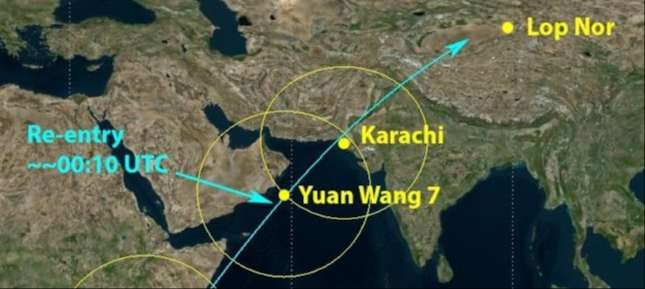 https://twitter.com/planet4589/status/1655382822796812289China successfully lands reusable test spacecraft
Source: XinhuaEditor: huaxia 2023-05-08 10:51:15
JIUQUAN, May 8 (Xinhua) -- A reusable experimental spacecraft on Monday successfully returned to its scheduled landing site at the Jiuquan Satellite Launch Center in northwest China.
The spacecraft returned after 276 days of in-orbit operation. The success of the experiment marks an important breakthrough in China's research on reusable spacecraft technologies, which will provide more convenient and affordable round-trip methods for the peaceful use of space in the future
https://english.news.cn/20230508/c36cce46d7574db08de8eaa081492c1e/c.html(1/2) Chińska bezzałogowa minirakieta powrotna Chongfu Shiyong Shiyan Hangtian Qi 2 wylądowała dzisiaj w bazie Lobnor (prawdopodobnie po północy). Spędził na orbicie 276 dni i 8 godzin.
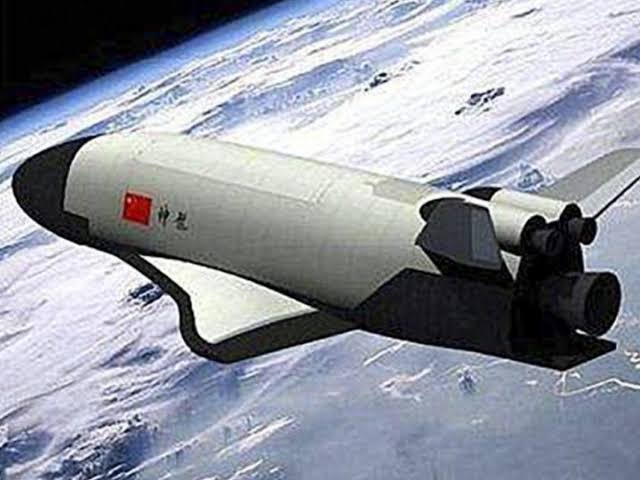

(2/2) Został wystrzelony 4 sierpnia 2022 r. za pomocą rakiety nośnej CZ-2F/T ze zmodyfikowaną osłoną aerodynamiczną zakrywającą skrzydła wahadłowca.
Nadal nie jest pewne, czy maszyna z 2020 roku była ponownie używana, czy też jest to nowo wyprodukowany egzemplarz.

https://twitter.com/Kosmo_Michal/status/1655463654941155328China’s mystery reusable spaceplane lands after 276 days in orbitAndrew Jones May 8, 2023
China has released little information about the project. The size and mass of the spacecraft is however constrained by the use of the Long March 2F rocket, which can carry just over 8 tons to low Earth orbit.
Clues as to the dimensions and shape of the craft appeared shortly after launch when apparent images of the payload fairing for the mission appeared online.
https://spacenews.com/chinas-mystery-reusable-spaceplane-lands-after-276-days-in-orbit/Reusable spacecraft returns after 276-day testBy ZHAO LEI | chinadaily.com.cn | Updated: 2023-05-09 00:28
Spacecraft: Wide range of applications foreseen
China's reusable experimental spacecraft returned to Earth on Monday morning after completing a 276-day orbital journey, according to the Jiuquan Satellite Launch Center in the country's northwestern desert.
The test's success marks a major breakthrough in China's reusable spacecraft technology, which will provide a convenient and affordable commuting means between outer space and Earth, the center said in a brief news release, without elaborating.
The robotic spaceship was launched by a Long March 2F carrier rocket at the Jiuquan center on Aug 5, 2022. It was tasked with verifying reusable technologies and in-orbit service technologies, laying a technological foundation for the peaceful use of space, according to China Aerospace Science and Technology Corp, the nation's leading space contractor.
The mission is the second time that China has made public the operations of its reusable experimental spacecraft.
The country's previous orbital test of a trial vehicle took place in September 2020, with the craft traveling in orbit for just under two days.
Currently, only China and the United States have reusable spacecraft, which were first initiated by the US in the 1970s. The icon of this concept — the US space shuttles — operated for three decades before retirement in 2011 due to technical and fiscal difficulties.
In recent years, advances in science and technology have reignited the space industry's enthusiasm about reusable spaceships, especially robotic spaceplanes like the Boeing X-37B that are smaller, cheaper and less sophisticated in design, production and operation.
According to experts, reusable spacecraft will have a wide range of applications in the future, such as conducting space tours for civilians, transporting astronauts, resupplying space stations and placing satellites into orbit at a lower cost.
China's space contractors have been studying and demonstrating reusable technologies for their space program for several years.
China Aerospace Science and Technology Corp and China Aerospace Science and Industry Corp, the two largest suppliers of rockets and spacecraft in the nation, are running their own programs.
Wang Ya'nan, chief editor of Aerospace Knowledge magazine, said that designing and building a reusable spaceship is quite challenging in terms of technology and engineering, because such a vehicle requires cutting-edge aerodynamic configuration, top complex materials and state-of-the-art manufacturing techniques.
"For example, the engines must be capable of working in different operational environments and modes and must have a very high level of reliability, because the spacecraft flies both in the atmosphere and in outer space, which have totally different working conditions," he said.
http://www.chinadaily.com.cn/a/202305/09/WS64592312a310b6054fad1c02.htmlhttps://www.nasaspaceflight.com/2023/05/this-week-in-spaceflight-may-12/
 Wątek: CZ 2 F z chińskim minipromem 04.08.2022 (Przeczytany 1736 razy)