Autor Wątek: The Space Review  (Przeczytany 178836 razy)

0 użytkowników i 3 Gości przegląda ten wątek.

Online Orionid

  • Weteran
  • *****
  • Wiadomości: 29670
  • Very easy - Harrison Schmitt
Odp: The Space Review
« Odpowiedź #75 dnia: Września 15, 2020, 02:44 »
11/III 2021 [43-46]

43) Review: Three Sigma Leadership
by Jeff Foust Monday, March 15, 2021


Three Sigma Leadership: Or, the Way of the Chief Engineer
by Steven R. Hirshorn
NASA, 2019
ebook
free
https://www.nasa.gov/connect/ebooks/three-sigma-leadership_detail

NASA engages in some of the most technically challenging projects, from building and operating the International Space Station to landing a one-ton rover on Mars. For all the complaints about those projects that run behind schedule or run over budget, not to mention to occasional failed mission, what is remarkable is that most of those projects are successful, often far beyond their original expectations. The ISS, for example, has been continuously crewed for more than two decades, and Perseverance is now rolling across the terrain of Jezero Crater on Mars.
https://www.thespacereview.com/article/4139/1

44) Mobility and surface access lessons for the Artemis lunar lander
by Philip Horzempa Monday, March 15, 2021


A Lockheed Martin concept from the mid-2000s for a Centaur-derived lunar lander.

NASA will soon choose the company or companies that will develop crewed lunar landers for the Artemis program. Mobility and ease of surface access should be key design goals for these new spacecraft. In 2006, Lockheed Martin proposed a lander, based on their veteran Centaur upper stage, which addressed how those goals could be achieved. I will review that concept and highlight some of its advantages. This is not meant to advocate for Lockheed’s specific proposal but, rather, these “concepts are intended to illustrate different design features and provoke further thought.”[1]
https://www.thespacereview.com/article/4140/1

45) The case for scrapping the Space Launch System
by Ajay Kothari Monday, March 15, 2021


The Space Launch System has been the subject of heated debates, but what’s the alternative for going to the Moon, Mars, and beyond? (credit: NASA)

Several days after the editorial board of Bloomberg recommended that the Biden Administration cancel the Space Launch System (SLS), Loren Thompson published a rebuttal in Forbes. But I respectfully, if strongly, disagree with Thompson. The future of the SLS is of immense importance to NASA and the country, and thus to the taxpayers, and hence we need to attempt as soon as possible to set the record straight.

Thompson says, “The editorial board at Bloomberg News launched a nonsensical attack on NASA’s human spaceflight program last week. It was full of dubious assertions about alternatives to the Space Launch System.” And yet it is his attack that seems motivated for self-centered reasons, and is full of questionable assertions.
https://www.thespacereview.com/article/4141/1

46) Spaceport traffic management
by Jeff Foust Monday, March 15, 2021


A Falcon 9 stands on the pad at LC-39A last month as another Falcon 9 lifts off from SLC-40 at Cape Canaveral, a sign of the increasing cadence of launches from the Eastern Range. (credit: SpaceX)

Early Sunday morning, just a few hours after clocks sprung ahead to daylight saving time, a Falcon 9 lifted off from Launch Complex 39A at the Kennedy Space Center. An hour and five minutes later, it deployed its payload of 60 Starlink satellites into low Earth orbit.

Those watching the launch could be excused for feeling a sense of déjà vu. Nearly 74 hours earlier, another Falcon 9 lifted off from nearby Space Launch Complex 40 at Cape Canaveral Space Force Station, carrying another set of Starlink satellites, again deployed 65 minutes after liftoff.
https://www.thespacereview.com/article/4142/1
« Ostatnia zmiana: Lipca 22, 2026, 09:50 wysłana przez Orionid »

Online Orionid

  • Weteran
  • *****
  • Wiadomości: 29670
  • Very easy - Harrison Schmitt
Odp: The Space Review
« Odpowiedź #76 dnia: Września 22, 2020, 11:36 »
12/III 2021 [47-50]

47) Review: Star Settlers
by Jeff Foust Monday, March 22, 2021


Star Settlers: The Billionaires, Geniuses, and Crazed Visionaries Out to Conquer the Universe
by Fred Nadis
Pegasus Books, 2020
hardcover, 288 pp., illus.
ISBN 978-1-64313-448-2
US$27.95
https://www.amazon.com/exec/obidos/ASIN/1643134485/spaceviews

Many industries have visionaries who predict how their companies and technologies will revolutionize life, but space seems to take that to a whole new level. Take, for example, Elon Musk, one of the world’s richest men, who has long talked about making humanity multiplanetary by settling Mars, and soon. Musk, replying Sunday to a tweet describing an architectural firm’s proposal to start building a Mars settlement in 2054, said, “Hopefully will happen this decade.” Then there’s Jeff Bezos, currently the world’s richest man, who many not have the same schedule or destination as Musk, but still talks about a goal of millions of people living and working in space.
https://www.thespacereview.com/article/4143/1

48) The politics of settling space
by Gregory Anderson Monday, March 22, 2021


A SpaceX vision for a future Mars settlement. Politics will guide when and how settlements beyond Earth develop. (credit: SpaceX)

Around 100,000 years ago, people we refer to as modern humans because they were physically like us began to move out of their African home and into the wider world. Those few humans and their descendants had much to learn, but they learned well enough, and quickly enough, to survive, and multiply, and prosper, not just for a few generations, but to the present day. Intelligence capable of grappling with the cosmos may or may not exist elsewhere, but it exists here, partly because those few people decided to roam.
https://www.thespacereview.com/article/4144/1

49) This woman’s work: “For All Mankind” and women’s pain
by Emily Carney Monday, March 22, 2021


Danielle Poole contemplates her next step while visiting her old Apollo spacecraft. (credit: AppleTV+)

In February, Apple TV+’s “For All Mankind” debuted its second season (see “It is very cold in space: Season 2 of ‘For All Mankind’”, The Space Review, February 8, 2021), and caught up with the women characters we’ve grown acquainted with during the show’s first season. Perhaps the most notable and unique characteristic of “For All Mankind” is how it depicts its women—astronauts, ground support crew, and wives/mothers—as real people with real issues, similar to how the AMC show “Mad Men” turned the image of the well-coiffed, lipsticked 1960s woman inside out during its seven seasons. In the new episodes of “For All Mankind”, its cadre of women are again front and center, and are all experiencing deep emotional and/or physical pain as the events of the 1980s unfold. “For All Mankind’s” women deny the presence of pain at all, or reveal it only after it’s shoved vividly into the forefront. (Note: this piece contains spoilers of “For All Mankind” Season 1, and the first four episodes of Season 2.)
https://www.thespacereview.com/article/4145/1

50) Back to the future
by Jeff Foust Monday, March 22, 2021


Bill Nelson, at the time a US senator from Florida, speaks at a September 2011 event unveiling the design of the Space Launch System, a vehicle established in a 2010 NASA authorization bill he helped author. Nelson was nominated Friday to be the agency’s next administrator. (credit: NASA/Paul E. Alers)

On Thursday afternoon, the core stage of the Space Launch System roared to life for a second time. Two months after its first test-firing was cut short after a little more than a minute because of what turned out to be “intentionally conservative” limits in software controlling the engines’ hydraulics (see “Green Run, yellow light”, The Space Review, January 18, 2021), the four RS-25 engines this time ignited and ran for a full 500 seconds. “Everything that we’ve seen in the test today looked nominal,” John Honeycutt, NASA SLS program manager, said in a briefing just after the test.
https://www.thespacereview.com/article/4146/1
« Ostatnia zmiana: Lipca 22, 2026, 09:53 wysłana przez Orionid »

Online Orionid

  • Weteran
  • *****
  • Wiadomości: 29670
  • Very easy - Harrison Schmitt
Odp: The Space Review
« Odpowiedź #77 dnia: Września 22, 2020, 11:36 »
13/III 2021 [51-54]

51) Review: Proxima
by Jeff Foust Monday, March 29, 2021


Proxima
directed by Alice Winocour
2019, 107 minutes
Streaming on Hulu
https://www.imdb.com/title/tt7374926/

The European Space Agency is starting its search for a new class of astronauts. ESA will begin accepting applications Wednesday for that astronaut class, continuing through late May. That kicks off a selection process that will end in about 18 months with the agency selecting four to six new career astronauts, eligible for long-duration missions to the International Space Station or, eventually to the Moon. ESA will also select a larger number of “reserve” astronauts who could fly one-off missions, such as taking part in commercial flight opportunities, and will investigate the feasibility of so-called “parastronauts,” or people with physical limitations who would not otherwise ordinarily be considered.
https://www.thespacereview.com/article/4147/1

52) Sustainable space manufacturing and design will help get us to the Moon, Mars, and beyond
by Dylan Taylor Monday, March 29, 2021


In-space manufacturing and assembly can be enabled by the use of technologies to repair and recycle materials. (credit: Made In Space)

Sustainability isn’t merely an initiative that supports life on Earth. It also holds the power to propel the future of the space industry forward. The NewSpace industry and government agencies like NASA are focused on developing the commercial space industry, where technologies and methodologies are lower cost and more accessible in a rapidly growing market.
https://www.thespacereview.com/article/4148/1

53) Space Force sounds like a joke thanks to pop culture: how that could be a problem for an important military branch
by Wendy Whitman Cobb Monday, March 29, 2021


Mention “Space Force” to many members of the public, and they’ll think of the Netflix series starring Steve Carrell rather than the new military service. (credit: Netflix)

The US Space Force has a serious role to play in the modern world. Its stated mission is to train and equip personnel to defend US interests in space. Given the increasing military and economic importance of space, the Space Force is likely to grow in importance.
https://www.thespacereview.com/article/4149/1

54) The growing case for active debris removal
by Jeff Foust Monday, March 29, 2021


Astroscale will use the ELSA-d spacecraft, launched March 22, to demonstrate technologies needed for active debris removal. (credit: Astroscale)

There are, unfortunately, plenty of reminders of the growing problem of orbital debris. On March 18, the Space Force’s 18th Space Control Squadron (18 SPCS), responsible for tracking objects in Earth orbit, announced that the retired NOAA-17 polar-orbiting weather satellite had broken up eight days earlier, creating 16 pieces being tracked (and likely more too small to be tracked.) On March 22, 18 SPCS reported that a Chinese satellite, Yunhai 1-02, had broken up four days earlier, creating 21 pieces being tracked.
https://www.thespacereview.com/article/4150/1
« Ostatnia zmiana: Lipca 22, 2026, 09:56 wysłana przez Orionid »

Online Orionid

  • Weteran
  • *****
  • Wiadomości: 29670
  • Very easy - Harrison Schmitt
Odp: The Space Review
« Odpowiedź #78 dnia: Września 22, 2020, 11:36 »
14/IV 2021 [55-58]

55) Review: Lunar Outfitters
by Jeff Foust Monday, April 5, 2021


Lunar Outfitters: Making the Apollo Space Suit
by Bill Ayrey
Univ. Press of Florida, 2020
hardcover, 422 pp., illus.
ISBN 978-0-8130-6657-8
US$35.00
https://www.amazon.com/exec/obidos/ASIN/0813066573/spaceviews

Most of the attention NASA’s Artemis lunar exploration program has received has been on its biggest programs: the Space Launch System, Orion spacecraft, lunar Gateway, and the Human Landing System program to commercially develop crewed lunar landers. A smaller yet still critical element of getting boots on the Moon is literally those boots, and the rest of the spacesuits that astronauts walking on the lunar surface will wear. NASA’s Exploration Extravehicular Mobility Unit (xEMU) program is developing that suit, building in part upon the lessons of the Apollo program.
https://www.thespacereview.com/article/4151/1

56) NASA revises its low Earth orbit commercialization plans
by Jeff Foust Monday, April 5, 2021


Axiom Space plans to start with commercial modules attached to the International Space Station, but eventually undocking and adding elements to create a standalone commercial station. (credit: Axiom Space)

In June of 2019, NASA rolled out its new low Earth orbit commercialization initiative, an effort to build up both the supply of commercial capabilities in LEO as well as demand for them outside of NASA (see “NASA tries to commercialize the ISS, again”, The Space Review, June 10, 2019.) That initiative features several elements, from setting aside a fraction of International Space Station resources for commercial activities and allowing private astronaut missions to starting the process of supporting both commercial ISS modules and standalone commercial stations that could, eventually, succeed the ISS.
https://www.thespacereview.com/article/4152/1

57) The Paper Chase: declassifying and releasing space history documents from the Cold War
by Dwayne A. Day and Asif Siddiqi Monday, April 5, 2021


A Soviet Lunokhod lunar rover. In 2020 Roscosmos released a new set of documents about this program, part of a series of document releases about their secretive space program. (credit: Roscosmos)

In recent years, the Russian space agency Roscosmos has begun releasing documents from the history of the Soviet civilian space program, usually corresponding with anniversaries of key achievements in their long history. These have included document releases on the Lunokhod rovers, the Luna 16 mission that returned samples from the Moon, the Apollo-Soyuz Test Project, and most recently, the Luna-9 mission, which became the first spacecraft to soft land on the Moon in February 1966. (See: “Handshakes and histories: The Apollo-Soyuz Test Project, 45 years later,” The Space Review, July 20, 2020.)
https://www.thespacereview.com/article/4153/1

58) The status of Russia’s signals intelligence satellites
by Bart Hendrickx Monday, April 5, 2021


Lotos signals intelligence satellite, part of the Liana project. (source)

In early February, Russia launched the latest in a series of signals intelligence satellites that are part of a project called Liana. Initiated shortly after the disintegration of the Soviet Union, the project has suffered significant technical problems and delays over the years and has so far failed to live up to expectations. A new generation of signals intelligence satellites is currently under development, but may take at least several more years to become fully operational.
https://www.thespacereview.com/article/4154/1
« Ostatnia zmiana: Lipca 22, 2026, 10:00 wysłana przez Orionid »

Polskie Forum Astronautyczne

Odp: The Space Review
« Odpowiedź #78 dnia: Września 22, 2020, 11:36 »

Online Orionid

  • Weteran
  • *****
  • Wiadomości: 29670
  • Very easy - Harrison Schmitt
Odp: The Space Review
« Odpowiedź #79 dnia: Września 22, 2020, 11:36 »
15/IV 2021 [59-62]

59) Review: Institutions That Shaped Modern India: ISRO
by Jeff Foust Monday, April 12, 2021


Institutions That Shaped Modern India: ISRO
by Ajey Lele
Rupa Publications India, 2021
ebook, 152 pp.
ISBN 9390356563
US$13.00
https://www.amazon.com/exec/obidos/ASIN/B08RMWKP2K/spaceviews

Since Yuri Gagarin flew to space 60 years ago today, people from dozens of countries have followed on suborbital or orbital missions. Yet, to this day, only three countries have developed human spaceflight capabilities: the United States and the former Soviet Union 60 years ago, and China more than 40 years later. All the space travelers from other countries have flown on American or Russian vehicles.
https://www.thespacereview.com/article/4155/1

60) Why venture? A memo for the Biden Administration
by Derek Webber
Monday, April 12, 2021


NASA is expected to continue the Artemis program of human lunar exploration under Biden Administration, which could eventually support efforts to utilize space resources for the benefit of humanity. (credit: NASA)

It’s that time again. A new administration reassesses the funding, rationale, and specific projects being undertaken by the various space related departments. This is an inevitable consequence of the political vicissitudes that operate on a four-year time horizon as compared with the much longer timescales involved in space development, at least in these still-early years, when most of the funding still comes from government sources. Of course, there will always be geopolitical and even military considerations, which will vary with the tides of world affairs, but maybe it would be a good idea to re-state those basic rationales that transcend the politics of the moment. Why did Gagarin, Glenn, Armstrong, et al., risk their lives at the onset of the Space Age, and why do today’s astronauts line up for the challenges of the future? Space, above all else, is a global endeavor, and we should therefore be able to understand those common perspectives that all occupants of the planet share about the rationale of space exploration, whether it involves robots or people. In particular, it can be helpful to do this to get a handle on the timescales involved in developing space policy.
https://www.thespacereview.com/article/4156/1

61) A Moonshot to inspire: Building back better in space
by Alan Stern Monday, April 12, 2021
[Editor’s Note: A version of this essay was previous published by The Hill, and is republished here with permission.]


President Joe Biden watching the landing of NASA’s Mars Perseverance rover from the White House in February. (credit: White House)

Recent Democratic presidents have supported and initiated important, bold, and sustainable robotic and commercial space efforts. But no Democrat since John F. Kennedy has set this nation onto a bold course that resulted in humans exploring new worlds.
https://www.thespacereview.com/article/4157/1

62) For human spaceflight, better late than never
by Jeff Foust Monday, April 12, 2021


SpaceX says the Crew Dragon that will fly the Inspiration4 private mission in September will be equipped with a cupola in place of the docking adapter on the nose of the capsule. (credit: SpaceX)

Anniversaries with nice round numbers tend to serve as prompts for reflection of the past and contemplation of potential futures. But some round numbers are more potent than others, so 40 and 60 tend to lose out to 50 in terms of significance. That means the commemorations today of the 60th anniversary of Yuri Gagarin’s flight and the 40th anniversary of the first Space Shuttle launch won’t have the impact of, say, Gagarin’s anniversary 10 years ago or, perhaps, the shuttle’s anniversary 10 years from now.
https://www.thespacereview.com/article/4158/1
« Ostatnia zmiana: Lipca 22, 2026, 10:03 wysłana przez Orionid »

Online Orionid

  • Weteran
  • *****
  • Wiadomości: 29670
  • Very easy - Harrison Schmitt
Odp: The Space Review
« Odpowiedź #80 dnia: Września 22, 2020, 11:37 »
16/IV 2021 [63-66]

63) Review: The High Frontier
by Jeff Foust Monday, April 19, 2021


The High Frontier: The Untold Story of Gerard K. O’Neill
directed by Ryan Stuit
2021, 90 mins., unrated
https://thehighfrontiermovie.com/

Among many space enthusiasts, Gerard K. O’Neill has achieved something akin to sainthood. More than 50 years ago, the Princeton physics professor first asked his students there if the surface of a planet was the best place for a technological civilization, a thought experiment that evolved over the course of several years into space colonies. It inspired a generation of space advocates, some of whom dubbed themselves “Gerry’s kids,” to carry forward his vision.
https://www.thespacereview.com/article/4159/1

64) Putting SpaceX’s Starship program in the proper context
by Wayne Eleazer Monday, April 19, 2021


A SpaceX Starship prototype at the company’s Boca Chica, Texas, test site before a recent test flight. (credit: SpaceX)

Where does the SpaceX Starship vehicle fit, anyway? It came out of nowhere, in response to no government RFP or recognized industry-wide need. There is no established market for its capabilities and apparently is being constructed for much the same reasons that people build little airplanes in their garage. It has been created based on the vision of one man. But perhaps the real question is, “Where should the Starship fit in the launch industry?”
https://www.thespacereview.com/article/4160/1

65) Higher burning: The Air Launched Sortie Vehicle of the 1980s
by Dwayne A. Day Monday, April 19, 2021


The air-launched space shuttle in the AppleTV+ series "For All Mankind." From 1980-1983, the US Air Force hired several aerospace contractors including Pratt & Whitney, Rockwell, and Boeing, to study such a concept, although it never reached an advanced design phase. (credit: Apple TV+)

A recent episode of the AppleTV+ series “For All Mankind” featured a big reveal: an advanced space shuttle launched off the back of a C-5 Galaxy, headed for space on a military mission. It is a concept that has been around since the beginning of the shuttle program. In the early 1980s, the United States Air Force sponsored studies of what was initially designated a Space Sortie Vehicle, then renamed the Air Launched Sortie Vehicle, or ALSV. The ALSV would have launched into space off the back of a 747. In one early concept, the 747 would have been equipped with multiple rocket engines in its tail to boost it to launch altitude. Now, newly-acquired information indicates that Boeing conducted several studies of “Trans-Atmospheric Vehicles” in 1983, including a revised variant of the ALSV. This Sortie Vehicle, looking somewhat like a space shuttle orbiter that had been (lightly) stepped on by Godzilla, would have fired its own rocket engines while on top of the 747 and pushed both vehicles higher before separating the spacecraft to head into orbit.
https://www.thespacereview.com/article/4161/1

66) All in on Starship
by Jeff Foust Monday, April 19, 2021


NASA said it picked SpaceX’s Starship lunar lander, and only SpaceX, becaused on both the quality of the proposals it received and the limited funding available. (credit: SpaceX)

History will show that SpaceX won two contracts last week to land spacecraft on the Moon, but few may remember the first. On Tuesday, Astrobotic announced it selected SpaceX to launch its Griffin lunar lander in 2023. That lander will carry to the south pole of the Moon NASA’s Volatiles Investigating Polar Exploration Rover (VIPER) to search for deposits of water ice there. NASA awarded Astrobotic a contract worth nearly $200 million last year to launch VIPER through the agency’s Commercial Lunar Payload Services Program; Astrobotic did not disclose the terms of its contract with SpaceX, although the Falcon Heavy has a list price of $90 million.
https://www.thespacereview.com/article/4162/1
« Ostatnia zmiana: Lipca 22, 2026, 10:05 wysłana przez Orionid »

Online Orionid

  • Weteran
  • *****
  • Wiadomości: 29670
  • Very easy - Harrison Schmitt
Odp: The Space Review
« Odpowiedź #81 dnia: Września 30, 2020, 00:43 »
17/IV 2021 [67-70]

67) Review: Not Necessarily Rocket Science
by Jeff Foust Monday, April 26, 2021


Not Necessarily Rocket Science: A Beginner's Guide to Life in the Space Age
by Kellie Gerardi
Mango, 2020
hardcover, 256 pp.
ISBN 978-1-64250-410-1
US$19.95
https://www.amazon.com/exec/obidos/ASIN/1642504106/spaceviews

For decades, the message to students interested in pursuing career in space was simple: study science and math. That was the way to get a job as an engineer or scientist at companies or government agencies involved in space. That’s understandable, given the essential nature of those fields to launching satellites, but it was also something of an exclusionary message: if you weren’t interested in science and math, or just not good at it, then you were out of luck.
https://www.thespacereview.com/article/4163/1

68) Thanks, Dmitry!
by A.J. Mackenzie Monday, April 26, 2021


In 2014, Dmitry Rogozin, Russian deputy prime minister, made threats about access to RD-180 engines and Soyuz seats that prompted a series of changes in the US. Will comments by Russia’s current deputy prime minister about the future of ISS have a similar impact? (credit: Roscosmos)

Russian officials stated last week that Russia could quit the International Space Station as soon as 2025. One of those officials, deputy prime minister Yuri Borisov, claimed “technical malfunctions” were taking place there at an increasing rate, and that Russia should instead build its own national space station, perhaps by 2030.
https://www.thespacereview.com/article/4164/1

69) A message of continuity from NASA’s next administrator
by Jeff Foust Monday, April 26, 2021


Bill Nelson, the Biden Administration’s nominee to lead NASA, talks to his former colleagues on the Senate Commerce Committee during his confirmation hearing April 21. (credit: NASA/Bill Ingalls)

The last time the Senate Commerce Committee held a confirmation hearing for a NASA administrator nominee, Bill Nelson was not happy. As the top Democrat on the committee, the Florida senator used his opening remarks to make it clear he did not think the nominee, Jim Bridenstine, was the right person for the job. “While your time as a pilot, and your service to our country in the military is certainly commendable,” Nelson told Bridenstine, “it doesn’t make you qualified to make complex and nuanced engineering, safety, and budgetary decisions for which the head of NASA must be accountable.” (See “A contentious confirmation”, The Space Review, November 6, 2017.)
https://www.thespacereview.com/article/4165/1

70) With Starship, NASA is buying the Moon, but investing in Mars
by Casey Dreier and Jason Davis Monday, April 26, 2021


NASA’s selection of SpaceX’s Starship to send humans to the Moon could help both organizations go to Mars. (credit: SpaceX)

NASA’s selection of SpaceX’s Starship for a crewed lunar landing is the most consequential decision in the Artemis program to date, not just as a major step toward the Moon, but for the long-term implications of investing in a Mars spacecraft.
https://www.thespacereview.com/article/4166/1
« Ostatnia zmiana: Lipca 22, 2026, 10:08 wysłana przez Orionid »

Online Orionid

  • Weteran
  • *****
  • Wiadomości: 29670
  • Very easy - Harrison Schmitt
Odp: The Space Review
« Odpowiedź #82 dnia: Września 30, 2020, 00:44 »
18/V 2021 [71-74]

71) Review: A Man on the Moon
by Jeff Foust Monday, May 3, 2021


A Man on the Moon: The Voyages of the Apollo Astronauts
by Andrew Chaikin
The Folio Society, 2021
hardcover, 800 pp. (two volumes), illus.
US$225.00
https://www.foliosociety.com/usa/a-man-on-the-moon.html

The first copy of A Man on the Moon that I bought was when the book came out in 1994, timed to the 25th anniversary of the Apollo 11 landing. I got a copy at a Boston bookstore just in time for a talk its author, Andrew Chaikin, gave at Boston University shortly before the book rode a wave of popularity tied to the 25th anniversary and other events, like the movie Apollo 13 that came out a year later, leading to the HBO miniseries From the Earth to the Moon.
https://www.thespacereview.com/article/4167/1

72) Don’t make space harder than it needs to be
by Matthew Jenkins Monday, May 3, 2021


Space Force Gen. Jay Raymond has made the case for his service to lawmakers, but the Space Force needs to inform the general public about the importance of space in order to win widespread support. (credit: US Air Force photo by Wayne Clark)

In February, White House press secretary Jen Psaki called the Space Force “the plane of today”—a reference to media interest in the paint scheme of the new Air Force One—when asked whether the new administration supported the United States Space Force. The good news is that she later provided a coherent answer. The Biden Administration fully supports the Space Force and is not revisiting its instantiation. Around the same time, the Chief of Space Operations, Gen. Jay Raymond, remark when asked about it that “it is hard to understand the link between what the Space Force does and how it affects U.S. citizens.”
https://www.thespacereview.com/article/4168/1

73) The little Mars helicopter that could
by Jeff Foust Monday, May 3, 2021


The Mastcam-Z camera on the Perseverance rover captured this image of Ingenuity during its second flight on Mars April 22. (credit: NASA/JPL-Caltech/ASU/MSSS)

In the last decade, drones have become almost ubiquitous. They have found roles from providing aerial photography to delivery services to entertainment. You can go on Amazon and find a low-end quadcopter, with limited range and performance but still sporting high-definition cameras, for less than $100, and maybe under $50.
https://www.thespacereview.com/article/4169/

74) Let’s take down the menace to our space dreams
by Alfred Anzaldúa Monday, May 3, 2021


The growing problem of space junk requires not just technical solutions for removing debris but also new legal, regulatory, and business models. (credit: ESA/Spacejunk3D, LLC)

In March, the retired NOAA-17 polar-orbiting weather satellite and the Chinese Yunhai 1-02 satellite both broke up in orbit. The former breakup created 16 pieces of trackable objects and the latter 21 pieces. Both were in polar orbits,[1] the most popular orbit in the Low Earth Orbit (LEO) band from 200 to 2000 kilometers.[2] These trackable objects joined around 34,000 other trackable objects weighing 8,000 tons[3] larger than 10 centimeters in diameter and at least 128 million smaller pieces of untrackable debris able to shred a spacecraft.[4] Around 10,000 of the fragments were created by more than 250 collisions or explosions in orbit. Only 7% of the objects are functioning satellites.[5]
https://www.thespacereview.com/article/4170/1
« Ostatnia zmiana: Lipca 22, 2026, 10:13 wysłana przez Orionid »

Online Orionid

  • Weteran
  • *****
  • Wiadomości: 29670
  • Very easy - Harrison Schmitt
Odp: The Space Review
« Odpowiedź #83 dnia: Września 30, 2020, 00:44 »
19/V 2021 [75-78]

75) Review: Test Gods
by Jeff Foust Monday, May 10, 2021


Test Gods: Virgin Galactic and the Making of a Modern Astronaut
by Nicholas Schmidle
Henry Holt and Co., 2021
hardcover, 352 pp., illus.
ISBN 978-1-250-22975-5
US$ 29.99
https://www.amazon.com/exec/obidos/ASIN/1250229758/spaceviews

When Virgin Galactic first announced its suborbital spaceflight plans in 2004, working in cooperation with Scaled Composites just as that company’s SpaceShipOne was on the cusp of winning the $10 million Ansari X PRIZE, it said it would begin commercial service as soon as late 2007. It’s 2021, and the company has yet to take a paying customer to the edge of space. SpaceShipTwo hasn’t made a trip to suborbital space since February 2019, and a flight in December 2020 was aborted just as its hybrid engine ignited because of a computer malfunction that’s taken months to correct.
https://www.thespacereview.com/article/4171/1

76) To catch a star: the technical and geopolitical arguments for autonomous on-orbit satellite servicing
by Matthew Jenkins Monday, May 10, 2021


An infrared image of Intelsat 10-02 taken by the MEV-2 spacecraft shortly before docking. MEV-2 will remain docked to Intelsat 10-02 for several years, extending the satellite’s mission. (credit: Northrop Grumman)

On April 12, Northrop Grumman’s Mission Extension Vehicle-2 (MEV-2) successfully docked with a geostationary communications satellite, Intelsat 10-02. It is easy to see the applications for this technology. Besides extending the lives of satellites running out of propellant, for example, one can imagine satellites carrying less fuel in the first place, freeing up more weight for payloads. It’s easy to get caught up in the potential applications of this technology. Yet, while this accomplishment is substantial and noteworthy, it is not the first time satellite to have conducted rendezvous and proximity operations (RPO) to service another satellite.
https://www.thespacereview.com/article/4172/1

77) Retaining both space policies and processes
by Jeff Foust Monday, May 10, 2021


Biden Administration officials have suggested that the National Space Council, under Vice President Harris’s leadership, won’t have the same “big displays” as those by the council under Vice President Mike Pence, like this December 2020 meeting under the Saturn V on display at the Kennedy Space Center. (credit: White House)

When the Biden Administration took office in January, some in the space community were concerned about the future of initiatives started by the Trump Administration. Within a matter of weeks, though, the White House affirmed its support for both the US Space Force (which would have required an act of Congress to undo in any case) as well as NASA’s Artemis lunar exploration program.
https://www.thespacereview.com/article/4173/1

78) Spybirds: POPPY 8 and the dawn of satellite ocean surveillance
by Dwayne A. Day Monday, May 10, 2021


Artist impression of the September 1969 launch of multiple satellites. The four yellow objects at the front represent the POPPY 8 signals intelligence satellites that for the first time had a mission of locating Soviet ships at sea by detecting their radar emissions. POPPY scanned large portions of the electromagnetic spectrum searching for new and unusual signals, and the use of four satellites in a constellation enabled precise location of detected radars. (credit: NRO)

At the end of September 1969, a Thor-Agena rocket roared off its launch pad in California and climbed high over the Pacific Ocean, heading south. The rocket dropped its stubby pencil-like solid booster motors not very long after lifting off and continued its arc. A few minutes later, its first stage, burning a mixture of kerosene and liquid oxygen, ran low on fuel and its engine shut down. The Agena upper stage separated and small motors fired, pushing it away and forcing the fuel in its tanks to settle to the rear, and in moments its Bell rocket engine ignited, pushing it faster and higher. Its bulbous nose cone separated and flew away, revealing a cluster of four shiny, egg-shaped satellites surrounding a small pointy object. Upon reaching orbital velocity the Agena’s engine shut down and the shiny satellites began to pop off, pushed away by springs. Each satellite was about the size of a toddler, and collectively they were known as POPPY 8. They were followed by several other satellites that also separated from the front of the Agena. Moments later, various small satellites were pushed off the rear of the Agena. Then came the finale: at the rear of the Agena, a box-shaped satellite the size of a fat suitcase and named WESTON rotated back on a hinge and was shoved away on springs before firing its solid rocket motor and heading to a higher orbit.
https://www.thespacereview.com/article/4174/1
« Ostatnia zmiana: Lipca 22, 2026, 10:15 wysłana przez Orionid »

Online Orionid

  • Weteran
  • *****
  • Wiadomości: 29670
  • Very easy - Harrison Schmitt
Odp: The Space Review
« Odpowiedź #84 dnia: Września 30, 2020, 00:44 »
20/V 2021 [79-82]

79) Review: Developing Space and Settling Space
by Jeff Foust Monday, May 17, 2021


Developing Space
by John Strickland with Sam Spencer and Anna Nesterova
Apogee Books, 2021
paperback, 354 pp., illus.
ISBN 978-1-989044-14-8
US$55.00
https://www.amazon.com/exec/obidos/ASIN/198904414X/spaceviews

Settling Space
by John Strickland with Sam Spencer and Anna Nesterova
Apogee Books, 2021
paperback, 398 pp., illus.
ISBN 978-1-989044-16-2
US$55.00
https://www.amazon.com/exec/obidos/ASIN/1989044166/spaceviews

For all his talk about wanting to make humanity multiplanetary, Elon Musk hasn’t said much about how he would ensure people would stay alive on another world. Musk is happy to talk about how Starship can make it possible for people to go to the Moon, Mars, and elsewhere in large numbers, including that vision of a million people living on Mars. But exactly what people would do once on Mars, and how they would survive the extreme environment there, is an exercise left for the reader.
https://www.thespacereview.com/article/4175/1

80) Why the China-Russia space alliance will speed up human exploration of Mars
by John Wolfram Monday, May 17, 2021


A Long March 5B rocket lifts off in April carrying the core module of China’s new space station. China and Russia have recently agreed to cooperate on space exploration activities, including missions to the Moon. (credit: Xinhua)

On March 9, the China National Space Administration and the Russian space agency Roscosmos signed a memorandum of understanding (MOU) for the joint construction of a permanent research station on the Moon. Their explicit goal is to make this a base of future space exploration operations, with the implicit goals of planning a crewed mission to Mars and boldly challenging US leadership in space. Could this latest and largest step in the emerging “new space race” ultimately accelerate the landing of humans on Mars?
https://www.thespacereview.com/article/4176/1

81) Build back better
by Robert G. Oler Monday, May 17, 2021


SpaceX’s Starship SN15 on its successful flight May 5, going to an altitude of ten kilometers before landing safely, unlike four previous vehicles. (credit: SpaceX)

History loves ironies and maybe the future will as well. SpaceX stuck the first landing of its Starship prototype on the 60th anniversary of Alan Shepard’s first flight into space. A long road remains, but the event prompts a simple question: “What if Starship works?”
https://www.thespacereview.com/article/4177/1

82) Redundancy now, or redundancy never?
by Jeff Foust Monday, May 17, 2021


Lunar lander concepts by Blue Origin (left) and Dynetics. The two companies have filed protests with the GAO about NASA’s award of a single Human Landing System contract to SpaceX, while a Senate bill would require NASA to select a second company. (credit: Blue Origin/Dynetics)

A month after NASA selected SpaceX for the sole Human Landing System (HLS) award (see “All in on Starship”, The Space Review, April 19, 2021), the reverberations continue. NASA’s decision April 16 to make a single “Option A” award for the development and flight demonstration of lunar lander to SpaceX surprised many in the industry and, given the high stakes of the competition, was one that the losing companies were unlikely to accept easily.
https://www.thespacereview.com/article/4178/1
« Ostatnia zmiana: Lipca 22, 2026, 10:17 wysłana przez Orionid »

Online Orionid

  • Weteran
  • *****
  • Wiadomości: 29670
  • Very easy - Harrison Schmitt
Odp: The Space Review
« Odpowiedź #85 dnia: Września 30, 2020, 00:44 »
21/V 2021 [83-86]

83) Review: Amazon Unbound and its insights into Blue Origin
by Jeff Foust Monday, May 24, 2021


Amazon Unbound: Jeff Bezos and the Invention of a Global Empire
by Brad Stone
Simon & Schuster, 2021
hardcover, 496 pp., illus.
ISBN 978-1-9821-3261-3
US$30.00
https://www.amazon.com/exec/obidos/ASIN/1982132612/spaceviews

The good news is that you can now buy a seat on a New Shepard suborbital flight. The bad news is that you probably can’t afford it. Blue Origin announced early this month it would offer a single seat on the first crewed flight of New Shepard, scheduled for July 20, which it would auction off. Last week, the company unsealed the bids it received in the first phase, and moved into a more open bidding phase. As of early May 24, the current high bid was $2.8 million, with the bidding set to conclude with a live auction June 12.
https://www.thespacereview.com/article/4179/1

84) Why the US should ban kinetic anti-satellite weapons
by Matthew Jenkins Monday, May 24, 2021


A proliferation of kinetic anti-satellite weapons to countries like India, which tested one in 2019, raise questions about the long-term sustainability of low Earth orbit. (credit: DRDO)

The United States has long been the world leader in developing and leveraging space-based technology. While the gap between the US and other countries has shrunk in recent years, the United States remains the nation most dependent on space-based capabilities. As of June 2020, the total number of active satellites in orbit was 2,787, of which 1,425 belong to the US, 382 to China, and 172 to Russia. All other states account for the remaining 808.[1] At no time in the history of space exploration has space been more congested, contested, and competitive.[2] Since the 1960s, the global economic system has become increasingly dependent on precision timing provided by space-based capabilities, which facilitate air travel, communications, banking, and numerous other core sectors in the global economy.[3] A guiding objective in the National Space Policy published last December is to preserve the space environment to enhance space activities’ long-term sustainability.[4] Given this emphasis and the particular dependence of the US on space-based technologies, policymakers should lead the global charge to ban the use of kinetic anti-satellite (ASAT) weapons development and testing through international legislation and multilateral cooperation of all nations who have a stake in ensuring the continued use of space for the benefit of all humanity.
https://www.thespacereview.com/article/4180/1

85) Red planet scare
by Jeff Foust Monday, May 24, 2021


An image released last week by the China National Space Administration showing the Zhurong rover on the surface of Mars. (credit: CNSA)

Sometimes a Mars rover is just a Mars rover, but sometimes it’s not.

When China landed its Zhurong rover in the Utopia Planitia region of Mars May 14, many celebrated the technical achievement. China is just the second country, after the United States, to land a spacecraft on Mars and sustain its operations (the Soviet Union’s Mars 3 landed in 1971, but lost contact less than two minutes after touchdown, while Britain’s Beagle 2 may have landed safely in 2004 but never deployed its solar panels and antenna.) Scientists looked forward to what Zhurong’s instruments might reveal, such as its ground-penetrating radar designed to search for subsurface ice deposits.
https://www.thespacereview.com/article/4181/1

86) Necessary but not sufficient: Presidents and space policy 60 years after Kennedy
by Wendy N. Whitman Cobb Monday, May 24, 2021


Sixty years after John F. Kennedy called for landing a man on the Moon by the end of the decade, the influence of presidents on space policy remains important, but alone is not sufficient. (credit: NASA)

On May 25, 1961, still in the first months of his presidency but stung by recent failures at the Bay of Pigs and elsewhere, President John F. Kennedy prepared to address the Congress. Seeking a way to move the United States forward in the Cold War, Kennedy stated:

First, I believe that this nation should commit itself to achieving the goal, before this decade is out, of landing a man on the Moon and returning him safely to earth. No single space project in this period will be more impressive to mankind, or more important for the long-range exploration of space; and none will be so difficult or expensive to accomplish.
https://www.thespacereview.com/article/4182/1

Note: Because of the Memorial Day holiday, next week’s issue will be published on Tuesday, June 1.
« Ostatnia zmiana: Lipca 22, 2026, 10:20 wysłana przez Orionid »

Online Orionid

  • Weteran
  • *****
  • Wiadomości: 29670
  • Very easy - Harrison Schmitt
Odp: The Space Review
« Odpowiedź #86 dnia: Października 08, 2020, 07:46 »
22/VI 2021 [87-90]

87) Review: Beyond
by Jeff Foust Tuesday, June 1, 2021


Beyond: The Astonishing Story of the First Human to Leave Our Planet and Journey into Space
by Stephen Walker
Harper, 2021
hardcover, 512 pp., illus.
ISBN 978-0-06-297815-8
US$29.99
https://www.amazon.com/exec/obidos/ASIN/0062978152/spaceviews

For all the rhetoric in recent months about a new space race developing between China and the United States, there’s little agreement about what exactly constitutes that race. Sending humans (back) to the Moon? Humans to Mars? A base on the Moon? The original Space Race between the United States and the Soviet Union was, in retrospect, a little more clear cut, with the two companies striving to be the first to land humans on the Moon, played out in a series of firsts—first satellite, first spacewalk, etc.—from 1957 to 1969.
https://www.thespacereview.com/article/4183/1

88) The revival of the suborbital market
by Sam Dinkin Tuesday, June 1, 2021


“Mannequin Skywalker” occupies a seat on a New Shepard suborbital vehicle earlier this year that, in July, will carry the winner of an ongoing auction to the edge of space. (credit: Blue Origin)

With the bidding for taking the first human-crewed suborbital flight of the New Shepard at $2.8 million, and the bidding not closing until June 12, a healthy market may be available, at least temporarily, for suborbital flights with paying spaceflight participants.
https://www.thespacereview.com/article/4184/1

89) Should India join China and Russia’s Lunar Research Station?
by Ajey Lele Tuesday, June 1, 2021


An illustration of what the proposed China-Russia international lunar research station might one day look like. (credit: CNSA)

Last week, South Korea signed the Artemis Accords, becoming the tenth country to join. It was the latest sign of the ongoing global efforts to study the Moon and beyond, involving both state-centric programs and multilateral collaborations.
https://www.thespacereview.com/article/4185/1

90) An aggressive budget for more than just Earth science
by Jeff Foust Tuesday, June 1, 2021


NISAR, a synthetic aperture radar Earth science mission being jointly developed by NASA and the Indian space agency ISRO, will be a pathfinder for the Earth System Observatory series of missions to follow later in the decade. (credit: NASA)

Even before President Biden took office in January, it was clear that his administration was going to emphasize Earth science at NASA. The Biden campaign had identified climate change as a major priority across the government, and the Democratic party platform last summer included, in its brief discussion of space policy, “strengthening” Earth observation missions at both NASA and NOAA (see “Moon 2020-something”, The Space Review, November 9, 2020).
https://www.thespacereview.com/article/4186/1
« Ostatnia zmiana: Lipca 22, 2026, 10:23 wysłana przez Orionid »

Online Orionid

  • Weteran
  • *****
  • Wiadomości: 29670
  • Very easy - Harrison Schmitt
Odp: The Space Review
« Odpowiedź #87 dnia: Października 08, 2020, 07:46 »
23/VI 2021 [91-94]

91) Review: Light in the Darkness
by Jeff Foust Monday, June 7, 2021


Light in the Darkness: Black Holes, the Universe, and Us
by Heino Falcke with Jörg Römer
HarperOne, 2021
hardcover, 368 pp., illus.
ISBN 978-0-06-302005-4
US$27.99
https://www.amazon.com/exec/obidos/ASIN/006302005X/spaceviews

Even though the term “black hole” was introduced less than 60 years ago, the phenomenon has long since transcended astrophysics into popular culture. Almost everyone is familiar with the term, associating it not just stars and galaxies but also, more figuratively, with things from which one cannot escape, ravenously consuming everything in its path.
https://www.thespacereview.com/article/4187/1

92) Revisiting the past’s future: ongoing ruminations about “For All Mankind”
by Emily Carney and Dwayne A. Day Monday, June 7, 2021


In the second season of “For All Mankind”, Skylab is the US space station in low Earth orbit, regularly serviced by—and refueling—space shuttles. (credit: AppleTV+)

Apple TV+’s “For All Mankind” finished its second season in April. That season was set entirely in 1983, in an alternate history where NASA builds a moonbase and ends up at the inflection point between peace and nuclear war. Two obsessive fans of the show who haven’t found enough opportunities to discuss it sat down and talked about it some more. Here is their extended commentary and speculation.
https://www.thespacereview.com/article/4188/1

93) Venus is hot again
by Jeff Foust Monday, June 7, 2021


An illustration showing the various phases of the DAVINCI+ probe entering the atmosphere of Venus and descending towards the surface. (credit: NASA GSFC visualization and CI Labs Michael Lentz and colleagues)

Planetary scientists who study Venus went into the competition for NASA’s Discovery program with high hopes. Two Venus mission concepts, an orbiter and an atmospheric probe, were finalists. With NASA having announced its intent to select two missions in this round—a move to space out the competitions and thus reduce the workload on the scientific community of preparing proposals—scientists were optimistic at least one would be selected, ending a long drought of NASA missions to the planet.
https://www.thespacereview.com/article/4189/1

94) Peeking behind the iron curtain: National Intelligence Estimates and the Soviet space program
by Dwayne A. Day Monday, June 7, 2021


The massive N1 rocket being elevated at its pad. American satellites photographed several launch vehicles on the pad during the late 1960s and early 1970s. (credit: Pavel Shubin, “Rocket Space System N1-L3”)

During the Cold War, the US intelligence community had a vast array of intelligence assets collecting information about the Soviet space program, from satellites to listening posts to radars pointed into space. Information was gathered up and processed and combined and then turned into products for decision makers. One of the major focuses at the time was the Soviet manned lunar landing program. American intelligence analysts had determined by around 1967 that the Soviet program, based on its huge N1 rocket, was not competitive with Apollo. Nevertheless, analysts in the US intelligence community maintained close tabs on Soviet space progress and regularly reported their assessments in a regular series of highly secret documents known as National Intelligence Estimates (NIEs). Now, new versions of several NIEs on the Soviet space program produced during the height of the space race have been released, and they shed further light on what the Soviets were doing, as well as some of the sources and methods used by the US intelligence community to keep tabs on their activities.
https://www.thespacereview.com/article/4190/1
« Ostatnia zmiana: Lipca 22, 2026, 10:26 wysłana przez Orionid »

Online Orionid

  • Weteran
  • *****
  • Wiadomości: 29670
  • Very easy - Harrison Schmitt
Odp: The Space Review
« Odpowiedź #88 dnia: Października 08, 2020, 07:46 »
24/VI 2021 [95-98]

95) Review: Losing the Sky
by Jeff Foust Monday, June 14, 2021


Losing the Sky
by Andy Lawrence
Photon Productions, 2021
paperback,150 pp., illus.
ISBN 978-1-8383997-2-6
US$8.37
https://www.amazon.com/exec/obidos/ASIN/1838399720/spaceviews

At a meeting of the American Astronomical Society last week, astronomers working on the issue of potential interference from satellite megaconstellations had some good news. Observations of the “VisorSat” versions of SpaceX’s Starlink satellites, so named because they’re equipped with visors intended to keep sunlight from hitting reflective surfaces on the satellites, were considerably darker than their unmodified counterparts. The original Starlink satellites had an average visual magnitude of 5 once in their final orbits, while the VisorSats were at magnitude 6.5, four times dimmer.
https://www.thespacereview.com/article/4191/1

96) Sword and shield: defending against an American anti-satellite weapon during the Cold War
by Dwayne A. Day Monday, June 14, 2021


Launch of an ASM-135 anti-satellite missile from an F-15 Eagle in 1985. The missile was equipped with an infrared seeker and minutes later it destroyed an Air Force satellite. Two years before this test, the CIA identified possible Soviet countermeasures to the weapon, estimating that they could be available by the later 1990s. (credit: USAF)

On September 13, 1985, Major Wilbert D. “Doug” Pearson, flying an F-15A fighter aircraft named “Celestial Eagle,” pulled his aircraft into a steep climb and fired a single ASM-135 anti-satellite missile at the sky. Moments later, the missile slammed into the US Air Force’s Solwind P78-1 satellite, blasting it to smithereens—producing both orbital debris and considerable controversy. It was the culmination of an ASAT development program started in the 1970s and dedicated to giving the United States the capability to destroy Soviet satellites. Now, a newly declassified 1983 CIA report indicates that the United States was concerned about how the Soviet Union might defend against the American ASAT weapon. It offers interesting insights into the possible countermeasures that may still be valid today, nearly four decades later.
https://www.thespacereview.com/article/4192/1

97) Giant ferocious steps from Jeff Bezos
by Sam Dinkin Monday, June 14, 2021


Jeff Bezos, seen here at a 2017 Blue Origin event, appears to be devoting more attention to his spaceflight company as he prepares to step down as Amazon CEO. (credit: J. Foust)

The Blue Origin motto is Gradatim Ferociter, Latin for step by step ferociously. In the past month, several of those steps have been revealed to be both giant and ferocious. In some ways Blue Origin’s owner, Jeff Bezos, is like Robert Heinlein’s character D.D. Harriman, who put everything on the line to open space and go there himself. Unlike Harriman, he is relying not only on Blue Origin’s industriousness, but also seeking a major government development contract.
https://www.thespacereview.com/article/4193/1

98)  Is a billionaire space race good for the industry?
by Jeff Foust Monday, June 14, 2021


Four people will be on the first crewed flight of New Shepard on July 20, including company founder Jeff Bezos and the person who bid $28 million for a seat in an auction Saturday. (credit: Blue Origin)

At one point in Saturday’s auction for a Blue Origin New Shepard seat, the bidding action slowed, prompting a rally cry of sorts from the auctioneer. “The more you pay for it, the more you enjoy it,” he implored.
https://www.thespacereview.com/article/4194/1
« Ostatnia zmiana: Lipca 22, 2026, 10:28 wysłana przez Orionid »

Online Orionid

  • Weteran
  • *****
  • Wiadomości: 29670
  • Very easy - Harrison Schmitt
Odp: The Space Review
« Odpowiedź #89 dnia: Października 08, 2020, 07:46 »
25/VI 2021 [99-103]

99) Review: My Remarkable Journey
by Jeff Foust Monday, June 21, 2021


My Remarkable Journey: A Memoir
by Katherine Johnson with Joylette Hylick and Katherine Moore
Amistad, 2021
hardcover, 256 pp., illus.
ISBN 978-0-06-289766-4
US$25.99
https://www.amazon.com/exec/obidos/ASIN/0062897667/spaceviews

At a hearing last week by a Senate appropriations subcommittee about NASA’s fiscal year 2022 budget proposal, Sen. Joe Manchin (D-WV) asked NASA administrator Bill Nelson about funding for the agency’s Independent Verification and Validation Facility, located in his state. In 2019, NASA renamed the facility after Katherine Johnson, the Black mathematician who became famous after the publication of the book Hidden Figures and the release of the movie of the same title. Nelson responded he would investigate the funding issue for the facility, then added, “if I might, tell you a story about Katherine Johnson.” He then mentioned the movie version of Hidden Figures.
https://www.thespacereview.com/article/4195/1

100) Why Astrofeminism?
by Layla Martin Monday, June 21, 2021


There are few companies in the space industry founded by women, just one example of the field’s gender gap.

The ancient universal practice of studying the moon, planets and stars from Earth helped to define primordial calendars and shape our earliest conception of gods, spirits, seasons, and tides. Today, space-based assets educate and connect humanity as well as revealing information that furthers efforts to mitigate anthropogenic climate change. At its best, what space offers us is the possibility to evolve the human condition. The power of space has benefited the United States on a global scale for decades, inspiring generations while expanding democratic soft power. To illustrate, in every single place around the world I’ve spent time in, from Akiruno, Tokyo to Zanzibar, Tanzania, I’ve observed local people proudly wearing NASA t-shirts! From a non-scientific perspective, images of space reveal patterns of light and color that are so beautiful it’s difficult to describe them as anything other than magical. Yet, they are in fact, very real!
https://www.thespacereview.com/article/4196/1

101) A shifting balance of space cooperation?
by Jeff Foust Monday, June 21, 2021


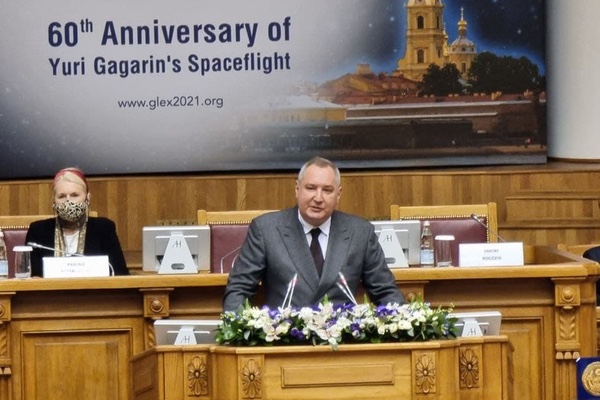
Roscosmos director general Dmitry Rogozin used a conference last week to express support for international cooperation in space exploration, even while continuing to raise questions about the future of the International Space Station. (credit: Roscosmos)

For nearly three decades, cooperation in human spaceflight has been defined by the partnership between the United States and Russia in the International Space Station program. After the end of the Cold War and the collapse of the Soviet Union, the US brought Russia into its space station program with the goal of keeping Russia’s space program engaged in peaceful endeavors rather than producing missiles for Iran or North Korea. (It also had the benefit of providing a new justification for a space station program that, in the US, was facing threats of cancellation.) For better or worse, the two countries have worked together, along with Europe, Japan, and Canada, to build and operate the ISS to this day.
https://www.thespacereview.com/article/4197/1

102) Burning Frost, the view from the ground: shooting down a spy satellite in 2008
by Dwayne A. Day Monday, June 21, 2021


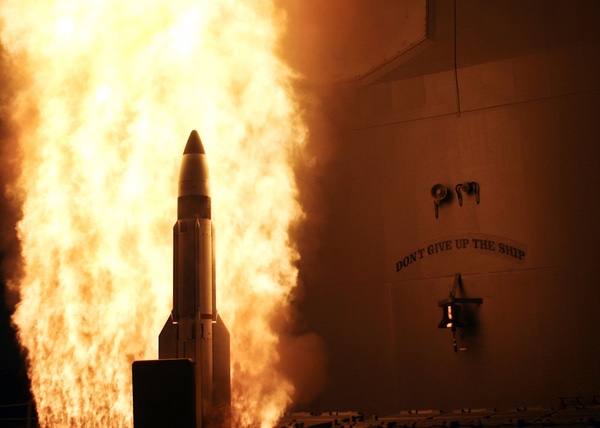
Launch of an SM-3 missile from the cruiser USS Lake Erie in February 2008 on an intercept course with a disabled American reconnaissance satellite. (credit: US Navy)

In February 2008, a missile fired from the Aegis class cruiser USS Lake Erie, several hundred kilometers northwest of Hawaii, blasted high into the sky and a few minutes later destroyed a malfunctioning top-secret American satellite. The operation was known as “Burnt Frost,” and according to American officials, it was undertaken to prevent potentially toxic debris from the satellite from falling on populated areas. The operation occurred only a few months after a heavily criticized Chinese anti-satellite test produced a large amount of orbital debris. The American action was designed to minimize the generation of debris but was nevertheless controversial. Now, a newly published account of the decision-making that led to the American action provides unique insight into how it was made. The author, orbital debris expert and longtime space writer Nicolas Johnson, died in April at age 71, and his article, titled “Operation Burnt Frost: A View From Inside,” was made available free of charge by the journal Space Policy.
https://www.thespacereview.com/article/4198/1

103) Scrutinizing the Russian-Iranian satellite deal
by Bart Hendrickx Monday, June 21, 2021


Signing of a pre-contractual agreement on a Russian-Iranian satellite project by Leonid Makridenko (VNIIEM), Alireza Zolali (Bonyan Danesh Shargh) and Sergei Baskov (NPK Barl) in August 2015. (Source)

On June 11, the Washington Post published an article claiming that Russia is preparing to supply Iran with an advanced remote sensing satellite that will give Tehran an unprecedented ability to track potential military targets across the Middle East and beyond. When asked to comment on the story the following day, President Vladimir Putin dismissed it as “fake news” and “nonsense”. However, plans for the joint satellite project were openly reported in the Russian and Iranian media until several years ago and an analysis of various recent Russian online sources corroborates the Post’s claim that it is not far away from launch.
https://www.thespacereview.com/article/4199/1
« Ostatnia zmiana: Lipca 22, 2026, 10:31 wysłana przez Orionid »

Polskie Forum Astronautyczne

Odp: The Space Review
« Odpowiedź #89 dnia: Października 08, 2020, 07:46 »