Autor Wątek: The Space Review  (Przeczytany 134676 razy)

0 użytkowników i 2 Gości przegląda ten wątek.

Online Orionid

  • Weteran
  • *****
  • Wiadomości: 28823
  • Very easy - Harrison Schmitt
Odp: The Space Review
« Odpowiedź #315 dnia: Października 19, 2021, 10:02 »
The normalization of space tourism
by Jeff Foust Monday, October 18, 2021


The New Shepard crew capsule descends under parachutes near the end of the NS-18 flight last week in West Texas. (credit: Blue Origin)

For a brief moment last Wednesday, there were two professional actors in space at the same time.

On the International Space Station, Russian actress Yulia Peresild was filming scenes for a Russian movie called Vyzov, or Challenge, where she plays a doctor sent to the station to perform surgery on a cosmonaut too ill to return to Earth. Klim Shipenko accompanied her to the station, with actual Roscosmos cosmonaut Oleg Novitskiy reportedly playing the role of the ailing cosmonaut (see “Five big questions about the International Space Station becoming a movie set”, The Space Review, October 4, 2021).
https://www.thespacereview.com/article/4266/1

Online Orionid

  • Weteran
  • *****
  • Wiadomości: 28823
  • Very easy - Harrison Schmitt
Odp: The Space Review
« Odpowiedź #316 dnia: Października 19, 2021, 10:02 »
The Artemis Accords after one year of international progress
by Paul Stimers and Audrey Jammes Monday, October 18, 2021


Peter Crabtree, head of the New Zealand Space Agency, and Charge d’Affaires Kevin Cover of the US Embassy in New Zealand pose following an Artemis Accords signing ceremony in May. New Zealand was 11th country to join the Accords. (credit: NASA)

NASA’s Artemis program, which will send the first woman and the first person of color to the Moon, is being closely watched by the rest of the world. The program’s success or failure will answer important questions with strategic implications for US leadership here on Earth: can the United States still achieve great things? Can it still lead by developing international consensus? Can it maintain a long-term effort despite political changes? Can it be a more compelling partner for space exploration than China?
https://www.thespacereview.com/article/4267/1

Online Orionid

  • Weteran
  • *****
  • Wiadomości: 28823
  • Very easy - Harrison Schmitt
Odp: The Space Review
« Odpowiedź #317 dnia: Października 26, 2021, 14:28 »
Review: Back to Earth
by Jeff Foust Monday, October 25, 2021


Back to Earth: What Life in Space Taught Me About Our Home Planet—And Our Mission to Protect It
by Nicole Stott Seal Press, 2021
hardcover, 304 pp., illus.
ISBN 978-1-5416-7504-9
US$30
https://www.amazon.com/exec/obidos/ASIN/1541675045/spaceviews

Most people in the space industry have heard of the Overview Effect, the change in perspective about the Earth that comes from seeing it from space. It got renewed attention earlier this month when William Shatner went on a Blue Origin suborbital spaceflight, and talked about the experience for what seemed like longer than the flight itself (see “Black ugliness and the covering of blue: William Shatner’s suborbital flight to ‘death’”, The Space Review, October 18, 2021). The topic is likely to come up among some of the astronaut panels at this week’s International Astronautical Congress in Dubai as well.
https://www.thespacereview.com/article/4268/1

Online Orionid

  • Weteran
  • *****
  • Wiadomości: 28823
  • Very easy - Harrison Schmitt
Odp: The Space Review
« Odpowiedź #318 dnia: Października 26, 2021, 14:28 »
How space tourism could affect older people
by Nick Caplan and Christopher Newman
Monday, October 25, 2021


Is space really the final frontier? William Shatner has found out after boldly going where no 90-year-old has gone before. Some 55 years after Captain James T. Kirk hit our screens in the original Star Trek, Shatner recently launched to the edge of space aboard Blue Origin’s New Shepard for a ten-minute suborbital flight (see “The normalization of space tourism”, The Space Review, October 18, 2021).
https://www.thespacereview.com/article/4269/1

Polskie Forum Astronautyczne

Odp: The Space Review
« Odpowiedź #318 dnia: Października 26, 2021, 14:28 »

Online Orionid

  • Weteran
  • *****
  • Wiadomości: 28823
  • Very easy - Harrison Schmitt
Odp: The Space Review
« Odpowiedź #319 dnia: Października 26, 2021, 14:29 »
Is outer space a de jure common-pool resource?
by Dennis O’Brien Monday, October 25, 2021


The scarcity of lunar resources like volatiles illustrates the need to deconflict activities on the Moon in a way that is acceptable by all participants. (credit: NASA)

As 2021 comes to a close, humanity is facing a historical crisis, when just a slight change will lead to widely different futures. The closest parallel occurred five centuries ago, when countries with advanced technology sought to exploit the resources of “new” worlds. The resulting Age of Imperialism was marked by needless war, suffering, and neglect, whose effects are still being felt today. How close are we to repeating that pattern? What role can space law play in avoiding it?
https://www.thespacereview.com/article/4270/1

Online Orionid

  • Weteran
  • *****
  • Wiadomości: 28823
  • Very easy - Harrison Schmitt
Odp: The Space Review
« Odpowiedź #320 dnia: Października 26, 2021, 14:29 »
The battle for Boca Chica
by Jeff Foust Monday, October 25, 2021


SpaceX is continuing preparations for orbital launches of its Starship/Super Heavy vehicle at Boca Chica, Texas, also called “Starbase”, as the FAA continues its environmental review. (credit: SpaceX)

Few companies in the space industry are as polarizing as SpaceX, and few projects are as polarizing as its Starship vehicle. To advocates, it is humanity’s best hope to become a multiplanetary species, to use the phase frequently invoked by both the company and its supporters. To others, Starship is a high-risk venture, not just for the company and the space industry but also to the people and environment in the corner of Texas where it is being built.
https://www.thespacereview.com/article/4271/1

Online Orionid

  • Weteran
  • *****
  • Wiadomości: 28823
  • Very easy - Harrison Schmitt
Odp: The Space Review
« Odpowiedź #321 dnia: Października 26, 2021, 14:29 »
Engineering the arts for space: developing the concept of “mission laureates”
by Christopher Cokinos Monday, October 25, 2021


NASA’s best-known links to arts is through an arts program that included works by artists like Andy Warhol, but there’s an opportunity to expand the scope of that partnership. (credit: Andy Warhol)

The arts have long been engaged with the night sky, astronomy, and, more recently, with space programs. Consider, in the latter case, NASA’s famed fine arts program that placed painters and illustrators such as Norman Rockwell and Robert Rauschenberg in the middle of launch facilities, training centers and recovery zones. There is a long tradition of “space art,” first popularized by Chesley Bonestell. Fine arts photographers, such as Michael Light, have given their craft over to space imagery. Many writers have turned their attention to space; in the modern era, consider Oriana Fallaci or Margaret Lazarus Dean. As co-editor of Beyond Earth’s Edge: The Poetry of Spaceflight, I know that poets have responded vigorously—if not always enthusiastically—to the Space Age.
https://www.thespacereview.com/article/4272/1

Offline Adam.Przybyla

  • Weteran
  • *****
  • Wiadomości: 6544
  • Realista do bólu;-)
Odp: The Space Review
« Odpowiedź #322 dnia: Października 26, 2021, 19:31 »
.. jednym slowem, kazda misja powinna miec swojego ... Cacofonix-a :) Z powazaniem
                                                                                                                            Adam Przybyla
https://twitter.com/AdamPrzybyla
JID: adam.przybyla@gmail.com

Online Orionid

  • Weteran
  • *****
  • Wiadomości: 28823
  • Very easy - Harrison Schmitt
Odp: The Space Review
« Odpowiedź #323 dnia: Listopada 02, 2021, 16:14 »
1/I 2019 [1-5]

1) How should Japan’s space agency foster NewSpace?
by Takashi Uchino Monday, January 7, 2019


NASA support led to the development of commercial capabilities like SpaceX’s Dragon. Can it also work in Japan? (credit: NASA)

The role of the private sector in space development and utilization is rapidly increasing, not only in the United States but also in Japan. NASA took an important role in fostering the private sector in US, the most famous example being the Commercial Orbital Transportation Services (COTS) program, which supported SpaceX. What should be the role of space agencies in fostering space startups? How can Japan’s space agency, JAXA, support them?
https://www.thespacereview.com/article/3631/1

2) Moore’s Law, Wright’s Law and the countdown to exponential space
by Daniel Berleant, Venkat Kodali, Richard Segall, Hyacinthe Aboudja, and Michael Howell Monday, January 7, 2019


Satellite lifespans could be one metric by which to measure the growth of “exponential space.” (credit: Boeing)

Technologies have often been observed to improve exponentially over time (Nagy et al. 2013). In practice this often means identifying a constant known as the doubling time, describing the time period over which the technology roughly doubles in some measure of performance or in performance per dollar. Moore’s law is, classically, the empirical observation that the number of electronic components that can be put on a chip doubles every 18 to 24 months (Moore 1965). Today it is frequently stated as the number of computations available per unit of cost [1]. Generalized to the appropriate doubling time, it describes the rate of advancement in many technologies.
https://www.thespacereview.com/article/3632/1

3) The asteroid mining bubble has burst
by Jeff Foust Monday, January 7, 2019


Deep Space Industries was founded to pursue asteroid mining, but had focused more on small satellite development prior to ita acquisition. (credit: Bryan Versteeg/Deep Space Industries)

Of all the market being pursued by space startups in the last decade, asteroid mining was perhaps the longest-term, and maybe also the most far-fetched. While space tourism has struggled to get off the ground the business case is clear once companies like Blue Origin and Virgin Galactic start flying—which may finally happen this year. Constellations of small satellites for remote sensing or broadband communications are taking shape now, stimulating demand for new launch vehicles, even if the supply of such vehicles is likely to exceed any reasonable demand forecast. Asteroid mining, though, required the patience to develop technologies to prospect, and then extract, resources like volatiles from asteroids, then find in-space applications for them.

4) The struggle for a practical cislunar transportation system
by John Strickland Monday, January 7, 2019


Three different versions of a reusable lunar ferry: cargo, tanker and crew, with a common propulsion section, will be much more useful than a single lander which has to be launched in three pieces due to politics. (credit: Anna Nesterova)

Although I have written several previous articles covering cislunar issues (see “Why use lunar propellant?” The Space Review, April 2, 2018), events have now clearly reached a whole new phase for all the players: within NASA, in the existing industry, and in NewSpace. This will strongly affect the central part of design and planning for beyond low Earth orbit (LEO) operations, the next major step in space development and operations by NASA and its international partners. This goes beyond the issue of using lunar propellant. Understanding the new situation and part of what may be driving it requires information about several different initiatives.
https://www.thespacereview.com/article/3634/1

5) A distant flyby
by Jeff Foust Monday, January 7, 2019


The first closeup view of 2014 MU69, aka Ultima Thule, returned by the New Horizons spacecraft. (credit: JHUAPL/SwRI)

Operate enough missions for enough time, and some of those milestones will fall on or near holidays. Sometimes the timing is coincidental and inconvenient at best, like InSight’s landing on Mars the Monday after Thanksgiving, a schedule dictated by orbital mechanics that meant that many people had to spend the holiday at work versus with their families. Sometimes the conjunctions can be a little more fortuitous and even poetic, such as when NASA’s NEAR Shoemaker entered orbit around the asteroid Eros on Valentine’s Day 2000. Or when the Deep Impact mission flew by the comet Tempel 1, firing a projectile that struck the comet, creating a flash of light and fountain of debris, on the Fourth of July 2005.
https://www.thespacereview.com/article/3635/1
« Ostatnia zmiana: Listopada 19, 2024, 13:24 wysłana przez Orionid »

Online Orionid

  • Weteran
  • *****
  • Wiadomości: 28823
  • Very easy - Harrison Schmitt
Odp: The Space Review
« Odpowiedź #324 dnia: Listopada 02, 2021, 16:14 »
2/I 2019 [6-10]

6) Review: Safely to Earth
by Jeff Foust Monday, January 14, 2019


Safely to Earth: The Men and Women Who Brought the Astronauts Home
by Jack Clemons
University Press of Florida, 2018
hardcover, 280 pp., illus.
ISBN 978-0-8130-5602-9
US$24.95
https://www.amazon.com/exec/obidos/ASIN/0813056020/spaceviews

The 50th anniversary of Apollo is in full swing, with events last month commemorating the Apollo 8 mission and more in the months to come, reaching a crescendo in July for the semicentennial of Apollo 11. The anniversaries will bring with them a bounty of books about the program, the astronauts, and others involved with achieving President Kennedy’s goal of a human lunar landing by the end of the 1960s.
https://www.thespacereview.com/article/3636/1

7) Small thrusters for small satellites: trends and challenges
by Igor Levchenko, Shuyan Xu, and Kateryna Bazaka Monday, January 14, 2019


A “planetary system of electric propulsion thrusters: four main types of electric propulsion systems currently tested and used on small satellites and cubesats. (credit: Appl. Phys. Rev. 2018, the authors)

For virtually all fields of technology, small is beautiful. From electronics to sensors, as users, we have come to associate small with fast, affordable, and efficient. For industry, small also means profitable, as portable and wearable devices, multifunctional smartphones, and crystal-size computers made possible by miniaturization create enormous new markets.
https://www.thespacereview.com/article/3637/1

8 ) Bulgarians still dream about space four decades after their first crewed mission
by Svetoslav Alexandrov Monday, January 14, 2019


The original Soyuz 33 descent module with its parachute, next to Georgi Ivanov’s Sokol-K space suit and Salyut work suit, at the Krumovo Aviation Museum in Bulgaria. (credit: Vislupus via Wikipedia)

There will be several important anniversaries to celebrated by the space communities all over the world in 2019. It will be the 50th anniversary for several Apollo missions, in particular the Apollo 11 lunar landing. Russians will mark 30 years since the arrival at Mars of Fobos 2, the last interplanetary robotic probe designed by the Soviet Union. As for Bulgarians, we will celebrate 40 years since the launch of our first crewed mission: Soyuz-33, with the Soviet cosmonaut and commander Nikolai Rukavishnikov and Bulgarian research cosmonaut Georgi Ivanov. This article will examine past space activities in Bulgaria, as well as what the current state regarding space exploration is.
https://www.thespacereview.com/article/3638/1

9) Why the Chang’e-4 Moon landing is unique
by Namrata Goswami Monday, January 14, 2019


The Chang’e-4 lunar lander, seen by the Yutu-2 rover, after landing on the Moon earlier this month. (credit: CNSA)

The world is following China’s Chang’e-4 landing on the far side of the Moon as an historic first for humanity. However, missing from most analyses is the rather unique nature of this landing for China’s long-term space ambitions and goals. Most have tended to view this as just another show-off stunt by China, or focused on the probe carrying out abstract science experiments.
https://www.thespacereview.com/article/3639/1

10) Repairing, and building, future space telescopes
by Jeff Foust Monday, January 14, 2019


An illustration of LUVOIR, one of the large space telescope missions under consideration in the 2020 astrophysics decadal survey. The telescope design is the largest that could be launched from the ground in a single mission. (credit: NASA)

An incident last week provided a reminder of the importance of being able to repair space telescopes. The Wide Field Camera 3 (WFC3), one of the instruments on the Hubble Space Telescope, malfunctioned January 8. As of the end of last week, the camera remained offline while engineers investigated the problem, although the telescope itself remained operational by using its other three instruments.
https://www.thespacereview.com/article/3640/1
« Ostatnia zmiana: Listopada 19, 2024, 13:36 wysłana przez Orionid »

Online Orionid

  • Weteran
  • *****
  • Wiadomości: 28823
  • Very easy - Harrison Schmitt
Odp: The Space Review
« Odpowiedź #325 dnia: Listopada 02, 2021, 16:14 »
3/I 2019 [11-15]

11) A bad start to a great year
by A.J. Mackenzie Monday, January 21, 2019
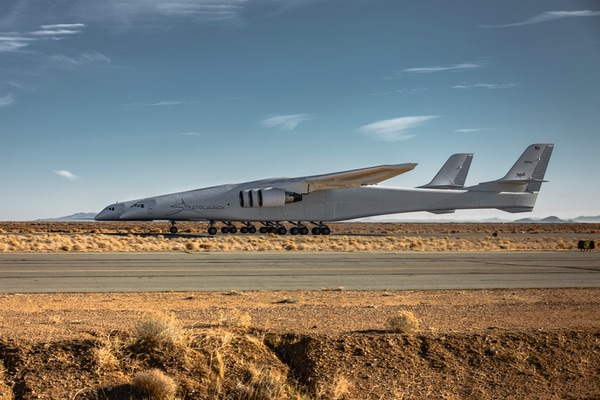

Just days after Stratolaunch completed a taxi text of its giant aircraft that appeared to signal it was ready for its first flight, the company cancelled work on the launch vehicles it was going to carry. (credit: Stratolaunch)

When 2019 started a few weeks ago, there were optimism about the year ahead. Blue Origin and Virgin Galactic would soon start flying people, many predicted, especially given Virgin’s successful SpaceShipTwo flight last month. Then there’s Boeing and SpaceX, who are scheduled to make their commercial crew test flights this year—just in time for NASA, since the clock is running out on access to Russia’s Soyuz. And then there are all the companies planning small launch vehicles that expect to make their first launches this year.
https://www.thespacereview.com/article/3641/1

12) Beyond UNISPACE: It’s time for the Moon Treaty
by Dennis C. O’Brien Monday, January 21, 2019
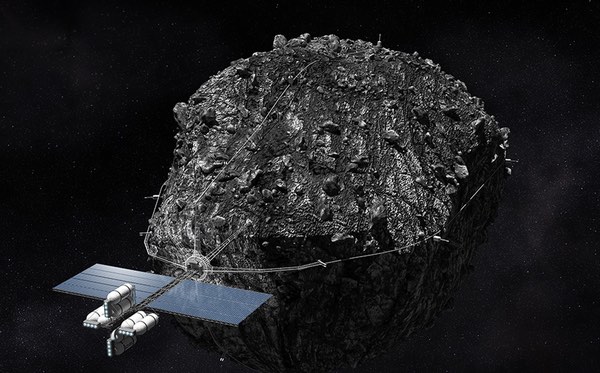

While critics of the Moon Treaty have argued that it would hinder commercial space activities, like asteroid mining, with the proper implementing agreement it could in fact enable them. (credit: Brian Versteeg/Deep Space Industries)

In 1968, the United Nations convened UNISPACE, the United Nations Conference on the Exploration and Peaceful Uses of Outer Space. It was the first of a series of UN-sponsored conferences intended to create an international framework of laws to guide humanity’s departure from the home planet. Alas, the effort has failed. The Moon Treaty, along with an Implementation Agreement, now appears to be the best hope for moving humanity forward.
https://www.thespacereview.com/article/3642/1

13) Mars: Bringer of ennui (part 1)
by Dwayne A. Day Monday, January 21, 2019


The second season of Mars features a clash between a scientific base and commercial prospectors, but one that doesn’t really come together. (credit: National Geographic Channel)

Two years ago, the National Geographic Channel debuted its first scripted television show. Mars had an unusual structure for TV, alternating between documentary segments, expert talking heads, and dramatic segments set during the first human mission to Mars in 2033. (See: “Red Planet blues: popular entertainment and the settlement of Mars, part 2,” The Space Review, December 5, 2016, and “Red zeitgeist: popular entertainment and the settlement of Mars, part 3,” The Space Review, January 16, 2017.) The first season, consisting of six episodes, featured some excellent and insightful documentary segments and commentary, but the drama segments, which were closely tied to the documentary stories, were grim and depressing. Now, two years later, season two has aired. Unfortunately, that same dynamic was repeated: often stunning documentary segments and intelligent commentary interspersed with tedious and uninspiring drama. If National Geographic has a message about the human exploration of Mars, it is that nobody will have any fun.
https://www.thespacereview.com/article/3643/1

14) Selecting the next great space observatory
by Jeff Foust Monday, January 21, 2019


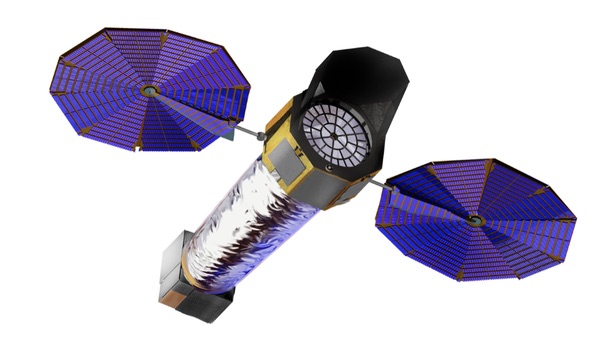
The Lynx x-ray observatory is one of the four large strategic, or flagship, astrophysics missions being studied for consideration by the 2020 decadal survey. (credit: NASA)

The great space telescope race is on.

In the next few months, the next decadal survey for astronomy and astrophysics—usually called just “Astro2020” by scientists and others involved—will get underway. In late November the National Academies announced the selection of the two co-chairs of the once-every-ten-years study of astronomy research priorities, Fiona Harrison of Caltech and Robert Kennicutt Jr. of the University of Arizona and Texas A&M University. The rest of the committee overseeing the study will be selected by this spring (nominations are open through January 22, but could be extended because of the ongoing partial government shutdown.)
https://www.thespacereview.com/article/3644/1

15) There is no space race
by Roger Handberg Monday, January 21, 2019
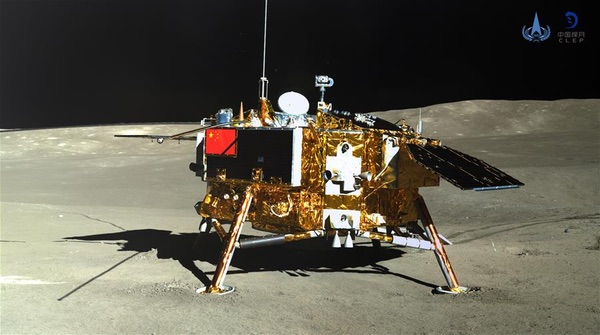

The Chang’e-4 lunar lander, seen by the Yutu-2 rover, after landing on the Moon earlier this month. (credit: CNSA)

The landing of Chang’e-4 on the far side of the Moon is a triumph for Chinese space exploration, reflecting technological sophistication in launching a communications satellite to orbit the Moon so that Chang’e-4 could communicate back to Earth. China provided the location of its spacecraft to NASA so that its Lunar Reconnaissance Orbiter could produce images of exact location where the lunar lander and its rover landed. That exchange, while no big deal technically, was symbolic of the reality that many are unwilling to accept for different reasons: there is no space race.
https://www.thespacereview.com/article/3645/1
« Ostatnia zmiana: Listopada 20, 2024, 10:55 wysłana przez Orionid »

Online Orionid

  • Weteran
  • *****
  • Wiadomości: 28823
  • Very easy - Harrison Schmitt
Odp: The Space Review
« Odpowiedź #326 dnia: Listopada 02, 2021, 16:14 »
4/I 2019 [16-20]

16) Review: Interplanetary Robots
by Jeff Foust Monday, January 28, 2019


Interplanetary Robots: True Stories of Space Exploration
by Rod Pyle
Prometheus Books, 2019
paperback, 368 pp., illus.
ISBN 978-1-63388-502-8
US$18.00
https://www.amazon.com/exec/obidos/ASIN/163388502X/spaceviews

The story of the robotic exploration of the solar system is one that has been told over and over, even as that story changes with new missions to new destinations. Some books focus on specific missions, while others devote their attention to places like the Moon and Mars that have been visited by many such missions. A comprehensive overview of six decades of planetary exploration, in a single volume, could only explore the history of that exploration at a high level.
https://www.thespacereview.com/article/3646/1

17) Weaponization of space will harm the United States more than it gains
by Takuya Wakimoto Monday, January 28, 2019


Any use of weapons in space could drastically increase the space debris environment and degrade some orbits for all users. (credit: AGI)

Developing and deploying weapons in space will ultimately hamper US national interests. President Trump’s recent endeavor to create a “space force” that would oversee the US military’s space activities does not mean that the United States will weaponize space. Rather, whether the United States will deploy weapons in space in the future or maintain outer space as a weapon-free zone is yet to be known. Nevertheless, if the US government leans towards dispatching weapons in space, this decision will only endanger existing US space systems, threaten stability in space, and demean American national prestige.
https://www.thespacereview.com/article/3647/1

18) Blue’s big year ahead
by Jeff Foust Monday, January 28, 2019


The propulsion module for Blue Origin’s New Shepard suborbital vehicle after landing on the tenth test flight of overall vehicle program January 23 in West Texas. (credit: Blue Origin)

Last month, Virgin Galactic’s SpaceShipTwo finally reached space—or, at least, one definition of it—when the VSS Unity spaceplane flew to an altitude of nearly 83 kilometers in the skies above Mojave, California, passing the 50-mile altitude used by US government agencies for awarding astronaut wings (see “SpaceShipTwo finally makes it to space*”, The Space Review, December 17, 2018). Immediately after the flight, Virgin founder Richard Branson said commercial flights would begin some time in 2019 after a few more test flights, a schedule he reiterated last week in a television interview to announce a partnership with athletic apparel company Under Armour to provide uniforms for SpaceShipTwo customers and crew.
https://www.thespacereview.com/article/3648/1

19) Would a decadal survey work for human space exploration?
by Joseph K. Alexander Monday, January 28, 2019


The decadal survey process, which has recommended missions like Mars 2020 (above), may not be well-suited to human spaceflight. (credit: NASA/JPL-Caltech)

The National Research Council decadal science strategy surveys—or more colloquially known as the decadal surveys or just the decadals—are signature products of the National Academies.[1] There is probably no other space science advisory product that has earned the attention and reputation, year after year, or had an impact to rival that of the decadals. If these strategy studies have been so successful for the space sciences, one might logically ask whether the same process could and should be applied to the area of human spaceflight. This article explores the questions of what constitutes a decadal survey and what makes them effective, all in order to consider whether the process is transferable to other areas such as human space exploration.
https://www.thespacereview.com/article/3649/1

20) Mars: Bringer of ennui (part 2)
by Dwayne A. Day Monday, January 28, 2019
Note: Part 1 was published last week.


What the second season of Mars illustrated was the challenges of making an economic case for human settlement of the Red Planet. (credit: National Geographic Channel)

One of the problems inherent in depicting humans on Mars is that all of our reference points are here on Earth. Certainly, humans will bring many of their same traits and foibles with them to the Red Planet. But Mars is a different place. The reasons people go, the type of people who go, and the challenges they will encounter there, will be unusual and unique. Other dramas about relatively near-term space exploration, like The Expanse, skip over the early years and jump to more fully-developed societies and economies. But in the early years of human missions to Mars, humans will go in small numbers and will not bring their entire society, culture, or economy to Mars.
https://www.thespacereview.com/article/3650/1
« Ostatnia zmiana: Listopada 20, 2024, 11:05 wysłana przez Orionid »

Online Orionid

  • Weteran
  • *****
  • Wiadomości: 28823
  • Very easy - Harrison Schmitt
Odp: The Space Review
« Odpowiedź #327 dnia: Listopada 11, 2021, 07:55 »
5/II 2019 [21-24]

21) The First didn’t last
by Jeff Foust Monday, February 4, 2019


Many had high hopes about The First starring Sean Penn as an astronaut preparing for a Mars mission, but the series failed to deliver the drama that viewers expected. (credit: Hulu)

A mission to Mars got cancelled last month, but not because of cost overruns or technical problems at NASA or another space agency.

The cancellation was not of a spacecraft but rather of a series: The First, whose first—and now only—season appeared on the streaming service Hulu in September. The series premiered with considerable fanfare, given a cast that included Sean Penn and with Beau Willimon, best known as the creator of Netflix’s House of Cards, as its executive producer.
https://www.thespacereview.com/article/3651/1

22) The ramjet mystery
by John Hollaway Monday, February 4, 2019


Data from decades-old missile tests suggests ramjets could have better performance than expected, which has implications for their use in launch systems.

In an earlier article of mine published here, I discussed the relevance of an old movie, Destination Moon, to the current maneuverings over the question of going to Mars (see “Echoes from the past: the Mars dilemma”, The Space Review, June 6, 2016). I pointed out that the Destination Moon storyline had private business take up the challenge of the first landing on the Moon in order to spur the government to do something about it, and that it rather looked as if this was going to happen with Mars.
https://www.thespacereview.com/article/3652/1

23) Rethinking satellite servicing
by Jeff Foust Monday, February 4, 2019


DARPA had been working with Space Systems Loral on the Robotic Servicing of Geosynchronous Satellites program to develop a satellite servicing system, but the company dropped out of the program last week. (credit: DARPA)

In the last few years the idea of satellite servicing has gained interest in the space industry. Part of it has been driven by improved technologies that now make it feasible for robotic spacecraft to dock with other spacecraft to handle stationkeeping or maneuvering, or even perform repairs. Several companies, from established satellite manufacturers to startups, announced plans to develop such systems or technologies to enable them.
https://www.thespacereview.com/article/3653/1

24) A Space Guard to enable, regulate, and protect national civil and commercial space activities
by Al Anzaldúa and Hoyt Davidson Monday, February 4, 2019

Editor’s Note: the following essay was originally published as a position paper of the National Space Society. A full list of contributing authors is at the end of the paper.


A Space Guard would be analogous to the Coast Guard in its role of “guardianship,” or the protection and safety of persons and property, and could be created from the existing NOAA Corps. (credit: US Coast Guard)

The National Space Society (NSS) is proposing a transparently operating civil US Space Guard with a national and collaborative international scope of operation. Such a civil Space Guard would initially be established and funded with the capacity and responsibility to: (a) license and regulate US civil and commercial space activities, other than as currently conducted by the Department of Commerce (DoC) space offices for various functions, by the Federal Communications Commission (FCC) for radiofrequency spectrum, and by the Office of Commercial Space Transportation in the Federal Aviation Administration (FAA) for rocket launches; (b) monitor and guide US civil and commercial space activities pursuant to applicable international treaties; (c) enforce US civil and commercial space regulations; (d) coordinate with US civil and commercial space and aviation offices to enhance efficiency, safety, and space traffic management; and (e) engage the international space community in collaborative efforts to advance space development throughout Earth orbit, cislunar space, lunar surface operations, orbital spaces, solar system planetary bodies, and beyond.
https://www.thespacereview.com/article/3654/1
« Ostatnia zmiana: Listopada 22, 2024, 15:30 wysłana przez Orionid »

Online Orionid

  • Weteran
  • *****
  • Wiadomości: 28823
  • Very easy - Harrison Schmitt
Odp: The Space Review
« Odpowiedź #328 dnia: Listopada 11, 2021, 07:55 »
6/II 2019 [25-28]

25) Review: War in Space
by Jeff Foust Monday, February 11, 2019


War in Space: The Science and Technology Behind Our Next Theater of Conflict
by Linda Dawson
Springer Praxis, 2018
paperback, 216 pp., illus.
ISBN 978-3-319-93051-0
US$29.95
https://www.amazon.com/exec/obidos/ASIN/3319930516/spaceviews

The last year has seen plenty of attention devoted to growing military activities in space and the threat of conflict there. Much of that has focused on proposals by the Trump Administration to establish a Space Force as a separate military branch (or, perhaps, as a “Space Corps” within the Air Force) to elevate the importance of space within the Pentagon. In addition, a new Missile Defense Review unveiled last month called for development of a new satellite system for monitoring missile launches and a study of space-based interceptors.
https://www.thespacereview.com/article/3655/1

26) A space-focused alternative to a Green New Deal
by Taylor Dinerman Monday, February 11, 2019


Visions of space settlements and space-based solar power emerged in the 1970s as a response to the environmental and resource concerns of that era; a similar vision may be needed today to address climate change and other environmental issues. (credit: Rick Guidice/NASA)

In a recent interview in the French magazine Le Nouvelle Observateur, Delphine Batho, a former French Minister of Ecology, said, “L’écologie ne peut pas etre consensuelle.” That roughly translates to, “Environmentalism cannot be consensual.”
https://www.thespacereview.com/article/3656/1

27) A helping hand for giant telescopes
by Jeff Foust Monday, February 11, 2019


The Giant Magellan Telescope will feature seven mirrors, each more tha eight meters in diameter. (credit: GMT Organization)

The decadal review for astrophysics, widely known as “Astro2020,” is ramping up after a bit of a delay because of the recent government shutdown (a deadline for white papers on various science topics to be considered by the survey was recently extended to March 11.) Much of the attention on Astro2020 will be devoted to deliberations on which large-scale strategic, or flagship, mission it will recommend for development later in the 2020s and into the 2030s, with four concepts currently under study (see “Selecting the next great space observatory”, The Space Review, January 21, 2019.)
https://www.thespacereview.com/article/3657/1

28) Building a better booster (part 1)
by Jeffrey L. Smith Monday, February 11, 2019


Northrop Grumman Innovation Systems successfully test fired the new GEM 63 motor on September 20, 2018. (credit: Northrop Grumman)

Normally, the first test of a new rocket engine or motor is a rather secretive affair witnessed only by engineers and top-level customer representatives. While the tension of firing a new rocket was still present, the atmosphere last September 20, when Northrop Grumman Innovation Systems (NGIS) first fired the new GEM 63 solid rocket motor, was much more festive.
https://www.thespacereview.com/article/3658/1
« Ostatnia zmiana: Listopada 22, 2024, 15:38 wysłana przez Orionid »

Online Orionid

  • Weteran
  • *****
  • Wiadomości: 28823
  • Very easy - Harrison Schmitt
Odp: The Space Review
« Odpowiedź #329 dnia: Listopada 11, 2021, 07:55 »
7/II 2019 [29-32]

29) Seeking the future: the fragility of the patron
by Roger Handberg Monday, February 18, 2019


Paul Allen funded the development of SpaceShipOne, which won the Ansari X Prize in 2004. But Allen’s death last October has affected another space company he founded, Stratolaunch. (credit: J. Foust)

Pushing out toward the final frontier is difficult both in the physical sense of building vehicles capable of carrying people out into the unknown as well as in the human sense. The former refers to the fact that simply reaching outer space safely and pushing outward from there is expensive, dangerous, and requires a long-term mindset. The lonely tinker working in their garage (e.g. the Wright Brothers) represented one path forward in the early days of human flight, albeit not spaceflight. Spaceflight requires significant resources, which traditionally has meant that the government or other organizations must be persuaded to provide that funding over relatively long periods of time. The Smithsonian, for example, supported Goddard’s early work leading to a liquid fueled launch vehicle albeit small in size.
https://www.thespacereview.com/article/3659/1

30) Building a better booster (part 2)
by Jeffrey L. Smith Monday, February 18, 2019


Titan IVA with heritage CSD booster motors on other side (left) and Titan IVB with improved Hercules motors (right). Notice the additional horizontal black lines denoting motor segments and the red tank for liquid injection TVC on the Titan IVA. (credit: USAF)

This isn’t the first time a Utah team managed to swipe a marquee rocket program out from under the nose of a California company. But the last time didn’t go so well.

In 1987, the US Air Force was in a bind, and they were looking for a way out. The previous year, the national security community had suffered two body blows in a row with the shuttle Challenger accident in January and, three months later, the loss of a Titan 34D. The Space Shuttle used the same solid rocket motor technology pioneered by the Titan a generation before to assemble large rocket motors like a wedding cake—one layer on top of another—rather than as a single gigantic piece that would be impossible to build or transport to the launch pad. Both of these incidents, though, were traced back to issues with the solid rocket motors. Clearly there were unresolved problems with the technology that had to be address immediately.
https://www.thespacereview.com/article/3660/1

31) Moon racing
by Jeff Foust Monday, February 18, 2019


Beresheet, the privately funded lunar lander developed by SpaceIL, is scheduled for launch later this week. (credit: SpaceIL)

The Moon is becoming a popular destination once again.

In early January, China landed its Chang’e-4 lander within von KĂĄrmĂĄn Crater on the far side of the Moon, deploying the Yutu-2 rover. The spacecraft was China’s second mission to land on the Moon, after Chang’e-3 five years earlier, and it was the first spacecraft by any nation to touch down on the far side.
https://www.thespacereview.com/article/3661/1

32) Above Top Secret: the last flight of the Big Bird
by Dwayne A. Day Monday, February 18, 2019


An illustration of a HEXAGON reconnaissance satellite, the last of which launched, unsuccessfully, in 1986.

By the early 1980s, the HEXAGON reconnaissance satellite program was scheduled to end. Only a few more of the heavy, schoolbus-sized spacecraft were under construction. Efforts by senior Air Force officials within the Los Angeles office of the highly classified National Reconnaissance Office (NRO) to either build more spacecraft, or use the Space Shuttle to recover and relaunch one or more of the last satellites, had been rejected as impractical or too expensive. The NRO leadership in Washington instead chose to stretch out the remaining launches, keeping the satellites in orbit longer and taking more images. The HEXAGON had a powerful dual camera system also known as the KH-9 and capable of imaging almost the entire Soviet landmass in a single mission. Because of that, the 20th and last HEXAGON spacecraft, scheduled for launch in spring 1986, became very important to many members of the intelligence community.
https://www.thespacereview.com/article/3662/1
« Ostatnia zmiana: Listopada 23, 2024, 11:06 wysłana przez Orionid »

Polskie Forum Astronautyczne

Odp: The Space Review
« Odpowiedź #329 dnia: Listopada 11, 2021, 07:55 »