Autor Wątek: The Space Review  (Przeczytany 136901 razy)

0 użytkowników i 5 Gości przegląda ten wątek.

Offline Orionid

  • Weteran
  • *****
  • Wiadomości: 28979
  • Very easy - Harrison Schmitt
Odp: The Space Review
« Odpowiedź #375 dnia: Lutego 08, 2022, 06:56 »
Are space movie studios sci-fi fantasies?
by Jeff Foust Monday, February 7, 2022


Space Entertainment Enterprise said last month it is working with Axiom Space on a spherical module that could be added to Axiom’s future commercial ISS module as an entertainment studio. (credit: SEE)

Remember all the excitement a couple years ago when Hollywood media reported that Tom Cruise planned to film a movie in space? The NASA administrator at the time, Jim Bridenstine, confirmed that NASA was in talks with the famous actor for filming some kind of movie—no one was really sure what it would be about—on the International Space Station, but there’s been little overt progress since then. Cruise remains grounded for the foreseeable future: given the schedule of missions to the ISS, the soonest he could go is early 2023.
https://www.thespacereview.com/article/4325/1
« Ostatnia zmiana: Listopada 18, 2024, 14:46 wysłana przez Orionid »

Offline Orionid

  • Weteran
  • *****
  • Wiadomości: 28979
  • Very easy - Harrison Schmitt
Odp: The Space Review
« Odpowiedź #376 dnia: Lutego 08, 2022, 06:56 »
What to really worry about when a rocket stage crashes on the Moon
by David Rothery Monday, February 7, 2022


The Falcon 9 that launched the DSCOVR mission in 2015. The upper stage of that rocket will crash into the Moon next month. (credit: SpaceX)

It’s not often that the sudden appearance of a new impact crater on the Moon can be predicted, but it’s going to happen on March 4, when a derelict SpaceX Falcon 9 rocket will crash into it.

The rocket launched in 2015, carrying NASA’s Deep Space Climate Observatory (DSCOVR) probe into a position 1.5 million kilometers from the Earth, facing the Sun. But the expended upper stage of the rocket had insufficient speed to escape into an independent orbit around the Sun and was abandoned without an option to steer back into the Earth’s atmosphere. That would be normal practice, allowing stages to burn up on reentry, thus reducing the clutter in near-Earth space caused by dangerous junk.
https://www.thespacereview.com/article/4326/1
« Ostatnia zmiana: Listopada 18, 2024, 14:47 wysłana przez Orionid »

Offline Orionid

  • Weteran
  • *****
  • Wiadomości: 28979
  • Very easy - Harrison Schmitt
Odp: The Space Review
« Odpowiedź #377 dnia: Lutego 08, 2022, 06:57 »
FROG: The Film Read Out GAMBIT program
by Dwayne Day Monday, February 7, 2022


Launch of a GAMBIT-3 high-resolution reconnaissance satellite in 1971, around the same time that the Film Read Out GAMBIT (FROG) program was approved. FROG would have used the same optics system as the GAMBIT-3, but would have scanned the film in orbit and relayed it to the ground. (credit: Peter Hunter Collection)

In September of 2021, the National Reconnaissance Office (NRO) declassified thousands of pages of documents on the development of the first near-real-time electro-optical satellite, the KH-11 KENNEN. The KENNEN was probably the most famous top secret satellite ever, the result of an embarrassing incident soon after it entered service in 1976 when a CIA employee sold a document to the KGB that contained technical details of the satellite. But included in the NRO’s 2021 release was significant information on an obscure and never-flown satellite proposal. KENNEN means “to know” in old English (and German). This other satellite had a less-weighty name: FROG.
https://www.thespacereview.com/article/4327/1
« Ostatnia zmiana: Listopada 18, 2024, 14:47 wysłana przez Orionid »

Offline Orionid

  • Weteran
  • *****
  • Wiadomości: 28979
  • Very easy - Harrison Schmitt
Odp: The Space Review
« Odpowiedź #378 dnia: Lutego 08, 2022, 06:57 »

Defining European space ambitions
by Jeff Foust Monday, February 7, 2022


ESA is looking to the upcoming space summit to win political support for initiative that include a new human space exploration program. (credit: ESA)

On February 16, European space leaders will gather in Toulouse, France, for what organizers call a “space summit” to discuss potential future space initiatives. It’s a one-day meeting that reflects both Europe’s ambitions in space, but also the complexities in trying to realize those ambitions.
https://www.thespacereview.com/article/4328/1
« Ostatnia zmiana: Listopada 18, 2024, 14:48 wysłana przez Orionid »

Polskie Forum Astronautyczne

Odp: The Space Review
« Odpowiedź #378 dnia: Lutego 08, 2022, 06:57 »

Offline Orionid

  • Weteran
  • *****
  • Wiadomości: 28979
  • Very easy - Harrison Schmitt
Odp: The Space Review
« Odpowiedź #379 dnia: Lutego 15, 2022, 09:01 »
Strategic geographical points in outer space
by Matthew Jenkins Monday, November 1, 2021


Spaceports like Cape Canaveral Space Force Station and the Kennedy Space Center could serve as choke points for space, given the relatively small number of such facilities and their vulnerability to a wider range of threats. (credit: NASA)

Geography has long been a critical factor influencing national strategy, playing a vital role in both international politics and military planning. Captured in history’s stories are countless examples of how geography shaped everything from economics and trade to military conflict. While space can appear both abstract and intimidating, traditional studies of strategy and geography can be successfully applied to the space domain. For example, Halford Mackinder’s heartland theory and Nicholas Spykman’s rimland theory claim that controlling the heartland or rimland, respectively, is the key to controlling the world. The central tenet—states that best understand how to exploit geography create decisive advantages—applies equally well to strategic geographical points in the space domain.
https://www.thespacereview.com/article/4273/1

How a small, distant space telescope can solve astrophysical mysteries big ones can’t
by Michael Zemcov Monday, November 1, 2021


A small telescope could be incorporated on future missions to the outer solar system and beyond, such as the proposed Interstellar Probe. (credit: JHUAPL)

Dozens of space-based telescopes operate near Earth and provide incredible images of the universe. But imagine a telescope far away in the outer solar system, 10 or even 100 times farther from the Sun than Earth. The ability to look back at our solar system or peer into the darkness of the distant cosmos would make this a uniquely powerful scientific tool.
https://www.thespacereview.com/article/4274/1

Will SpaceX follow Tesla to a $1 trillion market capitalization?
by Sam Dinkin Monday, November 1, 2021


Starship could enable new business opportunities for SpaceX that could cause its valuation of $100 billion today to grow to $1 trillion or more. (credit: SpaceX)

SpaceX is readying its first test of Starship and Super Heavy, where Starship will splash down about 90 minutes after takeoff 84% of the Earth’s circumference around the world to the east near Kauai. Like launching Elon Musk’s old Tesla roadster beyond Mars orbit, this may result in further proof that Starship may soon reduce the price of access to low Earth orbit substantially more than Falcon 9 and Falcon Heavy already have. With its 100-tonne capacity in reusable mode according to its user guide, or 136 tonnes “when fully optimized” and 227 tonnes in expendable mode, according to Musk in a tweet, it has the potential to increase global launch capacity by a giant leap. That would be especially true if Elon Musk devotes his possibly soon-to-be trillion-plus net worth to building extra Starships to settle Mars.
https://www.thespacereview.com/article/4275/1

The commercial space station race
by Jeff Foust Monday, November 1, 2021


Nanoracks, Voyager Space, and Lockheed Martin are cooperating on a commercial space station called Starlab that could be operational as soon as 2027. (credit: Nanoracks)

The International Astronautical Congress (IAC) returned last week after the pandemic forced last year’s event to move online. An estimated 5,000 people traveled to Dubai for the usual panel discussions and technical sessions on a wide range of space topics.
https://www.thespacereview.com/article/4276/1
« Ostatnia zmiana: Listopada 18, 2024, 14:54 wysłana przez Orionid »

Offline Orionid

  • Weteran
  • *****
  • Wiadomości: 28979
  • Very easy - Harrison Schmitt
Odp: The Space Review
« Odpowiedź #380 dnia: Lutego 15, 2022, 09:02 »
Review: Holdout
by Jeff Foust Monday, November 8, 2021


Holdout: A Novel
by Jeffrey Kluger
Dutton, 2021
hardcover, 352 pp.
ISBN 978-0-593-18469-1
US$26.00
https://www.amazon.com/exec/obidos/ASIN/0593184696/spaceviews

NASA astronauts have, by and large, been pretty well behaved on their missions over six decades of spaceflight. Only a few cases stand out, including the disagreements between Apollo 7 commander Wally Schirra and ground controllers on their mission and the so-called “strike” by the crew of the third and final Skylab mission in late 1973 (which, a NASA historical review noted last year, didn’t actually happen.)
https://www.thespacereview.com/article/4277/1

Witch-hunts, power, and privilege from Salem to the stars
by Layla Martin Monday, November 8, 2021


“Space Witch,” an NFT created by the author ©2021

And, stating that sounds absurd. Why don’t we apply that same notion of absurdity to the idea of witches here on Earth? Witches and witch-hunts are an accepted, even celebrated, phenomena below the Kármán line. Yet, in reality there are no witches here on Earth and never have been.
https://www.thespacereview.com/article/4278/1

For private space travelers, questions of vistas and titles
by Jeff Foust Monday, November 8, 2021


Private astronaut Chris Boshuizen, Emirati astronaut Hazzaa AlMansoori, and NASA astronaut Jessica Meir during a panel of astronauts at the International Astronautical Congress in Dubai October 29. (credit: J. Foust)

One of the selling points of commercial human spaceflight has been the ability to see the Earth from space, including the prospect of the Overview Effect: the shift in perspective that many astronauts have reported experiencing. But would a brief suborbital flight, spending only minutes in space, be long enough to trigger that effect in people?
https://www.thespacereview.com/article/4279/1

Boldly insure where no one has gone
by Christopher McKeon, Ann Satovich, McKay Simmons, Christopher O’Connor and Brad Barger Monday, November 8, 2021


The growth of satellite constellations and other commercial space activities create new opportunities, and new risks, for insurers. (credit: OneWeb)

Space today has become big business that will only expand thanks to the excitement and focus driven by the likes of Bezos, Branson, and Musk.

In the last decade, the space sector has seen more than 50% growth in commercial space initiatives. The commercial portion of the space ecosystem saw $200 billion of investment in 1,500 companies.
https://www.thespacereview.com/article/4280/1
« Ostatnia zmiana: Listopada 18, 2024, 14:16 wysłana przez Orionid »

Offline Orionid

  • Weteran
  • *****
  • Wiadomości: 28979
  • Very easy - Harrison Schmitt
Odp: The Space Review
« Odpowiedź #381 dnia: Lutego 15, 2022, 09:02 »
Review: Bright Galaxies, Dark Matter, and Beyond
by Jeff Foust Monday, November 15, 2021


Bright Galaxies, Dark Matter, and Beyond: The Life of Astronomer Vera Rubin
by Ashley Jean Yeager
MIT Press, 2021
hardcover, 256pp., illus.
ISBN 978-0-262-04612-1
US$24.95
https://www.amazon.com/exec/obidos/ASIN/0262046121/spaceviews

For several years a major new observatory has been taking shape on a mountaintop in Chile. The 8.4-meter telescope is designed to survey the entire sky visible from the site every few nights, collecting images with a 3.2-gigapixel camera. For much of its development, the observatory was known by the descriptive, if inelegant, name of Large Synoptic Survey Telescope, or LSST. Two years ago, though, an act of Congress renamed the telescope the Vera C. Rubin Observatory.
https://www.thespacereview.com/article/4281/1

An assessment of EU decarbonization options including astroelectricity
by Mike Snead
Monday, November 15, 2021


The recent COP26 climate change conference saw numerous pledges to decarbonize energy systems, but how feasible are they with current alternative energy sources? (credit: UN)

The European Union (EU), comprised of 27 countries with a total 2019 population of 446.4 million people, is ambitiously hoping to become a climate neutral continent by 2050. From an energy security perspective, decarbonization—meaning the general end of the use of fossil carbon fuels—is a wise policy given the likely end of middle-class affordable fossil carbon fuel supplies in the coming decades. (I first wrote about this in 2008 in The End of Easy Energy and What to Do About It.)
https://www.thespacereview.com/article/4282/1

Musk versus Bezos: a real rivalry or a fake feud?
by Ben Little
Monday, November 15, 2021


Jeff Bezos and Elon Musk are viewed as heated rivals in space, but how much of that public posturing is real? (credit: Blue Origin (left) and NASA/Bill Ingalls (right))

Flick through a news feed on your phone and you are likely to scroll across an article discussing the heated rivalries of the new space race. Forget the geopolitical struggles of a cold war. This time, it’s Tesla CEO Elon Musk versus Amazon founder Jeff Bezos: the two richest men in the world duking it out over whether SpaceX or Blue Origin, their respective companies, will be the dominant force in the new industry of private spaceflight.
https://www.thespacereview.com/article/4283/1

Resetting Artemis
by Jeff Foust Monday, November 15, 2021


NASA and SpaceX can move ahead with their HLS contract after a half year of legal delays that NASA said contributed to tis decision to push back the Artemis 3 mission to no earlier than 2025. (credit: SpaceX)

There are rarely slow weeks at SpaceX, but last week was certainly was not one of them. The company started the week bringing back a Crew Dragon spacecraft from the International Space Station with four astronauts on board who spent more than six months in space. Less than 48 hours after that Crew Dragon splashed down in the Gulf of Mexico, another Crew Dragon launched on a Falcon 9 from the Kennedy Space Center, delivering a new group of four astronauts to the station within 24 hours of liftoff. Early Saturday, a Falcon 9 lifted off from a nearby pad at Cape Canaveral Space Force Station, placing 53 Starlink satellites in orbit. And, amid all that activity in Florida, the company performed a brief static fire of the six Raptor engines in its first orbital Starship vehicle at Boca Chica, Texas, another step towards a launch some time next year.
https://www.thespacereview.com/article/4284/1
« Ostatnia zmiana: Listopada 18, 2024, 14:13 wysłana przez Orionid »

Offline Orionid

  • Weteran
  • *****
  • Wiadomości: 28979
  • Very easy - Harrison Schmitt
Odp: The Space Review
« Odpowiedź #382 dnia: Lutego 15, 2022, 09:03 »
Review: The Greatest Adventure
by Jeff Foust Monday, November 22, 2021


The Greatest Adventure: A History of Human Space Exploration
by Colin Burgess
Reaktion Books, 2021
hardcover, 368 pp., illus.
ISBN 978-1-78914-460-4
US$40.00
https://www.amazon.com/exec/obidos/ASIN/1789144604/spaceviews

There is no shortage of books about human spaceflight. Many dive deep into details about specific programs or missions, or offer biographies (or autobiographies) of those who have flown in space and others than enabled such flights. Nonetheless, there is still a place for an overall history of the subject, one that spans decades of activity to both provide an introduction to newcomers and to put such activities into a broader context.
https://www.thespacereview.com/article/4285/1

Risk, teamwork, and opportunity: the tale of a Soyuz abort
by Jeff Foust Monday, November 22, 2021


NASA’s Nick Hague (left) and Roscosmos’s Alexey Ovchinin discuss their Soyuz MS-10 abort at the International Astronautical Congress in Dubai October 27. (credit: J. Foust)

The annual International Astronautical Congress (IAC) is a sprawling event, often with dozens of parallel tracks of technical paper presentations or panel discussions. With so much going on over the course of a week and a sometimes confusion alphanumeric notation system for tracks—is this session A2.7 or A7.2?—it’s easy to miss out on some interesting presentations.
https://www.thespacereview.com/article/4286/1

Tracking unknown satellites
by Charles Phillips and Mykola Kulichenko Monday, November 22, 2021


Some satellites appear in one catalog but not in another, while the identity of others is unknown. (credit: ESA)

Tracking satellites used to be something that only large organizations could do, but today enthusiastic amateurs track many satellites. But to track many of the more interesting satellites it helps to have an observatory with professional support. This is the story of how some people are doing just that, and the contribution to safety in space that they are making.
https://www.thespacereview.com/article/4287/1

After another ASAT test, will governments finally take action?
by Jeff Foust Monday, November 22, 2021


A simulation of the intercept of the Cosmos 1408 satellite by a Russian ASAT missile in the November 15 test. (credit: COMSPOC)

On November 12, a group of companies and organizations announced an initiative to address the growing population of satellites and debris in orbit, unaware that their efforts were just days away from being undone.
https://www.thespacereview.com/article/4288/1
« Ostatnia zmiana: Listopada 18, 2024, 14:11 wysłana przez Orionid »

Offline Orionid

  • Weteran
  • *****
  • Wiadomości: 28979
  • Very easy - Harrison Schmitt
Odp: The Space Review
« Odpowiedź #383 dnia: Lutego 22, 2022, 08:14 »
Review: To Boldly Go
by Jeff Foust Monday, November 29, 2021


To Boldly Go: Leadership, Strategy, and Conflict in the 21st Century and Beyond
by Jonathan Klug and Steven Leonard (eds.)
Casemate, 2021
hardcover, 304 pp.
ISBN 978-1-63624-062-6
US$34.95
https://www.amazon.com/exec/obidos/ASIN/1636240623/spaceviews

Science fiction’s role in shaping the Space Age has long been appreciated. Countless scientists and engineers have cited the inspiration provided by science fiction novels, movies, and TV shows to pursue careers in the industry and work on spacecraft, launch vehicles, and other technologies linked to those accounts. But besides that inspiration—and, of course, entertainment—is there anything else science fiction can offer?
https://www.thespacereview.com/article/4289/1

Space law hasn’t been changed since 1967, but the UN aims to update laws and keep space peaceful
by Michelle L.D. Hanlon and Greg Autry Monday, November 29, 2021


A simulation of the intercept of the Cosmos 1408 satellite by a Russian ASAT missile in the November 15 test. (credit: COMSPOC)

On November 15, Russia destroyed one of its own old satellites using a missile launched from the surface of the Earth, creating a massive debris cloud that threatens many space assets, including astronauts onboard the International Space Station (see “After another ASAT test, will governments finally take action?”, The Space Review, November 22, 2021). This happened only two weeks after the United Nations General Assembly First Committee formally recognized the vital role that space and space assets play in international efforts to better the human experience – and the risks military activities in space pose to those goals.
https://www.thespacereview.com/article/4290/1

How America wins the future
by Frank Slazer Monday, November 29, 2021


Vice President Kamala Harris, seen here speaking at NASA’s Goddard Space Flight Center November 5, will lead the administration’s first National Space Council meeting this week. (credit: NASA/Taylor Mickal)

On December 1, Vice President Kamala Harris will convene the Biden Administration’s first meeting of the National Space Council in Washington. The gathering will provide an opportunity for Harris to refine the Biden Administration’s priorities for space, especially for NASA.
https://www.thespacereview.com/article/4291/1

A new approach to flagship space telescopes
by Jeff Foust Monday, November 29, 2021


The astrophysics decadal survey recommended a scaled-down version of a space telescope concept called LUVOIR as the first in a line of flagship space observatories to be developed over the next few decades. (credit: NASA/GSFC

For much of this year, the biggest puzzle for astrophysicists had nothing to do with dark matter, dark energy, or discrepancies in the value of the Hubble Constant. Instead, the question at the top of their minds was: when was Astro2020 coming out?
https://www.thespacereview.com/article/4292/1
« Ostatnia zmiana: Listopada 18, 2024, 14:09 wysłana przez Orionid »

Offline Orionid

  • Weteran
  • *****
  • Wiadomości: 28979
  • Very easy - Harrison Schmitt
Odp: The Space Review
« Odpowiedź #384 dnia: Lutego 22, 2022, 08:14 »
Space at Expo 2020
by Jeff Foust Monday, December 6, 2021


A full-sized replica of a Falcon 9 first stage stands next to the US pavilion at Expo 2020 Dubai. (credit: J. Foust)

For some people, trapped in a pandemic-induced time warp, it’s seemed like it’s been 2020 since last March. Sometimes, though, it’s still officially 2020, like the Summer Olympics in Tokyo that were still officially called the 2020 Games even though they were delayed a year. Likewise, Expo 2020 Dubai, the modern-day version of the world’s fair, retained the 2020 name even though its opening was delayed a year to the start of this October.
https://www.thespacereview.com/article/4293/1

A new era of planetary exploration: what we discovered on the far side of the Moon
by Iraklis Giannakis Monday, December 6, 2021


Data from China’s Yutu-2 rover is helping scientists understand the structure below the surface of the Moon. (credit: CLEP)

Seven months after it was launched, the US robotic rover Perseverance successfully landed on Mars on February 18. The landing was part of the Mars 2020 mission and was viewed live by millions of people worldwide, reflecting the renewed global interest in space exploration. It was soon followed by China’s Tianwen-1, an interplanetary Mars mission consisting of an orbiter, lander and rover called Zhurong.
https://www.thespacereview.com/article/4294/1

How to clarify human futures beyond Earth
by Joe Carroll Monday, December 6, 2021


Figure 1. Surface gravity clustering in our solar system

Figure 1 above shows a remarkable coincidence: clustering of surface gravity levels in our solar system. All bodies with 9% to 250% of Earth gravity cluster near Earth, Mars, or Moon gravity. Those 3 gravity levels seem like the only levels available for us to live in this solar system. I stumbled onto this only after 34 years in aerospace. [1]
https://www.thespacereview.com/article/4295/1

A Biden space policy take shape
by Jeff Foust Monday, December 6, 2021


Vice President Kamala Harris gives opening remarks at the National Space Council meeting December 1. (credit: NASA/Joel Kowsky)

Every presidential administration, through its actions (and, sometimes, inaction) puts its stamp on space policy. The Trump Administration directed NASA to return humans to the Moon in an accelerated fashion and supported the establishment of the Space Force. The Obama Administration cancelled the Constellation program but started the commercial crew program. So, what would the Biden Administration do?
https://www.thespacereview.com/article/4296/1
« Ostatnia zmiana: Listopada 18, 2024, 14:07 wysłana przez Orionid »

Offline Orionid

  • Weteran
  • *****
  • Wiadomości: 28979
  • Very easy - Harrison Schmitt
Odp: The Space Review
« Odpowiedź #385 dnia: Lutego 22, 2022, 08:14 »
Review: The Apollo Murders
by Jeff Foust Monday, December 13, 2021


The Apollo Murders
by Chris Hadfield
Mulholland Books, 2021
hardcover, 480 pp.
ISBN 978-0-316-26453-2
US$28.00
https://www.amazon.com/exec/obidos/ASIN/0316264539/spaceviews

It’s not uncommon for retired astronauts to take pen to paper, or fingers to keyboard, and write a book. Most are memoirs about how they became astronauts and highlights of astronaut careers. Some turn their attention to other topics, like spaceflight or issues related to or inspired by it. A few even try their hand at fiction, like Buzz Aldrin, who teamed with John Barnes for the sci-fi novels Encounter with Tiber and The Return.
https://www.thespacereview.com/article/4297/1

Who was missing at COP26 and why it’s a problem
by Layla Martin
Monday, December 13, 2021


Sustainable Cities winner: Net-zero Transition Photobioreactor, by Simone Tramonte, taken in ReykjanesbĂŚr, Iceland. A photobioreactor at Algalif’s facilities in Reykjanesbaer, Iceland, produces sustainable astaxanthin using clean geothermal energy. Featured at The New York Times Climate Hub, Glasgow (2021).

I attended the United Nations Climate Conference (COP26) this November in Glasgow and observed a lack of participation from the aerospace & defense (A&D) sector. I am in possession of the COP26 attendee list, which is 1,616 pages long. After cross-checking the attendee list, I was unable to confirm any representatives from The Boeing Company, Lockheed Martin, Northrop Grumman, Raytheon Technologies, Virgin Orbit, and SpaceX in attendance at the climate summit. After individually reviewing the physical materials I gathered at the conference against the corporate sponsors, I was unable to confirm one of the preceding A&D companies sponsored COP26. If corporate sponsorship was considered “too green” by the board, why were employees with titles such as “Director of Sustainability” not listed on the roster at COP26?
https://www.thespacereview.com/article/4298/1

Private space stations are coming. Will they be better than their predecessors?
by Justin St. P. Walsh and Alice Gorman Monday, December 13, 2021


A Northrop Grumman concept for a commercial space station is one of three that won NASA funding for studies earlier this month. (credit: Northrop Grumman)

A new era of space stations is about to kick off. NASA has announced three commercial space station proposals for development, joining an earlier proposal by Axiom Space.

These proposals are the first attempts to create places for humans to live and work in space outside the framework of government space agencies. They’re part of what has been called “Space 4.0”, where space technology is driven by commercial opportunities. Many believe this is what it will take to get humans to Mars and beyond.
https://www.thespacereview.com/article/4299/1

Private human spaceflight become more regular, but not routine
by Jeff Foust Monday, December 13, 2021


The crew capsule of Blue Origin’s New Shepard vehicle descends during the NS-19 mission December 11. (credit: Blue Origin)

In the end, the FAA decided to declare victory and go home.

On Friday, the FAA announced that it would retire its Commercial Astronaut Wings program at the end of this year. The program started in 2004 but, after awarding the first wings to SpaceShipOne pilots Mike Melvill and Brian Binnie that year, it was dormant until 2019, when five SpaceShipTwo crew members got wings for two suborbital flights of that vehicle.
https://www.thespacereview.com/article/4300/1
« Ostatnia zmiana: Listopada 18, 2024, 14:05 wysłana przez Orionid »

Offline Orionid

  • Weteran
  • *****
  • Wiadomości: 28979
  • Very easy - Harrison Schmitt
Odp: The Space Review
« Odpowiedź #386 dnia: Lutego 22, 2022, 08:14 »
Review: 50 Years of Solar System Exploration
by Jeff Foust Monday, December 20, 2021


50 Years of Solar System Exploration: Historical Perspectives
by Linda Billings (ed.)
NASA, 2021
ebook, 352 pp., illus.
NASA SP-2021-4705
Free
https://www.nasa.gov/connect/ebooks/50-years-of-solar-system-exploration.html

Some projects take a while: ask those involved with the James Webb Space Telescope, finally launching later this week (barring any last-minute issues) after many years of delays. Even books about space projects can take time to complete. NASA released earlier this month 50 Years of Solar System Exploration, a collection of essays on various topics of NASA’s planetary science program. The book stems from a conference to mark the 50th anniversary of NASA’s first mission to another planet, the Mariner 2 flyby of Venus in 1962. That conference took place in 2012, or nine years ago. Next year will mark the 60th anniversary of that mission.
https://www.thespacereview.com/article/4301/1

Growing the global space community: onboarding spacefaring nations
by Cody Knipfer Monday, December 20, 2021


England’s Spaceport Cornwall, located at Cornwall Airport Newquay, plans to start hosting Virgin Orbit LauncherOne missions as soon as 2022. (credit: Spaceport Cornwall)

The space sector is truly going global. The massive influx of private investment into the commercial space sector over the past decade is no longer centered on the United States space startups are now a common fixture of the space ecosystem in regions such as Europe and Asia. Recognizing the many benefits that space capabilities provide, more and more countries across the world are actively developing robust domestic space sectors of their own: standing up dedicated space agencies, crafting forward-looking space strategies, and initiating work on a variety of new space projects.
https://www.thespacereview.com/article/4302/1

For JWST, the launch is only the beginning of the drama
by Jeff Foust Monday, December 20, 2021


The Ariane 5 payload fairing is lowered into position around the James Webb Space Telescope last week ahead of its Christmas Eve launch. (credit: ESA/CNES/Arianespace)

It’s finally here. A wait once measured in years and months is now best calibrated in days, a moment many in the space community wondered would ever arrive.

On Friday morning—yes, Christmas Eve—at 7:20 am EST, an Ariane 5 is scheduled to lift off from Kourou, French Guiana, carrying the most valuable payload in that rocket’s quarter-century history, the James Webb Space Telescope (JWST). A $10 billion mission decades in the making, and delayed by many years, will get off the ground at last.
https://www.thespacereview.com/article/4303/1

Dark side of the Moon: the lost Surveyor missions
by Dwayne Day Monday, December 20, 2021


NASA Administrator James Webb showing President Lyndon Johnson how Surveyor would be used in support of Apollo landings. After the initial Surveyor missions, NASA planned on using some Surveyor missions to certify specific sites as safe for the Lunar Module to land. Although 17 Surveyor missions were initially planned, only seven ultimately flew, with five successes. (credit: NASA)

It may happen as soon as next year: an American robotic spacecraft may once again set down on the surface of the Moon, for the first time in more than 50 years. The last time that happened was in January 1968, when Surveyor 7 touched down on the outer rim of the giant crater Tycho, the site of the mysterious monolith in the movie 2001: A Space Odyssey. If American scientists had gotten their wish, Surveyor 7 would have been followed by more robotic missions into the 1970s, some equipped to last much longer than a single lunar day, and some possibly carrying a small rover that could extend exploration efforts beyond the initial landing site. At one point, the Surveyor program planned to send 17 missions to the Moon. But Surveyor was dramatically pared back by the mid-1960s, and although some American scientists apparently held out hope of continued robotic exploration of the Moon after Apollo, those hopes did not flourish.[1] Surveyor had started out as a scientific spacecraft, but the race to the Moon changed its goals and ultimately determined its fate.
https://www.thespacereview.com/article/4304/1

Note: Happy Holidays! The Space Review will not publish next week. We will return on Monday, January 3, 2022.
« Ostatnia zmiana: Listopada 18, 2024, 14:03 wysłana przez Orionid »

Offline Orionid

  • Weteran
  • *****
  • Wiadomości: 28979
  • Very easy - Harrison Schmitt
Odp: The Space Review
« Odpowiedź #387 dnia: Marca 01, 2022, 09:35 »
Review: Shatner in Space
by Jeff Foust Monday, January 3, 2022


Shatner in Space
Amazon Studios, 2021
46 mins, unrated
https://www.amazon.com/Shatner-in-Space/dp/B09NCH5D56/ref=sr_1_1?keywords=shatner+in+space&qid=1641199437&s=instant-video&sprefix=shatner%2Cinstant-video%2C93&sr=1-1

Last year was not only a pivotal year for commercial human spaceflight, but also for television programming regarding those missions. The flights of Virgin Galactic’s SpaceShipTwo and Blue Origin’s New Shepard nine days apart in July got wall-to-wall coverage, as did the orbital Inspiration4 flight in September. The Inspiration4 flight was also the subject of a five-part Netflix documentary about the training for the flight and the mission itself (see “Review: Countdown”, The Space Review, October 4, 2021.) When former football player, now TV host, Michael Strahan flew on New Shepard last month, the flight got extensive coverage on ABC’s “Good Morning America” worth likely far more to Blue Origin than if it sold the seat to a paying customer.
https://www.thespacereview.com/article/4305/1

China says Elon Musk’s Starlink is “phenomenal,” but what is the real message?
by Michelle Hanlon and Josh Smith Monday, January 3, 2022


China claimed it had to move its new space station twice last year to avoid close approaches by SpaceX Starlink satellites. (credit: CMSA)

On December 3, 2021, China used a diplomatic message known as a Note Verbale to inform the Secretary General of the United Nations of a “phenomena” they discovered in outer space that “could constitute a danger to the life or health of astronauts.” The perilous culprit was not a threatening alien spacecraft or even a hazardous field of space debris, as was created by Russia when it tested an anti-satellite weapon in November. No, this danger to life or health was Elon Musk.
https://www.thespacereview.com/article/4306/1

Blackbirds and black satellites: the A-12 OXCART as a satellite launcher
by Dwayne Day Monday, January 3, 2022


The A-12 OXCART reconnaissance aircraft was capable of flying in excess of Mach 3. In 1962, Lockheed proposed using this aircraft to launch a rocket with a reconnaissance camera. The vehicle would have completed less than a single orbit around the globe before returning its exposed film for recovery and processing. (credit: CIA)

The history of American aerospace is littered with contractor proposals that never went anywhere. Sometimes these proposals were borderline crazy, often they were dubious: ideas that made little sense, met nonexistent needs, or would have required huge investments to make them work, assuming that they did not violate the laws of physics. But considering that the US Air Force provided extensive funding for ridiculous studies of nuclear-powered airplanes, you cannot blame aerospace contractors for at least trying to pitch every idea they came up with, no matter how unconventional. And if they had an aircraft that already accomplished amazing things, it wasn’t that outlandish for them to push it for other unusual missions.
https://www.thespacereview.com/article/4307/1

Transfer of tension
by Jeff Foust Monday, January 3, 2022


The James Webb Space Telescope separating from the upper stage of the Ariane 5 after launch December 25. (credit: Arianespace)

Sure, the James Webb Space Telescope was launching on a rocket with an excellent track record, one that hadn’t suffered a catastrophic failure in nearly two decades. It didn’t mean people weren’t nervous when that rocket finally lifted off on Christmas morning.
https://www.thespacereview.com/article/4308/1
« Ostatnia zmiana: Listopada 18, 2024, 13:53 wysłana przez Orionid »

Offline Orionid

  • Weteran
  • *****
  • Wiadomości: 28979
  • Very easy - Harrison Schmitt
Odp: The Space Review
« Odpowiedź #388 dnia: Marca 01, 2022, 09:35 »
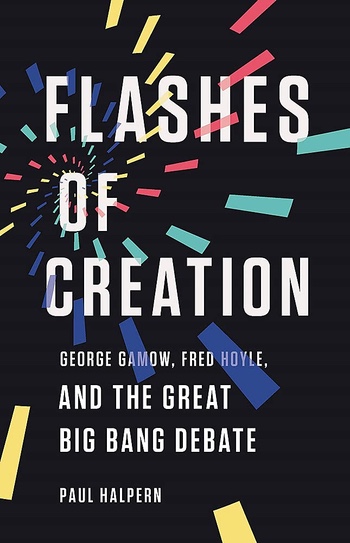
Review: Flashes of Creation
by Jeff Foust Monday, January 10, 2022


Flashes of Creation: George Gamow, Fred Hoyle, and the Great Big Bang Debate
by Paul Halpern
Basic Books, 2021
hardcover, 304 pp., illus.
ISBN 978-1-5416-7359-5
US$30
https://www.amazon.com/exec/obidos/ASIN/154167359X/spaceviews

On Saturday, controllers completed the last of the major deployments of the James Webb Space Telescope when the second of two “wings” holding segments of its primary mirror swung into place. Months of work still lie ahead to align the telescope optics and commission the instruments, but astronomers were both relieved the deployments had gone so well and confident the telescope will fulfill its ambitious science goals. “The core science of this telescope was to see the very first light in the universe: the first galaxies that formed, perhaps even the first stars,” said Heidi Hammel, vice president for science at the Association of Universities for Research in Astronomy, during a press conference Saturday. “That’s why it was built the way it was built.”
https://www.thespacereview.com/article/4309/1

Steady growth beyond the skies: five trends in outer space from 2021
by Harini Madhusudan Monday, January 10, 2022
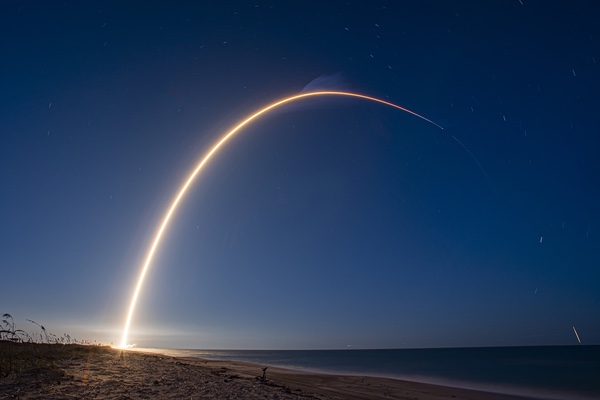

SpaceX launched 31 Falcon 9 rockets in 2021, part of a worldwide surge in orbital launch activity last year. (credit: SpaceX)

Outer space was one of the most successful domains in 2021 amidst fluctuations in politics and industry worldwide. The world observed dynamic growth in space, specifically in the participation of non-state players, while among the government players there was significant institutionalization. There were an estimated 141 orbital launches in the year with 132 successes and up to ten missions that were related to various planetary achievements. The 2020s have seen a significant increase in investment in space, and many of the missions undertaken in the past decade have come to fruition in the past two years. These achievements individually have added a lot of value and have set the ball rolling for a Space Race 2.0. This time, it includes many more contenders than the US or the former USSR, and have expanded to include major corporations competing at an unprecedented scale. What are the highlights of space activities in 2021?
https://www.thespacereview.com/article/4310/1

New year, new (and overdue) rockets
by Jeff Foust Monday, January 10, 2022


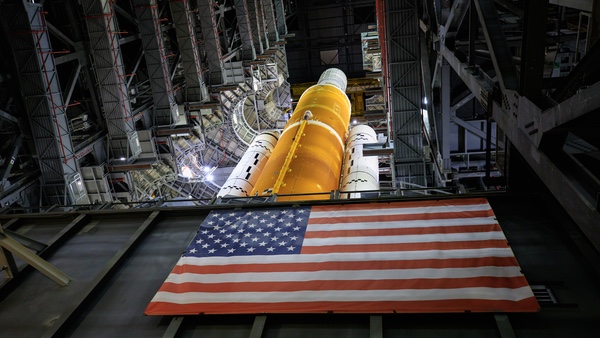
The first SLS in the Vehicle Assembly Building at the Kennedy Space Center, awaiting a first launch some time in 2022. (credit: NASA/Frank Michaux)

In a race to see which will launch first, neither the Space Launch System nor Starship appears to be winning.

Both giant launch vehicles are set to make their first launches early this year. In the case of SLS, that launch comes after years of delays that have had ripple effects on the overall Artemis program. SpaceX’s Starship had also fallen behind the aspirational schedules of its founder, Elon Musk, who in September 2019 predicted that the company would “try to reach orbit in less than six months” (see “Starships are meant to fly”, The Space Review, September 30, 2019).
https://www.thespacereview.com/article/4311/1

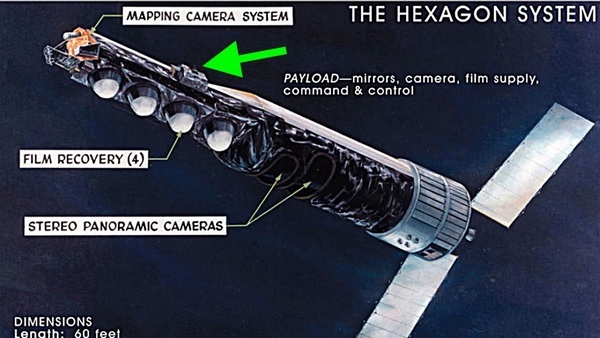
Blacker than a very black thing: the HEXAGON reconnaissance satellite signals intelligence payloads
by Dwayne Day Monday, January 10, 2022


HEXAGON satellites had a large forward section that could carry deployable satellites as well as attached "pallets" used for collecting signals intelligence.

On April 18, 1986, a giant Titan 34D rocket roared off its launch pad at California’s Vandenberg Air Force Base and promptly blew itself to smithereens.

The rocket exploded only a few hundred feet above the ground, relatively close to the ocean, and rained pieces of rocket, propellant, and a top secret spy satellite all over the surrounding area. The satellite was a HEXAGON reconnaissance satellite, the last of its type, and its loss was a major blow to the American intelligence community, happening less than a year after another Titan launching from Vandenberg destroyed another reconnaissance satellite called CRYSTAL (originally KENNEN), leaving the United States with very limited reconnaissance capability.
https://www.thespacereview.com/article/4312/1
« Ostatnia zmiana: Listopada 18, 2024, 13:51 wysłana przez Orionid »

Offline Orionid

  • Weteran
  • *****
  • Wiadomości: 28979
  • Very easy - Harrison Schmitt
Odp: The Space Review
« Odpowiedź #389 dnia: Marca 01, 2022, 09:35 »
Review: Not Yet Imagined
by Jeff Foust Monday, January 17, 2022


Not Yet Imagined: A Study of Hubble Space Telescope Operations
by Christopher Gainor
NASA, 2021
ebook, 452 pp., illus.
free

The James Webb Space Telescope is, in many respects, unlike any other astrophysics mission launched to date: a massive telescope that required an intricate series of deployments after launch last month to take its final shape, with months of commissioning of its mirrors and instruments still ahead, all to peer deeper into the universe than any previous observatory. Yet, it’s based on the legacy and the institutions of its predecessors, notably the Hubble Space Telescope.
https://www.thespacereview.com/article/4313/1

Liability and insurance framework for manufacturers of space objects in India
by Biswanath Gupta, Lavanya Pathak, and Kunwar Surya Pratap Monday, January 17, 2022


India is working to commercialize its launch and satellite manufacturing sectors, but those efforts require reforms in areas like liability and insurance. (credit: ISRO)

On June 24, 2020, India approved the participation of Non-Government-Private-Entities (“NGPEs”),[1] in end-to-end space activities. This shift from exclusive reliance on a state-owned agency, Indian Space Research Organization (“ISRO”), is likely to boost the economy and allow ISRO to focus on capacity building. Thus, ISRO and New Space India Limited (“NSIL”), a public undertaking, will now outsource work to NGPEs on a demand basis and an autonomous nodal agency will regulate private endeavors.[2]
https://www.thespacereview.com/article/4314/1

When SPACs are attacked
by Jeff Foust Monday, January 17, 2022


Virgin Orbit’s stock got a boost when it put a replica of LauncherOne on display in Times Square earlier this month. But when an actual LauncherOne boosted seven cubesats into orbit less than a week later, the company’s stock fell. (credit: Virgin Orbit)

For publicly traded space companies, it may be better to look good than to feel good.

Take Virgin Orbit, the air-launch company that became the latest in a wave of space companies to go public in the last year when it completed its merger with a special-purpose acquisition company (SPAC) in late December. On January 7, the company took part in a ceremony at Nasdaq’s headquarters in New York, ringing the opening bell. A full-sized mockup of its LauncherOne rocket went on display in Times Square as company executives talked up the company’s prospects for the coming year. It looked good, and the market responded accordingly: the company’s stock closed up nearly 25% after dropping nearly every day since its public debut.
https://www.thespacereview.com/article/4315/1

Stealing secrets from the ether: missile and satellite telemetry interception during the Cold War
by Dwayne Day Monday, January 17, 2022


The dishes of the STONEHOUSE site in Ethiopia. STONEHOUSE was used to intercept Soviet deep space signals, such as those emitted by lunar and planetary spacecraft. A site in Turkey was used to intercept the signals that were sent up to the spacecraft. STONEHOUSE was closed in the mid-1970s after civil unrest in Ethiopia made the location unsafe. (credit: NSA)

Atop a mountain in northeast Iran there sit several buildings and some satellite dishes. What they are doing is not clear, but the Iranians have improved the site and added equipment over the past 15 years, indicating that it is active and probably serves as a post for Iran to intercept signals from American and other satellites. That site is notable for another reason: it used to be a CIA facility known as TACKSMAN. TACKSMAN was established in the late 1950s by the CIA to monitor Soviet missile launches from their Baikonur launch facility in Kazakhstan, the same location where Sputnik and Yuri Gagarin launched into space. It was an important Cold War missile telemetry interception cite. CIA officials sometimes had a knack for applying winking codenames to their projects, and this facility was a classic case, because “tacksman” is a Scottish term for somebody who paid rent to his landlord, usually a clan chief. The United States certainly paid the Shah of Iran for the use of land at his hunting palace, in return for the opportunity to hunt Soviet missiles and rockets.[1]
https://www.thespacereview.com/article/4316/1
« Ostatnia zmiana: Listopada 18, 2024, 13:48 wysłana przez Orionid »

Polskie Forum Astronautyczne

Odp: The Space Review
« Odpowiedź #389 dnia: Marca 01, 2022, 09:35 »