38/X 2023 [156-160]156)
Review: Elon Muskby Jeff Foust Monday, October 2, 2023

Elon Musk
by Walter Isaacson
Simon & Schuster, 2023
hardcover, 688 pp., illus.
ISBN 978-1-9821-8128-4
US$35.00
https://www.amazon.com/exec/obidos/ASIN/1982181281/spaceviewsIt’s hard to imagine, at this point in time, anyone not having an opinion of Elon Musk. That is, in part, because of his growing profile, from SpaceX and Tesla to last year’s acquisition of the social media network Twitter (which Musk has since renamed X.)
https://www.thespacereview.com/article/4659/1157)
How orbital refueling will unlock humanity’s potential in spaceby Manny Shar Monday, October 2, 2023
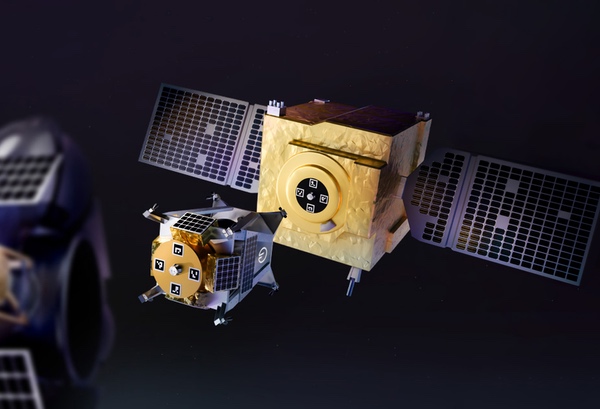 In-space refueling of satellites can extend spacecraft lifetimes and enable new capabilities. (credit: Orbit Fab)
The last half century has witnessed unprecedented growth in our understanding of space, both as a frontier and a domain of endless opportunities. Yet, as with any frontier, there are challenges and barriers that must be overcome. One such challenge is the current limitation of space vehicle endurance and mobility. The solution? In-space refueling.
https://www.thespacereview.com/article/4660/1158)
An ambitious decadal survey for research in spaceby Jeff Foust Monday, October 2, 2023
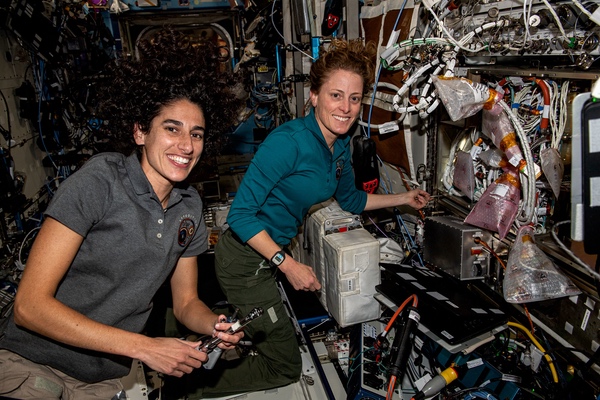 NASA astronauts Jasmin Moghbeli and Loral O’Hara work on the Cold Atom Lab research payload on the ISS, one of the key facilities there for supporting physical science research in space. (credit: NASA)
In other space-related scientific disciplines, the decadal surveys used to guide planning for research and investment have often recommended ambitious missions. Past astrophysics decadals backed what would become the James Webb Space Telescope, which is now delivering on that promise after extensive delays and cost overruns. Planetary science decadals recommended Mars Sample Return, which is facing its own cost and schedule challenges even as scientists continue to advocate for its importance.
https://www.thespacereview.com/article/4661/1159)
Secrets of ExoMarsby Brian Harvey Monday, October 2, 2023
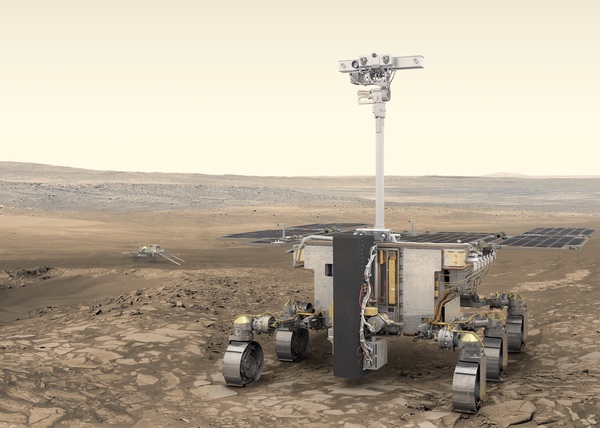 ESA decided to cancel cooperation with Roscosmos on ExoMars just days after the invasion of the Ukraine, and weeks before the Rosalind Franklin rover was due to ship to Russia for launch. (credit: ESA)
When we think of the secrets of Mars, we think of life there, possibly hidden below its surface. A European-Russian rover, ExoMars, was built to go there. It was due to land on June 10, 2023, and might even have found signs of life there by now. Instead, its secrets remain locked up—but on Earth.
https://www.thespacereview.com/article/4662/1160)
Crisis in space: The 1973 Yom Kippur War and “crisis reconnaissance”by Dwayne A. Day Monday, October 2, 2023
 A burning ammunition storage site photographed by an SR-71 Blackbird during the 1973 Yom Kippur War. This was some of the very limited reconnaissance the United States had during the conflict. This is a poor photocopy of the original photograph, which has not been released. (credit: CIA)
On October 6, 1973, tanks from Syria and Egypt rolled on Israeli-occupied territory as artillery bombarded Israeli military targets. At the same time, aircraft from these countries launched multiple strikes. The attack came during the Yom Kippur holiday, catching the Israelis—and America’s political leaders—by surprise.
https://www.thespacereview.com/article/4663/139/X 2023 [161-164]161)
Review: A Million Miles Awayby Jeff Foust Monday, October 9, 2023
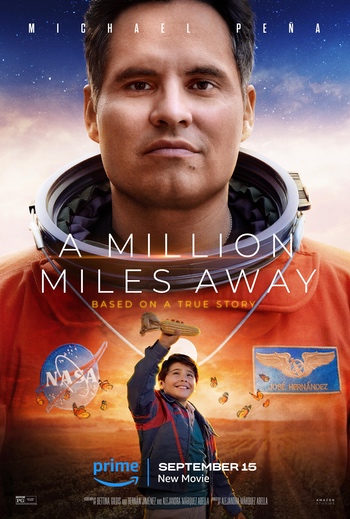 A Million Miles Away
directed by Alejandra Márquez Abella
Amazon Prime Video, 2023
121 minutes, rated PG
https://www.imdb.com/title/tt21940010/?ref_=tt_mv_closeWe are used to a steady, if low volume, stream of astronaut memoirs. People who became NASA (or sometimes ESA or CSA) astronauts describe their journeys to space, recounting the paths they took to realize dreams, often dating from childhood, about becoming astronauts. The individual stories are unique even if they share common traits and characteristics, like perseverance and persistence.
https://www.thespacereview.com/article/4664/1162)
With a tweet, America has joined the race to develop astroelectricity—hopefully!by Mike Snead
Monday, October 9, 2023
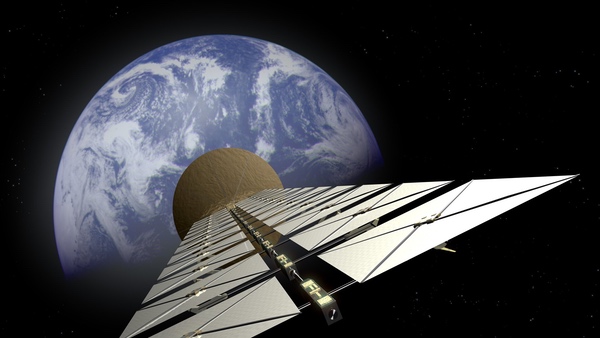 As the European Space Agency and other governments fund space solar power initiatives, the US government may be showing renewed interest. (credit: ESA)
In a September 21 tweet, US Department of Energy (DOE) Secretary Jennifer Granholm suggested that space(-based) solar power (SSP) was now a part of the clean energy mix DOE is pursuing. This off-the-cuff announcement followed preliminary work begun last year by NASA—for the third time—to study SSP.
https://www.thespacereview.com/article/4665/1163)
NASA’s Mars rovers could inspire a more ethical future for AIby Janet Vertesi Monday, October 9, 2023
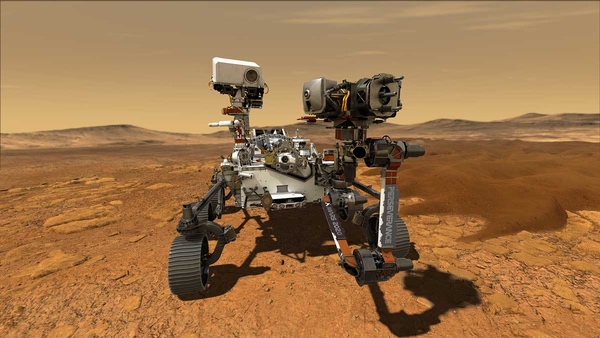 Mars rovers like Perseverance show how artificial intelligence can augment, not replace, human capabilities. (credit: NASA/JPL-Caltech)
Since ChatGPT’s release in late 2022, many news outlets have reported on the ethical threats posed by artificial intelligence. Tech pundits have issued warnings of killer robots bent on human extinction, while the World Economic Forum predicted that machines will take away jobs.
https://www.thespacereview.com/article/4666/1Trwa tworzenie systemu koordynacji ruchu w przestrzeni kosmicznej TraCSS (Traffic Coordination System for Space).
TraCSS będzie w porównaniu z obecnym systemem skanował niebo w celu identyfikacji bliskich podejść satelitów lub potencjalnych kolizji dwa razy częściej (co 2 godziny) niż obecnie.
System będzie składał się z 3. elementów (OASIS, SKYLINE, HORIZON).164)
Getting a new civil space traffic management system on trackby Jeff Foust Monday, October 9, 2023
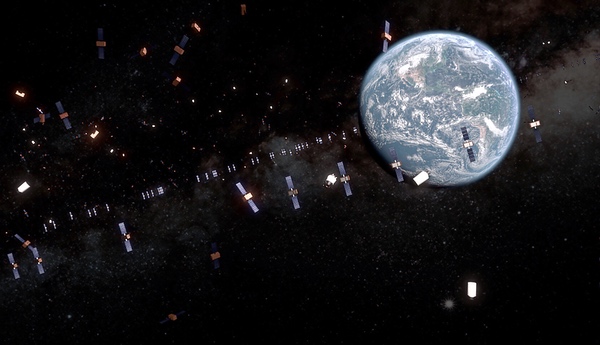 The growth in both active satellites and debris emphasizes the need for improved space traffic management systems. (credit: ESA)
More than five years ago, the White House released Space Policy Directive 3, which established a national policy for space traffic management (see “Managing space traffic expectations”, The Space Review, June 25, 2018). One key element of the policy was direction that the Commerce Department take over the responsibility for providing civil space traffic management (STM) services, like warning satellite operators of potential close approaches, or conjunctions, with other objects.
https://www.thespacereview.com/article/4667/140/X 2023 [165-168]165)
Maybe space shouldn’t be for allby A.J. Mackenzie Monday, October 16, 2023
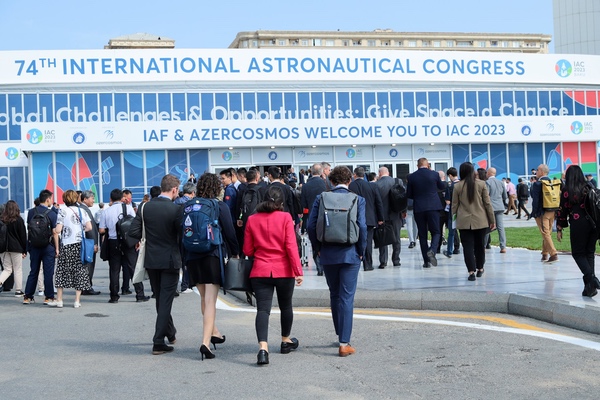 The International Astronautical Federation held its annual conference in Baku, Azerbaijan, this month despite concerns about the situation in Nagorno-Karabakh. (credit: IAF)
Space advocates have for decades been trying to expand the audience for their broad vision of a bold a future for humanity in space or for specific programs and projects. At one level, it’s a laudable effort. Getting more people interested in space helps build support for programs, particularly when trying to get funding. Broadening support also helps expand the pool of potential scientists, engineers, and others who seek to work on them.
https://www.thespacereview.com/article/4668/1166)
The brave new world of spaceby Aditya Chaturvedi Monday, October 16, 2023
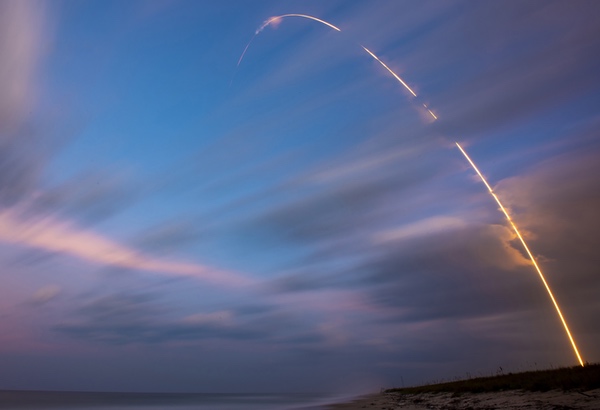 The increase in space access enabled by SpaceX and others is reshaping views of what can be done in space, and also how it should be regulated. (credit: SpaceX)
“Who controls low Earth orbit, controls near Earth space. Who controls near-Earth space dominates Terra. Who dominates Terra, determines the destiny of humankind.”
— Everett Dolman, Author of Astropolitik:
Classic Geopolitik in the Space Age, and Professor, Strategy, US Air Force War College
https://www.thespacereview.com/article/4669/1167)
Commercial lunar landers prepare for liftoffby Jeff Foust Monday, October 16, 2023
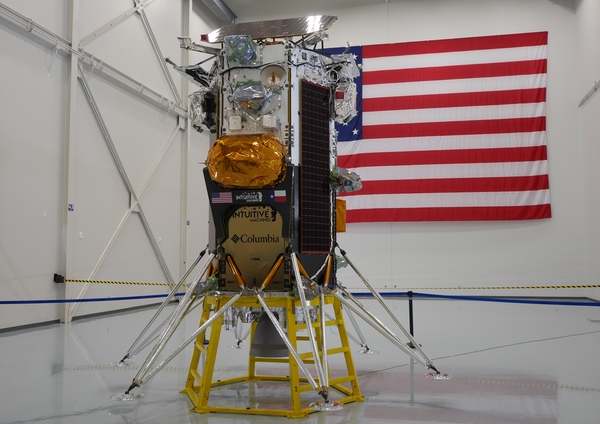 Intuitive Machines showed off its IM-1 lunar lander at its new Houston headquarters before shipping it to Florida for launch as soon as mid-November. (credit: J. Foust)
Houston Spaceport is not a spaceport in the traditional sense of the term. While the spaceport, located at the city’s Ellington Airport, has an FAA spaceport license, it has yet to host a launch or landing, and no companies have announced firm plans to carry out launches from its modest runways in the suburbs not far from NASA’s Johnson Space Center. Instead, the focus has been on turning the airport into an aerospace business hub, including a new business park that’s home to companies like Axiom Space and Collins Aerospace.
https://www.thespacereview.com/article/4670/1168)
Roads not taken in satellite photo-reconnaissance: Part 1, the 1960sby Dwayne A. Day Monday, October 16, 2023
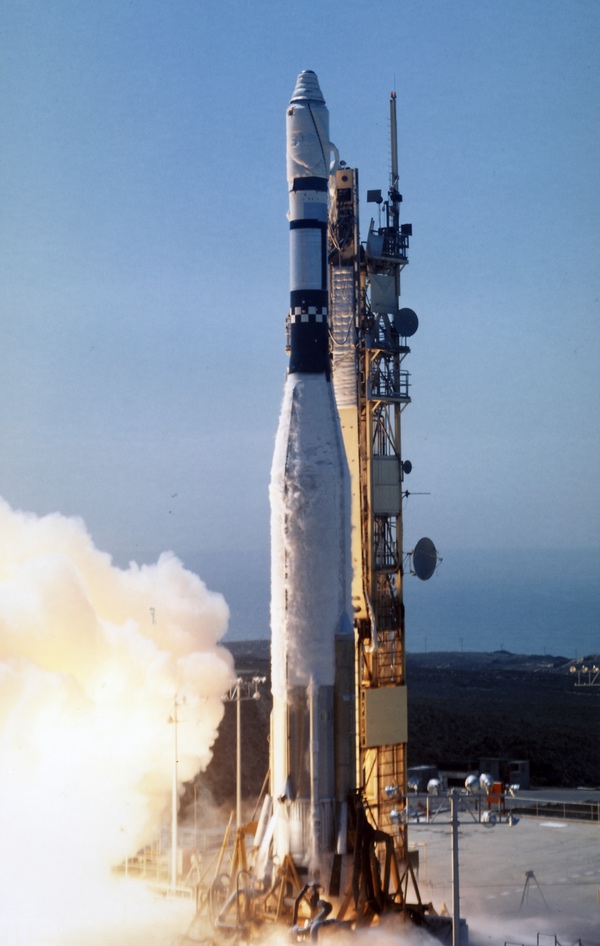 An Atlas-Agena launch in the 1960s carrying a KH-7 GAMBIT reconnaissance satellite. During the decade there were numerous proposals for reconnaissance satellites that were never built, including some that would have used GAMBIT hardware. (credit: USAF)
Today digital cameras are everywhere and most people under 30 will have no concept of what a film camera was. But film was a powerful storage medium for more than a century, and from the late 1950s to the mid-1980s American reconnaissance satellites depended upon it. During this period, the National Reconnaissance Office (NRO), which oversaw the procurement and operation of American reconnaissance satellites, studied numerous alternative reconnaissance satellite designs to meet new requirements.
https://www.thespacereview.com/article/4671/141/X 2023 [169-174]169)
Phil PresselMonday, October 23, 2023
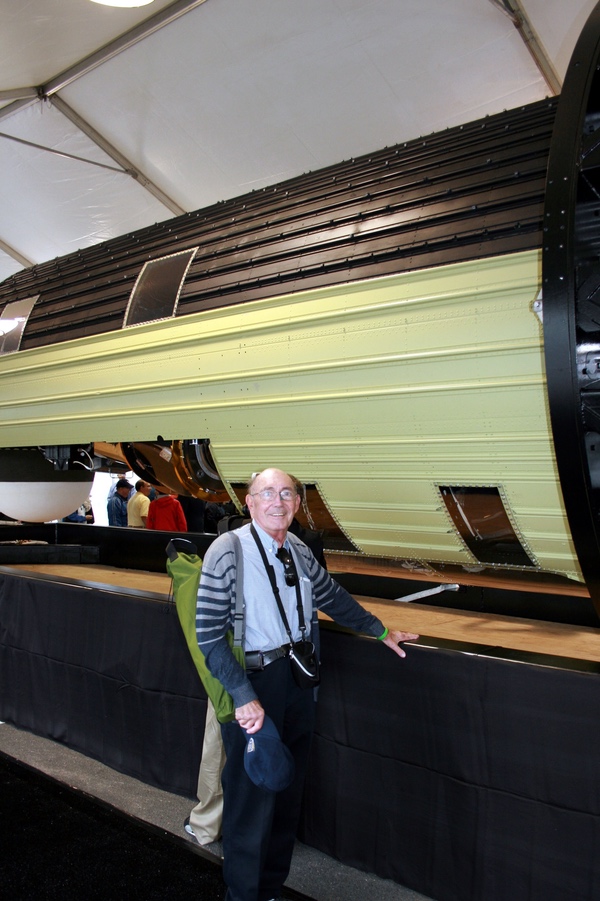 Phil Pressel, one of the designers of the HEXAGON reconnaissance camera, standing next to the engineering mockup of the satellite in 2011. (credit: Roger Guillemette)
Philip Pressel passed away on October 18 at the age of 86. Phil was among the designers of the reconnaissance cameras carried aboard the HEXAGON reconnaissance satellite from 1971 to 1986. In addition, he worked on other national security programs during his long career at Perkin-Elmer Corporation. He was an immigrant and Holocaust survivor.
https://www.thespacereview.com/article/4672/1170)
ISRO prepares for human spaceflightby Gurbir Singh Monday, October 23, 2023
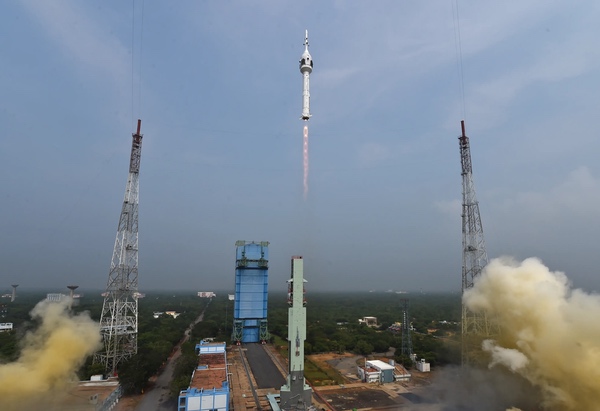 Liftoff of the TV-D1 mission October 21 to demonstrate the crew escape system for the Gaganyaan spacecraft. (credit: ISRO)
In 2025, India is planning its first crewed spaceflight, carrying astronauts on an Indian launch vehicle, launched from India. On October 21, ISRO conducted an uncrewed in-flight abort test. One minute into the flight, the Crew Escape System fired for just over two seconds, pulling the crew module away from the launch vehicle. The momentum took the crew module to an altitude of 17 kilometers, where the Crew Escape System itself separated from the crew module.
https://www.thespacereview.com/article/4673/1171)
ISRO develops its agenda for the futureby Ajey Lele Monday, October 23, 2023
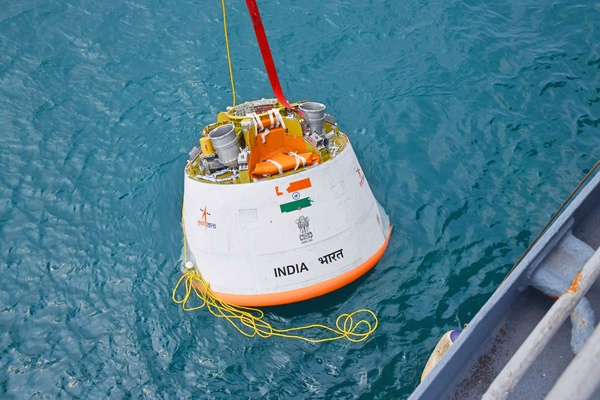 The Gaganyaan capsule prototype used in the abort test is recovered from the ocean after splashdown. (credit: ISRO)
On October 21, the Indian Space Research Organisation (ISRO) successfully tested the Crew Escape System (CES), part of its progress on the human space travel program called Gaganyaan. ISRO will be analyzing the data generated during the entire mission and is expected to undertake three more such tests to validate various technologies required to ensure the crew safety.
https://www.thespacereview.com/article/4674/1172)
My suborbital life, part 1: Childhood’s end, perseverance paysby Alan Stern Monday, October 23, 2023
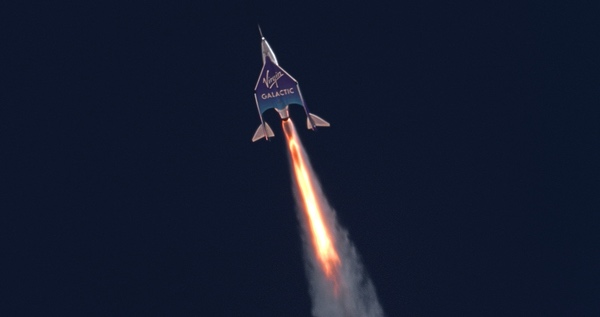 Virgin Galactic’s SpaceShipTwo on ascent to space. (credit: Virgin Galactic)
Late next week, I’m scheduled to launch aboard Virgin Galactic’s VSS Unity on a suborbital spaceflight. I’m not flying as a private astronaut, though, as most Virgin Galactic customers are, but as a researcher, headed to work in space.
https://www.thespacereview.com/article/4675/1173)
My suborbital life, part 2: Objectives, timeline, trainingby Alan Stern Monday, October 23, 2023
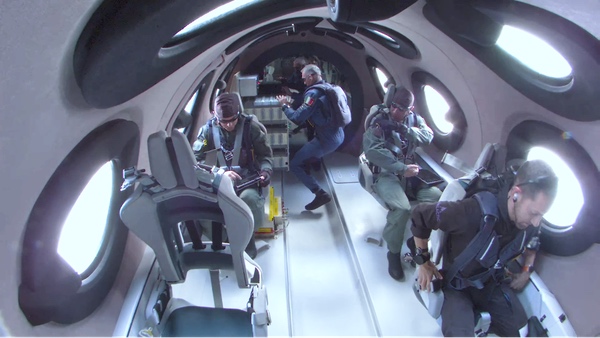 Inside the VG VSS Unity cabin in flight, where my work will take place. (credit: Virgin Galactic)
Late next week I’ll be undertaking my first spaceflight, flying a training and “risk reduction” mission funded by my employer, the Southwest research Institute (SwRI). This flight is in preparation for a NASA-SwRI suborbital research mission that is coming up for me as well, hopefully next year. That research flight will feature two experiments: one to assess the efficacy of the spacecraft for doing suborbital astronomy, and one to take physiological data on an experimenter undergoing suborbital spaceflight.
https://www.thespacereview.com/article/4676/1174)
The launch industry strains launch licensingby Jeff Foust Monday, October 23, 2023
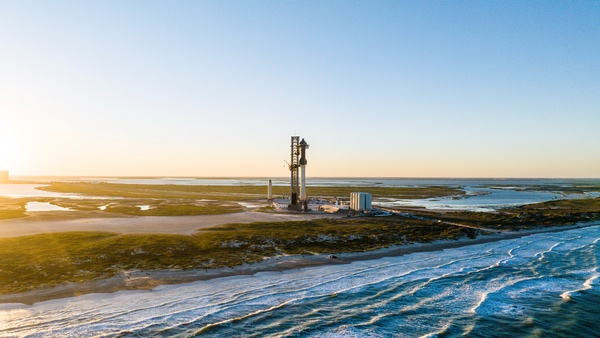 SpaceX is continuing pad tests of its second integrated Starship/Super Heavy vehicle as it awaits an updated FAA launch license. (credit: SpaceX)
There is always some degree of tension between companies and regulators in almost any industry. That tension can be healthy as both companies and government agencies seek the right balance between ensuring safety and allowing progress.
https://www.thespacereview.com/article/4677/142/X 2023 [175-180]175)
My suborbital life, part 3: The suborbital revolution is hereby Alan Stern Friday, October 27, 2023
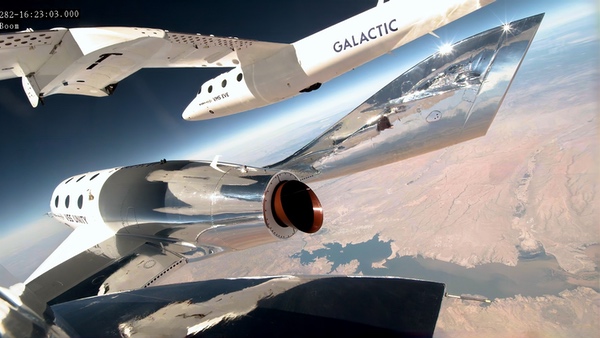 A Virgin Galactic suborbital spaceship at release from its carrier aircraft for ascent to space. (credit: Virgin Galactic)
As I write this blog, I’m about to leave on a business trip to Boston, to lead a science team meeting of the NASA New Horizons mission, which I serve as Principal Investigator (PI) for. The meeting is a typical business trip, one of over a thousand that I’ve made in my career.
https://www.thespacereview.com/article/4678/1176)
My suborbital life, part 4: My research spaceflight training countdown to launchby Alan Stern Saturday, October 28, 2023
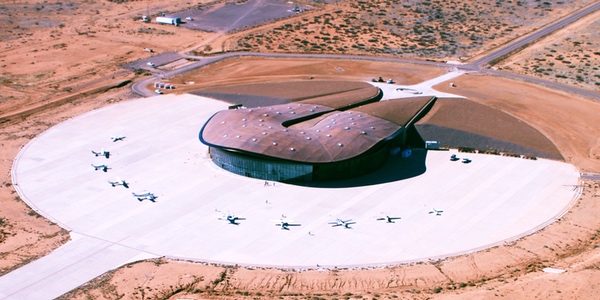 The central hub of Spaceport America in New Mexico. (credit: Spaceport America)
It’s just T-5 days to launch on my first space mission, which is set for liftoff on Thursday, November 2, from Spaceport America in southern New Mexico. Spaceport America is Virgin Galactic’s operations base for commercial suborbital missions.
https://www.thespacereview.com/article/4679/1177)
Review: Deep Skyby Jeff Foust Monday, October 30, 2023
Deep Skydirected by Nathaniel Kahn
IMAX, 2023
40 minutes, unrated
https://www.imdb.com/title/tt28370567/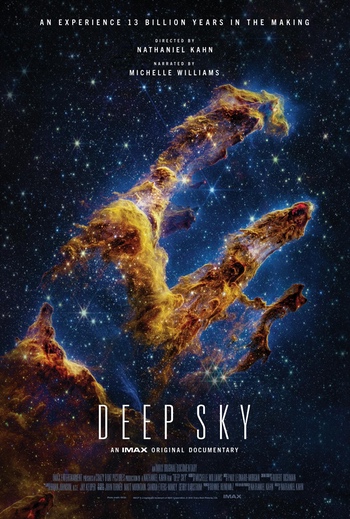
It was inevitable, perhaps, that a very big space telescope would end up on a very big screen. Once it was clear that the James Webb Space Telescope was both a technical and scientific success, putting its dramatic images on an IMAX screen was something close to a no-brainer. “It has to be on an IMAX screen because only that giant screen is making you fully immersed in these worlds,” said Nathaniel Kahn at a National Academies event in July.
https://www.thespacereview.com/article/4680/1178)
Shaking up the commercial space station industryby Jeff Foust Monday, October 30, 2023
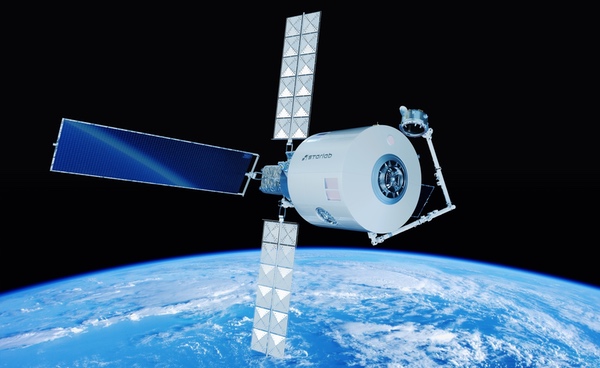 Northrop Grumman is joining forces with Voyager Space on the Starlab space station (above), dropping plans to develop its own. (credit: Voyager Space)
The early years of a new industry can be a bit chaotic. A wave of new entrants rush in, far more than can be reasonably supported by demand. The companies compete vigorously for customers and investment, while also forming—and breaking up—partnerships with one another. Ultimately, only a few will survive, with the rest subsumed by the winners or disappearing entirely.
https://www.thespacereview.com/article/4681/1179)
Roads not taken in satellite photo-reconnaissance: Part 2, the 1970sby Dwayne A. Day Monday, October 30, 2023
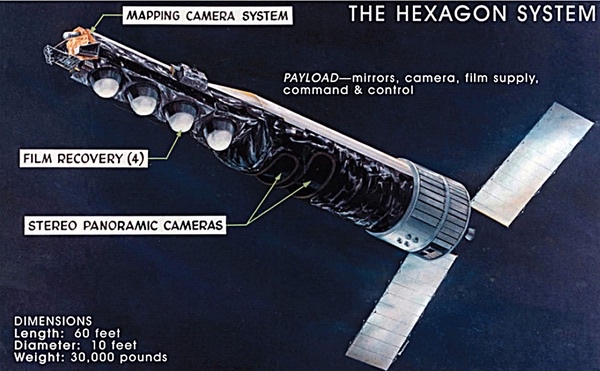 The HEXAGON program lasted from 1971 until the loss of the last vehicle in April 1986. Throughout the life of the program there were various proposals to launch and/or retrieve it using the Space Shuttle. (credit: NRO)
Throughout the 1960s, American aerospace companies proposed and/or studied various reconnaissance satellites that were never put into development. These were intended to fulfill various requirements, often not very well-defined, to improve ground resolution, area coverage, or timeliness. (See part 1 here.) That continued into the 1970s. The early part of the decade included numerous proposals for satellites to produce imagery on a much quicker basis—a day or less—than existing systems.
https://www.thespacereview.com/article/4682/143/X/XI 2023 [180-185]180)
My suborbital life, part 5: Hi Five!by Alan Stern Tuesday, October 31, 2023
 Virgin Galactic’s patch for the upcoming Galactic 05 mission. (credit: Virgin Galactic)
Virgin Galactic’s Galactic 05 suborbital mission I am flying on, still set for November 2, is the fifth commercial suborbital revenue mission for Virgin Galactic.
https://www.thespacereview.com/article/4683/1
 Wątek: The Space Review (Przeczytany 176860 razy)