1/I 2026 [1-6]1)
Review: Gemini: Stepping Stone to the Moonby Jeff Foust Monday, January 5, 2026
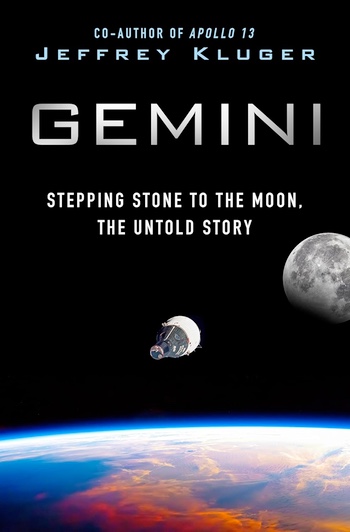 Gemini: Stepping Stone to the Moon, the Untold Story
by Jeffrey Kluger
St. Martin’s Press, 2025
hardcover, 304 pp.
ISBN 978-1-250-32300-2
US$32
https://www.amazon.com/exec/obidos/ASIN/1250323002/spaceviewsIt is almost an article of faith in the space community that the Gemini program has been overlooked and undercovered. It was the middle child of NASA’s early human spaceflight programs, sandwiched between the Mercury missions that put the first Americans in space and the Apollo missions that landed the first humans on the Moon. Gemini, space enthusiasts argue, didn’t get its due.
https://www.thespacereview.com/article/5127/12)
See you on the other side: What Jim Lovell’s Apollo 8 mission taught a divided worldby Kathleen Bangs Monday, January 5, 2026
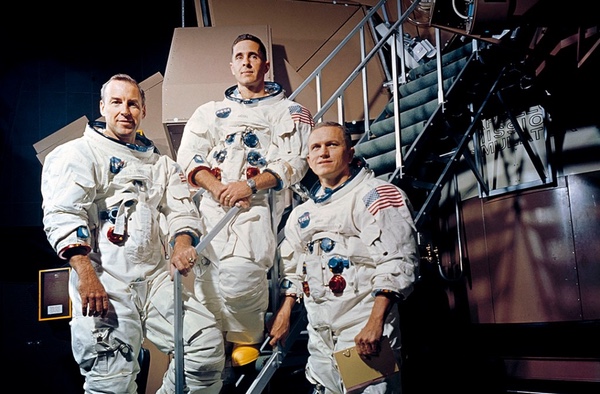
This will be the first New Year of the Space Age without Jim Lovell. The legendary astronaut, who died in August at the age of 97, is most remembered for his steady command of Apollo 13’s crippled spacecraft. But as we enter 2026, it’s his December 1968 Apollo 8 mission that offers a perspective to reconsider.
https://www.thespacereview.com/article/5128/13)
Buck Rogers in the 20th centuryby Dwayne A. Day Monday, January 5, 2026
 Buck Rogers in the Twenty-Fifth Century premiered as a movie in spring 1979 and then on the NBC network in September 1979. It last two seasons. It was not very good. (credit: Universal Studios)
Actor Gil Gerard passed away on December 16, 2025, due to what his wife described as a “rare and viciously aggressive form of cancer.” He was 82. He was most well-known for playing Buck Rogers in the 1979–1981 TV show “Buck Rogers in the Twenty-Fifth Century.” If some television shows, particularly Star Trek, inspired people to go into scientific and engineering fields, or at least to become interested in spaceflight, Buck Rogers did not really inspire anybody, and was at best a lost opportunity, at worst, the non-Star Trek. The show did not last, and indeed, the character of Buck Rogers has not made it out of the 20th century. This wasn’t Gil Gerard’s fault. He was a better actor than the show deserved.
https://www.thespacereview.com/article/5129/14)
Houston deserves a Space Shuttle, but not like thisby Maxwell Zhu Monday, January 5, 2026
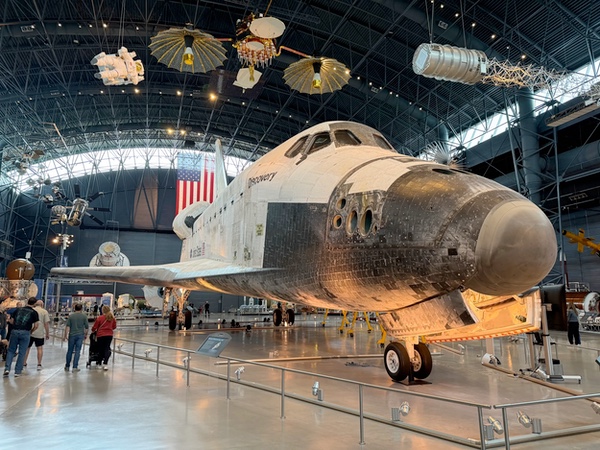 The shuttle orbiter Discovery at its current home, the National Air and Space Museum’s Udvar-Hazy Center. (credit: J. Foust)
For nearly 15 years, the Discovery space shuttle has rested at the Udvar-Hazy Center of the Smithsonian National Air and Space Museum. Millions of schoolchildren have wandered underneath, imagining the roar of its three RS-25 engines as it escapes Earth’s gravity, gazing up at the weathered silica tiles that once protected against the heat of atmospheric re-entry, marveling at its airframe that ferried 184 pilots, scientists, engineers—astronauts all—to and from Earth.
https://www.thespacereview.com/article/5130/15)
Innovative, affordable, and expeditedby Robert Oler Monday, January 5, 2026
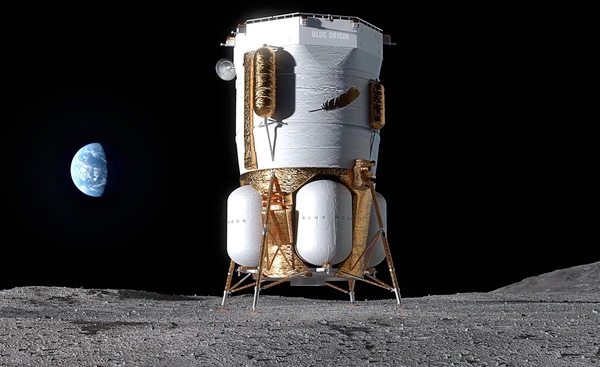 An alternative approach to returning humans to the Moon could involve Blue Origin’s Blue Moon Mark 1 lander. (credit: Blue Origin)
It’s January 20, 2029, and Jared Issacman’s term as NASA administrator is over. Was it a success or failure? Answer: who is first to land on the Moon this century? If it’s China, then it’s a failure. If it’s US and our allies, he is a miracle worker. In the US, the game so far has been badly played but a few cards are still in hand; they need to be played aggressively.
https://www.thespacereview.com/article/5131/16)
The Isaacman era begins at NASAby Jeff Foust Monday, January 5, 2026
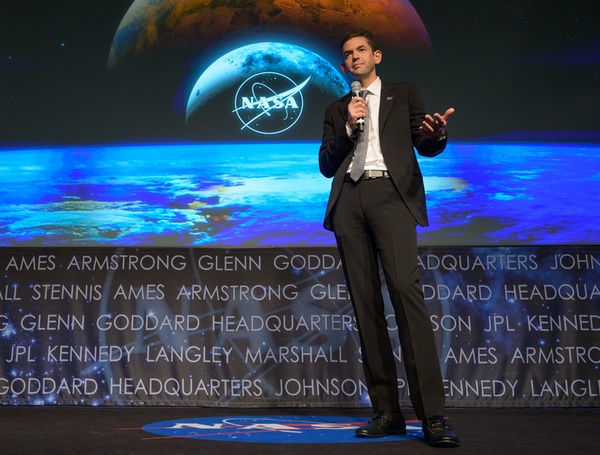 Jared Isaacman speaks at a NASA town hall December 19, a day after he was sworn in as NASA administrator. (credit: NASA/Bill Ingalls)
After a year-long roller coaster of a nomination and confirmation process, the finale was decidedly anticlimactic. On December 17, the full Senate took up Jared Isaacman’s nomination to be NASA administrator, about six weeks after he was renominated (see “Isaacman’s second chance”, The Space Review, November 10, 2025). After senators voted 67–30 on a cloture motion, two hours of debate were reserved for senators to discuss the nomination.
https://www.thespacereview.com/article/5132/12/I 2026 [7-10]7)
Safe passage in the stars: The next Bretton Woodsby Alex Li Monday, January 12, 2026
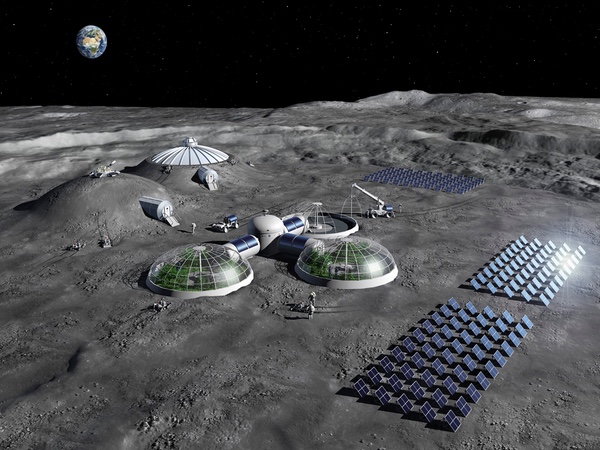 Commerce involving lunar bases and other space facilities will require protection by some nation or group of nations. (credit: ESA/P. Carril)
“Whoever Commands The Sea Commands The Trade; Whoever Commands The Trade Of The World Commands The Riches Of The World, And Consequently The World Itself.” — Sir Walter Raleigh
Dedicated to the loving memory of my maternal grandmother, who taught me that strength comes from perseverance.Even during the Age of Exploration, Sir Walter Raleigh understood one of the major factors of global influence: control of vital maritime trade routes. More than four hundred years later, this fact still rings true. With the Houthis Red Sea shipping attacks in 2023 and 2024 leading to supply chain disruptions, shipping delays, and insurance rate spikes, they reminded the world just how vital these trade routes remain for the global economy.
https://www.thespacereview.com/article/5133/18 )
Building empires in the sky: Effectuating off-Earth territorial expansion using existing legal frameworksby Camisha L. Simmons Monday, January 12, 2026
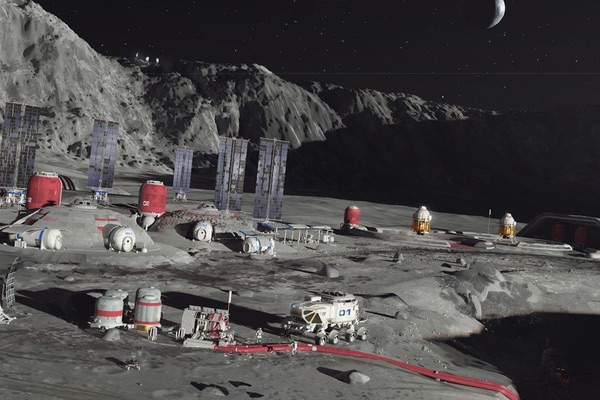 Companies that want to mine the Moon or asteroids could follow legal approaches used in oil and gas exploration on Earth. (credit: ESA)
Throughout human history on Earth, various world powers have sought territorial expansion. We currently see territorial expansion efforts by Russia with respect to Ukraine and China’s desire to wrest ownership of Tawain. Though these attempts at territorial expansion on Earth are significant, the next seismic territorial expansion will occur off-Earth in outer space.
https://www.thespacereview.com/article/5134/19)
Japanese commercial firms as drivers of Japanese space policyby Owen Chbani Monday, January 12, 2026
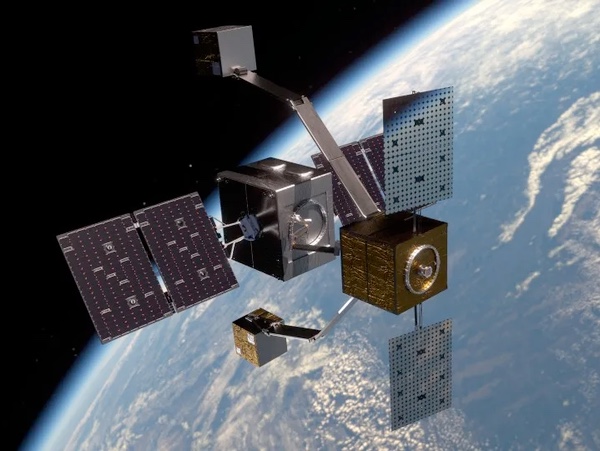 Satellite servicing startup Astroscale is part of a growing Japanese commercial space industry that benefits from policy changes. (credit: Astroscale)Disclaimer: The views expressed in this paper are those of the author and do not necessarily reflect the views or policies of the United States Government.
The rise of America’s commercial space industry has become a key enabler of ambitious programs across the U.S. government and private sector. NASA’s Artemis Program, Golden Dome, and megaconstellations like Starlink and Kuiper all depend on the capabilities of America’s commercial space industry. Since the passage of Japan’s Basic Space Law in 2008, key Japanese firms have acted as key drivers of commercial-enabling policy, leading to a push within Japan for market-enabling regulations, legislation, funding schemes, and a quasi-commercial civil space program. This has also led to the recentering of aspects of the US-Japan space alliance to commercial-led ventures.
https://www.thespacereview.com/article/5135/13/I 2026 [11-15]11)
Apollos anew by Dwayne A. Day Monday, January 19, 2026
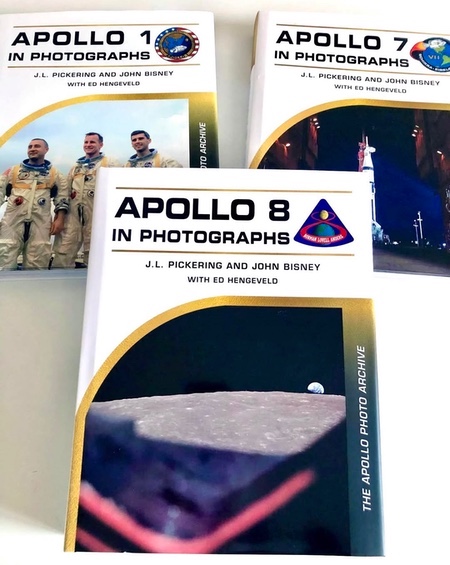
Many aspects of American space history have been extensively covered by historians. There are dozens of books about the Mercury and Gemini programs, and dozens more about the Apollo program. There are books about the missions themselves, astronaut biographies and autobiographies, official histories and technical histories. There are numerous documentaries and podcasts. Thus, it is almost impossible to produce something that is unique and new and adds substantively to what has already come before. In 2019, for the 50th anniversary of the Apollo 11 landing, the BBC World Service produced the amazing podcast “13 Minutes to the Moon…” which told the story of the final minutes before the landing so well, with so much detail, that it reshaped the listener’s understanding of what happened. That podcast proved that we could still be surprised.
https://www.thespacereview.com/article/5137/112)
The successful development of Russia’s counterspace activities in LEO and GEOby Matthew Mowthorpe and Markos Trichas Monday, January 19, 2026
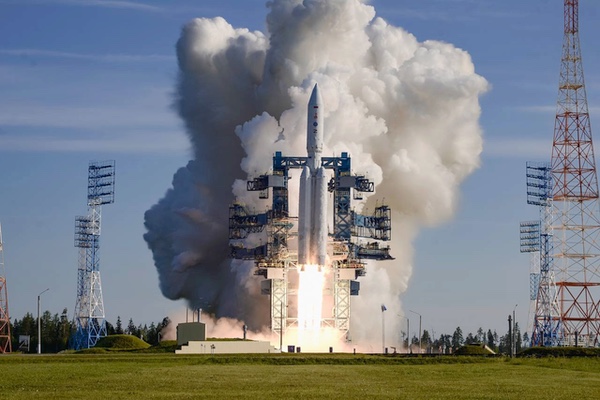 The launch of Cosmos 2589, a spacecraft with a likely counterpsace mission. (credit: Russian MoD)
Russia has continued to develop its arsenal of counterspace capabilities. This has been undertaken often under the guise of developing experimental space systems. This research and development once in orbit and successfully proven has become operational. This includes co-orbital ASAT (Nivelir) systems described as space domain awareness and space-based situational systems.
https://www.thespacereview.com/article/5138/113)
A hell of a character: the late, great, Martin Caidinby Dwayne A. Day Monday, January 19, 2026
 Martin Caidin, who died in 1997, was a prolific aviation and space author. (credit: Wikipedia)
There was a time when novelists—not all of them, but some of them—were larger than life versions of the characters they wrote: hard-drinking, cigar-chomping manly men who tried to out macho their literary rivals. They treated their typewriters as weapons and had reputations that were legendary. Hemmingway and Norman Mailer were the epitome of that stereotype.
https://www.thespacereview.com/article/5139/114)
The PSLV-C62 failure marks a setback for India’s space ambitionsby Ajey Lele Monday, January 19, 2026
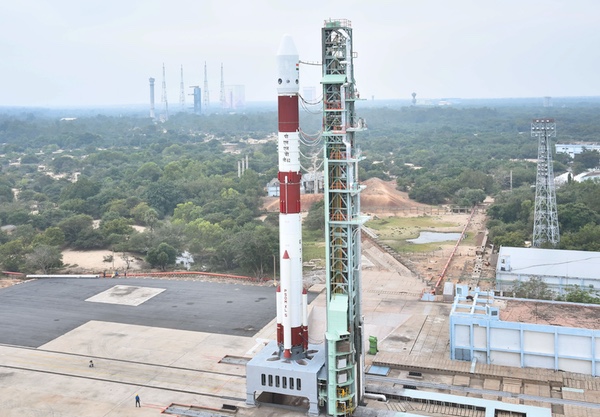 The PSLV rocket before the launch of the ill-fated PSLV-C62/EOS-N1 mission. (credit: ISRO)
On January 12, the Indian Space Research Organisation (ISRO) experienced a setback when its PSLV-C62/EOS-N1 mission failed to reach the designated orbit. While the Polar Satellite Launch Vehicle (PSLV) performed nominally during its first two stages, an anomaly occurred during the third stage of the launch. Notably, on the previous PSLV mission, C61, launched in May 2025, also failed to reach orbit because of a problem with the third stage. Since September 1993, there have been 64 PSLV launches and, among them, five missions have failed. Because the PSLV has built an excellent track record over the years, the recent failures represent a serious concern.
https://www.thespacereview.com/article/5140/115)
Liftoff for European launch startupsby Jeff Foust Monday, January 19, 2026
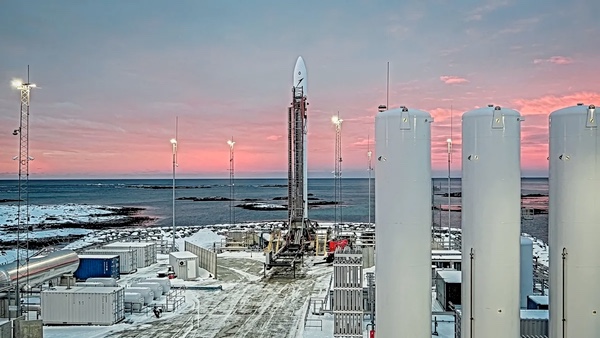 The second Spectrum rocket built by Isar Aerospace is scheduled to launch as soon as January 21. (credit: Isar Aerospace)
It was a little after six o’clock on a Friday evening and the factory was quiet. A little too quiet, perhaps.
“Where is everyone?” asked Stefan Brieschenk as he took a visitor on a tour. It was clear that, despite it being late on a Friday, he expected more people to be at work on the company’s rocket. There were, in fact, some people still working: installing cabling in the rocket’s first stage, assembling subsystems, putting equipment into test cells.
https://www.thespacereview.com/article/5141/14/I 2026 [16-20]16)
Review: The Islands and the Starsby Jeff Foust Monday, January 26, 2026

The Islands and the Stars: A History of Japan’s Space Programs
by Subodhana Wijeyeratne
Stanford University Press, 2026
paperback, 352 pp., illus.
ISBN 978-1-5036-4478-6
US$35
https://www.amazon.com/exec/obidos/ASIN/1503644782/spaceviewsJapan’s space industry suffered a setback last month with an unusual—maybe unique—launch failure. An H3 rocket lifted off carrying the Michibiki 5 navigation satellite, but the upper stage malfunctioned and reentered within hours, presumably with the satellite still attached. A report last week said that pressure in the upper stage’s liquid hydrogen tank dropped, causing reduced thrust of the stage’s engine on the first burn and a failure to ignite on the second. That loss of pressure started when the payload fairing separated. Investigators believes a shock from the fairing separation damaged the satellite and its payload adaptor, which fell into the upper stage and damaged propellant lines, creating a leak. The satellite itself, it appears, never made it to space: images show it falling off the upper stage when it separated from the first stage.
https://www.thespacereview.com/article/5142/117)
Kazakhstan’s space strategy: can its high-tech assets propel it to Eurasia’s new broker?by Zhaslan Madiyev, Olaf J. Groth, and A.B. Sinchev Monday, January 26, 2026
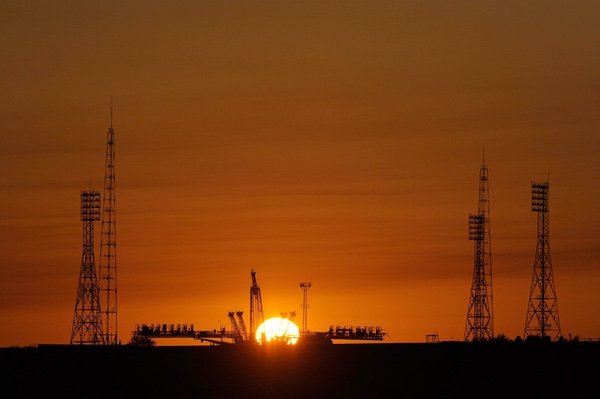 A new opportunity may be dawning for Kazakhstan in space beyond its role as a launch site. (credit: NASA/Bill Ingalls)
Kazakhstan’s skies have long been a launchpad for the country’s dreams of advancement, and today, they may serve as a testing ground for a new model of regional cooperation. For decades, the country has balanced legacy connections with future-oriented ambitions. As space technology, advanced materials, robotics, and AI remake the global economy, Kazakhstan faces a rare opportunity: it can leverage its world-class infrastructure and growing innovation ecosystem to position itself as Eurasia’s “New Broker” of technological collaboration.
https://www.thespacereview.com/article/5143/118)
How superheavy-lift rockets could transform astronomy by making space telescopes cheaperby Martin Elvis Monday, January 26, 2026
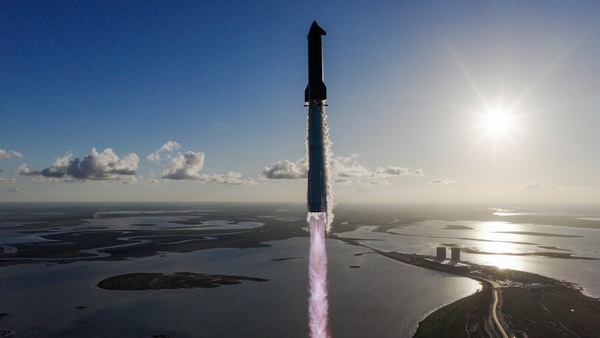 Starship lifts off from Texas October 13 on its 11th test flight. (credit: SpaceX)
After a string of dramatic failures, the huge Starship rocket from SpaceX had a fully successful test on October 13, 2025. After a couple more test flights, SpaceX plans to launch it into orbit.
19)
When satellites are hacked: the legal gray zone of non-kinetic space attackby Aakansh Vijay and Udit Jain Monday, January 26, 2026
 International space law has struggled with how to deal with non-kinetic antisatellite weapons. (credit: UN)
Satellites are the foundation of modern civilization. Global navigation systems, aviation safety, financial transactions, disaster management, and defense operations all depend on space-based services. As dependency on space infrastructure has increased, attacks on it show the emergence of a new silent modern conflict. During the ongoing Russia-Ukraine conflict, Russia jammed GPS signals that were used by civilian aircraft and iinterfered with the Starlink satellite internet service in Ukraine. The commercial satellite network has been experiencing jamming, spoofing, and cyber-attacks, thus indicating a new mode of warfare that is glaringly unregulated.
https://www.thespacereview.com/article/5145/120)
Inching towards launchby Jeff Foust Monday, January 26, 2026
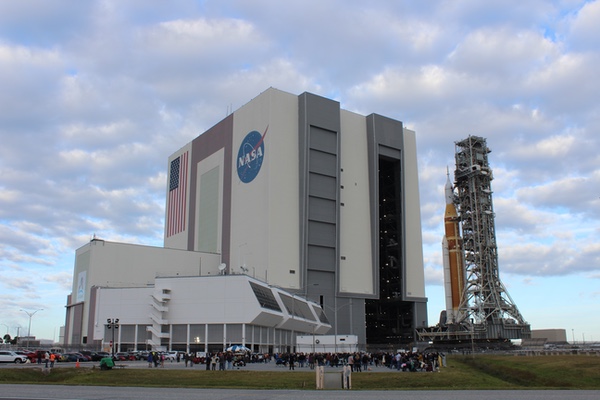 The SLS/Orion stack for Artemis 2 emerges from the Vehicle Assembly Building January 17. (credit: J. Foust)
The faithful turned out by the hundreds to see the rocket, and given the timing and conditions, they had to be really faithful.
Before sunrise on Saturday, January 17, employees and the families drove onto the grounds of the Kennedy Space Center, picking out prime viewing spots near the Vehicle Assembly Building. Besides being early on a Saturday morning, it was also unseasonably cold—for Florida—with temperatures in the low 40s Fahrenheit. Bundled up in winter coats, knit hats, gloves, and blankets, they looked like they were heading to an NFL playoff game in Chicago or Denver.
https://www.thespacereview.com/article/5146/1
 Wątek: The Space Review (Przeczytany 183130 razy)