Autor Wątek: Artykuły o International Space Station (ISS)  (Przeczytany 11164 razy)

0 użytkowników i 1 Gość przegląda ten wątek.

Online Orionid

  • Weteran
  • *****
  • Wiadomości: 28848
  • Very easy - Harrison Schmitt
Odp: Artykuły o International Space Station (ISS)
« Odpowiedź #15 dnia: Kwietnia 22, 2025, 15:19 »
Cytuj
Z uwagi na problemy z NG-22 , CRS-33, którego start zaplanowano na lato pozostanie zadokowany do ISS dłużej i pomoże podnieść orbitę ISS.
CRS-32 pozostanie w składzie ISS około miesiąca.
Cytuj
NASA @NASA 2:45 PM · Apr 22, 2025
Docking confirmed!
@SpaceX's latest resupply mission arrived at the @Space_Station  at 8:40am ET (1240 UTC). The uncrewed Dragon spacecraft is scheduled to remain at the station until May.
https://x.com/NASA/status/1914661810352816488

SpaceX launches 32nd resupply mission for NASA to the International Space Station
April 20, 2025


Former NASA astronaut and current Chief Medical Officer for Sierra Space Tom Marshburn discusses the Dream Chaser spaceplane development and impact at NASA’s Armstrong Test Facility on Thursday, Feb. 1, 2024. Image: Adam Bernstein/Spaceflight Now

The next Cargo Dragon, on the CRS-33 mission, is expected to launch during the summer and stay at the station for a prolonged period of time to test technologies for the U.S. Deorbit Vehicle, which is being built by SpaceX to safely bring down the ISS at the end of its planned life, around 2031.

With the Cygnus delays, CRS-33 additional thrusters will help keep the space station maintain its orbit, according to Scoville.

“There are a lot of parallels with the technologies and the hardware needed for the eventual Deorbit Vehicle, but really it’s intended to be an augmentation or a supplemental capability to ISS,” Sarah Walker, SpaceX’s Director of Dragon Mission Management, said. “It’s really just some tanks and thrusters inside our trunk. It’s a bit heavier than our typical CRS mission, but other than that, you won’t notice a ton of difference.”

Monday’s CRS-32 mission was the fifth flight for the Cargo Dragon C209, one of three cargo vehicles in SpaceX’s fleet. Its previous flights were CRS-22, 24, 27, and 30. Walker noted that the mission will debut “enhanced” drogue parachutes when the capsule makes its return to Earth in about a month. (...)
https://spaceflightnow.com/2025/04/20/live-coverage-spacex-to-launch-32nd-resupply-mission-for-nasa-to-the-international-space-station/
« Ostatnia zmiana: Kwietnia 22, 2025, 15:27 wysłana przez Orionid »

Online Orionid

  • Weteran
  • *****
  • Wiadomości: 28848
  • Very easy - Harrison Schmitt
Odp: Artykuły o International Space Station (ISS)
« Odpowiedź #16 dnia: Kwietnia 29, 2025, 21:47 »
Cytuj
Treściwa konferencja z udziałem astronauty

Veteran NASA astronaut says ISS can operate past 2030
by Jeff Foust April 28, 2025 [SN]


NASA astronaut Don Pettit gives a thumbs-up after landing on a Soyuz spacecraft April 20 (Kazakhstan time), completing seven months on the ISS. Credit: NASA/Bill Ingalls

WASHINGTON — A veteran NASA astronaut just back from the International Space Station believes the orbiting facility can operate well past its planned 2030 retirement date — and he wouldn’t mind another trip there.

Don Pettit returned to Earth April 19 (U.S. time) on a Soyuz spacecraft, completing his third long-duration expedition to the station. He spent 220 days in space on this flight and has logged 590 days in orbit in his career, behind only Peggy Whitson and Suni Williams among American astronauts.

Most of those 590 days were spent on the ISS on three expeditions spread over the life of the station: 2002-2003, 2011-2012 and 2024-2025. The ISS has changed drastically since that first mission, when the station was still in the early phases of assembly. (...)

Pettit said at the briefing that he was recovering well from his latest long-duration spaceflight. He did not look well as he was carried out of the Soyuz spacecraft, and Russian video crews at the landing site took little footage of him after that. “I didn’t look too good because I didn’t feel too good,” he said, including “emptying the contents of my stomach” after landing. (...)

Pettit, who turned 70 years old April 20, said he is not interested in retiring. “I’m ready to go back when the flight docs say I’m ready to go back,” he said. “I’ve got a few more good years left. I could see getting another flight or two in.”
https://spacenews.com/veteran-nasa-astronaut-says-iss-can-operate-past-2030/

NASA says long-running budget shortfalls may lead to ISS crew and research reductions
by Jeff Foust May 20, 2025


The International Space Station seen from a Crew Dragon spacecraft in October 2024. Credit: NASA

(...) Those cargo shortfalls, Weigel said, have led NASA to consider reducing the size of the crew on the station’s U.S. segment — which includes Canada, Europe and Japan — from four astronauts to three. “We’re evaluating the potential for moving to three crew. That’s something that we’re working through and trying to assess today,” she said.

Those reviews predate the proposed cuts in the White House’s 2026 budget proposal. “We haven’t really worked through specific plans for that,” she said, citing a focus on the current challenges as well as day-to-day ISS operations. “When we see the full president’s budget request, we’ll take a look at those details to really understand what changes or adjustments will need to be made.” (...)
https://spacenews.com/nasa-says-long-running-budget-shortfalls-may-lead-to-iss-crew-and-research-reductions/


Cytuj
« Ils ramènent du matériel venu du futur » : SpaceX récupère 3 tonnes d’équipements robotiques ultra-avancés
Eva LAURENT 29/05/2025 à 8h54

Alors que SpaceX Dragon revient sur Terre chargé de plus de 3 000 kg de matériel scientifique, les avancées technologiques qu'il renferme promettent de redéfinir notre compréhension de l'espace.


Illustration de la capsule SpaceX Dragon revenant sur Terre avec du matériel scientifique. Image réalisée par IA.

(...) Parmi les expériences notables ramenées sur Terre figure le projet MISSE-20, un test essentiel pour comprendre la durabilité des matériaux dans l’espace. Cette expérience a permis aux scientifiques d’exposer divers échantillons à des conditions extrêmes, telles que le rayonnement ultraviolet, l’oxygène atomique et les fluctuations de température. Les matériaux, comprenant des écrans de protection contre les radiations, des revêtements pour voiles solaires et des composites céramiques, pourraient significativement améliorer la conception des futurs vaisseaux spatiaux, notamment en ce qui concerne les boucliers thermiques et les coques extérieures. En étant montés à l’extérieur de la station, ces échantillons offrent aux chercheurs une vision claire de la dégradation des matériaux dans l’espace au fil du temps. (...)
https://hellobiz.fr/2025/05/29/ils-ramenent-du-materiel-venu-du-futur-spacex-recupere-3-tonnes-dequipements-robotiques-ultra-avances/

Międzynarodowa Stacja Kosmiczna: fundament badań kosmicznych i symbol globalnej współpracy
Agnieszka Kliks-Pudlik 01.06.2025


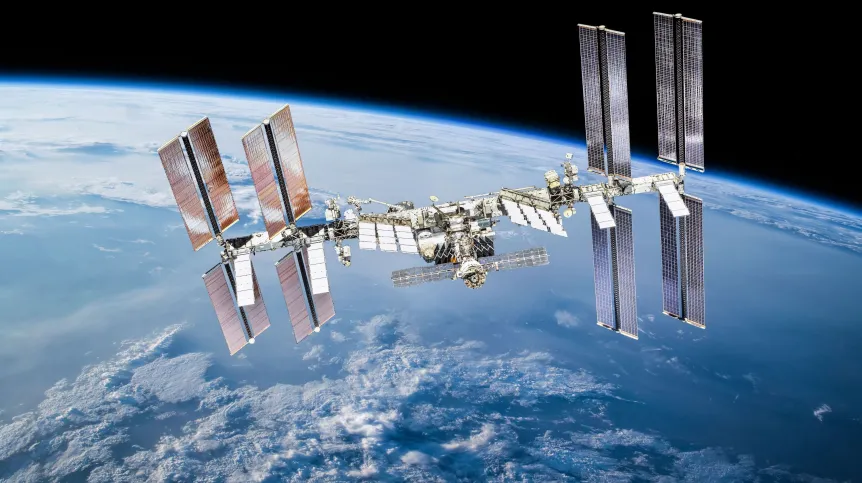
Fot. Adobe Stock

Międzynarodowa Stacja Kosmiczna (ISS) to jedno z najbardziej zaawansowanych osiągnięć współczesnej technologii i symbol współpracy międzynarodowej na rzecz badań kosmicznych. Choć jej dni są policzone, dziedzictwo ISS będzie fundamentem dla nowych inicjatyw wokół eksploracji kosmosu.

(...) Historia ISS sięga 1984 roku, kiedy NASA (amerykańska agencja kosmiczna) ogłosiła projekt budowy stacji orbitalnej Space Station Freedom – za oficjalną aprobatą prezydenta Ronalda Reagana oraz po zatwierdzeniu budżetu przez Kongres Stanów Zjednoczonych.

Wkrótce do projektu dołączyli Kanadyjczycy, Japończycy oraz państwa należące do Europejskiej Agencji Kosmicznej. Projektowanie stacji trwało od 1984 do 1993 roku.

Równolegle ZSRR przygotowywał się do budowy swojej stacji Mir-2. Po zakończeniu zimnej wojny obie strony postanowiły połączyć wysiłki, tworząc wspólny projekt ISS. (...)

Obecnie ISS zbliża się do końca swojej żywotności. 31 grudnia 2021 r. agencja NASA poinformowała bowiem, że od amerykańskiej administracji prezydenckiej otrzymała deklarację przedłużenia okresu działania Międzynarodowej Stacji Kosmicznej do 2030 roku.

W styczniu 2031 roku stacja kosmiczna ma zostać zdeorbitowana. Jej orbita będzie stopniowo obniżana z wysokości około 400 km i ostatecznie stacja spadnie do Oceanu Spokojnego.

W związku z tym NASA zaktualizowała plany dotyczące stacji, zakładając, że do 2030 roku uda się na tyle rozwinąć amerykańskie prywatne firmy kosmiczne, że będą w stanie realizować na niskiej orbicie okołoziemskiej zadania, które wykonywano do tej pory na stacji ISS. Przykładowo firmy takie, jak Blue Origin, Nanoracks i Northrop Grumman, otrzymały wsparcie finansowe na opracowanie nowych platform orbitalnych, które mogą przejąć rolę ISS w zakresie badań naukowych, produkcji przemysłowej czy turystyki kosmicznej. (...)
https://naukawpolsce.pl/aktualnosci/news%2C108076%2Cmiedzynarodowa-stacja-kosmiczna-fundament-badan-kosmicznych-i-symbol

NASA withdraws support for conferences
by Jeff Foust June 5, 2025


NASA had used the ISS Research and Development Conference to discuss the status and future plans for the station, such as this panel discussion at the 2023 event. Credit: SpaceNews/Jeff Foust

(...) “The International Space Station National Laboratory, in close consultation with NASA, has determined that the current regulatory and budgetary environment does not support holding the International Space Station Research and Development Conference (ISSRDC) in 2025,” the organization stated.

It didn’t elaborate on the decision, but industry sources said in recent days that NASA had decided to withdraw its support for the conference. The event, which had been run annually for more than a decade, was used by both NASA and CASIS to highlight research opportunities on the station and provide updates on station activities and future plans, such as the transition to commercial stations. (...)
https://spacenews.com/nasa-withdraws-support-for-conferences/

"Ogrodniczka" z NASA dla PAP: zrezygnowaliśmy z wysyłania w kosmos kapusty pekińskiej
Anna Bugajska 13.06.2025


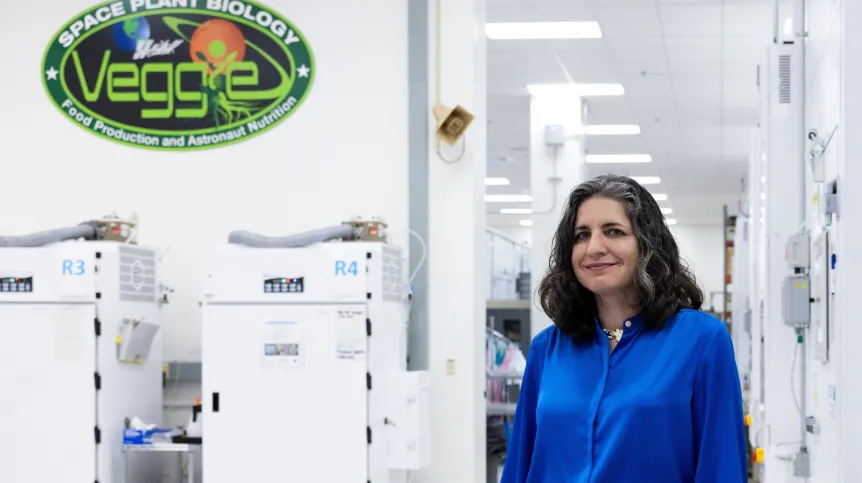
12.06.2025. Na zdjęciu z 9 bm. ekspertka w dziedzinie biologii roślin i starsza naukowczyni projektowa NASA dr Gioia Massa podczas oprowadzania po swoim laboratorium w Centrum Przetwarzania Systemów Kosmicznych na Florydzie. Gioia Massa udzieliła wywiadu Polskiej Agencji Prasowej. (ad) PAP/Leszek Szymański

Dłuższe misje kosmiczne wymagają m.in. urozmaicenia diety astronautów. Naukowcy testują więc możliwość uprawiania na orbicie m.in. pszenicy, jęczmienia czy grochu. Świetnie wypada miniaturowy ogórek, za to kapusta pekińska się nie udaje - mówiła PAP "kosmiczna ogrodniczka" z NASA, dr Gioia Massa.

Rozwój systemów upraw w przestrzeni kosmicznej to jedna z najważniejszych kwestii dla długoterminowych misji - uważa dr Gioia Massa, ekspertka w dziedzinie biologii roślin i starsza naukowczyni projektowa NASA. Jej zespół z Centrum Kosmicznego Kennedy’ego (KSC) na Florydzie (USA) pracuje m.in. nad rozwiązaniami, które mają zapewnić astronautom pożywienie.
https://naukawpolsce.pl/aktualnosci/news%2C108257%2Cogrodniczka-z-nasa-dla-pap-zrezygnowalismy-z-wysylania-w-kosmos-kapusty

https://spacepolicyonline.com/news/nasa-confirming-success-of-iss-leak-repairs-before-finalizing-ax-4-launch-date/

NASA, SpaceX target July 31 for Crew-11 launch to the ISS
July 14, 2025 Will Robinson-Smith


The four crew members of NASA’s SpaceX Crew-11 mission to the International Space Station are pictured inside SpaceX’s Hangar X at NASA’s Kennedy Space Center in Florida. From left to right: Roscosmos cosmonaut Oleg Platonov, NASA astronauts Mike Fincke and Zena Cardman, and JAXA astronaut Kimiya Yui. Image: SpaceX

The next four-person crew heading to the International Space Station is less than three weeks away from launch. On Thursday, NASA announced that it and SpaceX were targeting July 31 for the flight of SpaceX’s Crew-11 mission to the orbiting outpost.

The penultimate Dragon mission for 2025 is set to liftoff from Launch Complex 39A at NASA’s Kennedy Space Center at 12:09 p.m. EDT (1609 UTC). The mission is led by NASA astronaut Zena Cardman. She will be flying along with fellow NASA astronaut Mike Fincke, Japan Aerospace Exploration Agency (JAXA) astronaut Kimiya Yui and Roscosmos cosmonaut Oleg Platonov. (...)
https://spaceflightnow.com/2025/07/14/nasa-spacex-target-july-31-for-crew-11-launch-to-the-iss/

SpaceX, NASA conduct static fire test of a Falcon 9 rocket ahead of the Crew-11 launch
July 28, 2025 Will Robinson-Smith [SFN]


SpaceX conducts a static fire test of its Falcon 9 rocket at Launch Complex 39A at NASA’s Kennedy Space Center at 12:30 p.m. EDT (1630 UTC) on Tuesday, July 29, 2025. The hot fire test of the rocket is part of the prelaunch evaluations leading up to the liftoff of the Crew-11 mission to the International Space Station. Image: Adam Bernstein/Spaceflight Now

Update July 28, 7:14 p.m. EDT: Added NASA comment regarding aborted static fire.
Update July 29, 1 p.m. EDT: Static fire was completed.

The nine Merlin engines that power SpaceX’s Falcon 9 rocket roared to life for about 10 seconds on Tuesday afternoon at NASA’s Kennedy Space Center. With the hold down clamps at Launch Complex 39A keeping the rocket in place, the launch vehicle appeared to perform a good static fire test, pending review.
https://spaceflightnow.com/2025/07/28/live-coverage-spacex-to-perform-a-static-fire-test-of-its-falcon-9-rocket-ahead-of-the-crew-11-launch/

Cumulus clouds scrub launch of Crew-11 mission to the Space Station
July 31, 2025 Will Robinson-Smith [SFN]
Update July 31, 1:12 p.m. EDT: Cumulus clouds caused a scrub of the mission. Teams are targeting no earlier than Aug. 1, 2025, for the next launch attempt, weather permitting.


A SpaceX Falcon 9 rocket, topped with Crew Dragon Endeavour, stands at Launch Complex 39A at NASA’s Kennedy Space Center. The rocket will launch the Crew-11 mission to the International Space Station. Image: Michael Cain/Spaceflight Now

A group of astronauts and a cosmonaut originally slated to fly on other missions finally got their ticket to ride, but will have to wait at least another day before getting to launch. The quartet, led by NASA astronaut Zena Cardman, will head to the International Space Station beginning with a launch from Florida. (...)

A little less than eight minutes after liftoff, B1094 will target a touchdown at Landing Zone 1 (LZ-1) at Cape Canaveral Space Force Station. This will be the 53rd landing at LZ-1, if all goes well, and according to William Gerstenmaier, SpaceX’s vice president of Build and Flight Reliability, this is also the planned last SpaceX use of LZ-1.

The U.S. Space Force is requiring launch providers who want to use landing pads to have them located at the launch complex where the rocket departs. Gerstenmaier said they will continue use of LZ-2 following the retirement of LZ-1.

The two landing pads are located at Launch Complex 13, the future home of Vaya Space and Phantom Space for their small, orbital class rockets. (...)
https://spaceflightnow.com/2025/07/31/live-coverage-nasa-spacex-to-launch-crew-11-mission-to-the-international-space-station-on-a-falcon-9-rocket-from-the-kennedy-space-center/


NASA, SpaceX launch Dragon to the ISS on extended cargo, station boosting mission
August 24, 2025 Will Robinson-Smith


A SpaceX Falcon 9 rocket lifts off from Space Launch Complex 40 at Cape Canaveral Space Force Station to begin SpaceX’s 33rd Commercial Resupply Services (CRS-33) mission to the International Space Station. Image: SpaceX

A Cargo Dragon spacecraft from SpaceX lifted off atop a Falcon 9 rocket in the early hours Sunday morning to begin a day-long journey to the International Space Station. It carried with it more than 5,000 pounds of cargo and science experiment supplies for the astronauts onboard and a new propulsion package for orbit raising maneuvers.

The launch marks SpaceX’s 33rd Commercial Resupply Services (CRS-33) mission to the orbiting outpost. Docking at the forward port of the Harmony module is anticipated on Monday, Aug. 25, at 7:30 a.m. EDT (1130 UTC), marking the 50th Dragon vehicle to reach the ISS. (...)

Packed aboard the Dragon was hardware to support more than 50 science experiments and technology demonstrations, ranging from 3D metal printing to studying bone loss.

The Cargo Dragon spacecraft, serial number C211, making its third trip to the ISS, will be onboard when NASA and it’s international partners mark 25 years of continuous human presence in low Earth orbit about the station. (...)
Cytuj
SpaceX @SpaceX
While docked, Dragon will perform a series of burns to help the @Space_Station maintain its current altitude, using an independent propellant system and two Draco engines in the spacecraft’s modified trunk
https://twitter.com/SpaceX/status/1959504658164265014
https://spaceflightnow.com/2025/08/24/nasa-spacex-launch-dragon-to-the-iss-on-extended-cargo-station-boosting-mission/

Next Boeing Starliner To Fly Without Crew as NASA Looks to Extend SpaceX Missions To 8 Month Rotation
Updated 7:16 PM EDT, Sun July 13, 2025

NASA officials say there's a “strong chance” that Boeing’s next CST-100 Starliner test flight could launch without a crew onboard, as teams continue to work through a series of technical issues with the spacecraft’s propulsion and thermal systems.

Latest Update

At a July 10 media briefing ahead of the upcoming SpaceX Crew-11 launch to the International Space Station (ISS), Steve Stich, manager of NASA’s Commercial Crew Program, provided an update on Starliner’s progress following its first crewed flight last year, which revealed several hardware concerns.

“We really are working toward a flight as soon as early next year...Ultimately, our goal is to get into crew rotation flights with Starliner and those would start no earlier than the second rotation slot at the end of next year.” - Steve Stich, Manager of NASA’s Commercial Crew Program

While that timeline sets the stage for operational crew flights in late 2026 at the earliest, NASA is now considering a cargo-only test mission in early 2026 to validate ongoing fixes; particularly to Starliner’s helium leak problems and the thermal management of its thrusters and surrounding enclosures, informally known as "doghouses."

“We’re still looking at that, whether it will be a cargo flight or not. I think there’s a lot of advantages, I would say, to flying a cargo flight...There’s a strong chance we’ll fly a cargo flight first...We still haven’t made that decision yet." - Steve Stich, Manager of NASA’s Commercial Crew Program

He pointed to SpaceX’s own Crew Dragon development path, where cargo missions played a pivotal role in refining the system before human launches began. [...]
https://tlpnetwork.com/news/america/next-boeing-starliner-to-fly-without-crew-as-nasa-looks-to-extend-spacex-missions-to-8-month-rotation
« Ostatnia zmiana: Września 15, 2025, 18:07 wysłana przez Orionid »

Online Orionid

  • Weteran
  • *****
  • Wiadomości: 28848
  • Very easy - Harrison Schmitt
Odp: Artykuły o International Space Station (ISS)
« Odpowiedź #17 dnia: Września 15, 2025, 10:53 »
Cytuj
Pierwszy lot Cygnusa w wersji  XL.
Jego objętość ciśnieniowa jest o ok. 33% większą w porównaniu z poprzednim statkiem Cygnus (ma wielkość ok. dwóch połączonych modułów dowodzenia Apollo).
Misja NG-23 SS William „Willie” C. McCool  jest 22. lotem Cygnusa realizowanym w ramach kontraktu Commercial Resupply Services 2 zarządzanego przez Northrop Grumman.
Ładunek to ponad 4990 kg zasobów naukowych i zaopatrzenia na pokładzie.
Po dołączeniu do ISS ma pozostać na orbicie do późnej wiosny.
NASA planuje tymczasowe odcumowanie transportowca w listopadzie, co ma być związane z dokowaniem Sojuza MS-28.

Northrop Grumman’s 1st Cygnus XL spacecraft launches on cargo run to the space station
September 15, 2025 Will Robinson-Smith


A SpaceX Falcon 9 rocket blasts off from Space Launch Complex 40 (SLC-40) at Cape Canaveral Space Force Station on Sept. 14, 2025, to begin the NG-23 mission. This was the first launch of a Northrop Grumman Cygnus XL spacecraft. Image: John Pisani / Spaceflight Now

(...) SpaceX’s Falcon 9 rocket thundered off the pad at Space Launch Complex 40 (SLC-40) at 6:11 a.m. EDT (2211). About 8 minutes after taking off, the booster shook the Space Coast with a sonic boom as it touched down at Landing Zone 2 at Cape Canaveral Space Force Station.

(...) This was just the fourth flight for this booster with the tail number B1094. It previously launched a batch of Starlink satellites along with two astronaut missions to the ISS: Axiom Mission 4 and NASA’s Crew-11.

This was one of the final landings at this site as SpaceX builds a new landing pad adjacent to its launch pad at SLC-40. The company expects this new site to be operational by early 2026.

More than 14 minutes into the flight, the Cygnus XL spacecraft was released from the Falcon 9 rocket’s upper stage and it began its more than two-day journey to the space station. NASA confirmed that the two, circular UltraFlex solar arrays successfully deployed about an hour and a half after launch.

The cargo vehicle is scheduled to be berthed to the ISS by NASA astronaut Jonny Kim on Wednesday, Sept. 17. The Cygnus XL is expected to be captured by the robotic arm on the ISS around 6:35 a.m. EDT (1035 UTC) and berthing will begin around 8 a.m. EDT (1200 UTC).

“Our ISS team has worked hand-in-hand with Northrop Grumman to assess how their spacecraft changes affect ISS in our operations,” said Dina Contella, the deputy manger for NASA’s ISS Program, during a prelaunch briefing. “For example, on the ISS side, we had to consider thermal and life support impacts from having a larger vehicle berth to the ISS and we had to assess impacts to the Canadian robotic arm operations.” (...)

“The exact details on the NG-22 configuration, we’re still working through that, but NG-22 will fly,’ Tinter said. “The NG-22 mission will be manifested and again, we’re working with NASA to determine, as we complete the path forward there, exactly what the timing will be.” (...)
https://spaceflightnow.com/2025/09/15/northrop-grummans-1st-cygnus-xl-spacecraft-launches-on-cargo-run-to-the-space-station/

Northrop Grumman cargo ship reaches space Station
September 18, 2025 William Harwood


Northrop Grumman’s Cygnus XL cargo ship on final approach to the International Space Station early Thursday. Image: NASA

(...) The capture came after Northrop Grumman engineers adjusted the sensitivity of main engine fault detection software that prematurely triggered shut downs during two rendezvous thruster firings Tuesday.

As it turned out, the main engine was healthy all along and once the software was adjusted, the spacecraft was able to press ahead with the rendezvous, pulling up to a point just below the station so robot arm operator Jonny Kim, assisted by Zena Cardman, could capture the ship. (...)
https://spaceflightnow.com/2025/09/18/northrop-grumman-cargo-ship-reaches-space-station/
« Ostatnia zmiana: Września 18, 2025, 18:50 wysłana przez Orionid »

Online Orionid

  • Weteran
  • *****
  • Wiadomości: 28848
  • Very easy - Harrison Schmitt
Odp: Artykuły o International Space Station (ISS)
« Odpowiedź #18 dnia: Listopada 27, 2025, 10:35 »
27.11.2025 o 09:27:57 UTC z wyrzutni 31/PU-6 na Bajkonurze wystrzelona została RN Sojuz-2.1a ze statkiem kosmicznym Sojuz MS-28.
Połączy się on z ISS ok. 12:38:32 UTC.
Cytuj
Anatoly Zak @RussianSpaceWeb 10:28 AM · Nov 27, 2025
Soyuz MS-28 lifts off from Baikonur Cosmodrome carrying a crew of three to the ISS.
Updates:
https://russianspaceweb.com/soyuz-ms-28.html
https://twitter.com/RussianSpaceWeb/status/1993975277047959744

NASA astronaut, two cosmonauts take Thanksgiving Day ride to space station
November 27, 2025 William Harwood


The Soyuz rocket launches to the International Space Station with Expedition 74 crew members: NASA astronaut Chris Williams, Roscosmos cosmonauts Sergey Kud-Sverchkov and Sergei Mikaev, onboard, Thursday, Nov. 27, 2025, at the Baikonur Cosmodrome in Kazakhstan. Photo: NASA/Bill Ingots

Astronomer-turned-medical physicist and now NASA astronaut Chris Williams joined two Russian cosmonauts aboard a Soyuz ferry ship Thursday for a Thanksgiving Day flight to the International Space Station, kicking off a planned eight-month stay in orbit.
https://spaceflightnow.com/2025/11/27/nasa-astronaut-two-cosmonauts-take-thanksgiving-day-ride-to-space-station/
« Ostatnia zmiana: Listopada 27, 2025, 22:34 wysłana przez Orionid »

Polskie Forum Astronautyczne

Odp: Artykuły o International Space Station (ISS)
« Odpowiedź #18 dnia: Listopada 27, 2025, 10:35 »

Online Orionid

  • Weteran
  • *****
  • Wiadomości: 28848
  • Very easy - Harrison Schmitt
Odp: Artykuły o International Space Station (ISS)
« Odpowiedź #19 dnia: Grudnia 07, 2025, 11:22 »
Cytuj
Jeszcze planowanych jest w ramach rutynowych startów 6 załogowych Sojuzów oraz 7 amerykańskich statków załogowych.
Oznacza to, że ostatnia ekspedycja będzie miała numer 80, a ilość załogantów może wynieść jeszcze 46.
Niewykluczone, że ostatnia załoga będzie przebywała na stacji ponadstandardowo długo.

International Space Station prepares for new commander, heads into final five years of planned operations
December 5, 2025 Will Robinson-Smith


The International Space Station is pictured from the SpaceX Dragon crew spacecraft during a fly around of the orbiting lab that took place following its undocking from the Harmony module’s space-facing port on Nov. 8, 2021. Image: ESA / NASA / T. Pesquet

(...) On Sunday, Dec. 7 NASA astronaut Mike Fincke will assume the role of ISS Commander, taking over from Russian cosmonaut Sergey Ryzhikov. The cosmonaut along with his colleague, Alexey Zubritsky and NASA astronaut Jonny Kim, will then board their Soyuz spacecraft and undock Monday evening to complete their 245-day mission in orbit. (...)

“Station has sufficient capability for reboost and attitude control, and there are no expected impacts to this capability,” a spokesperson said on Thursday. (...)

Starliner may carry crew on its next voyage, but that depends on the outcome of the Starliner-1 mission. (...)

In these final five years, NASA and its partners will begin winding down station operations and in the immediate years before its demise, the station will be slowly lowered using orbital drag and the station’s thrusters over the course of two to two-and-a-half years, according to Dana Weigel, ISS Program Manager, during a post-launch Crew-11 briefing.

“The Russian segment is prime for doing all of that. So, all of the attitude control, debris avoidance, anything we do with actively lowering is from the Russian segment,” Weigel said. (...)

As for the crews onboard, assuming the current schedule holds, the final years onboard station may look something like the following:

Feb. 2026 – SpaceX Crew-12
July 2026 – Soyuz MS-29
Oct. 2026 – SpaceX Crew-13 or Starliner-2
March 2027 – Soyuz MS-30
June 2027 – Dragon or Starliner
Nov. 2027 – Soyuz MS-31
Feb. 2028 – Dragon or Starliner
July 2028 – Soyuz MS-32
Oct. 2028 – Dragon or Starliner
March 2029 – Soyuz MS-33
June 2029 – Dragon or Starliner
Nov. 2029 – Soyuz MS-34
Feb. 2030 – Dragon or Starliner

Asked whether NASA would want its final crew onboard station to be comprised of seasoned veterans instead of making sure its newest astronauts get flight experience Weigel told Spaceflight Now following the Crew-11 briefing that it’s a complicated question.

“I think there are so many different factors that can work on that. One of the things from a medical consideration standpoint is we do limit radiation exposure for crew members and if we’re asking for a year-long mission, we have to factor all of that in for crew health,” Weigel said.

“So, in an ideal sense, you’d say, ‘Yeah, send me somebody who’s flown, who’s great at spacewalks, this, that and the other.’ But too much experience puts you over the radiation limit.”
https://spaceflightnow.com/2025/12/05/international-space-station-prepares-for-new-commander-heads-into-final-five-years-of-planned-operations/

Soyuz safely lands in Kazakhstan
December 9, 2025 William Harwood


The Soyuz MS-27/73S spacecraft carrying NASA’s Jonny Kim and two Russian cosmonauts undocked from the International Space Station Monday evening as the two spacecraft were sailing 262 miles above eastern Mongolica. Image: NASA

A NASA astronaut and two cosmonaut crewmates strapped into their Soyuz ferry ship Monday evening, undocked from the International Space Station and plunged to an on-target landing on the frigid steppe of Kazakhstan early Tuesday to wrap up an eight-month mission.

With Soyuz commander Sergey Ryzhikov strapped into the descent module’s center seat, flanked on his left by cosmonaut Alexey Zubritsky and on the right by NASA’s Jonny Kim, the Soyuz MS-27/73S spacecraft undocked from the lab complex at 8:41 p.m. EST.

After moving a safe distance away to a precise point in space, the Soyuz braking rockets fired for four minutes and 42 seconds starting at 11:09 p.m., slowing the ship’s 17,100-mph velocity by about 286 mph, just enough to drop the far side of the orbit into Earth’s lower atmosphere.

Enduring re-entry temperatures of some 2,500 degrees Fahrenheit — and rapidly decelerating in the process — the Soyuz descent module, suspended beneath a large orange-and-white parachute, landed at 12:03 a.m. EST Tuesday (0503 UTC, 10:03am local time) and tipped over on its side. (...)

After more detailed medical checks, the crew was to be flown by helicopter to the town of Dzhezkazgan where Kim planned to board a NASA jet for the long flight home to the Johnson Space Center in Houston. Ryzhikov and Zubritsky will head for Star City near Moscow for debriefings and reunions with family members.

Left behind aboard the space station were NASA Crew 11 fliers Zena Cardman, Mike Fincke, Japanese astronaut Kimiya Yui and cosmonaut Oleg Platonov. (...)
https://spaceflightnow.com/2025/12/09/soyuz-safely-lands-in-kazakhstan/

After half a decade, the Russian space station segment stopped leaking
Eric Berger – 2 sty 2026 16:30

“NASA and Roscosmos continue to monitor and investigate the previously observed cracks.”

A small section of the International Space Station that has experienced persistent leaks for years appears to have stopped venting atmosphere into space.

The leaks were caused by microscopic structural cracks inside the small PrK module on the Russian segment of the space station, which lies between a Progress spacecraft airlock and the Zvezda module. The problem has been a long-running worry for Russian and US operators of the station, especially after the rate of leakage doubled in 2024. This prompted NASA officials to label the leak as a “high likelihood” and “high consequence” risk. (...)

The problems there occurred when a Soyuz rocket launched Roscosmos cosmonauts Sergei Kud-Sverchkov and Sergei Mikayev, as well as NASA astronaut Christopher Williams, on an eight-month mission to the International Space Station in late November. The rocket had no difficulties, but a large mobile platform below the rocket was not properly secured prior to the launch and crashed into the flame trench below, taking the pad offline.

It is unclear when the pad, Site 31 at the Baikonur Cosmodrome in Kazakhstan, will come back online.

Russia had been targeting a return-to-flight mission in March 2026. NASA now appears to believe that. The US space agency’s internal schedule, which was recently updated, has the next Progress spacecraft launch set for March 22, followed by another Progress mission on April 26. The next Soyuz crewed mission, MS-29, remains scheduled for July 14th. This flight will carry NASA astronaut Anil Menon to the space station.
https://arstechnica.com/space/2026/01/finally-some-good-news-for-russia-the-space-station-is-no-longer-leaking/
« Ostatnia zmiana: Stycznia 07, 2026, 23:11 wysłana przez Orionid »

Online mss

  • Moderator Globalny
  • *****
  • Wiadomości: 10747
  • he/him
    • Astronauci i ich loty...
Odp: Artykuły o International Space Station (ISS)
« Odpowiedź #20 dnia: Grudnia 07, 2025, 21:16 »
Z pierwszych 4 statków załogowych na dziś znamy składy załóg 3 statków czyli do marca 2027!
"Mathematics is the language in which God has written the universe." - Galileo Galilei (1564 - 1642)

Online Orionid

  • Weteran
  • *****
  • Wiadomości: 28848
  • Very easy - Harrison Schmitt
Odp: Artykuły o International Space Station (ISS)
« Odpowiedź #21 dnia: Stycznia 08, 2026, 15:00 »
Cytuj
Czy przełożenie EVA-94 będzie miało wpływ na EVA-95 ?

NASA weighs an earlier end to the Crew-11 mission after a ‘medical situation’ with an ISS crew member postpones first spacewalk of 2026
January 7, 2026 Will Robinson-Smith


At center, JAXA (Japan Aerospace Exploration Agency) astronaut and Expedition 74 Flight Engineer Kimiya Yui assists NASA astronauts Zena Cardman (left) and Mike Fincke (right), the station’s flight engineer and commander respectively, during spacesuit checks inside the International Space Station’s Quest airlock. Image: NASA

(...) EVA 95 was scheduled for Jan. 15, a day before NASA aims to have a SpaceX Cargo Dragon spacecraft perform its last scheduled boost of the station, part of work to prepare for the station’s end of life in about five years.

That Dragon spacecraft, which launched on the CRS-33 mission on Aug. 24, 2025, is slated to undock from the ISS on Jan. 21, followed by the unberthing of Japan’s HTV-X cargo vehicle on Jan. 27 and release on Jan. 28. With the spacewalk delay, it’s now unclear if NASA will have time to perform one or both of the spacewalks before those vehicles need to depart.

And if Crew-11 does indeed end earlier than originally planned, it may necessitate additional station schedule shifts, including EVA 94 and EVA 95.
https://spaceflightnow.com/2026/01/07/nasa-postpones-first-spacewalk-of-2026-due-to-a-medical-concern-with-an-iss-crew-member/
« Ostatnia zmiana: Stycznia 12, 2026, 09:16 wysłana przez Orionid »

Online Orionid

  • Weteran
  • *****
  • Wiadomości: 28848
  • Very easy - Harrison Schmitt
Odp: Artykuły o International Space Station (ISS)
« Odpowiedź #22 dnia: Lutego 11, 2026, 08:59 »
Crew-12 astronauts will be 1st allowed to take smartphones to space
Eric Lagatta   USA TODAY


NASA Administrator Jared Isaacman announced that, starting with Crew-12 and Artemis 2, astronauts will be able to take modern smartphones to space.

(...) The USA TODAY Network left a message Feb. 9 with NASA's media office seeking more information about how smartphones could be used in space.

The change comes after NASA officials "challenged long-standing processes" that governed the type of hardware and technology considered safe for space travel, Isaacman said.

"This is a small step in the right direction," Isaacman said. (...)
https://eu.usatoday.com/story/news/nation/2026/02/09/crew-12-smartphones-space-isaacman/88546553007/

‘Very lucky day’: NASA, SpaceX ace astronaut launch to the space station on Friday the 13th
February 14, 2026 Will Robinson-Smith [SFN]


A composite shot showing the liftoff of SpaceX’s Falcon 9 from Space Launch Complex 40 and the landing of the Falcon booster, 1101, at the new recovery site, Landing Zone 40, during NASA’s SpaceX Crew-12 mission on Friday, Feb. 13, 2026. Image: John Pisani/Spaceflight Now

(...) The forthcoming arrival of Crew-12 at the ISS marks the beginning of a busy period for the orbiting outpost. At the end of February, SpaceX will undock its Cargo Dragon vehicle that’s flying the company’s 33rd Commercial Resupply Services (CRS-33) mission.

That will be followed by the unberthing of JAXA’s (Japan Aerospace Exploration Agency) HTV-X cargo vehicle in early March. Then in the mid-March two astronauts will conduct a spacewalk that was postponed with the early departure of Crew-11 from the space station.

Then at the end of March, Roscomos is set to launch its next Progress cargo vehicle. Finally, in April, SpaceX will launch Northrop Grumman’s next Cygnus spacecraft, on the NG-24.

“So a lot going on, as always. Very, very busy onboard space station,” said Dana Weigel, manager of NASA’s International Space Station Program. “We’re really looking forward to having the crew onboard.” (...)
https://spaceflightnow.com/2026/02/14/very-lucky-day-nasa-spacex-ace-astronaut-launch-to-the-space-station-on-friday-the-13th/

Replacement crew docks at space station, boosts crew back to seven
February 15, 2026 William Harwood [SFN]


The Crew 12 fliers cavort aboard the International Space Station shortly after floating inside Saturday. They joined station commander Sergey Kud-Sverchkov, back left in black shirt, NASA astronaut Chis Williams and cosmonaut Sergey Mikaev, both wearing black shirts. The Crew 12 astronauts, from left to right, are cosmonaut Andrey Fedyaev (upside down), Jack Hathaway, Jessica Meir and French astronaut Sophie Adenot at far right. Image: NASA

(...) As for the trip up, Adenot, a veteran French air force helicopter test pilot, sky diver and SCUBA expert, said SpaceX gave the crew “quite a ride, very fun!”

“The first time we looked at the Earth was, wow, mind blowing,” she said. “The Earth is so beautiful from up (here). We see no lines, no borders, it was a very big moment for us, for Jack and me, to see that for the first time.”

Meir and her crewmates are replacing Crew 11 commander Zena Cardman, Mike Fincke, Japanese astronaut Kimiya Yui and cosmonaut Oleg Platonov, whose early departure last month left the station with just three occupants: Kud-Sverchkov, Mikaev and Williams.

While the outpost can be safely operated by a crew of three, a single NASA astronaut cannot carry out a full range of NASA and partner agency research as well as required maintenance.

In addition, spacewalks, which require two astronauts using a “buddy” system, are ruled out.

NASA managers attempted to move up Crew 12’s launch by about four days to as early as Feb. 11 to shave off some of the time Williams would be the sole operator of systems in the U.S. segment of the space station. (...)

“We’re going to go forward with that plan, so if you could just have the (flight) surgeon ready for us after we get all docked we would appreciate that,” Hathaway radioed. Mission control replied: “We’ll be ready to support.”

Under strictly enforced medical privacy guidelines, NASA does not discuss astronaut health issues, and it wasn’t known what sort of issue might have prompted the request for a post-docking PMC.

About half the men and women who fly in space suffer nausea and related symptoms during their initial adaptation to weightlessness, but the discomfort typically abates after a few days in orbit.
https://spaceflightnow.com/2026/02/15/replacement-crew-docks-at-space-station-boosts-crew-back-to-seven/

SpaceX, NASA mission arrives at ISS, relieving bare-bones astronaut crew
By Jackie Wattles

(...) Given Crew-11’s emergency medical departure, the Crew-12 astronauts had no such handover period. But Meir said she and her crewmates were able to exchange information with the Crew-11 astronauts on the ground.

“We ran into them several times and had a little bit of a debrief so they could pass along some pertinent things,” she said during a February 8 news conference.

The Crew-11 astronauts’ premature departure left the football field-size space station with three remaining staff members: two Russian cosmonauts, Sergey Kud-Sverchkov and Sergei Mikayev, as well as NASA astronaut Chris Williams, who traveled to the orbiting laboratory as part of a rideshare agreement with Roscosmos, NASA’s Russian counterpart. (...)
https://edition.cnn.com/2026/02/13/science/spacex-crew-12-launch-nasa?cid=external-feeds_iluminar_google

‘It's fun to be up in space with you’: Artemis 2 crew calls up space station astronauts
Author of the article:By AFP Published Apr 07, 2026

The two crews connected Tuesday afternoon with an audio call — the first of its kind in the history of spaceflight

The Artemis astronauts hurtling back home after circling the moon have had regular communication with their team on Earth, but on Tuesday they got to chat with colleagues floating elsewhere in space.

“We have been waiting for this like you can’t imagine,” said Artemis 2 mission commander Reid Weisman as his crew began the call with astronauts aboard the International Space Station.

“It’s fun to be up in space with you at the same time!” said Canadian astronaut and Artemis 2 crewmember Jeremy Hansen.

At around 2:40 p.m. ET, the two crews connected with an audio call — the first of its kind in the history of spaceflight — and spoke about what it was like for the Artemis crew to launch and then fly around the moon.

The call came one day after the Artemis crew had a packed day filled with milestones like breaking the space travel distance record, conducting the first lunar flyby in more than 50 years, and delivering more than six hours of vivid observations of the moon’s surface.

Unsurprisingly, the ISS team had questions.

“We know how fortunate all of us are as humans to come up here and look down at the Earth from above,” said ISS Crew-12 commander Jessica Meir. “Every astronaut that comes to space remarks on that.”

“And we really wanted to hear what that felt like, how different that felt now from your new perspective around the moon?”

Artemis astronaut Christina Koch — she and Meir were the first women to participate in an all-female spacewalk — said viewing Earth from near the moon, which is roughly 1,000 times farther away than the ISS, was particularly striking given all the “blackness.”

“It truly emphasized how alike we are, how the same thing keeps every single person on planet Earth alive.”

And they commiserated about life in space, and how ISS missions — all three of the American Artemis astronauts had previously served on the ISS — had prepared them for their historic lunar voyage.

“Basically every single thing that we learned on ISS is up here,” said Koch.

“And then, of course, there’s the funny and practical, how to eat, how to do silly things with water, how to flip around. We’re bringing that with us too.”

And they commiserated about life in space, and how ISS missions — all three of the American Artemis astronauts had previously served on the ISS — had prepared them for their historic lunar voyage.

“Basically every single thing that we learned on ISS is up here,” said Koch.

“And then, of course, there’s the funny and practical, how to eat, how to do silly things with water, how to flip around. We’re bringing that with us too.”

And Wiseman relayed an amusing anecdote about Canadian Hansen, whose trip around the moon was also his first time in space.

As they prepared to fire their engines to blast off towards the moon and out of Earth’s orbit, there was a moment when the view of Earth grew rapidly in the window, Wiseman explained.

“Jeremy turns around to us and goes, ‘I’m not sure. I think we’re going to run right into it!,'” he continued.

“We were all dyin’ laughin’.”

Following their lunar flyby, the Artemis 2 astronauts are on their long journey back home and expected to splash back down on Earth late Friday.


— With additional reporting from Bloomberg
https://nationalpost.com/news/space/artemis-2-space-station-call
« Ostatnia zmiana: Kwietnia 09, 2026, 16:14 wysłana przez Orionid »

Polskie Forum Astronautyczne

Odp: Artykuły o International Space Station (ISS)
« Odpowiedź #22 dnia: Lutego 11, 2026, 08:59 »