Autor Wątek: Artykuły o Artemis II  (Przeczytany 2621 razy)

0 użytkowników i 2 Gości przegląda ten wątek.

Online Orionid

  • Weteran
  • *****
  • Wiadomości: 28975
  • Very easy - Harrison Schmitt
Artykuły o Artemis II
« dnia: Kwietnia 03, 2023, 17:57 »
https://twitter.com/collectSPACE/status/1642915234368176129
NASA names Artemis II crew for first moon mission since Apollo

April 3, 2023 — NASA has named its first astronaut crew bound for the moon in more than 50 years.

The space agency on Monday (April 3) announced the four astronauts who will launch on its Artemis II mission to fly around the moon. The crew is expected to become the first moon voyagers since the Apollo program.

The Artemis II crew includes commander Reid Wiseman, pilot Victor Glover and mission specialists Christina Koch and Jeremy Hansen. Hansen is a Canadian Space Agency (CSA) astronaut flying under an agreement between the U.S. and Canada. He will be the first non-American to leave Earth orbit and fly to the moon.
http://www.collectspace.com/news/news-040323a-nasa-names-artemis-2-moon-crew.html

NASA announces crew for Artemis 2 mission
Jeff Foust April 3, 2023


The Artemis 2 crew of (clockwise from top) Victor Glover, Jeremy Hansen, Reid Wiseman and Christina Koch. Credit: NASA

HOUSTON — NASA announced April 3 the three Americans and one Canadian who will be on the crew of the Artemis 2 mission, the first humans to travel beyond low Earth orbit in more than half a century.
https://spacenews.com/nasa-announces-crew-for-artemis-2-mission/

NASA names crew for first human mission to the moon in more than 50 years
April 3, 2023 Stephen Clark [SFN]

NASA announced Monday that former U.S. Navy fighter pilots Reid Wiseman and Victor Glover, veteran space station astronaut Christina Koch, and rookie Canadian astronaut Jeremy Hansen will crew the Artemis 2 mission to fly around the far side of the moon as soon as late next year, a test flight that will carry the foursome farther from Earth than any humans in history.
https://spaceflightnow.com/2023/04/03/nasa-names-crew-for-first-human-mission-to-the-moon-in-more-than-50-years/

How NASA’s astronauts learned they’d been assigned to the moon mission
By Christian Davenport April 3, 2023 at 5:03 p.m. EDT

The head of the astronaut corps scheduled a secret meeting to let them know, but the astronauts were all late


NASA astronauts Victor Glover, Reid Wiseman and Christina Koch arrive at Johnson Space Center in Houston on Monday. (Jonathan Newton/The Washington Post)

HOUSTON — It was a virtual meeting. NASA astronaut Christina Koch was sure of it. But when she logged on to her computer a couple of weeks ago and searched for the meeting link, she realized there was no link.

So she texted her boss and asked, “‘Hey, can we meet virtually?’ And he said: ‘Nope. You’re going to want to be in person for this one.’”

So she hopped in her car and made the drive across town to the Johnson Space Center, home of NASA’s astronaut corps.

“I was late. Very late,” she said. “I realized when I got to the room that it was a bigger meeting than I realized.”

She was being assigned to NASA’s Artemis II mission, the first to return people to the vicinity of the moon since the last of the Apollo missions, some 50 years ago.

Astronaut crew assignments are notoriously secretive. Not even astronauts know how they get selected for missions. And this was going to be the biggest crew assignment in a generation, the next step in NASA’s return to the moon. But the astronaut office was having a hard time corralling its astronauts.

Koch wasn’t the only one who was late. Victor Glover was running late, too, having lunch with some of his staff and texting his apologies.

Reid Wiseman, who would be named the commander of the mission, thought he was going to have to miss it entirely. He was across town at a doctor’s appointment. On his calendar, the meeting was listed as an update on what was happening with a troubled Russian spacecraft, docked at the International Space Station, that had sprung a leak. He had no idea what was really in store.

“I don’t think I’m going to make it,” he recalled texting his boss, Joe Acaba, the chief astronaut.

“It’s not about what you think it is,” Acaba responded. “You have to get here.”

So Wiseman started to dial in remotely. But just then the doctor walked in, so he shut off his phone.

Some 40 minutes later, after the appointment, he texted Acaba again. “Is it too late to join?”

No, Acaba told him. Dial in. So Wiseman did — and learned he would be named to the crew as he was walking down the hallway of the doctor’s office and then settling in behind the wheel of his truck.

Acaba had recently gathered his troops and laid out his priorities for being the new chief astronaut.

“And one of the things he talked about was punctuality, being on time,” Glover said.

And yet: “One way or another all of us were late.”

“I like for people to be on time,” Acaba said in an interview.

https://www.washingtonpost.com/technology/2023/04/03/nasa-artemis-astronauts-announcement/
« Ostatnia zmiana: Kwietnia 04, 2023, 20:05 wysłana przez Orionid »

Online Orionid

  • Weteran
  • *****
  • Wiadomości: 28975
  • Very easy - Harrison Schmitt
Odp: Artykuły o Artemis II
« Odpowiedź #1 dnia: Grudnia 26, 2023, 13:21 »
Artemis II Crew Visits White House
Monika Luabeya DEC 21, 2023 [NASA]


NASA / Bill Ingalls

Artemis II crew members (from left) CSA (Canadian Space Agency) astronaut Jeremy Hansen and NASA astronauts Christina Koch, Victor Glover, and Reid Wiseman pose for a group photograph after their meetings with U.S. President Joe Biden and U.S. Vice President Kamala Harris at the White House on Dec. 14, 2023.

The crew will travel aboard NASA’s Orion spacecraft on a 10-day mission around the Moon, testing spacecraft systems for the first time with astronauts for long-term exploration and scientific discovery.
https://www.nasa.gov/image-article/artemis-ii-crew-visits-white-house/

https://twitter.com/POTUS/status/1737210593222815879
Cytuj
I had the honor of welcoming the brave crew of the Artemis II mission to the Moon to the White House.
Here on Earth, our children will learn the names of these pioneers.
And it's the Artemis Generation who will carry us into the future we hope to build for the benefit of all.

Cytuj
As the Chair of the National Space Council, I am proud of our Administration's work to continue the American legacy of space exploration.
Thanks to the leadership and ingenuity of the Artemis II crew, we are one step closer to returning to the moon.
https://x.com/VP/status/1736933117464653947


https://x.com/NASA_Astronauts/status/1735721215279423973

Inside The White House With President Joe Biden


Biden's West Wing has a moon rock, a rugby ball and homemade cookies
Emma Bowman, NPR December 26, 2023 5:55 PM

(...) Few presidents have renovated or made major alterations to the Oval Office, noted Coe. But Biden's unique contributions to the White House furnishings include an Irish rugby team ball signed and given to him by his distant cousins, two of whom are current and former star rugby players in Ireland. There's also a moon rock behind a display case, a 1972 lunar sample that NASA lent to the Oval Office. (...)
https://www.mprnews.org/story/2023/12/26/npr-biden-architectural-digest-tour
« Ostatnia zmiana: Grudnia 29, 2023, 03:48 wysłana przez Orionid »

Online Orionid

  • Weteran
  • *****
  • Wiadomości: 28975
  • Very easy - Harrison Schmitt
Odp: Artykuły o Artemis II
« Odpowiedź #2 dnia: Stycznia 29, 2026, 18:45 »
Astronauts Are Going Back to the Moon For The First Time in Half a Century
by Jeffrey Kluger Jan 29, 2026 2:00 PM CET

(...) Asked if he feels the weight of history as the flight draws near, Wiseman—who will follow in the footsteps of Borman, Armstrong, and Lovell as commander of the missions—at first jokes. “Until about 30 seconds ago, I didn’t,” he says. “But seriously, I really don’t think any of us have thought about that aspect of the mission. I really think we are taking the next right step in a sustained lunar presence. The important thing about being first is that there’s a second, third, fourth, and more.”

For a mission that carries so much hope, Artemis II will fly a relatively simple trajectory. After launch, it will make two long, high, looping orbits around the Earth, before pointing toward the moon, firing its engine and pulling itself away from the grip of earthly gravity. It will follow the safe profile Kraft long ago rejected, flying around the far side of the moon and coming home without a lunar orbit, to end a 10-day mission. But those 10 days will serve as a critical test for NASA’s giant Space Launch System (SLS) moon rocket and the Orion spacecraft, preparatory to lunar landings by Artemis III, IV, V, and beyond.

Artemis II will take the crew farther from Earth than any human beings have ever traveled before. The crippled Apollo 13 spacecraft flew a similar circumlunar route, reaching 158 miles beyond the far side of the moon at its most remote remove. For 56 years, that mission held the distance record, but Artemis II will smash it when the spacecraft travels a whopping 4,700 miles beyond the lunar backside. From that distance, the crew will be able to take dramatic photographs of the sphere of the Earth and the sphere of the moon in the same frame. (...)
https://time.com/7346146/artemis-ii-launch-nasa-astronauts-moon-mission/

NASA waves off February launch for Artemis II moon mission; now targeting early March
February 3, 2026 William Harwood


NASA’s Space Launch System rocket stands atop pad 39B at the Kennedy Space Center. After working around a hydrogen leak at the base of the rocket, engineers spent the day Monday pumping more than 750,000 gallons of supercold liquid oxygen and hydrogen fuel into the 32-story-tall launcher in a dress rehearsal countdown. How the leak might play into plans to launch four astronauts on a moon mission as early as Sunday is not yet clear. Image: NASA

(...) The SLS rocket’s first and so far only mission came in 2022 when it was launched on an unpiloted test flight. In the campaign leading up to launch, engineers ran into a variety of problems ranging from fuel leaks to unexpected propellant flow behavior in the launch pad’s plumbing. Launch was delayed for months while engineers worked to resolve the problems.

For the rocket’s second launch, multiple upgrades and improvements were implemented and Blackwell-Thompson said last week she was optimistic the fueling test would go well.

“Why do we think that we’ll be successful? It’s the lessons that we learned,” she said. (...)
https://spaceflightnow.com/2026/02/03/engineers-work-around-hydrogen-fuel-leak-press-ahead-with-countdown/
« Ostatnia zmiana: Lutego 05, 2026, 14:26 wysłana przez Orionid »

Online Orionid

  • Weteran
  • *****
  • Wiadomości: 28975
  • Very easy - Harrison Schmitt
Odp: Artykuły o Artemis II
« Odpowiedź #3 dnia: Lutego 22, 2026, 03:12 »
When does the Nasa Moon mission launch and who are the Artemis II crew?
Feb 21, 2026, Pallab Ghosh,Science Correspondent and Alison Francis, Senior Science Journalist


(...) With a March launch no longer being considered, the next possible dates are April 1, 3, 4, 5 and 6.

A potential February launch was ruled out after a pre‑flight test - known as a wet dress rehearsal - was cut short when hydrogen rocket fuel leaked from an umbilical connection linking the launch tower to the rocket.

Beyond resolving the technical issues, mission planners also have to wait until the Moon is in the right part of its orbit, so launch windows are timed accordingly.

In practice, this creates a pattern of roughly one week at the start of each month when the rocket can be pointed in the right direction, followed by about three weeks with no launch opportunities. (...)

Once they are safely in orbit, the astronauts will test how the Orion handles. This will involve manually flying the capsule in Earth orbit to practise steering and lining up the spacecraft for future Moon landings.

They will then head out to a point thousands of kilometres beyond the Moon to check Orion's life‑support, propulsion, power and navigation systems. (...)

The crew will also act as medical test subjects, sending back data and imagery from deep space.

They will work in a small cabin in weightlessness. Radiation levels will be higher than on the ISS, which is in low‑Earth orbit, but still safe. (...)
https://www.bbc.com/news/articles/c0q4w3l0wdvo

https://nationaltoday.com/us/al/huntsville/news/2026/02/28/nasa-adds-mission-to-artemis-lunar-program-updates-architecture/
« Ostatnia zmiana: Marca 12, 2026, 07:18 wysłana przez Orionid »

Polskie Forum Astronautyczne

Odp: Artykuły o Artemis II
« Odpowiedź #3 dnia: Lutego 22, 2026, 03:12 »

Online Orionid

  • Weteran
  • *****
  • Wiadomości: 28975
  • Very easy - Harrison Schmitt
Odp: Artykuły o Artemis II
« Odpowiedź #4 dnia: Kwietnia 01, 2026, 12:50 »
Cytuj
Godziny dzielą nas od prawdopodobnego startu roku.
Misja weszła w ostatnie procedury przedstartowe.
Cytuj
Jade Boudreaux @nevernorminal 9:40 PM · Apr 2, 2026
Managed to fit in a super quick 15-minute sketch before the launch of Artemis II!
Drawing is one of my favorite ways to cherish and appreciate a moment.. and this was certainly one to remember.
https://twitter.com/nevernorminal/status/2039790060690624989

NASA Teams Readying Artemis II Moon Rocket for Launch


From left, NASA astronauts Reid Wiseman, Artemis II commander; Victor Glover, Artemis II pilot; Christina Koch, Artemis II mission specialist; and CSA (Canadian Space Agency) astronaut Jeremy Hansen, Artemis II mission specialist, stop for a group photograph as they visit NASA’s Artemis II SLS (Space Launch System) rocket and Orion spacecraft, Monday, March 30, 2026, at Launch Complex 39B of NASA’s Kennedy Space Center in Florida. NASA/Bill Ingalls

As the Artemis II countdown moves steadily toward liftoff no earlier than 6:24 p.m. EDT, Wednesday, April 1, launch teams at NASA’s Kennedy Space Center in Florida continue completing a sequence of highly choreographed steps to ready the SLS (Space Launch System) rocket and Orion spacecraft for the crew’s journey around the Moon.

The weather forecast for launch day shows an 80% chance of favorable weather conditions with primary concerns being cumulus clouds, ground winds, and solar weather. NASA and weather officers with the U.S. Space Force’s Space Launch Delta 45 will continue to monitor the weather leading up to liftoff.

Engineers began the day by finishing critical health checks on the rocket’s four RS‑25 engines, confirming that sensors, connections, and diagnostics were all performing as expected. Their readiness marks an important milestone as cryogenic operations approach.

Meanwhile, the SLS upper stage – the interim cryogenic propulsion stage – having completed its earlier power‑up and verification activities, was powered down into a safe, stable configuration.   

Teams also brought the Orion spacecraft’s flight batteries to full charge, ensuring dependable power for avionics, life support, and communications throughout launch and early flight. Soon after, engineers began charging the rocket’s core stage flight batteries, which is another essential step to support sensors and control systems during launch and ascent.

As launch approaches, preparations increasingly focus on operations to support the crew. Engineers performed regulator leak checks on the astronauts’ pressure suits inside Orion, verifying airtight seals and pressure control systems. These checks ensure the suits are ready to protect the crew in the unlikely event of cabin depressurization.

Tonight at Launch Complex 39B, engineers will shift the pad environment toward its final configuration. All non-essential personnel will depart the area, leaving only the specialists required for the remaining prelaunch tasks. Clearing the pad minimizes risk as cryogenic loading draws closer.

In the early morning hours of launch day, teams will activate another critical component of the countdown: the ground launch sequencer. This automated system will orchestrate thousands of commands in the final minutes before liftoff, managing valve movements, system transitions, and timing cues that prepare the rocket for the terminal count.

Finally, engineers will initiate the air‑to‑gaseous nitrogen changeover inside the rocket’s cavities, which is an important safety step that replaces atmospheric air with inert nitrogen gas. By displacing oxygen and moisture, technicians create a stable, non-reactive environment ahead of fueling operations.

NASA broadcast coverage of tanking operations begins on launch day at 7:45 a.m. EDT on NASA’s YouTube channel, as teams load propellant into the SLS rocket. Full launch coverage begins at 12:50 p.m. on NASA+, Amazon Prime, and YouTube. Learn how to watch NASA content through a variety of online platforms, including social media.  

NASA’s first crewed mission under the Artemis program, Artemis II will send NASA astronauts Reid Wiseman, Victor Glover, Christina Koch, and CSA (Canadian Space Agency) astronaut Jeremy Hansen on an approximately 10-day journey around the Moon.
 
https://www.nasa.gov/blogs/missions/2026/03/31/nasa-teams-readying-artemis-ii-moon-rocket-for-launch/

Krispy Kreme to launch limited doughnut for Artemis II moon mission

March 27, 2026 — Krispy Kreme is getting on board with NASA's Artemis II mission to fly by the moon.

The sweet-treat brand is set to debut the limited edition Artemis II Doughnut in celebration of the first astronauts to launch to Earth's natural satellite in more than 50 years. The special pastry will be available from Tuesday (March 31) through Thursday (April 2) only at participating Krispy Kreme shops across the country. (...)
https://www.collectspace.com/news/news-032726a-krispy-kreme-artemis-ii-doughnut.html

Artemis II crew to launch to the moon on 43 years of shuttle parts

March 31, 2026 — The first astronauts to fly to the moon since the end of the Apollo program are launching on a vehicle built out of space shuttle history.

Artemis II commander Reid Wiseman, pilot Victor Glover and mission specialists Christina Koch and Jeremy Hansen did not launch on any of the winged orbiters. The three who flew before — Wiseman, Glover and Koch — all logged time on the International Space Station after flying on either Russia Soyuz or SpaceX Dragon spacecraft. (...)
https://www.collectspace.com/news/news-033126a-artemis-ii-space-shuttle-legacy-hardware.html

Live coverage: NASA to launch Artemis 2, its first Moon-bound mission with astronauts since 1972
April 1, 2026 Will Robinson-Smith
https://spaceflightnow.com/2026/04/01/live-coverage-nasa-to-launch-artemis-2-its-first-moon-bound-mission-with-astronauts-since-1972/

Artemis II crew will use laser communications developed in Massachusetts on trip around the moon
By Aaron Parseghian March 31, 2026 / 7:16 PM EDT / CBS Boston


Optical communication system designed at MIT Lincoln Laboratory. MIT Lincoln Laboratory

MIT Lincoln Laboratory

Researchers and developers at MIT Lincoln Laboratory designed and built optical communication systems, which use lasers instead of traditional radio frequencies to transmit information.

"With laser communications, we're able to deliver a lot more data with a lot less power and with much smaller terminals," explained Jade Wang, Assistant Group Leader of Optical and Quantum Communications at MIT Lincoln Laboratory.

The technology marks a major leap from the RF systems used during the Apollo missions decades ago. Researchers say those older systems created limits on how much and how reliably data could be sent back to Earth during flight.

"The in-flight instrumentation is a huge bottleneck [on newer spacecrafts], and without laser communications, all of that data that's critical to the safety and the health of the astronauts wouldn't be as readily available," said Steve Gillmer, Assistant Group Leader of Structural and Thermo-Fluids Engineering at MIT Lincoln Laboratory.

4K video in space

The new system is expected to provide a faster, more seamless flow of critical data, including 4K video upload and download as well as other capabilities. In a sense those grainy videos of the moon from the 60s and 70s will truly be a thing of the past. (...)
https://www.cbsnews.com/boston/news/lincoln-laboratory-artemis-laser-communications/

NASA to launch Artemis II crew on flight around the moon today. Here's everything to know about the mission.
By William Harwood Updated on: April 1, 2026 / 5:00 AM EDT / CBS News


The Artemis II astronauts, left to right: commander Reid Wiseman, pilot Victor Glover, astronaut Christina Koch and Canadian astronaut Jeremy Hansen.  NASA

(...) In the meantime, NASA will be focusing on increasing the flight rate and designing a moon base where astronauts can spend weeks or months at a time carrying out research and technology development.

NASA Administrator Jared Isaacman, who announced the updated plans in February with an estimated cost of $20 billion over seven years, said this "step-by-step approach" is "exactly how NASA achieved the near impossible" with the Apollo program in the 1960s.

"But this time, the goal is not flags and footprints. This time, the goal is to stay," he said, adding, "America will never again give up the moon." (...)
https://www.cbsnews.com/news/nasa-artemis-ii-moon-launch-astronauts-flight-plan/?intcid=CNR-02-0623

The biggest dangers facing the Artemis II crew, from swelling and radiation to sickness and bone loss
By Iain Todd Published: April 1, 2026 at 4:52 pm
https://www.skyatnightmagazine.com/news/biggest-dangers-facing-artemis-ii-crew

NASA's Artemis 2 crew completes push and pull up challenge
VideoFromSpace


Artemis II astronauts get suited up as countdown to launch continues


Artemis II lifts of from the Kennedy Space Center – in pictures


https://www.theguardian.com/science/gallery/2026/apr/02/nasa-rocket-launch-artemis-ii-space-moon-pictures
« Ostatnia zmiana: Kwietnia 21, 2026, 16:44 wysłana przez Orionid »

Online Orionid

  • Weteran
  • *****
  • Wiadomości: 28975
  • Very easy - Harrison Schmitt
Odp: Artykuły o Artemis II
« Odpowiedź #5 dnia: Kwietnia 03, 2026, 22:40 »
Artemis 2 crew blasts off on historic moon mission
April 2, 2026 William Harwood

(...) Next Thursday, the astronauts will attempt a ship-to-ship call with the crew of the International Space Station followed by a crew news conference later that afternoon. That will set the stage for re-entry on Friday, April 10.

A critical thruster firing Friday afternoon will fine-tune the crew’s approach before they jettison the no-longer-needed service module.

Flying heat shield forward, the Orion will hit the top of the discernible atmosphere around 8 p.m. while moving at some 25,000 mph. The heat shield will experience temperatures of up to 5,000 degrees as the spacecraft rapidly slows in a blaze of atmospheric friction. (...)
https://spaceflightnow.com/2026/04/02/artemis-2-crew-blasts-off-on-historic-moon-mission/

Online Orionid

  • Weteran
  • *****
  • Wiadomości: 28975
  • Very easy - Harrison Schmitt
Odp: Artykuły o Artemis II
« Odpowiedź #6 dnia: Kwietnia 05, 2026, 13:14 »
Cytuj
Maksymalna odległość od Ziemi ma wynieść 404 000 km

NASA Answers Your Most Pressing Artemis II Questions
Cheryl Warner Apr 04, 2026


NASA astronaut Christina Koch, Artemis II mission specialist, peers out of one of the Orion spacecraft’s main cabin windows on Saturday, April 4, 2026, looking back at Earth, as the crew travel toward the Moon. NASA

How far will Artemis II travel?

Crew is expected to travel a total of 695,081 miles from launch to splashdown. The spacecraft will pass within 4,066 miles of the lunar surface during its closest approach and will reach a maximum distance of 252,757 miles from Earth, about 4,102 miles farther than Apollo 13.

When and where will the Artemis II crew and Orion spacecraft splashdown?

The location and time of our Artemis II splashdown will continue to shift as mission milestones are reached. In the days leading up to splashdown, updates will be available on NASA’s website and in our daily news conferences. Mission media events are available on the agency’s website.

NASA’s Artemis II mission is scheduled to splash down off the coast of San Diego at approximately 8:07 p.m. EDT (5:07 p.m. PDT) on Friday, April 10. Following splashdown, recovery teams will retrieve the crew using helicopters and deliver them to the USS John P. Murtha. Once aboard, the astronauts will undergo post-mission medical evaluations in the ship’s medical bay before traveling back to shore to meet with an aircraft bound for NASA’s Johnson Space Center in Houston. (...)
https://www.nasa.gov/missions/nasa-answers-your-most-pressing-artemis-ii-questions/

Artemis II astronauts find hidden eggs on Easter Sunday as they close in on the moon
By William Harwood Updated on: April 6, 2026 / 1:23 AM EDT / CBS News

(...) As the four Artemis II astronauts closed in on the moon, they took time to send Easter greetings to Earth and had their own version of an egg hunt.

Artemis II commander Reid Wiseman, Victor Glover and Christina Koch on Sunday presented "astronaut wings" to Canadian crewmate Jeremy Hansen, making his first space flight, before getting down to work carrying out planned tests of new Artemis pressure suits. But first, Koch passed along Easter greetings to flight controllers.

"This time of year is something that many religions and many cultures hold dear," Koch said. "It's a time of emotions such as joy, as well as solemnness, honoring what's going on both in our world and in our religious beliefs."

"Another aspect of that is our family tradition ... If I was on the Earth right now, I would be with my family in Houston and we would be hiding confetti eggs in the backyard and watching two very sweet little girls go try to find them."

Koch said the crew had hidden eggs around the cabin to mark the holiday. "They were the dehydrated scrambled egg variety," she added, "but we're all pretty happy with them." (...)
https://www.cbsnews.com/news/artemis-ii-astronauts-easter-eggs-sunday-near-moon/
« Ostatnia zmiana: Kwietnia 06, 2026, 13:27 wysłana przez Orionid »

Online Orionid

  • Weteran
  • *****
  • Wiadomości: 28975
  • Very easy - Harrison Schmitt
Odp: Artykuły o Artemis II
« Odpowiedź #7 dnia: Kwietnia 06, 2026, 13:14 »
It’s time for Artemis II to break Apollo 13’s distance record: What to know about the moon flyby
By Associated Press 04/05/2026 10:33 AM EDT


This photo shows the exterior of the Orion spacecraft Integrity during the Artemis II mission en route to the moon April 3, 2026. | NASA via AP

(...) Their roughly six-hour lunar flyby promises views of the moon’s far side that were too dark or too difficult to see by the 24 Apollo astronauts who preceded them. A total solar eclipse also awaits them as the moon blocks the sun, exposing snippets of shimmering corona. (...)

(...) Commander Jim Lovell, Fred Haise and Jack Swigert reached a maximum 248,655 miles (400,171 kilometers) from Earth before making their life-saving U-turn on Apollo 13. (...)

Because they launched on April 1, the rendezvous won’t have as much of the far lunar side illuminated as other dates would have. But the crew still will be able make out “definite chunks of the far side that have never been seen” by humans, said NASA geologist Kelsey Young, including a good portion of Orientale Basin. (...)

The upside of the April 1 launch is a total solar eclipse. The eclipse won’t be visible from Earth — only from the Orion capsule — treating the astronauts to several minutes’ worth of views of the sun’s outermost, radiating atmosphere, the corona. (...)

During the flight back, the astronauts will link up via radio with the crew of the orbiting International Space Station. This is the first time that a moon crew has colleagues in space at the same time and NASA can’t pass up the opportunity for a cosmic chitchat. The conversation will include both members of the first all-female spacewalk in 2019: Koch aboard Orion and Jessica Meir, on the station.
https://www.politico.com/news/2026/04/05/its-time-for-artemis-ii-to-break-apollo-13s-distance-record-what-to-know-about-the-moon-flyby-00859271

Artemis's stunning Moon pictures - science or holiday photos?
Apr 5, 2026 Georgina Rannard Science reporter

(...) I asked Chris Lintott, Professor of Astrophysics at the University of Oxford and co-host of BBC's series The Sky at Night for his opinion.

"The value of the images coming back from Artemis and its crew is artistic, not scientific," he said.

He explained that since the Apollo program in the 1960s and 1970s, robotic explorers have mapped the far side of the Moon.

In 2023, India sent the probe Chandrayaan-3 and captured detailed images of the same terrain. (...)
https://www.bbc.com/news/articles/clye6j0g840o

Cytuj
Gorący temat, chociaż schłodzony nieco.

Artemis II's last test: Will its heat shield work?
BySwapna Krishna Published April 9, 2026

(...) But unlike Camarda, he was convinced by NASA’s conclusions. While Olivas agrees Camarda is “100 percent accurate” in pointing out that NASA doesn’t have a complete physics picture of what happened on Artemis I—as they cannot completely recreate the conditions of reentry on Earth—he was won over by the agency’s worst-case scenario simulation.

If an entire block of Avcoat popped off the spacecraft, heat would penetrate deeper into the craft, and closer to the crew compartment, tempting catastrophe. But even if that damage occurred, Orion’s backshell, made of carbon fiber, would not fail, according to NASA’s analysis. The crew would return safely, even in that worst-case scenario. During his review, Olivas also felt assured by NASA’s transparency. “I was basically given carte blanche to go anywhere I wanted to, and see anything I wanted to, and actually have independent tests done on my behalf. And I exercised all of those,” he said. (...)
https://www.nationalgeographic.com/science/article/artemis-ii-heat-shield-nasa

Cytuj
13 minut ma zająć zejście ze 120 km do wodowania.

'Riding a fireball through atmosphere': How Artemis II astronauts will return to Earth
By Anna Desmarais Published on 09/04/2026 - 17:56 GMT+2

(...) About 20 minutes before re-entry, the service module that supported and powered the crew during the mission will separate from Orion. It will eventually burn up in the atmosphere before coming down to Earth on its own. (...)

Only 24 seconds after entering the Earth’s atmosphere, Orion will hit a "blackout," when plasma builds up around the spacecraft, which will cut the communications between the astronauts and NASA control for about six minutes.

Orion has the world’s largest heat shield on its body, which will protect the astronauts from the extreme heat and plasma.

After the six-minute blackout is over, Orion will be at an altitude of 150,000 feet (45,720 metres), travelling at a "very quick" speed towards the landing site, so the next focus will be on deploying parachutes, Henfling said.​ (...)

Two small drogue parachutes — designed for deployment from a rapidly moving object — that are seven metres in diameter will unfurl at an altitude of 25,000 feet (7,620 metres) to slow Orion down to 494 km/h. Three larger parachutes will slow Orion down even further to 38 km/h, the speed it will maintain to splash down into the Pacific Ocean. (...)

"We expect to recover the crew and deliver them to the medical bay within two hours of splashdown," Villarreal said. "We had a very successful recovery […] during the Artemis I mission, and we feel confident during our testing and training […] Artemis II will be just as successful." (...)
https://www.euronews.com/next/2026/04/09/riding-a-fireball-through-atmosphere-how-artemis-ii-astronauts-will-return-to-earth


Organ Chips: Avatars for Human Health

(...) To make the bone marrow chips, Artemis II astronauts will first donate platelets to a local healthcare system. The cells remaining from their samples will contain a small percentage of bone marrow-derived stem and progenitor cells.

After researchers purify these live cells, they will place them in the bone marrow chips next to blood vessel cells and other supporting cells. This will enable scientists to model the structure and function of the bone marrow “passengers.”

Organ chips have been used on Earth and in space to study many other human organs and tissues, including the brain, liver, heart, lung, and many more. This is the first time personalized organ chips, matched to the astronaut crew, will be flying beyond low Earth orbit.
https://science.nasa.gov/biological-physical/organ-chips-avatars-for-human-health/
« Ostatnia zmiana: Kwietnia 10, 2026, 18:37 wysłana przez Orionid »

Online Orionid

  • Weteran
  • *****
  • Wiadomości: 28975
  • Very easy - Harrison Schmitt
Odp: Artykuły o Artemis II
« Odpowiedź #8 dnia: Kwietnia 10, 2026, 00:17 »
Cytuj
Jeden z polskich akcentów misji Artemis II

Obserwatoria POLSA wspomagają obserwacyjnie misję Artemis II
Ewelina Krajczyńska-Wujec 09.04.2026


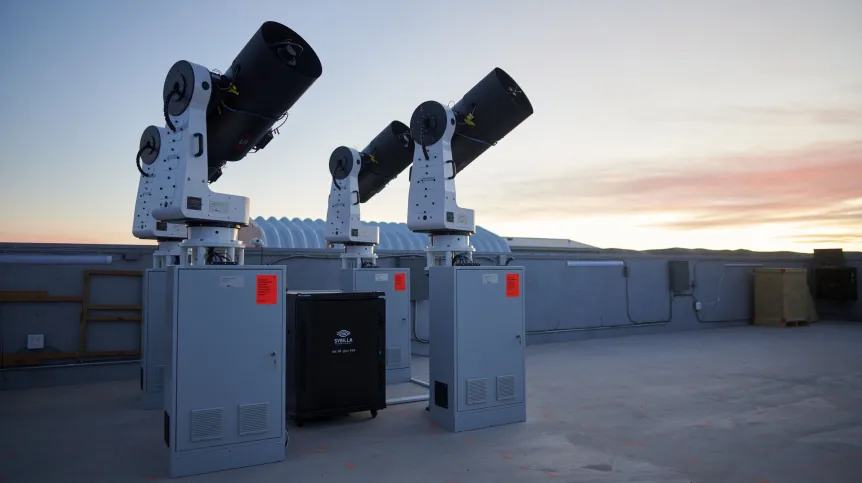
Teleskopy sieci POLON; źródło: M. Słonina

(...) W międzynarodowej sieci obserwacyjnej misji Artemis II aktywnie uczestniczy także POLSA wraz z Centrum Operacji Satelitarnych ARGUS. - Polska Agencja Kosmiczna dysponuje siecią obserwatoriów POLON rozlokowanych na całym świecie. One dostarczają na bieżąco cennych danych obserwacyjnych operatorom misji - powiedział PAP Mariusz Słonina, szef Centrum Operacyjnego SSA POLSA.

Teleskopy Sieci Optycznej POLON (POLSA Optical Network) znajdują się w Europie, Australii, Afryce, Ameryce Południowej i Północnej. To zarówno obiekty własne POLSA, jak i współpracujące z siecią POLON. Z przekazywanych przez nie danych dotyczących lotu kapsuły Orion korzysta NASA. (...)
https://naukawpolsce.pl/aktualnosci/news%2C112406%2Cobserwatoria-polsa-wspomagaja-obserwacyjnie-misje-artemis-ii.html

Astronomowie z UW uchwycili na zdjęciach statek misji Artemis II
09.04.2026


(...) Jak poinformował PAP prof. Andrzej Udalski, trajektoria na niebie misji kosmicznej NASA Artemis II, wracającej z podróży wokółksiężycowej na Ziemię, przecinała w nocy z 8 na 9 kwietnia pola centrum Drogi Mlecznej, regularnie obserwowane przez astronomów z projektu OGLE prowadzonego w Obserwatorium Astronomicznym UW. (...)

Zdjęcia zostały wykonane 1,3-m warszawskim teleskopem w Obserwatorium Las Campanas w Chile. (...)
https://naukawpolsce.pl/aktualnosci/news%2C112423%2Castronomowie-z-uw-uchwycili-na-zdjeciach-statek-misji-artemis-ii.html
Cytuj
Surajit @surajit_ghosh2 8:03 PM · Apr 13, 2026
New Artemis II rescue footage dropped by U.S. Navy crew
https://twitter.com/surajit_ghosh2/status/2043751956276228156

Cytuj
Astronauti NASA oblékli při obletu Měsíce jemné vlněné prádlo ze Sokolova
Aktual.: 14.04.2026 18:17 Vydáno: 14.04.2026, 18:17


Textilní firma Lasting. Spolumajitel Martin Walter. 14. dubna 2026, Sokolov. CTK/Slavomír Kubeš

Sokolov - Čtveřice astronautů amerického Národního úřadu pro letectví a vesmír (NASA) obletěla začátkem dubna Měsíc ve vlněném prádle vyrobeném rodinnou společností Lasting v Sokolově. Dnes to v rozhovoru s ČTK řekl spolumajitel firmy Martin Walter. NASA si prádlo pro svůj vesmírný program vybrala v roce 2020. Posádka mise Artemis II na sobě měla podle fotografií z letu trika z vlákna o průměru 16 mikrometrů (mikronů), tedy 0,016 milimetru. Tato vlna má podstatně lepší izolační schopnost a prodyšnost než běžná vlna a při nošení nekouše.

"Pořád jsme nevěděli, jestli se to stane, jestli naše prádlo skutečně poletí do vesmíru, byť v objednávce stálo, že oblečení bude součástí letu. Potom jsme to sledovali, a když to oblečení znáte, jeho detaily, tak to člověk pozná, i ten střih. Jsme strašně rádi, že se to stalo," řekl Walter.

Vesmírná společnost oblečení před misí Artemis II testovala přes pět let. "NASA objevila naše merino prádlo na veletrhu a oslovili nás, že by ho chtěli vyzkoušet. Jsme strašně rádi, že jim prádlo bylo pohodlné, že se jim dobře nosilo a že jim sedělo a nic kosmonauty nikde nekousalo. Díky tomu vlastně dneska naše nejprodávanější modely, které už děláme 20 let, letěly kolem Měsíce. Jsme také strašně rádi, že se prádlo vyrábí v Sokolově," řekl Walter.

Americká vesmírná společnost poprvé oslovila vedení sokolovské firmy v létě 2020. "Předtím si nás pravděpodobně vyhlédli na veletrhu v Denveru. Dostali jsme e-mail, že pracují na vesmírném obleku příští generace a že by chtěli použít naše vlněné prádlo, aby ho nosili během testování a při cestě kolem Měsíce," řekl Walter. Lasting se s Američany domluvil na první objednávce vzorků. "Chtěli spodky ATOK a trika s dlouhým rukávem ATAR, což je taková naše stálice v sortimentu. Postupně potom NASA udělala další objednávku na jaře 2024 a třetí v září 2025," popsal Walter.

Astronauti měli zájem o trika i spodní kalhoty v celé škále velikostí, vyrobené ze stoprocentní nejjemnější vlny. "Myslím, že si řekli, že vlna by mohla být dobrá, kosmonauti budou na palubě více než týden, nebude možnost prát. Ono v té 16,5mikronové kvalitě vlny na světe moc producentů nebude. Když jsme s tím začali před 25 lety, tak to nedělal nikdo. Dnes je těch firem už asi několik," uvedl Walter.

Žádné speciální požadavky NASA neměla. Američtí astronauti Reid Wiseman, Victor Glover a Christina Kochová a Kanaďan Jeremy Hansen oblékli trika, která se v Česku prodávají za zhruba 1500 korun, na 1,12 milionu kilometrů dlouhý let. Loď Orion se dostala 406.771 kilometrů od Země, čímž posádka překonala dosavadní rekord v největší vzdálenosti.

Firma Lasting vznikla v Kynšperku nad Ohří v roce 1991. Založili ji rodiče Martina Waltera, kteří se na jejím chodu dodnes aktivně podílejí. Prvních téměř deset let byly hlavním produktem ponožky na denní nošení. Zhruba od roku 2003 šije a plete Lasting z merino vlny. Reaguje tak na trend návratu k přírodním materiálům. Při výrobě oblečení a ponožek je ale kombinuje v různém poměru se syntetickými materiály a vyrábí oblečení pro sport i volný čas. Firma sídlí v Sokolově, poslední tři roky v nové budově s většími prostory pro výrobu. Zaměstnává zhruba 55 lidí a v loňském roce měla obrat okolo 130 milionů korun.

Lasting vyrobí zhruba 100.000 kusů oblečení ročně. Z jedné osmihodinové směny vzejde z poloautomatizované pletárny 120 párů ponožek nebo podkolenek. Zhruba 95 procent produktů Lasting prodá v sítích nezávislých prodejen se sportovním nebo speciálním zbožím, část z toho jsou větší objednávky pro ozbrojené složky. Lasting vlněné prádlo nosí například strážníci a policisté nebo příslušníci nizozemské armády. Firma dodává produkty do více než 50 zemí na celém světě. Pět procent svých výrobků prodá ve vlastním e-shopu a v podnikové prodejně v Sokolově.
https://www.ceskenoviny.cz/zpravy/astronauti-nasa-oblekli-pri-obletu-mesice-jemne-vlnene-pradlo-ze-sokolova/2812600
« Ostatnia zmiana: Kwietnia 17, 2026, 01:37 wysłana przez Orionid »

Online Orionid

  • Weteran
  • *****
  • Wiadomości: 28975
  • Very easy - Harrison Schmitt
Odp: Artykuły o Artemis II
« Odpowiedź #9 dnia: Wczoraj o 03:31 »
Trump hosts crew of historic Artemis mission: ‘I would have had no trouble making it’
Marina Dunbar Wed 29 Apr 2026 23.41 CEST

The astronauts joined president in Oval Office for a press conference, and it wasn’t long before he praised himself

(...) “We’re very proud of these people. They have unbelievable courage, unbelievable a lot of other things too,” Trump said at the start of the conference, immediately segueing into praise for himself.

“To get in there, you have to be very smart, have to do a lot of things physically good. So I would have had no trouble making it, I’m physically very, very good. Maybe a little bit of a problem. We’ll have to try it.” (...)
https://www.theguardian.com/science/2026/apr/29/artemis-crew-white-house-trump
https://abcnews.com/video/132508018/
Cytuj
The White House @WhiteHouse 10:07 PM · Apr 29, 2026
AMERICAN HEROES! 🇺🇸🚀
President Trump welcomes the incredible Artemis II astronauts to the Oval Office after their historic trip around the Moon, an epic moment for our nation!
https://twitter.com/WhiteHouse/status/2049581455110529402

President Trump Participates in a Greeting with Artemis II Astronauts

« Ostatnia zmiana: Wczoraj o 03:41 wysłana przez Orionid »

Polskie Forum Astronautyczne

Odp: Artykuły o Artemis II
« Odpowiedź #9 dnia: Wczoraj o 03:31 »