(2)
Rosyjski materiał filatelistyczny.
Stephane SEBILE @spacemen1969
2 novembre 2000
Arrimage ! Premier équipage permanent de l'ISS et cela fait 25 ans aujourd'hui que des femmes et des hommes sont en permanence au-dessus de nos têtes à bord de l'ISS.
https://x.com/spacemen1969/status/19847588531087115852)
The International Space Station celebrates 25 years of human life in space. Here’s a look back at itBy Anna Desmarais Published on 09/11/2025 - 8:00 GMT+1
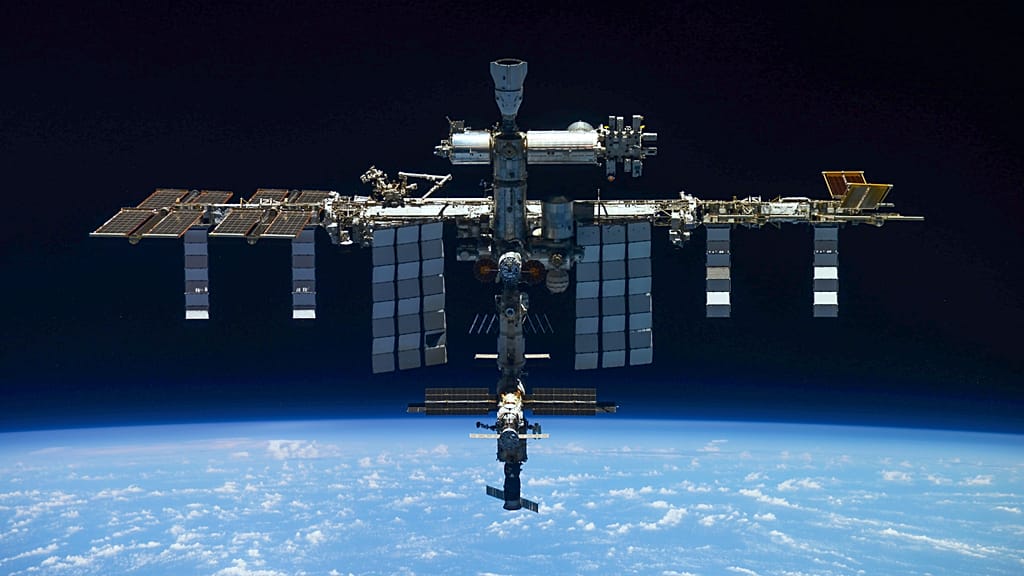 Copyright Roscosmos Space Agency Press Service via AP, File
(...) The space laboratory has hosted more than 4,000 experiments from over 5,000 researchers from 110 countries, according to the United States National Aeronautics and Space Administration (NASA), the American space agency. (...)
25 years of memoriesThe ISS has been the backdrop for historic and personal moments alike over the last 25 years. One of the first astronauts to land at the station, Russian Yuri Malenchenko, married his wife Ekaterina Dmitriev from 380 kilometres above the Earth in 2003.
In 2004, American astronaut Mike Fincke listened from the ISS as his wife gave birth to their daughter, Tarali, near Houston, Texas. In the Indian dialect spoken by his wife’s family, Tara means “star”.
There’s been tragedy too for those onboard the ISS. American Daniel Tani mourned family from the station in 2007, when ground crews told him that his 90-year-old mother had died in a car crash.
Then in 2011, American astronaut Scott Kelly found out that his sister-in-law, US congresswoman Gabrielle Giffords, had been shot in the head and survived.
One of the most recent ISS missions is also one of the most memorable. In 2024, astronauts Butch Wilmore and Suni Williams went up to the ISS to test Boeing’s new Starliner capsule in what was supposed to be a weeklong trip. (...)
https://www.euronews.com/next/2025/11/09/the-international-space-station-celebrates-25-years-of-human-life-in-space-heres-a-look-ba3)
Cady Coleman @Astro_Cady 5:52 PM · Oct 31, 2025
🚀 25 years ago today, the 1st long-duration crew arrived at the @Space_Station! The #Soyuz spacecraft carrying #Expedition1 launched on #OTD 10/31/2000. Since then, the #ISS has been continuously occupied!
@NASA @Roscosmos @NASA_Astronauts #space #spaceflight #spacestation
https://x.com/Astro_Cady/status/19843024565079002904)
油井 亀美也 Kimiya.Yui @Astro_Kimiya 1:52 PM · Nov 2, 2025
It is a great honor to be able to stay on the ISS on this memorable day.
We have sent a congratulatory message to the ground from orbit, and we look forward to celebrating with our fellow crew members later by taking commemorative photos!
Today marks 25 years since the first long-term crew began living on the ISS on November 2, 2000. 🎉
More than 280 people from 23 countries have visited the ISS. 🧑🚀
More than 4,000 experiments have been conducted there. 🥼
The 15 stars on the 25th anniversary logo represent the 15 countries that jointly operate the ISS.
https://twitter.com/Astro_Kimiya/status/19849668405445513135)
Celebrating 25 Years of Continuous Human Presence Aboard the International Space Station Monika Luabeya Jul 25, 2025
https://www.nasa.gov/image-article/celebrating-25-years-of-continuous-human-presence-aboard-the-international-space-station/6)
NASA looking at what artifacts to save from ISS before 2030 demiseJuly 17, 2024 — Two years after stating there were no plans to save artifacts from the destructive end of the International Space Station (ISS), NASA is now in the early stages of identifying what small parts of the orbiting laboratory to preserve.
Agency officials on Wednesday (July 17) shared the preliminary details during a media briefing about the space station's end of life in 2030 and the selection of SpaceX to build the vehicle that will move the massive complex out of orbit such that it mostly burns up in Earth's atmosphere and plunge any surviving fragments into a remote area of the ocean.
"Twenty-five years out of the 60 years [of human spaceflight] has been on ISS," said Ken Bowersox, NASA's associate administrator for space operations and a former astronaut who spent 161 days aboard the station as the commander of its sixth crewed expedition.
"People tend to see different things about the ISS that are interesting to them, whether that's the international cooperation, where we've worked with so many different countries; whether it's the thousands of experiments that have been conducted in microgravity; whether it's the human research; whether it's the assembly that we did, showing how you can put together large structures in space; the exploration operations that we practice; or what we've learned about the human body and microgravity," he said. (...)
https://www.collectspace.com/news/news-071724a-international-space-station-deorbit-artifact-preservation.htmlCelebrating 25 Years of Humanity in Space Sumer Loggins Johnson Space Center Office of Communications Nov 19, 2025
In 2025, NASA and its international partners celebrate 25 years of continuous human presence aboard the International Space Station. Since November 2, 2000, more than 290 people from 26 countries have lived and worked aboard the orbiting laboratory, conducting thousands of experiments that have advanced science and technology on Earth and paved the way for Artemis missions to the Moon and future journeys to Mars.
Beyond its role as a science platform, the station has been a bridge—connecting cultures, sparking creativity, and inspiring generations. The memories of Johnson Space Center employees reflect how the orbiting laboratory is not only an engineering marvel but also a deeply human endeavor.
Christopher Brown – Advancing Life Support Systems for Future Exploration 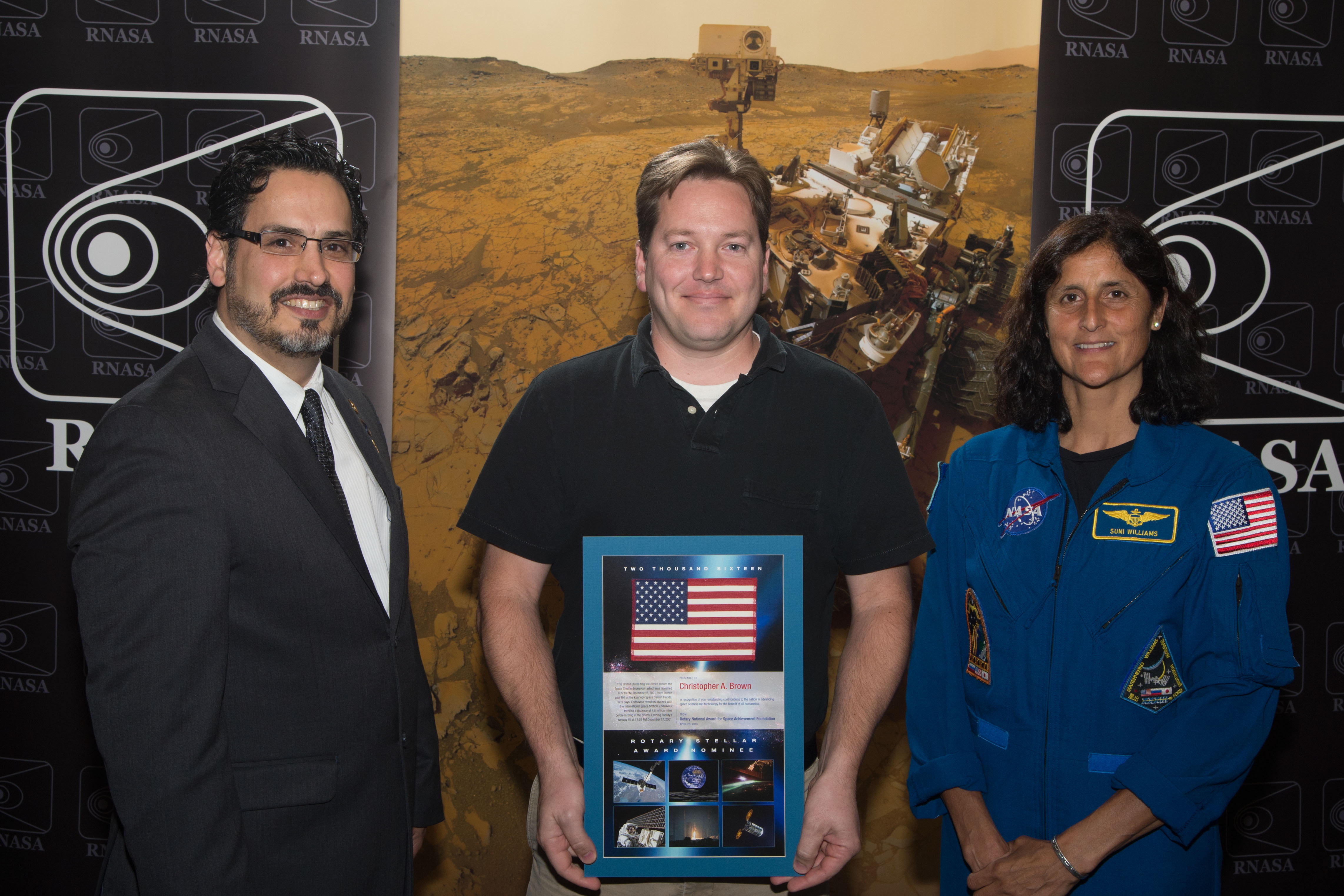 Christopher Brown (center) receives the Rotary National Award for Space Achievement alongside NASA astronaut Sunita Williams. NASA/James BlairAs a space station Environmental Control and Life Support System (ECLSS) integrator, Christopher Brown’s role has been ensuring astronauts have clean air and water. ECLSS removes carbon dioxide from the air, supplies oxygen for breathing, and recycles wastewater—turning yesterday’s coffee into tomorrow’s coffee. Today, these systems can recover nearly 98% of the water brought to the station.
His proudest memory was commissioning regenerative life support systems and raising a symbolic toast with the crew while on console in mission control. He also helped activate the Water Storage System, saving crew time and improving operations on station. For Brown, these milestones were vital steps toward future long-duration missions beyond Earth.
Stephanie Sipila – The Heart of Microgravity Research 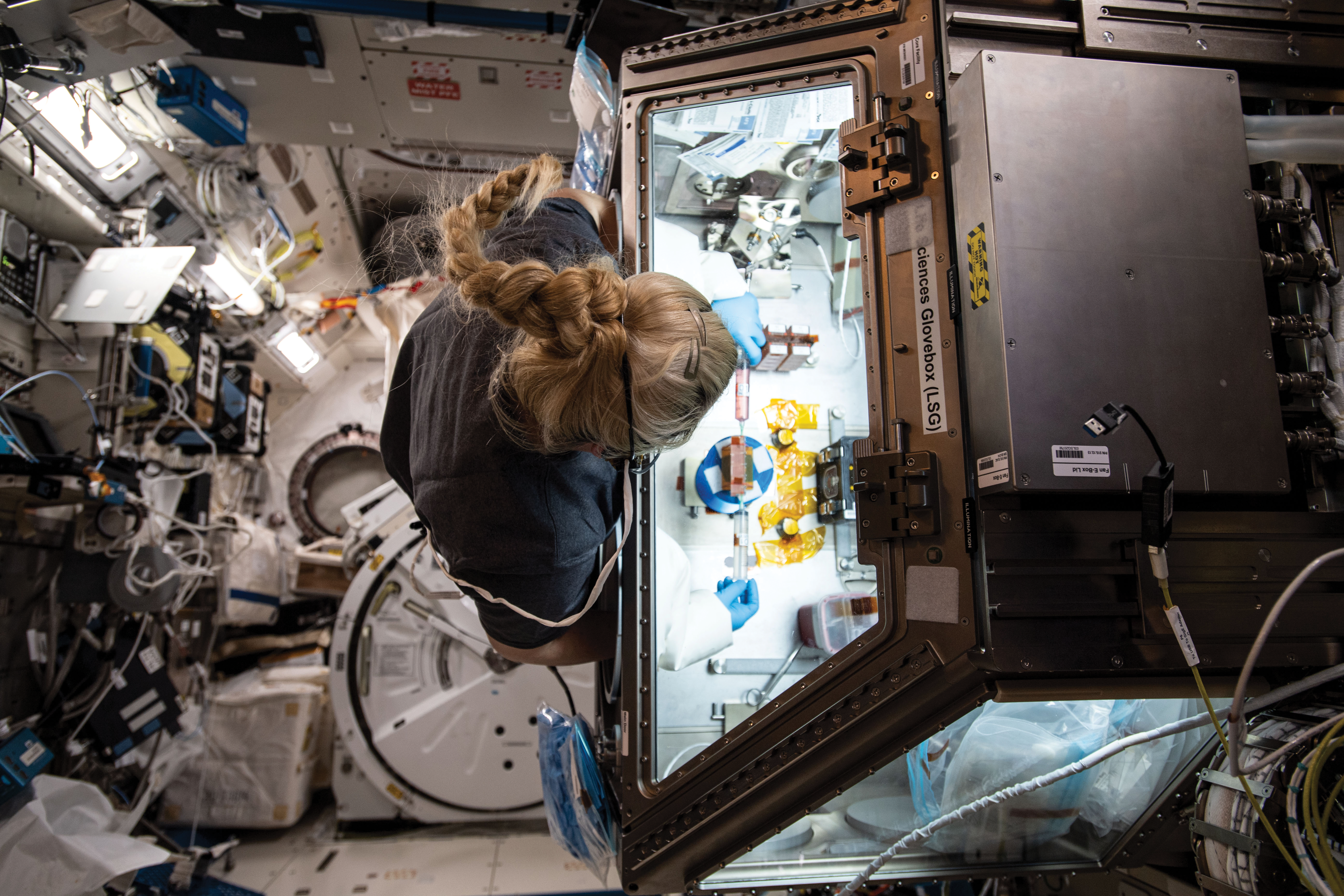 NASA astronaut Kate Rubins works on the Cardinal Heart study, which seeks to help scientists understand the aging and weakening of heart muscles in the search for new treatments for astronauts and people on Earth.
NASA/Mike HopkinsStephanie Sipila, now integration manager for NASA’s Extravehicular Activity and Human Surface Mobility Program, began her career as a mechanical and robotic systems instructor for the orbital outpost. Her favorite experiment, Engineered Heart Tissues, studies microgravity’s effect on the human heart to help develop new treatments for cardiovascular disease. She recalls NASA astronaut Sunita Williams running the Boston Marathon on a treadmill aboard station, becoming the first person to complete the race in space and showing how astronauts stay connected to Earth while living on orbit.
Sipila also highlights the Spacesuit Art Project, an initiative that turned artwork from children with cancer into spacesuits flown to and worn aboard the orbital outpost during live downlinks, connecting science, art, and hope — and raising awareness of cancer research conducted aboard the orbital outpost. Liz Warren – Where Exploration Meets Humanity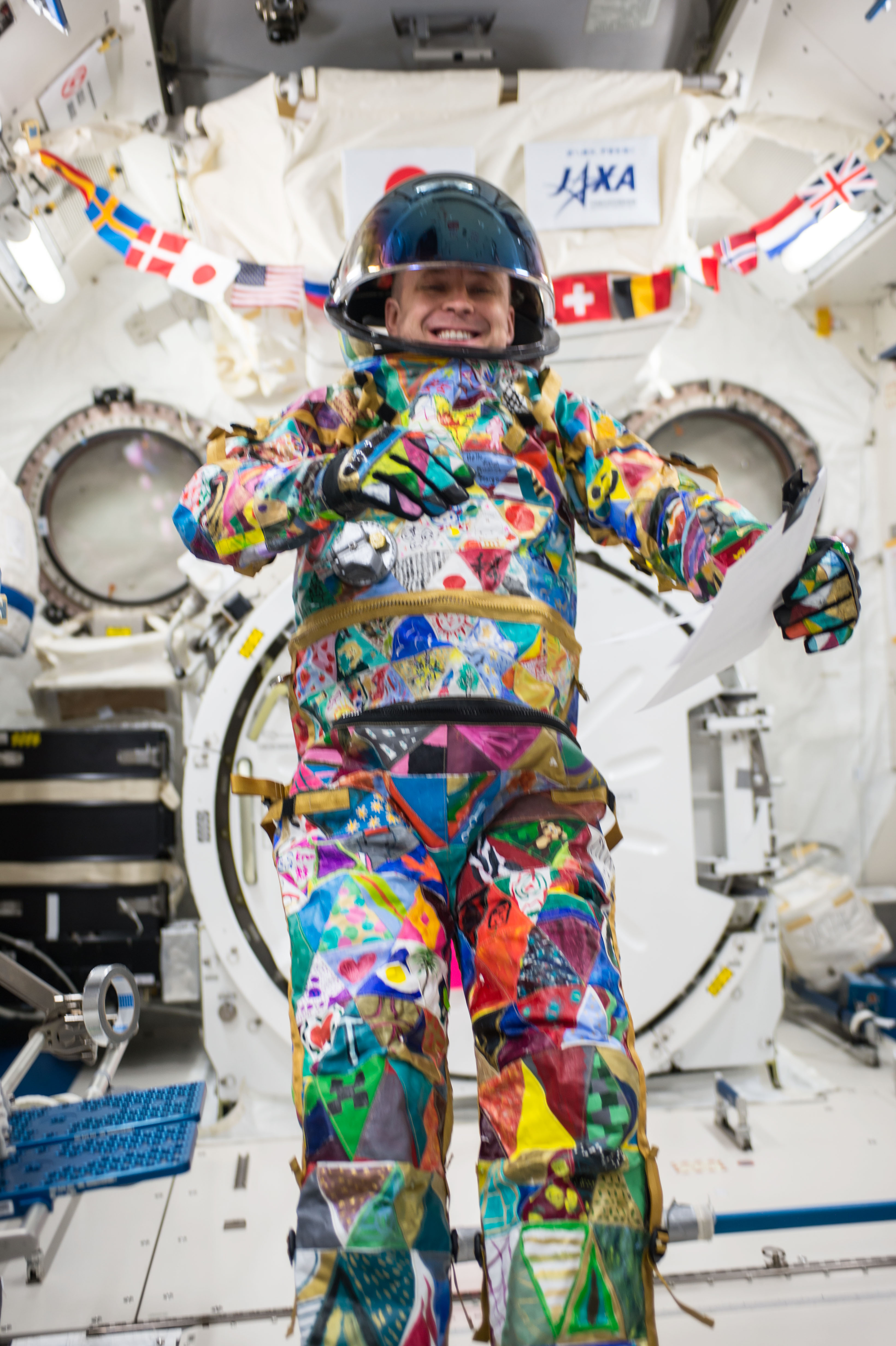 NASA astronaut Jack Fischer wearing the Unity spacesuit painted by patients at MD Anderson Cancer Center in Houston. NASA/Randy BresnikSpace station Associate Chief Scientist Liz Warren has seen firsthand how the Spacesuit Art Project uplifted children on Earth. During Expedition 52, she watched astronaut Jack Fischer wear a suit covered in artwork created by young cancer patients, including his own daughter, a survivor. “It was incredibly touching to note the power of art and inspiration. Human spaceflight requires fortitude, resilience, and teamwork—so does fighting childhood cancer,” Warren said.
Her memories also extend to her time as an operations lead for NASA’s Human Research Program, which uses research to develop methods to protect the health and performance of astronauts in space to prepare for long-duration missions. While out for a weekend run, Warren received a call from the Payload Operations and Integration Center in Huntsville, Alabama. An astronaut on station, following a prescribed diet for a research study, wanted to swap out a food item. Warren coordinated with her support team and relayed the decision back to orbit—all while continuing her run. The moment, she recalls, underscored the constant, real-time connection between astronauts in space and teams on the ground. Adam Baker – Checkmate: Space Debris Cleanup 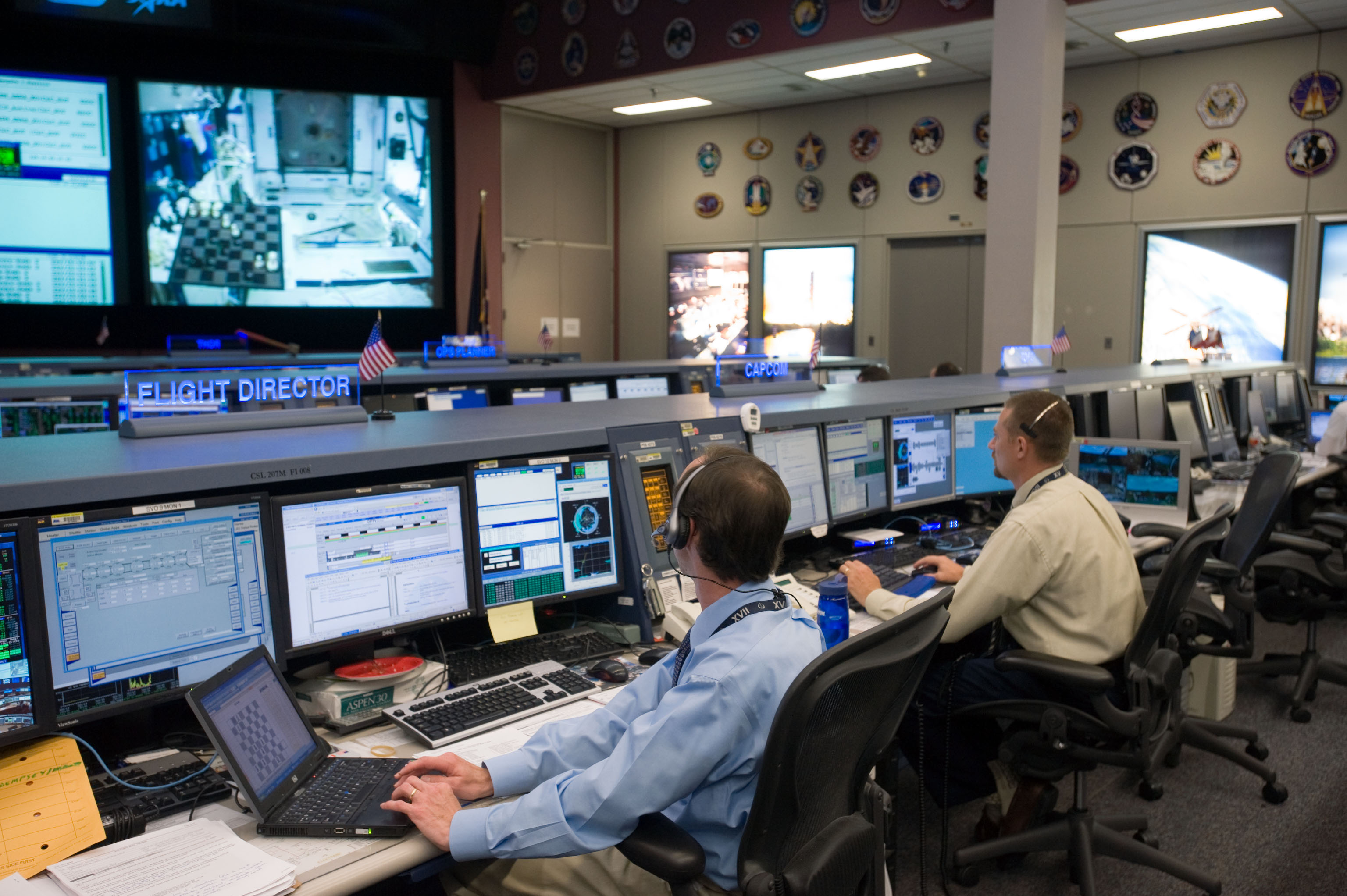 Flight Director Chris Edelen, left, and capsule communicator Jay Marschke discuss their next chess move during a match with NASA astronaut Greg Chamitoff, Expedition 17 flight engineer aboard the space station. NASA/Robert MarkowitzAs an aerospace engineer, Adam Baker helped track experiments and spacecraft operations from mission control. Baker remembers when mission control played a live chess match with astronaut Greg Chamitoff during Expedition 17, a moment that showed the unique ways the station connects crews in orbit with people on Earth. His favorite technical project, though, was the RemoveDebris small satellite, deployed from the station in 2018 to test technologies for cleaning up space junk. “Knowing these experiments could one day help keep the orbital environment safe made it even more meaningful,” he said. Michael McFarlane – Training for Success
 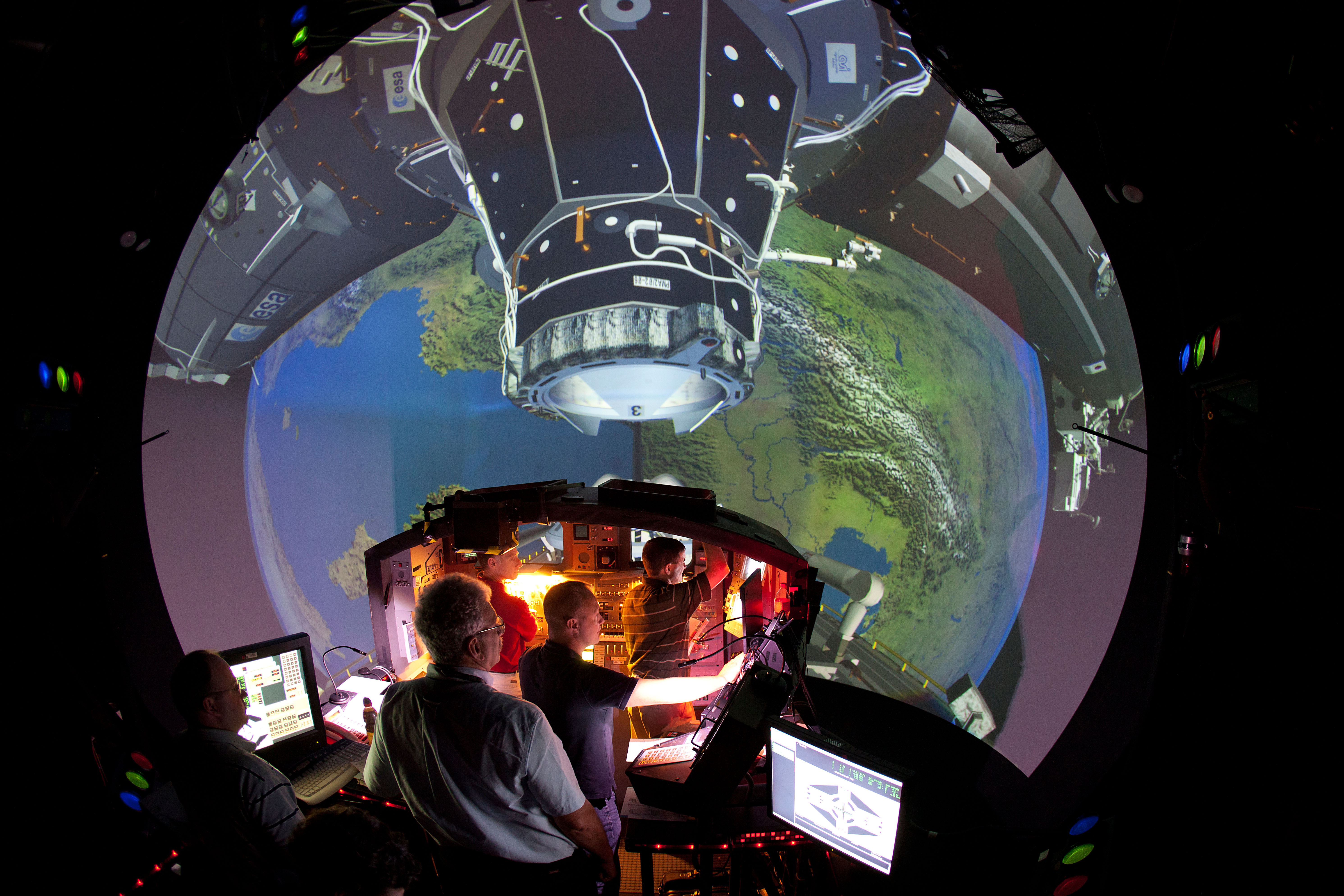 Engineers run simulations inside Johnson’s Systems Engineering Simulator during a shuttle-to-station docking simulation. Smiley Pool/Houston ChronicleAs chief of the Simulation and Graphics Branch, Michael McFarlane prepared astronauts for space station assembly missions using high-fidelity simulators. “My greatest memory is seeing the station grow as we successfully executed assembly missions that looked very much like what we analyzed and trained for in our ground-based simulations,” he said. A Legacy of Ingenuity and Community
 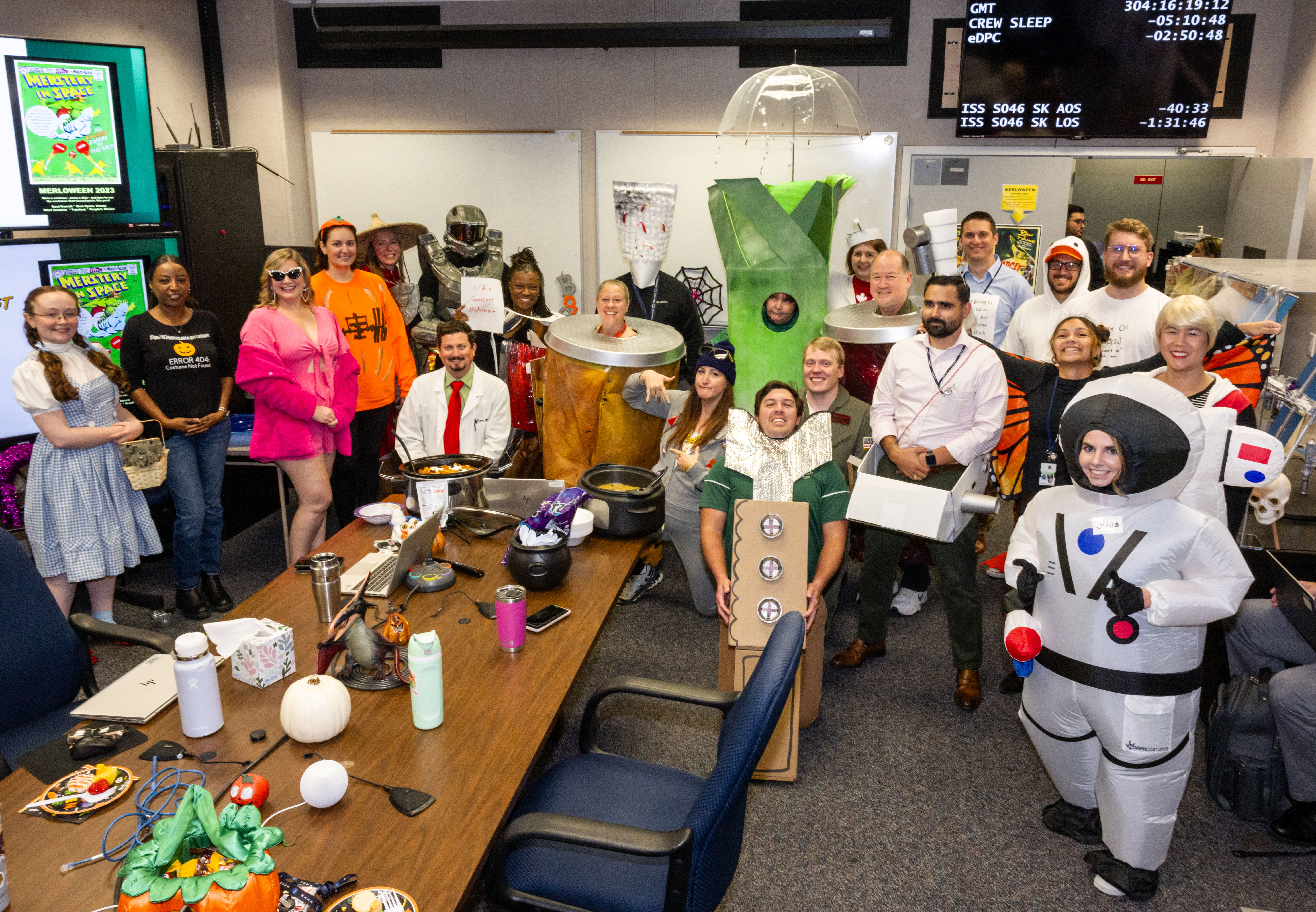 The space station Mission Evaluation Room (MER) team in costume for “MERloween,” a long-running tradition at NASA’s Johnson Space Center. NASA/James BlairIn the Mission Evaluation Room, engineers not only troubleshoot in real time but also celebrate milestones with traditions like “MERloween,” where controllers dress in space-themed costumes to honor the year’s lessons learned.
 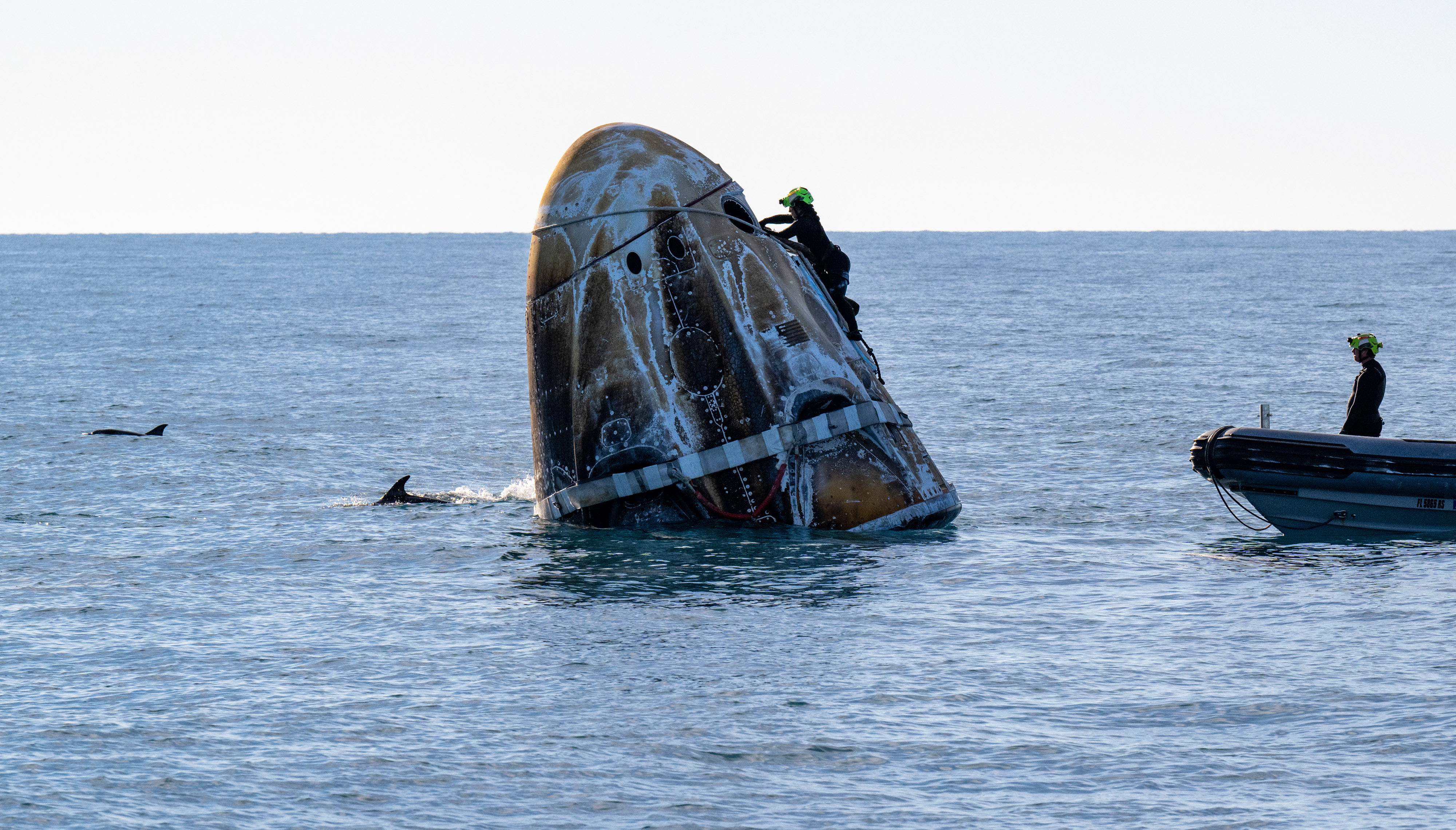 NASA’s SpaceX Dragon Freedom spacecraft splashed down in the Gulf of America, off the coast of Tallahassee, Florida, returning Crew-9 to Earth on March 18, 2025. NASA/Keegan BarberFor social media consultant Mark Garcia, sharing the station story with the public has been the highlight of his career. His favorite moment was watching NASA’s SpaceX Crew-9 splash down in 2025, greeted by dolphins in the Gulf of America. “I love writing about the science aboard the station that benefits people on Earth,” he said.
For 25 years, the International Space Station has shown what humanity can accomplish together. The lessons learned aboard will guide Artemis missions to the Moon and future journeys to Mars—ensuring the next 25 years are built on innovation, resilience, and the human spirit. https://www.nasa.gov/centers-and-facilities/johnson/celebrating-25-years-of-humanity-in-space/Peggy Whitson @AstroPeggy 5:18 PM · Nov 2, 2025
Today marks 25 years of continuous human presence on the @Space_Station!
https://twitter.com/AstroPeggy/status/1985018620347310496https://www.nasa.gov/international-space-station/iss25/ Wątek: International Space Station (ISS) (Przeczytany 15405 razy)