Autor Wątek: DR Pettit - 20.04.1955  (Przeczytany 7080 razy)

0 użytkowników i 1 Gość przegląda ten wątek.

Online Orionid

  • Weteran
  • *****
  • Wiadomości: 29675
  • Very easy - Harrison Schmitt
DR Pettit - 20.04.1955
« dnia: Kwietnia 26, 2024, 13:00 »
Donald Roy Pettit został wyselekcjonowany w ramach NASA grupa 16 (1996) w wieku 41. lat.

Jest 426. człowiekiem w kosmosie.
Jego 3 loty kosmiczne trwały łącznie 369d 16m 42m 35s.
Wykonał 2 spacery kosmiczne, które trwały w sumie 13d 17m.

1984 w wieku 29 lat nie został przyjęty do NASA grupa 10 (znalazł się wśród 128 finalistów).
40 lat później zostanie najstarszym astronautą NASA na orbicie.

1987 znalazł się wśród 117 finalistów do NASA grupa 12.

1994 był jednym ze 122 finalistów do NASA grupa 15.

Przygotowuje się do 4. lotu w ramach misji Sojuz MS-26.
Jego półroczny lot kosmiczny będzie oznaczać, że zostanie 4. Amerykaninem z nalotem powyżej 500. dni oraz najstarszym człowiekiem, który uda się w kosmos na pokładzie Sojuza.

Z Barratem należy do dwóch najstarszych aktywnych astronautów NASA.
70. urodziny powinien spędzić już na Ziemi.

1983 uzyskał stopień doktora (inżynieria chemiczna) na Uniwersytecie w Arizonie.

1984-1996 był zatrudniony jako pracownik naukowy w Los Alamos National Laboratory w Nowym Meksyku.
Zajmował się dynamiką płynów i materiałów w warunkach nieważkości, fizyką wybuchów i badaniami spektroskopowymi.
Jednym z efektów jego pracy było stworzenie kubka, który pozwala pić kawę w stanie nieważkości.

24.11.2002 wystartował jako specjalista misji w składzie załogi STS-113 Endeavour. Został na orbicie w składzie 6 Ekspedycji.

04. 2003 członkowie 6. Ekspedycji mieli pierwotnie powrócić na Ziemię na pokładzie misji  STS-115.

04.05.2003 dr Pettit wraz z pozostałymi członkami 6. Ekspedycji powrócił na Ziemię w trybie balistycznym na pokładzie Sojuza TMA-1.
https://www.russianspaceweb.com/iss_soyuztma1.html

27.03.2024 w komunikacie prasowym NASA 24-048 oficjalnie potwierdzono włączenie Donalda Pettita do załogi Ekspedycji 71/72.

https://www.nasa.gov/humans-in-space/astronauts/donald-r-pettit/

http://www.spacefacts.de/bios/astronauts/english/pettit_donald.htm
http://www.astronautix.com/p/pettit.html
https://www.worldspaceflight.com/bios/p/pettit-d.php

https://mek.kosmo.cz/bio/usa/00426.htm
https://www.kozmo-data.sk/kozmonauti/pettit-donald-roy.html
https://www.astronaut.ru/index/in_pers/13_047.htm
https://www.april12.eu/usaastron/pettit426ru.html

https://en.wikipedia.org/wiki/Donald_Pettit
https://pl.wikipedia.org/wiki/Donald_Pettit

https://historycollection.jsc.nasa.gov/JSCHistoryPortal/history/oral_histories/ISS/PettitDR/PettitDR_8-17-15.htm
https://appel.nasa.gov/wp-content/uploads/2013/05/50i-interview-pettit.pdf

https://www.quora.com/Don-Pettit-said-that-NASA-has-lost-the-technology-to-leave-Lower-Earth-Orbit-LEO-which-is-why-we-have-not-gone-back-to-the-Moon-If-this-is-the-case-how-are-we-able-to-send-out-satellites-probes-past-LEO-not-manned

Fueled By Death Cast Ep. 106 - DONALD PETTIT
https://www.deathwishcoffee.com/pages/fbdc-ep-106-donald-pettit

Alum Donald R. Pettit: NASA Astronaut


https://twitter.com/ASE_Astronauts/status/1781737200771580267
https://x.com/spacemen1969/status/1781444664358473850
Cytuj
No astronaut can resist the urge to take a selfie during a space walk. I took this on my first @Space_Station EVA on January 15, 2003. At the time, EVA #photography was film-based, which gives a different quality to the now digital EVA imagery.
https://x.com/astro_Pettit/status/1678497490302128134
« Ostatnia zmiana: Kwietnia 28, 2024, 12:43 wysłana przez Orionid »

Online Orionid

  • Weteran
  • *****
  • Wiadomości: 29675
  • Very easy - Harrison Schmitt
Odp: DR Pettit - 20.04.1955
« Odpowiedź #1 dnia: Kwietnia 26, 2024, 13:02 »
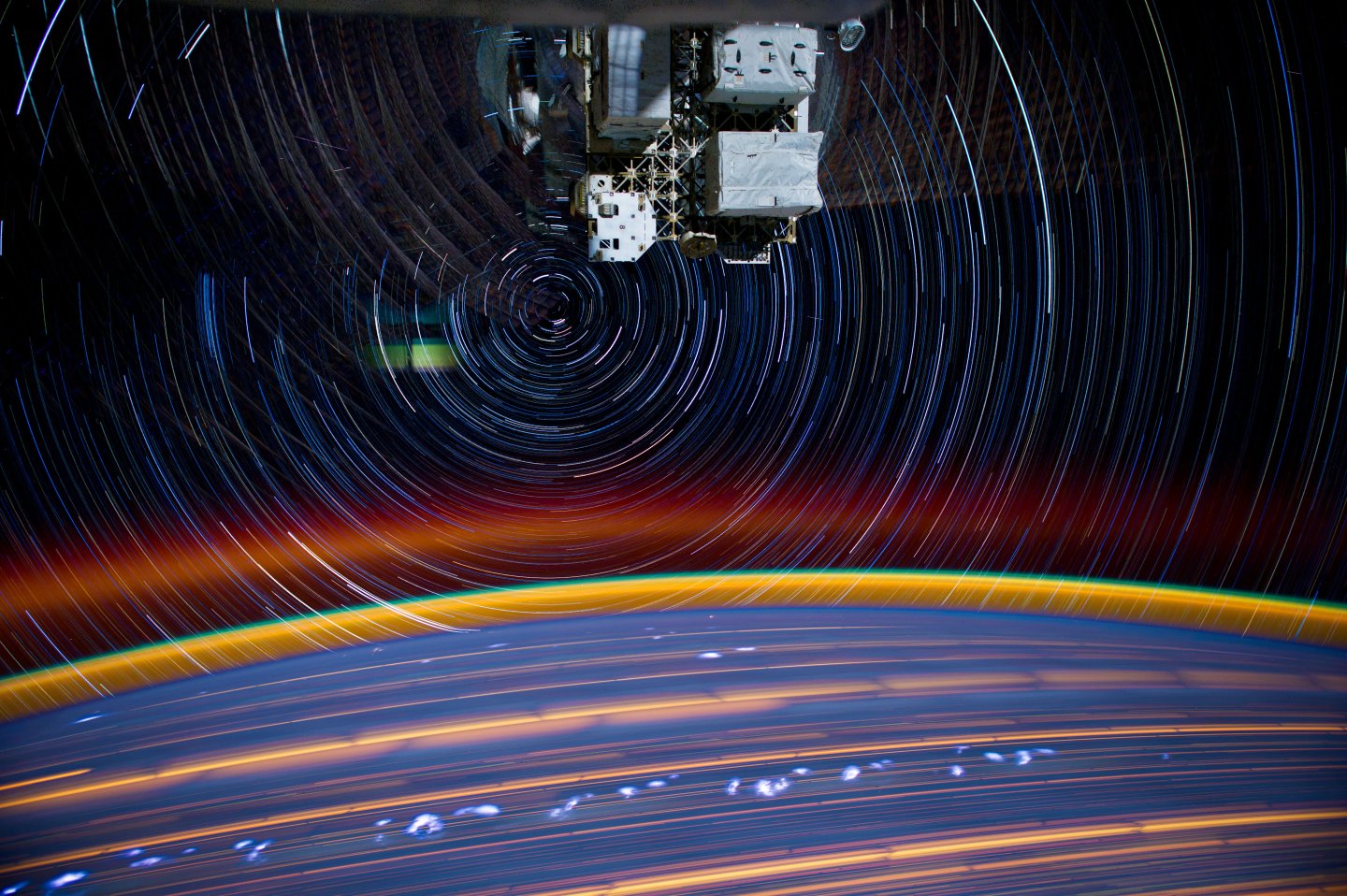
A Master Class in Space Photography with NASA Astronaut Donald Pettit
BY MIA TRAM  JULY 17, 2014 4:00 AM EDT


Star trail compositeDonald Pettit—NASA

(...) MT: TIME actually just got to do a video-chat with Reid Wiseman, Steve Swanson and Alexander Gerst on the ISS last week. Have they come to you and asked for any advice on how to photograph from the Space Station?

DP: I’ve been corresponding with them via email to help them set up some photo situations. One of my ground jobs right now is to write a technical report on photography in space. My working title is Astronauts’ Guide to Photography in Space. It’s written for astronauts, so it basically assumes that if I’m talking about going into the PMA and doing something that you know what the PMA is. It’ll probably be 50 pages. It doesn’t say anything about how to use the cameras, it assumes that you know how to use our Nikon D3S’s and D4’s. It just tells you how you should be setting the camera up for different situations. (...)
https://time.com/3810759/donald-pettit-space-photography/

From Above - Astronaut Photography with Don Pettit


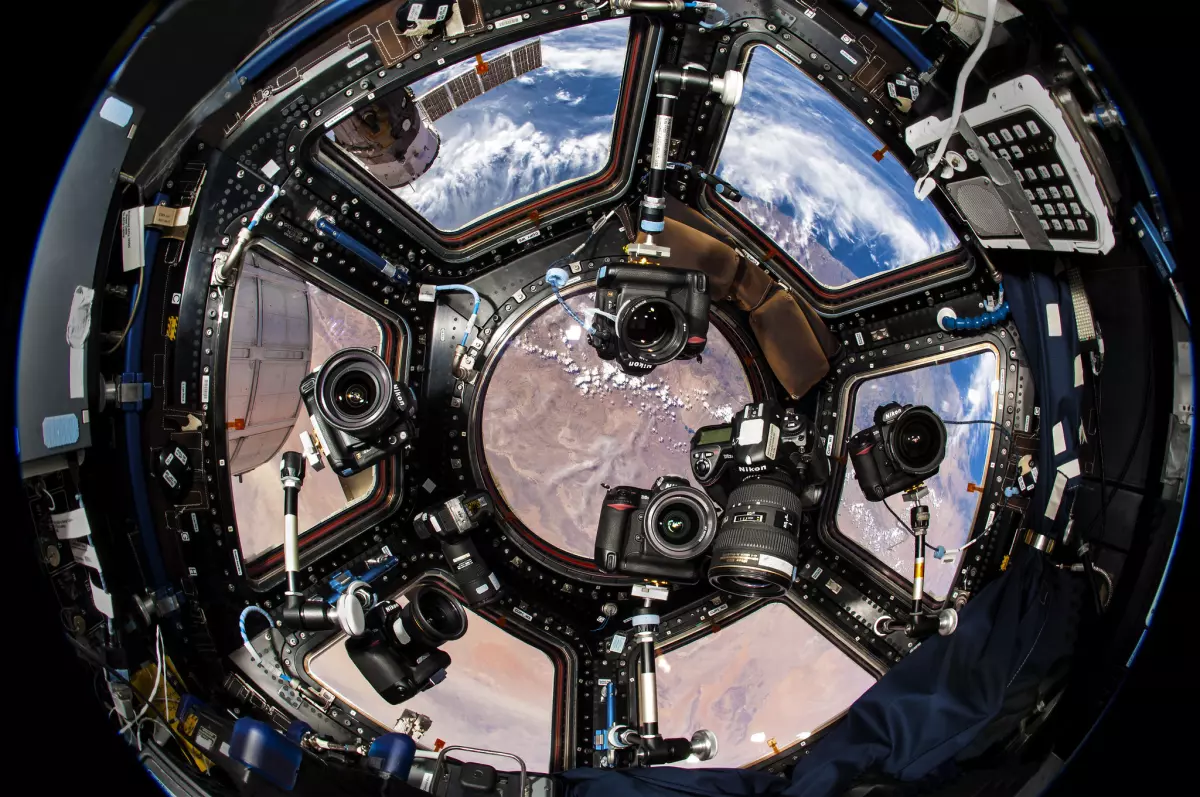
This is what your photo stream looks like when you’re a NASA astronaut
By Liesl Bradner Nov. 18, 2016 6 AM PT


Vista point: Cameras are set to fire in the cupola window. (Donald R. Pettit )
https://www.latimes.com/entertainment/arts/la-ca-cm-spaceborne-20161120-htmlstory.html

NASA Astronaut Don Pettit to Conduct Science During Fourth Mission
The headshot image of Abbey A. Donaldson Abbey A. Donaldson
MAR 27, 2024

(...) During his fourth mission to the International Space Station, NASA astronaut Don Pettit will serve as a flight engineer and member of the Expedition 71/72 crew. After blasting off to space, Pettit will conduct scientific investigations and technology demonstrations to help prepare crew for future space missions. (...)

NASA selected Pettit as an astronaut in 1996. A veteran of three spaceflights, he made integral advancements in technology and demonstrations for human exploration. He served as a science officer for Expedition 6 in 2003, operated the robotic arm for STS-126 space shuttle Endeavour in 2008, and served as a flight engineer for Expedition 30/31 in 2012.
https://www.nasa.gov/news-release/nasa-astronaut-don-pettit-to-conduct-science-during-fourth-mission/
https://x.com/NASA_Johnson/status/1773094929163575526
https://twitter.com/NASA/status/1773391508944630165
Cytuj
Astronaut @Astro_Pettit has been assigned to his fourth flight to the @Space_Station, currently set for September 2024: https://go.nasa.gov/4ahsGfR
On previous flights, Pettit was celebrated for his space photography and invention of a zero g coffee cup.
« Ostatnia zmiana: Maja 01, 2024, 10:54 wysłana przez Orionid »

Online Orionid

  • Weteran
  • *****
  • Wiadomości: 29675
  • Very easy - Harrison Schmitt
Odp: DR Pettit - 20.04.1955
« Odpowiedź #2 dnia: Kwietnia 26, 2024, 13:04 »
Ciekawe czy znowu spotka się na ISS z najbardziej doświadczoną amerykańską astronautką ?

Don Pettit, Fourth Most Experienced US Astronaut, Turns 60 Today
by Ben Evans April 20, 2015


Don Pettit holds a still camera as he looks through the nadir window in the Destiny laboratory on the International Space Station (ISS). The islands of Lanzarote and Fuerteventura of the Canary Island chain in the Atlantic Ocean off the coast of Morocco are visible. Photo Credit: NASA

Astronaut Don Pettit, a veteran of more than a year in orbit, the fourth most experienced U.S. spacefarer of all time, and the oldest American ever to participate in a long-duration mission to the International Space Station (ISS), turns 60 today (Monday, 20 April). A chemical engineer by training and a former scientist at Los Alamos National Laboratory in Los Alamos, N.M., Pettit unsuccessfully applied three times to enter NASA’s astronaut corps, before finally being accepted as a Mission Specialist candidate in April 1996. Since then, he has flown two lengthy expeditions to the ISS—the first of which came about by serendipity, following the grounding of a member of the prime crew—and a 16-day shuttle mission, which has left him with almost 370 days of cumulative time in space and over 13 hours of spacewalking expertise in two EVAs. (...)
https://www.americaspace.com/2015/04/20/don-pettit-fourth-most-experienced-u-s-astronaut-turns-60-today/

https://twitter.com/astro_Pettit/status/1781770154763772328
Cytuj
In the weightlessness on @Space_Station I placed a sphere of water with an air bubble on a speaker cone, then drove it with acoustical waves from the speaker.
This created a series of standing nodes and anti-nodes that responded to the frequency and amplitude. A zero gravity Lava Lamp!
Will post what happens when I drove this with some of my favorite rock and roll! From Expedition 31, 2012.

https://twitter.com/astro_Pettit/status/1783697110849765561
Cytuj
Playing ZZ Top through my water sphere aboard the @Space_Station!
Cool! We can see standing nodes and anti-nodes in weightlessness that responded to the frequency and amplitude of the music. What other sounds should the water sphere dance to?

https://twitter.com/astro_Pettit/status/1799845180960354793
Cytuj
Water sphere with internal air bubble driven into resonance by a speaker playing the Moody Blues "Precession" where the song starts with a pipe organ going from 20,000 hertz to 20 herts. 
At certain frequencies, the water-air bubble is driven into delightful resonances creating internal droplets.
Canon G1 camcorder, Expedition 31 to @Space_Station, 2012

2)
https://twitter.com/astro_Pettit/status/1776645820374302780
Cytuj
Annular solar #eclipse from @Space_Station taken on May 20, 2012 when I was East of Kamchatka Peninsula, Russia. The deep umbra of the Moon's shadow makes a stark contrast to the surrounding white clouds.

3)
https://twitter.com/astro_Pettit/status/1784368115016470807
Cytuj
Nighttime photo of Iberia from @Space_Station, including all of Spain, Portugal, Gibraltar, North Africa, and some of France, showing a rich history of human development.
At night it becomes obvious where civilization is by the way we sprinkle our light bulbs across Earth, and differences can be seen between multiple cultures and technologies. Historical European vs American grid city patterns. Newer LED vs older incandescent lighting.
Cities at night make great #astrophotography, with this being one of my favorite shots. Captured in 2012 with Nikon D3s, 24mm lens, .3 sec, f1.4, ISO 3200.

4)
https://twitter.com/astro_Pettit/status/1788722951908442341
Cytuj
My EMU space suit during Expedition 6 to @Space_Station in 2003. It is seen in storage between my first and second spacewalk.
Some changes between then and now: notice the printed paper procedures and Q-cards tacked on the walls. Now nearly all our documentation is electronic. The basics of going outside for a stroll are unchanged.
« Ostatnia zmiana: Czerwca 24, 2024, 11:57 wysłana przez Orionid »

Online Orionid

  • Weteran
  • *****
  • Wiadomości: 29675
  • Very easy - Harrison Schmitt
Odp: DR Pettit - 20.04.1955
« Odpowiedź #3 dnia: Maja 14, 2024, 15:49 »
Astronauta wyjaśnia dlaczego teraz nie było spektakularnych obserwacji zorzy polarnej z ISS (2).
https://twitter.com/astro_Pettit/status/1790028533919592541
Cytuj
This is why there are no spectacular photos from @Space_Station of the recent worldwide display of auroras.
For a few days about twice a year the orbit of ISS aligns with the day-night terminator, continuously straddling the border between light and dark. With no night, photography of auroras is difficult.
This photo, taken in 2012 during Expedition 31 illustrates the period of perpetual twilight.

2)
https://twitter.com/astro_Pettit/status/1790839497485087049
Cytuj
Aboard @Space_Station, I photographed this sprite, a rare upward electric discharge from a thunderstorm.
Look closely and you can see the red flash above the purple lightning spot, surrounded by stars from orbital night. Second image gives a closer view. Captured on Expedition 30.

3)

Cytuj
Good times training for my next mission at the Neutral Buoyancy Lab!
https://x.com/astro_Pettit/status/1792244349712949606

4)
https://twitter.com/astro_Pettit/status/1794351531027780019
Cytuj
12 years ago today my crew and I grappled the first @SpaceX Dragon aboard @Space_Station.
150 years ago, American expansion into the Western frontier was overseen by governments and supplied by free enterprise with commercial contracts.
Today, the cycle repeats with commercial space pushing new innovations to supply humanity’s most critical outposts in the next frontier.
And soon to make their own outposts as well!
« Ostatnia zmiana: Czerwca 24, 2024, 12:09 wysłana przez Orionid »

Polskie Forum Astronautyczne

Odp: DR Pettit - 20.04.1955
« Odpowiedź #3 dnia: Maja 14, 2024, 15:49 »

Online Orionid

  • Weteran
  • *****
  • Wiadomości: 29675
  • Very easy - Harrison Schmitt
Odp: DR Pettit - 20.04.1955
« Odpowiedź #4 dnia: Czerwca 10, 2024, 11:11 »
Interesujących szczegółów dostarcza astronauta nt. naszywki Exp. 72.
Cytuj
Expedition 72 starts in September about a week after I dock at @Space_Station with my Soyuz crew. 
When designing this mission patch, I wanted something simple and patterned after Expedition 1, which had a front profile view of space station's configuration at that time.
This patch is updated to current space station configuration complete with the IROSA solar panel upgrades.
https://x.com/astro_Pettit/status/1798170928192410005

2)
https://twitter.com/astro_Pettit/status/1802021221711708470
Cytuj
Reflecting on reflections: working in the @Space_Station Cupola setting up for a night pass of imagery while using a flashlight. I captured this moment as a self portrait.
Nikon D3s, 8mm fisheye, f2.8, 1/10th sec, ISO 1600, Expedition 30, 2012

3)
https://twitter.com/PettitFrontier/status/1802372247446864171
Cytuj
Happy Father’s Day to @astro_Pettit, inspiring the next generation of space explorers.

4)
https://twitter.com/astro_Pettit/status/1803565706585219550
Cytuj
Yo-yo in space! Microgravity makes inventing new tricks easy, and when you invent them, you get to name them!
I'll be bringing a new set of yo-yos on my next mission to @Space_Station this September.

5) Błysk od iridium ? Meteor ?

Cytuj
I'm not sure what made this streak. It looks like a burning meteor but appears significantly above the atmosphere from this perspective.
It might be a solar reflection "flash" from an Iridium satellite. Any ideas?
Captured with Nikon D3s with IR blocking filter removed, 15 sec, 58mm f1.2, ISO 3200, Expedition 30, Jan. 18 at 14:34 UTC, 2012
https://x.com/astro_Pettit/status/1804993841633566910
Cytuj
The streak in the image is likely due to a reflection from an Iridium satellite or another similar satellite, as their reflective surfaces can create bright streaks visible from space. Alternatively, it could be a high-altitude meteor captured by the sensitive camera settings. 🔭
https://x.com/StarChainDev/status/1805041446308749661
« Ostatnia zmiana: Czerwca 24, 2024, 12:06 wysłana przez Orionid »

Online Orionid

  • Weteran
  • *****
  • Wiadomości: 29675
  • Very easy - Harrison Schmitt
Odp: DR Pettit - 20.04.1955
« Odpowiedź #5 dnia: Sierpnia 15, 2024, 09:55 »
NASA Astronaut Don Pettit Training Resource Reel


2)
Cytuj
I am in remote Kazakhstan for my 2nd Soyuz launch.
This place is the Center of the World, a mix of Russian and Soviet, to Mongol and nomad cultures.
It is fittingly where humanity first left Earth, with Yuri Gagarin’s historic launch into the Space Age we now carry forward.
https://twitter.com/PettitFrontiers/status/1833010967678013747

3)
Cytuj
Baikonur Cosmodrome is a surreal place.
Yesterday’s technologies rusting in the Kazakh steppe next to pristine Soviet monuments to tomorrow’s achievements.
Remarkable to realize that the Space Age began here, among camels and nomadic tribes.
https://twitter.com/PettitFrontiers/status/1833220441957404971


4)

Cytuj
Why be a car guy when you can be a rocket guy?
https://x.com/PettitFrontiers/status/1833542524839072115


5)
Cytuj
Orbital eye wash:  NASA engineers have come up with a simple method for emergency eye wash in weightlessness.  We practice on the ground so if needed we can quickly deploy and treat ourselves or one of our crew mates.
https://twitter.com/astro_Pettit/status/1811285088631406670
« Ostatnia zmiana: Września 19, 2024, 11:06 wysłana przez Orionid »

Online Orionid

  • Weteran
  • *****
  • Wiadomości: 29675
  • Very easy - Harrison Schmitt
Odp: DR Pettit - 20.04.1955
« Odpowiedź #6 dnia: Września 01, 2024, 21:32 »
Historia picia kawy na orbicie ma już dłuższą historię.
Astronauta już raczej nie zdąży napić się kawy z załogantami Ax-4.

Cytuj
The Space Station Coffee Machine; turns yesterday’s coffee into today’s coffee;  starting the morning off with a fresh bag of coffee from our galley dispenser (1), the potable water comes from our distillation-filtration unit (2), via a mess of plumbing (3), with the “head waters” of this flow originating from our orbital toilet (4).  In space we can take yesterday’s coffee and literally turn it into today’s coffee, the ultimate coffee machine.
https://x.com/astro_Pettit/status/1827590543502643705
https://www.nytimes.com/2020/11/02/science/space-station-coffee.html
https://www.space.com/6154-astronaut-invents-coffee-cup.html


2)
Cytuj
This was so fascinating.  I had a teflon knitting needle on @ISS and charged it by rubbing with my Russian fur boots.  Then I directed water droplets from a syringe towards the charged knitting needle and this is the resulting dynamics.  The droplets, due to charge forces, go into a crazy orbit around the knitting needle.  If planets were cylindrical this would be the orbit of its moons due to gravity.  Canon G1 video camera, Expedition 30, 2012.
https://twitter.com/astro_Pettit/status/1832020711235260503


3)
Cytuj
Water droplets orbiting a charged metal sphere on @iss.  After posting droplets orbiting a knitting needle (cylinder) I was asked if I had done that with a sphere.  Of course!  Expedition 30, 2012
https://twitter.com/astro_Pettit/status/1832631119532999068
« Ostatnia zmiana: Września 11, 2024, 10:13 wysłana przez Orionid »

Online Orionid

  • Weteran
  • *****
  • Wiadomości: 29675
  • Very easy - Harrison Schmitt
Odp: DR Pettit - 20.04.1955
« Odpowiedź #7 dnia: Września 11, 2024, 20:08 »
Cytuj
NASA astronaut @astro_Pettit is on his way to the @Space_Station for his fourth mission, and we are looking forward to nearly six months of his inventive astrophotography!
📸 NASA/Don Pettit
https://twitter.com/NASA_Astronauts/status/1833925393130397925

Online Orionid

  • Weteran
  • *****
  • Wiadomości: 29675
  • Very easy - Harrison Schmitt
Odp: DR Pettit - 20.04.1955
« Odpowiedź #8 dnia: Września 13, 2024, 18:12 »
Astronauta obecnie z dotychczasowym rekordzistą pod względem najwyższego wieku w ramach Ekspedycji przebywa na ISS.
Cytuj
My ~70 year old father just flew to space for a 4th time.
Age is just a number. Health is the true measure of time’s passage, and he might as well be timeless.
Don’t let anything slow you down.
https://twitter.com/PettitFrontiers/status/1834218417764602228

T-R
Cytuj
Coincido con @Cmdr_Hadfield, @astro_Pettit  es uno de las personas más inteligentes, simpáticas y que más anécdotas ha compartido con nosotros los novatos!  También es un fotógrafo excelente y el astronauta en activo ama veterano de la NASA.  Safe flight! 🚀
Cytuj
In a few hours, Don Pettit will launch for space - one of the smartest, nicest guys from Earth. Have a great 4th spaceflight, @astro_Pettit!
Watch @nasa https://youtube.com/live/c59N7aHLZx8?feature=shared
https://twitter.com/Astro_Pablo_A/status/1834053784122560893


2)
Cytuj
Every city should have decommissioned rockets on display like Baikonur.
Inspire the people. 🚀
https://twitter.com/PettitFrontiers/status/1834822627367485786


3)
Cytuj
So much space history in Baikonur Cosmodrome.
Literally thousands of tourists traveled to the middle of nowhere to witness the Soyuz MS-26 launch and raid the Roscosmos museum gift shops.
Way richer an experience than Venice.
https://twitter.com/PettitFrontiers/status/1834889641901617495
« Ostatnia zmiana: Września 14, 2024, 19:35 wysłana przez Orionid »

Online Orionid

  • Weteran
  • *****
  • Wiadomości: 29675
  • Very easy - Harrison Schmitt
Odp: DR Pettit - 20.04.1955
« Odpowiedź #9 dnia: Września 19, 2024, 11:09 »
Zdjęcie pożaru nieopodal JSC
Cytuj
Pipeline fire in Deer Park, TX. ~10 miles north of Johnson Space Center, and even closer to my Earth home.
Nikon Z9, 200mm f2, 1/320 sec, ISO 25600.
https://x.com/astro_Pettit/status/1836041507263877220


2) Możliwości techniczne pozyskiwania lepszych zdjęć z pokładu ISS zwiększyły się.
Matthew Dominick @dominickmatthew Don Pettit@astro_Pettit·   2:46 PM · Sep 21, 2024
Cytuj
The lens used below arrived on the ISS recently. @astro_Pettit and I have been having fun taking handheld shots of city lights at night with it. The f2 and high ISO (25600) have made it possible. It was also helpful for taking shots of both Starliner and Polaris Dawn re-entry.
Cytuj
From orbit, Dubai looks like it has glowing streets of gold. Palm Island (second photo) sparkles like a cosmic jewel. I have only been transient through the airport; I hope someday to pay it a proper visit.
Nikon Z9, 200mm f2, 1/320 sec, ISO 25600.
https://x.com/dominickmatthew/status/1837473550476755292


3) Widok pożarów w Australii, odróżnialny od oświetlenia ulicznego.
Rozdzielczość wykonanych zdjęć pozwala dostrzec faliste linie ognia. (iss 22092024 5)

11:22 PM · Sep 22, 2024
Cytuj
Wildfires from orbit.
What first looked like bright street lighting really turned out to be wildfires in Australia. Taken today (Sunday September 9th) at 16:00 UT, these fires are in the North East region, the largest near Talaroo and the smaller one near Clermont.
It’s amazing how bright the scalloped fire lines are from orbit. I hope these get under control soon.
https://x.com/astro_Pettit/status/1837965789254779292
« Ostatnia zmiana: Września 26, 2024, 16:35 wysłana przez Orionid »

Online Orionid

  • Weteran
  • *****
  • Wiadomości: 29675
  • Very easy - Harrison Schmitt
Odp: DR Pettit - 20.04.1955
« Odpowiedź #10 dnia: Września 23, 2024, 07:03 »
Astronauta ma nowy obiekt do obserwacji.
Kometa C2023-A3 (Tsuchinshan-ATLAS).
Cytuj
It is totally awesome to see a comet from orbit. The perspective of rising through the atmosphere on edge is truly unique from our vantage point. The comet tail is still too dim to see with your eyes, but it is heading towards the sun and growing brighter every day.

This comet is known as C2023-A3 or Tsuchinshan-ATLAS. @dominickmatthew used math (go figure) and our orbital geometry to figure out where to point our cameras and was the first to get a good photo (https://x.com/dominickmatthew/status/1836916069870751825?s=46).

Using Matthew’s technique, I will photograph every day to see what develops in the tail structure. Currently, there appears to be a forward directed “tail” that I am not certain is real or an artifact from shooting through 4 window panes. Time will tell if this structure brightens. Stay tuned.

Nikon Z9, 200mm f2, 1/8th sec, ISO 25600, processed with Photoshop.
https://twitter.com/astro_Pettit/status/1837863486015131799
Cytuj
An amateur astronomer told @astro_Pettit that the comet would be about 20 degrees ahead of the sun from our perspective. We needed photos to be taken when we were on the dark side of the Earth because the comet is still very dim. We have software on the ISS that tells us when orbital sunrise will occur. So we did a simple estimate to figure out when and where to point the cameras. (20 deg / 360 deg)*90 min/orbit for the ISS = 5 min. This told us we should expect the comet to rise out of the horizon 5 minutes prior to orbital sunrise. With the naked eye the comet is still just a dot and pretty much indiscernible from stars . . . so about 7 minutes prior to sunrise we started scanning the horizon back and forth with a 200mm lens looking through he viewfinder for the comet.  You can imagine how we felt when it appeared. Math works!
https://x.com/dominickmatthew/status/1837875491472126150
« Ostatnia zmiana: Września 23, 2024, 10:03 wysłana przez Orionid »

Online Orionid

  • Weteran
  • *****
  • Wiadomości: 29675
  • Very easy - Harrison Schmitt
Odp: DR Pettit - 20.04.1955
« Odpowiedź #11 dnia: Września 26, 2024, 16:54 »
Zdjęcia różnych rejonów Ziemi z interesującymi komentarzami astronauty.
Cytuj
El Paso and Juarez: This shows a distinction between two cultures for how city lighting is laid out and the border between them.
https://x.com/astro_Pettit/status/1838230703139369345


Cytuj
Istanbul is an ancient city; when I fly over, the song “Istanbul, (Not Constantinople)” gets stuck in my head.
https://x.com/astro_Pettit/status/1838230700035547563

Cytuj
New York and New Jersey: shown here as an oblique due to our orbit not going straight overhead. I like the perspective that obliques give. The straight nadir views are great for technical investigations but lack in an artful measure.
https://x.com/astro_Pettit/status/1838230696638242885

Cytuj
Galveston and Tiki Island illustrate where water is, therefore lighting is not.
https://x.com/astro_Pettit/status/1838230693261758857

Online Orionid

  • Weteran
  • *****
  • Wiadomości: 29675
  • Very easy - Harrison Schmitt
Odp: DR Pettit - 20.04.1955
« Odpowiedź #12 dnia: Września 26, 2024, 16:54 »
(2)
Cytuj
The way we sprinkle our light bulbs out says something about our cities. Some cities are laid out in north-south grids, as if an engineer designed them with a master plan, and others show a spider-web network of haphazard lighting. Perhaps what was a meandering cow trail/wagon road is now a well-lit superhighway.

Let’s look at a few examples:

First, old town Denver has meandering streets, where new Denver shows the typical north-south, east-west grids from a master-planned cityscape. Boulder is dimly seen to the northwest, a fine example of engineered street lighting to minimize light pollution.
Cytuj
Camera details for all photos: Nikon Z9, 200mm f2, 1/320 sec, ISO 25600.


2) Dorzecze Amazonki nocą z widocznym blaskiem księżyca, odbijającym się od meandrujących rzek lasu deszczowego (37-39)
Cytuj
Moonshine from space. Somewhere over the Amazon basin, shooting photos of cities at night, I noticed the light from a near-full moon reflecting off of the meandering rainforest rivers. In the cool moon-ish light these rivers became flowing silver snakes. When the moonlight was filtered through thunderheads, it turned the rivers into glowing golden claws.
Nikon Z9, 200mm f2, 1/320 sec, ISO 25600, processed in Photoshop.
https://x.com/astro_Pettit/status/1838586293871124583

Cytuj
@johnkrausphotos 4:32 PM · Sep 24, 2024
Wow… amazing
https://x.com/johnkrausphotos/status/1838587390903845361


3)
Cytuj
A. Pettit @PettitFrontiers  2:57 AM · Sep 29, 2024
Back Stateside after a month abroad.
Key takeaways:
1) US anti-smoking programs are some of the best policies this country enacted
2) American spaceflight via NASA and SpaceX has many fans worldwide
3) All the ISS spotting platforms are broken. Should I build a better one?

Cytuj
A. Pettit @PettitFrontiers 4:50 PM · Sep 29, 2024
The anti-smoking point is out of context, but I believe one of America’s greatest public policy decisions was the complete 180 on smoking.
People should have the right, but because that right endangers oneself and others, it must be limited.
Most of the world has it very bad.
https://x.com/PettitFrontiers/status/1840403870779888001
« Ostatnia zmiana: Września 29, 2024, 21:15 wysłana przez Orionid »

Online Orionid

  • Weteran
  • *****
  • Wiadomości: 29675
  • Very easy - Harrison Schmitt
Odp: DR Pettit - 20.04.1955
« Odpowiedź #13 dnia: Października 02, 2024, 12:38 »
Kometa podążająca w kierunku Canadaarm2.
1:42 PM · Sep 26, 2024
Cytuj
Out of focus photo of the Canadarm being photobombed by Comet C/2023-A3 (Tsuchinshan-ATLAS). Do you see it?
Nikon Z9, 50mm f1.2, 1/8th second, ISO 6400.
https://x.com/astro_Pettit/status/1839269432226365530

2) Kometa w duecie z meteorem.

Last edited 6:34 PM · Sep 30, 2024
Cytuj
Formation flight; comet C/2023-A3 (Tsuchinshan-ATLAS) and a meteor burning up in the atmosphere. This looks like they are traveling in formation but are unrelated and only by chance did this get caught by camera.

This was taken on UT day 267 (Monday Sept. 23), and since then the comet has gotten much brighter. I look forward to it in a few weeks where it should become spectacular, both from space and from Earth.

On @Space_Station, we go by GMT or UT time and dates, so it is easy to lose track of what day of the week it is. For us on station, UT dates just become a number. Only when I try to interact with earthlings do the seven-day week labels become important.

Nikon Z9, 85mm f1.4, 1/5th sec, ISO 12800, processed with Photoshop.
https://x.com/astro_Pettit/status/1840792362923983108

3)
6:37 PM · Oct 1, 2024
Cytuj
Wow, comet C/2023-A3 (Tsuchinshan-ATLAS) is growing a long tail! Canadarm is shown for scale.
Nikon Z9, 50mm, f1.2, ½ second, ISO 12600, processed with FastStone.
https://x.com/astro_Pettit/status/1841155613016920571

4) Amsterdam
11:25 PM · Oct 1, 2024
Cytuj
City at Night: Amsterdam edition. Space travelers from all over the world (more than 100 astronauts from 38 countries) are there right now for the Association of Space Explorers Planetary Congress. Technical exchange is flowing freely as they continue to build and strengthen the international cooperation that makes it possible for humans to explore the stars.
Nikon Z9, 200mm, f2, 1/320th second, ISO 25600.
https://x.com/astro_Pettit/status/1841227982481834300

Online Orionid

  • Weteran
  • *****
  • Wiadomości: 29675
  • Very easy - Harrison Schmitt
Odp: DR Pettit - 20.04.1955
« Odpowiedź #14 dnia: Października 11, 2024, 16:27 »
Kair z piramidami bardzo oświetlony i Luksor (Teby) ze świątynią Karnak w ciemnościach.
Cytuj
Cities at night: Cairo with pyramids and Luxor (Thebes) with the Karnak Temple. Can you find them?  While Luxor is well lit, the City of the Dead is respectfully dark. There is some ancient human feeling, a residual in our being, that draws one to the Nile River, on Earth and especially so from orbit. I once sailed down the Nile River in an open felucca from Aswan to Luxor and now fly above from space. What a strange juxtaposition of views.
Nikon Z9, Nikon 200mm f2 lens, 1/320th sec, ISO 25800, adjusted in Photoshop.
https://x.com/astro_Pettit/status/1841883776973983895

2) Połączenie Sycylii z „Butem” w fałszywych kolorach bliskiej podczerwieni.

Cytuj
8:31 PM · Oct 4, 2024
The junction between Sicily and the “Boot” in near infrared false colors. Mount Etna is quiet today. Here the wavelength of light is restricted from 550nm (green) to 1200nm (near infrared), capturing light and detail that we cannot see with our eyes nor with normal photography. The color spectrum assigned here renders highly reflective infrared subjects as red and magenta. This yields lush vegetation as red-magenta and brings out details in the ocean currents that are difficult to otherwise see.

Nikon Z9 with IR blocking filter removed, sensitive from 550 to 1200 nm, Nikon 70-200mm zoom set 70mm, f8, 1/6400 sec, ISO 500, adjusted in Photoshop (noise reduction, red-blue color swap, contrast).
https://x.com/astro_Pettit/status/1842271289152848023


3)
Los Alamos, Valle Grande Caldera, region Jemez w Nowym Meksyku.
Odpowiednie jest uchwycenie tego obrazu w fałszywych kolorach bliskiej podczerwieni.
Roślinność i klify tufu wulkanicznego pojawiają się jako magenta.

Cytuj
9:50 PM · Oct 5, 2024
Los Alamos, Valle Grande Caldera, Jemez region of New Mexico. I spent my early career at Los Alamos National Laboratory, where I grew up from a freshly minted graduate student into a professional staff researcher. My scientific colleagues helped warp me into the scientist I am today. It is appropriate to capture this image in false color near infrared. Vegetation and the volcanic tuff cliffs appear as magenta.

Nikon Z9 with IR blocking filter removed, sensitive from 550 to 1200 nm, Nikon 70-200mm zoom set 130mm, f8, 1/5000 sec, ISO 500, adjusted in Photoshop (noise reduction, red-blue color swap, contrast).
https://x.com/astro_Pettit/status/1842653593440305656
« Ostatnia zmiana: Października 20, 2024, 18:24 wysłana przez Orionid »

Polskie Forum Astronautyczne

Odp: DR Pettit - 20.04.1955
« Odpowiedź #14 dnia: Października 11, 2024, 16:27 »