Załoga umieszczała ładunki w bliżej nie nazwanym przez NASA Dragon cargo.
ISS Research @ISS_Research 7:31 PM · May 21, 2025
Nichole and Anne pack up MISSE samples for return to Earth. MISSE exposed materials and tech to the harsh space environment outside @Space_Station. This platform helps design more durable materials and tech for future space missions. http://go.nasa.gov/45b1jUT
https://twitter.com/ISS_Research/status/1925243170331467807Crew Packs Dragon for Thursday Departure and Keeps Up Research
Mark A. Garcia May 21, 2025
Four station astronauts worked together throughout their day loading several tons of completed science experiments and station hardware inside Dragon. NASA Flight Engineers Anne McClain and Nichole Ayers kicked off their shift loading and securing a variety of cargo inside the spacecraft ahead of its departure and undocking planned for 12:05 p.m. EDT on Thursday. Toward the end of their shift, they removed portable science freezers containing research samples from station EXPRESS racks and installed them inside Dragon.
Station Commander Takuya Onishi spent the majority of his day assisting with the Dragon loading as the U.S. spacecraft nears the end of 30 days docked to the Harmony module’s space-facing port. NASA Flight Engineer Jonny Kim, who will be on duty Thursday monitoring Dragon as it departs the station, also joined in on the cargo transfers. The four crew members will be back on cargo duty early Thursday loading time sensitive, critical research samples on Dragon for the ride back to Earth. NASA+ will begin its live broadcast of Dragon’s departure at 11:45 a.m. Thursday.
https://www.nasa.gov/blogs/spacestation/2025/05/21/crew-packs-dragon-for-thursday-departure-and-keeps-up-research/2)
NASA Sets Coverage for 32nd SpaceX Resupply Mission DepartureJessica Taveau May 20, 2025 MEDIA ADVISORY M25-057
(...) After re-entering Earth’s atmosphere, the spacecraft will splash down at approximately 1:45 a.m. on Sunday, May 25, off the coast of California. NASA will post updates on the agency’s space station blog. There is no livestream video of the splashdown.
Filled with nearly 6,700 pounds of supplies, science investigations, equipment, and food, the spacecraft arrived at the space station on April 22 after launching April 21 on a Falcon 9 rocket from Launch Complex 39A at NASA’s Kennedy Space Center in Florida for the agency’s SpaceX 32nd commercial resupply services mission.
Some of the scientific hardware and samples Dragon will return to Earth include MISSE-20 (Multipurpose International Space Station Experiment), which exposed various materials to space, including radiation shielding and detection materials, solar sails and reflective coatings, ceramic composites for reentry spacecraft studies, and resins for potential use in heat shields. Samples were retrieved on the exterior of the station and can improve knowledge of how these materials respond to ultraviolet radiation, atomic oxygen, charged particles, thermal cycling, and other factors.
Additionally,
Astrobee-REACCH (Responsive Engaging Arms for Captive Care and Handling) is returning to Earth after successfully demonstrating grasping and relocating capabilities on the space station. The REACCH demonstration used Astrobee robots to capture space objects of different geometries or surface materials using tentacle-like arms and adhesive pads. Testing a way to safely capture and relocate debris and other objects in orbit could help address end-of-life satellite servicing, orbit change maneuvers, and orbital debris removal. These capabilities maximize satellite lifespan and protect satellites and spacecraft in low Earth orbit that provide services to people on Earth.
Books from the
Story Time from Space project also will return. Crew members aboard the space station read five science, technology, engineering, and mathematics-related children’s books in orbit and videotaped themselves completing science experiments. Video and data collected during the readings and demonstrations were downlinked to Earth and were posted in a video library with accompanying educational materials.
Hardware and data from a one-year technology demonstration called
OPTICA (Onboard Programmable Technology for Image Compression and Analysis) also will return to Earth. The OPTICA technology was designed to advance transmission of real-time, ultra-high-resolution hyperspectral imagery from space to Earth, and it provided valuable insights for data compression and processing that could reduce the bandwidth required for communication, lowering the cost of acquiring data from space-based imaging systems without reducing the volume of data. This technology also could improve services, such as disaster response, that rely on Earth observations. (...)
https://www.nasa.gov/news-release/nasa-sets-coverage-for-32nd-spacex-resupply-mission-departure/3)
NASA, SpaceX Stand Down 24 Hours for Dragon UndockingMark A. Garcia May 22, 2025
(...) NASA and SpaceX are standing down from Thursday’s undocking opportunity of Dragon, filled with science, from the International Space Station. Mission teams will continue to review weather conditions off the coast of California, which currently are not favorable for splashdown operations, and set a new target opportunity for the return of SpaceX’s 32nd commercial resupply services mission for NASA. (...)
https://www.nasa.gov/blogs/spacestation/2025/05/22/nasa-spacex-stand-down-24-hours-for-dragon-undocking/Dragon Undocking Adjusted to Friday as Space Science Continues(...) Dragon will extend its stay at the orbital lab by 24 hours and shift its undocking time to 12:05 p.m. EDT on Friday. Support personnel are waiting for visibility conditions to improve at the splashdown site in order to safely retrieve Dragon after its parachute-assisted splashdown in the waters near California. NASA+ will begin is undocking coverage at 11:45 a.m. (...)
https://www.nasa.gov/blogs/spacestation/2025/05/22/dragon-undocking-adjusted-to-friday-as-space-science-continues/3)
ISS Research @ISS_Research 9:33 PM · May 23, 2025
@Astro_Ayers was hands-on in the Life Science Glovebox testing ELVIS, a microscope designed to capture bacteria movement in 3D. This tool could help detect potentially infectious organisms in space. http://go.nasa.gov/4cWFaLZ
https://twitter.com/ISS_Research/status/1925998580155793632NASA Kicks Off Biological Research Aboard Space StationMelissa L. Gaskill Apr 30, 2025
ContentsMicroalgae in microgravity
Microscopic motion
Genetics of biofilms
Crew members are kicking off operations for several biological experiments that recently launched to the International Space Station aboard NASA’s 32nd SpaceX commercial resupply services mission. These include examining how microgravity affects production of protein by microalgae, testing a microscope to capture microbial activity, and studying genetic activity in biofilms.
Microalgae in microgravityThis image looks down on a white bowl filled with a creamy, slightly off-white substance and a metal ice cream scoop holding a ball of it. Next to the bowl is a smaller jar containing a coarse white powder.
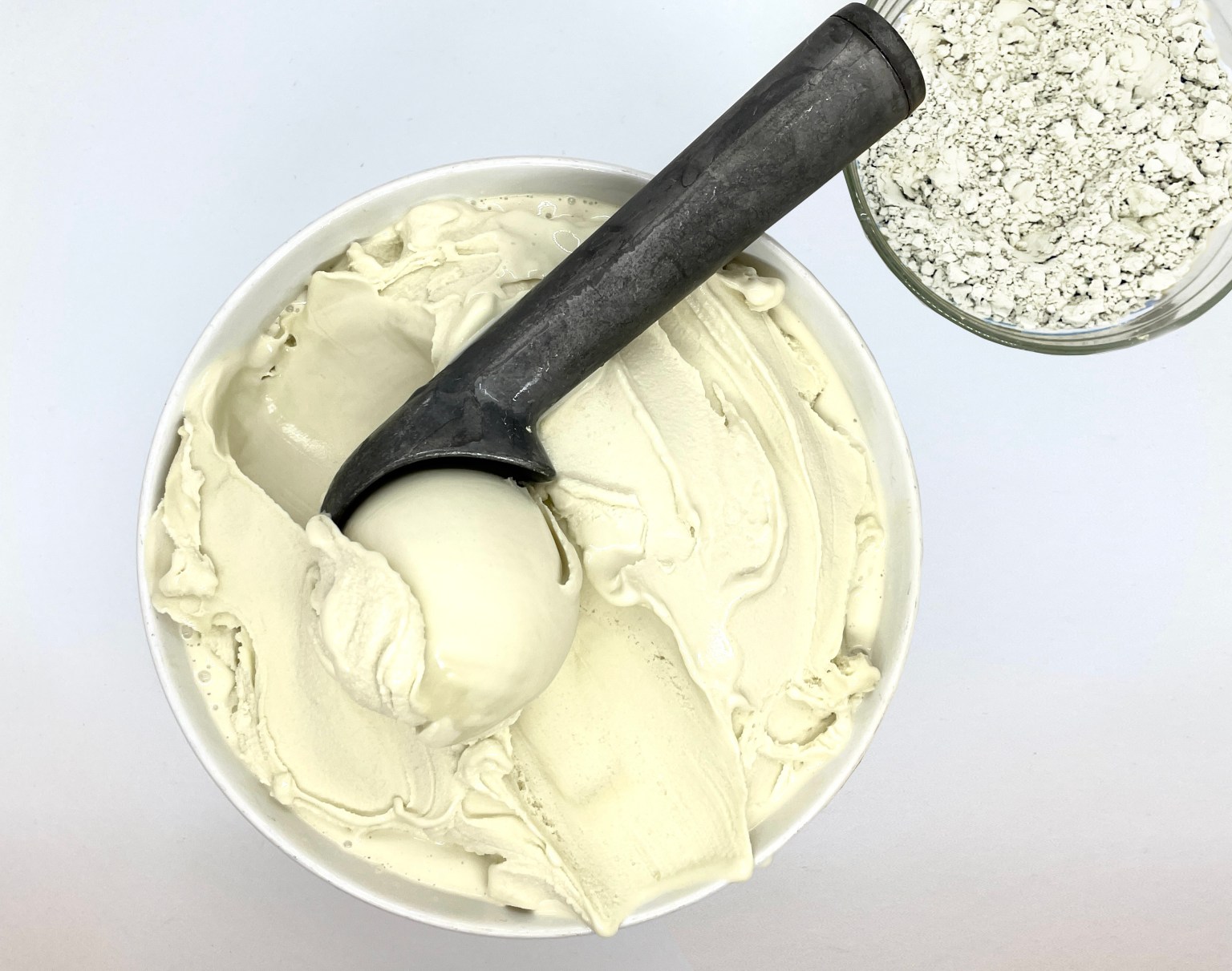 Sophie’s BioNutrients
This ice cream is one of several products made with a protein powder created from Chlorella microalgae by researchers for the SOPHONSTER investigation, which looks at whether the stress of microgravity affects the algae’s protein yield. Microalgae are nutrient dense and produce proteins with essential amino acids, beneficial fatty acids, B vitamins, iron, and fiber. These organisms also can be used to make fuel, cooking oil, medications, and materials. Learning more about microalgae growth and protein production in space could support development of sustainable alternatives to meat and dairy. Such alternatives could provide a food source on future space voyages and for people on Earth and be used to make biofuels and bioactive compounds in medicines.
Microscopic motion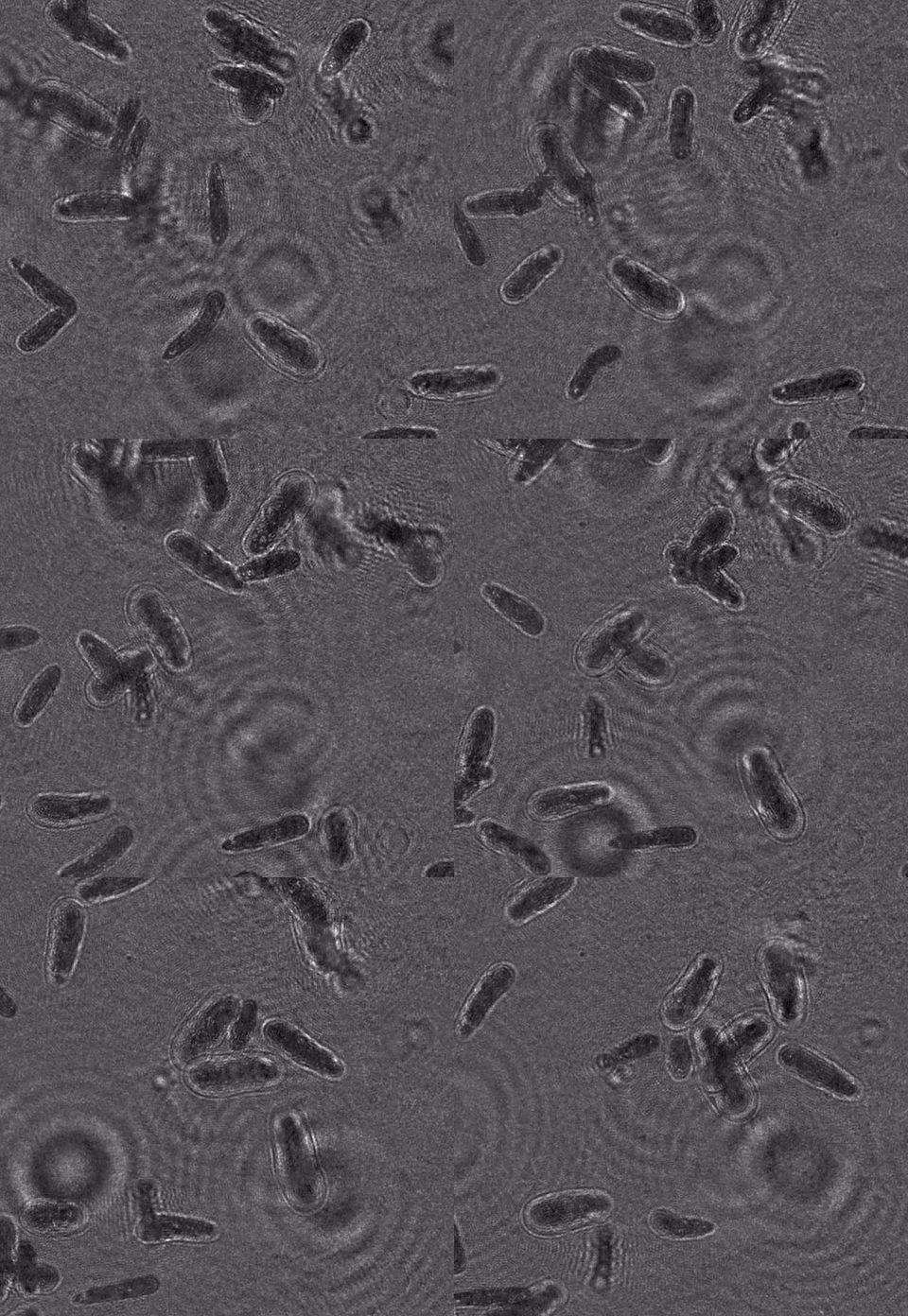 Portland State University
These swimming microalgae are visible thanks to the Extant Life Volumetric Imaging System or ELVIS, a fluorescent 3D imaging microscope that researchers are testing aboard the International Space Station. The investigation studies both active behaviors and genetic changes of microscopic algae and marine bacteria in response to spaceflight. ELVIS is designed to autonomously capture microscopic motion in 3D, a capability not currently available on the station. The technology could be useful for a variety of research in space and on Earth, such as monitoring water quality and detecting potentially infectious organisms.
Genetics of biofilms BioServe
This preflight image shows sample chambers for the Genetic Exchange in Microgravity for Biofilm Bioremediation (GEM-B2) investigation, which examines the mechanisms of gene transfer within biofilms under microgravity conditions. Biofilms are communities of microorganisms that collect and bind to a surface. They can clog and foul water systems, often leave a residue that can cause infections, and may become resistant to antibiotics. Researchers could use results from this work to develop genetic manipulations that inhibit biofilm formation, helping to maintain crew health and safety aboard the International Space Station and on future missions.
Learn more about microgravity research and technology development aboard the space station on this
webpage.
https://www.nasa.gov/image-article/nasa-kicks-off-biological-research-aboard-space-station/4)
COL Anne McClain @AstroAnnimal 6:10 PM · May 14, 2025
How can we best detect potentially harmful organisms in drinking water, on Earth and in space?
The Extant Life Volumetric Imaging System (ELVIS) is one possibility. This compact 3D microscope can image objects as small as bacteria, even while they are in motion. We are doing twelve runs with ELVIS in the coming weeks to study active behavior and genetic changes in microalgae and marine bacteria strains. We hope this technology makes monitoring water quality more thorough and reliable, both on terra firma and deep space. Sports photography is tough, sports photography on the microbial scale is next level.
Also, when you do science called “ELVIS,” you gotta pop a collar to the King!
https://twitter.com/AstroAnnimal/status/1922685968215069036 Wątek: ISS - Międzynarodowa Stacja Kosmiczna (2025) (Przeczytany 41627 razy)