Wywiad z astronautą.Interview with Astronaut and Space Expert Tony Antonelli
by Marianne Curphey | Jun 12, 2023
Astronaut Tony Antonelli shares insights on leadership and innovation in the Space Sector and how NASA’s experience in overcoming setbacks has real-life, practical applications for businesses
Astronaut and space expert Tony Antonelli describes how the space sector combines leadership and innovation and deals with the challenges of setbacks.
Organisations have huge challenges ahead in keeping up with developments in Cybersecurity, AI, Robotics and Technology and face a dilemma in planning for the future when advancement in technology is so fast.
There is much they can learn from the long-term planning and leadership of space missions, which may be ten years or more in planning and implementation and require teamwork and collaboration across different departments.
Work on what you can control and concentrate on making it a success. If your long-term goal or mission has gone awry, then pause, reset, and figure out what is needed.”
Tony Antonelli, NASA Astronaut and Space Expert
Tony Antonelli is a former NASA astronaut who has flown to space twice during his remarkable career. His first foray into space was in 2009 as the pilot of the Space Shuttle’s STS-119 mission to the International Space Station (ISS). The following year he was also pilot for the Space Shuttle’s STS-132 mission. He has also held leadership roles at NASA until his retirement in 2018.
Born in North Carolina, he holds a Bachelor of Science in aeronautics and astronautics from the Massachusetts Institute of Technology (MIT) and took a Master of Science in aeronautics and astronautics at the University of Washington. He can therefore offer an insider’s view of NASA’s current plan to have humans on the surface of the moon by 2028.
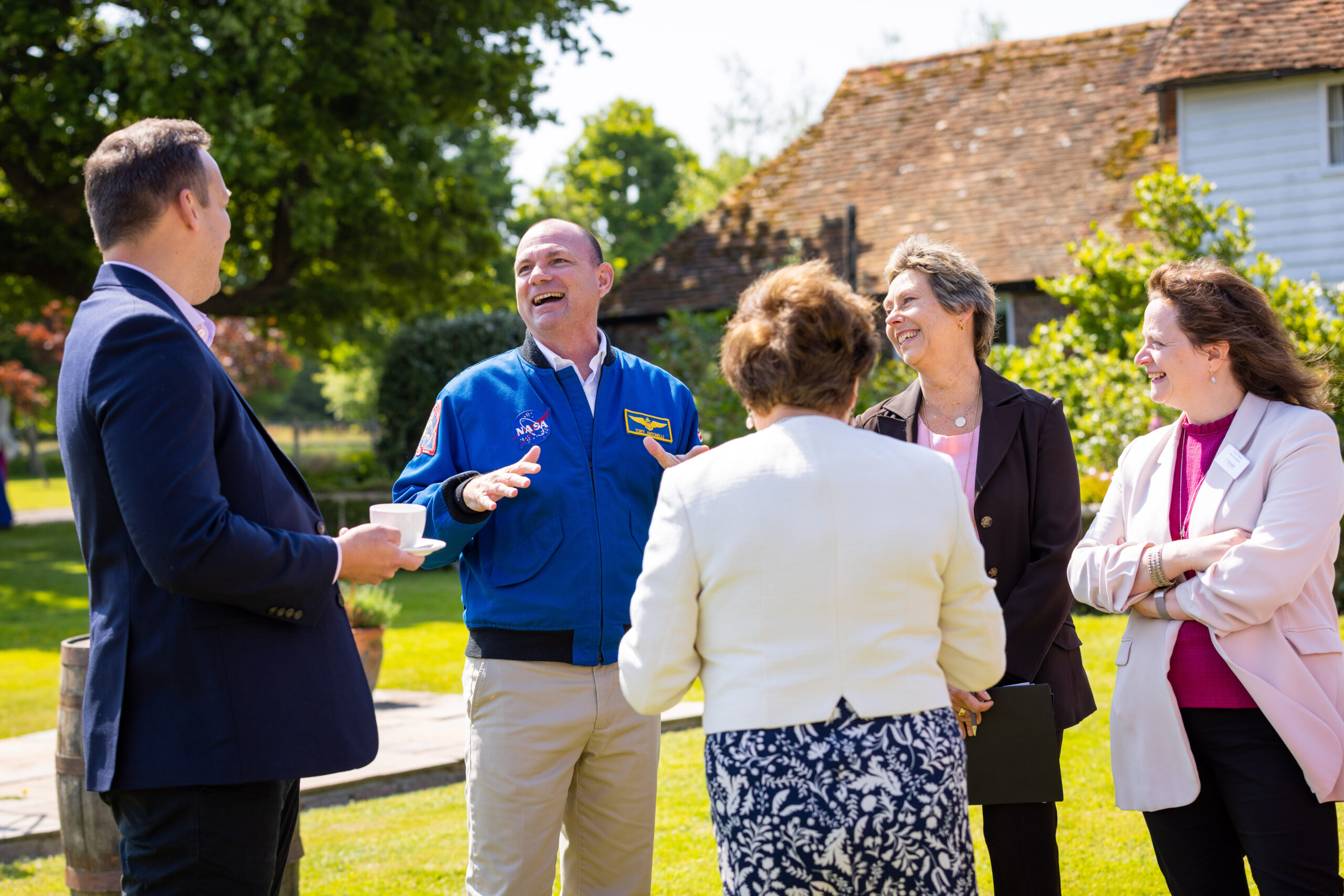
Deeper into space yields research dividends
The Artemis project is a space exploration program jointly run by NASA and three partner agencies—the European Space Agency, the Japan Aerospace Exploration Agency, and the Canadian Space Agency. The programme is likely to have many spin-offs for technology and industry, including developing new rockets and power systems, creating innovative communication networks and studying the moon’s geology. The project will also examine the effects of long-duration spaceflight on human health.
The Artemis program requires huge international and commercial collaboration, while bearing in mind the requirements of sustainability and diversity and inclusion. There is much that business can learn from the huge effort required in planning, research and people management that is required from such a large undertaking.
“Space research has yielded many developments in science and our understanding of the human body,” Tony explains. “For example, gravity affects the distribution of liquids around the body. On earth, more liquid is stored in the lower parts of our body because of the effects of gravity. When you take that away, the liquid disperses itself more evenly through the body which can lead to the brain becoming waterlogged, a condition known as fat face syndrome.”
When some astronauts returned to earth, they exhibited difficulties with reading and writing similar to those experienced by people with dyslexia, which prompted new research into brain function and body biochemistry.
There are also systems in place to mitigate muscle wastage and skeletal deterioration due to the lack of gravity. Gravity is a dampening force and resistance that gets in the way of the purity of carrying out an action. This has applications for scientific and medical research on physical rehabilitation now and in the future.
Be clear about your mission
The Artemis goal is to land the first woman and the first person of colour on the surface of the moon.
“There is real value and importance on zeroing in on exactly what you’re trying to accomplish in a particular mission and then stay in laser focused on that for that,” Tony says.
“Really examine what long term mission are you trying to accomplish? At the highest level, what’s the risk associated with that? If the benefits of performing that mission outweigh the risks and you can rally the team around it and make it happen, then you can press ahead.”
Space exploration also teaches us that with the right planning, many things that were previously thought impossible can be achieved.
“For example, a space station or a spacecraft is self-contained and can sustain human life,” he says. “With this achievement comes the opportunity to sustain life in hostile places on earth, enabling humans to live and survive in more challenging parts of the globe. The isolation and loneliness of being in space is also a challenge which astronauts have to overcome. Their experiences can have important applications on earth.”

Consider how badly you want change
Sometimes goals are nebulous and they do not happen because the motivation is not there. For example, when people across multiple generations are asked when will humans go to Mars, it is always 20 years in the future.
“That is a clear indication in my mind that we don’t yet want to go enough,” Tony says. “As soon as we decide we want to go, I do believe we have all the technology to make it happen. It would be an arduous expedition, and not without a significant amount of risk, but it is possible.”
Achieving change is about looking at how you can support the people around you and show great principles of leadership. Survival training is about creating teams that are strong enough to stick together and collaborate under stress.
Rather than attaching blame, assess the situation that you are in and decide how to move forward.
“First thing you do in is look at the situation and think, what do we do now? How do we move forward? You don’t start talking blame or asking whose fault is it that we are in this position. Instead, consider your next steps, how can the team pull together and how can we improve the situation?”
Test your plan and be prepared to change and adapt
It is easy to get caught up in details but you also need to keep the long term goal in mind. Showing progress will motivate your team and keep morale high.
“It is about having a bias for action,” Tony says. “Let’s get today’s work done and we can adjust our plans going forward if necessary. You have to make sure you are making progress.”
In space, there are many variables which cannot be controlled, but which can be planned and prepared for. For example, when you communicate from Mars when Mars is nearer to the earth, the communication takes about four minutes. When Mars is on the other side of the sun, it takes about 20 minutes. In planning the mission to Mars, scientists will need to take these variables into account.
“A medical emergency in space can also present serious problems,” Tony explains. “The team on board the International Space Station have to be prepared for a major accident, for example, a heart attack or stroke. In such circumstances, telemedicine becomes the only option – with astronauts needing to be trained to carry out emergency medical procedures. In order to train for this, astronauts shadow ambulance crews and A&E teams in order to learn procedures that need to be done in an emergency.”
This training can also be applied in the wider world. Astronauts have helped medics develop telemedicine systems which are able to give people medical advice over satellite in order to enable lay people to treat themselves or treat their colleagues.
This is now used in hardship locations such as Canada and Australia where access by road is not possible and people are far from medical centres.
Accept what you can control, and work around what you cannot control
Often issues around funding can be technical and difficult. In the US space business, government funding is on a different cycle to the election of the political leaders and this can sometime make forward planning more tricky.
“We can’t change that,” says Tony. “Work on what you can control and concentrate on making it a success. If your long-term goal or mission has gone awry, then pause, reset, and figure out what is needed.”
Regular reviews will ensure you stay focussed, and once you pick worthy goals you will find it easier to draw in and maintain talent, something that is a challenge in today’s business economy.
Be mindful of details, but don’t lose sight of the bigger picture
NASA tests everything from the smallest resistors to how human teams will cope under intense pressure. However, you cannot anticipate everything that will happen, and some risk will always remain.
“You can assess and manage risk and do additional testing or analysis, but the final decision is about the risk/reward trade off,” he says.
“This is a risky business and we do a lot of testing and a lot of analysis to come up with reasonable statistical models of how these components are going to perform. In the business world, if your mission really is out there on the edge from a risk perspective, then you are going to have to work hard on competitive analysis, market testing, and be really clear about what you want to achieve.
“Changing the change in an organisation is not always easy or quick. However, with the right mission and the right goals you can make it happen.”

Do not underestimate the importance and value of international collaboration and the human capacity to overcome extraordinary challenges
The 2010 Copiapó mining accident, also known as the Chilean mining accident, trapped 33 miners underground for 69 days, capturing global attention and resulting in a remarkable rescue effort.
On August 5, 2010, a cave-in occurred at the San José mine, leaving the miners trapped approximately 2,300 feet (700 meters) below the surface. The collapse was caused by a massive rockfall, blocking the access shaft and preventing the miners from escaping. The initial shockwave caused extensive damage, leaving the miners stranded in a confined space with limited provisions.
The rescue operation continued for several weeks, focusing on providing the miners with necessary supplies, medical assistance, and psychological support. The miners were able to establish communication with their families and the outside world through video and audio transmissions sent through narrow boreholes.
The Chilean government, mining experts, and international teams immediately focused on locating the miners, providing them with essential supplies, and maintaining their physical and mental well-being. A team of psychologists was sent to support the miners and help them cope with the stressful and challenging situation. Assisting the rescue teams and mining experts were astronauts from NASA, who were able to advise on how to help the miners cope with the psychological effects of being isolated and trapped.
“The simulation of space landing and space walking is repeated hundreds of times in preparation for the real even,” Tony says. “The team prepare meticulously for each event and every single move is drawn out and choreographed down to the detail of which hand you use to pass a tool or execute a task. Even so, just because something works here on Earth, you can’t assume when you take it to space, it’s going to work, so you need to prepare a fallback position too. It is about detailed and specific preparation, and building in alternatives if something does not go to plan.”
Tony Antonelli was a speaker at the Innovation Festival for Global Working on June 8th.
https://thinkglobalpeople.com/interview-with-astronaut-and-space-expert-tony-antonelli/Former NASA astronaut tells how anyone can go to spaceBy Margi Murphy, The Sun Published Sep. 4, 2017 Updated Sep. 4, 2017, 7:00 p.m. ET
 Tony Antonelli speaks to the media after completing a construction mission to the ISS in 2009. Getty Images
You don’t need to look like Arnold Schwarzenegger, but you do need to be in peak physical condition.
Antonelli says: “I would say working hard and persistence starting from whatever age you’re at — all the way through to early career and working experience — that’s the part you can control.”
“But you need to pass the medical tests. You don’t get to have good eyesight and a clean bill of health by studying hard, so there is a bit of luck involved.”
In the case of NASA, you can apply for a range of different roles (and no, not all of them involve flying into space).
It will first screen you to check your qualifications, before probing your criminal history and following up on your references.
After that, you’ll be medically tested, and then comes the final hurdle — the interview. (...)
https://nypost.com/2017/09/04/former-nasa-astronaut-tells-how-anyone-can-go-to-space/Astronaut Tony Antonelli Departs NASA After 15 Years
Jul 21, 2015 RELEASE J15-016
Two-time space shuttle pilot Tony Antonelli has departed from NASA. His last day with the agency was July 10.
“Tony was a major contributor to our office,” said Chris Cassidy, chief of the Astronaut Office at NASA’s Johnson Space Center. “His skills and expertise were extremely valuable to our exploration and Space Launch System engineering team. We wish him the best in his future pursuits.”
Antonelli was born in Detroit and grew up in Indiana and North Carolina. He holds degrees in aeronautics and astronautics from the Massachusetts Institute of Technology in Cambridge and the University of Washington in Seattle. A retired captain in the U.S. Navy, he has accumulated more than 3,200 hours in 41 different kinds of aircraft and has completed 273 carrier-arrested landings.
NASA selected him as an astronaut in 2000. A veteran of two space flights, Antonelli has logged a total of 24 days, 3 hours, 57 minutes in space. He first flew on STS-119 aboard Space Shuttle Discovery in March 2009. The flight delivered the Starboard Integrated Truss Segment and the final pair of power-generating solar array wings to the International Space Station. His second mission was on Atlantis for STS-132 in May 2010. The mission delivered an Integrated Cargo Carrier and a Russian-built Mini Research Module to the Station.
Antonelli’s complete biography is available at:
http://www.jsc.nasa.gov/Bios/htmlbios/antonelli-da.html
-end-
Nicole Cloutier-Lemasters
NASA Johnson Space Center
281-483-5111
Nicole.Cloutier-1@nasa.govhttps://www.nasa.gov/news-release/astronaut-tony-antonelli-departs-nasa-after-15-years/https://astrolightvic.wordpress.com/2017/08/23/nasa-astronaut-tony-antonelli/
 Wątek: DA 'Tony' Antonelli - 23.08.1967 (Przeczytany 270 razy)