30 lat temu, 08.04.1993 o 05:28:59,989 z wyrzutni LC-39B na Cape Canaveral wystartował wahadłowiec Discovery do misji
STS-56.
Był to 16. lot orbitalny Discovery.
Czas lotu: 9d 06g 08m 19s.
Głównym ładunkiem był ATLAS-2 (Atmospheric Laboratory for Applications and Science-2), który służył do badania oddziaływania cząstek wiatru słonecznego na ziemską atmosferę oraz do mierzenia wpływu różnych czynników na warstwę ozonową.
11.04.1993 przy pomocy
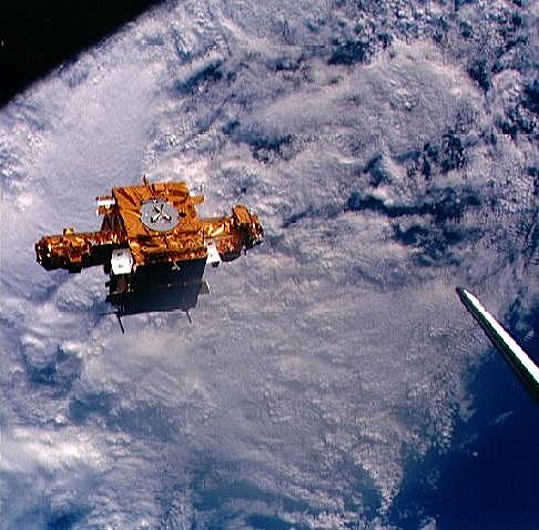
Canadarm został umieszczony poza orbiterem SPARTAN-201 (Shuttle Pointed Autonomous Research Tool for Astronomy) do badania wiatru słonecznego i obserwacji korony słonecznej.
Platforma naukowa została ponownie umieszczona na pokładzie wahadłowca 13.04.1993.
Został nawiązany po raz pierwszy kontakt radiowy między wahadłowcem a stacją kosmiczną Mir przy wykorzystaniu amatorskiego sprzętu radiowego.
Lądowanie zaplanowano na 16.04.1993, ale zostało odwołane z powodu pogody.
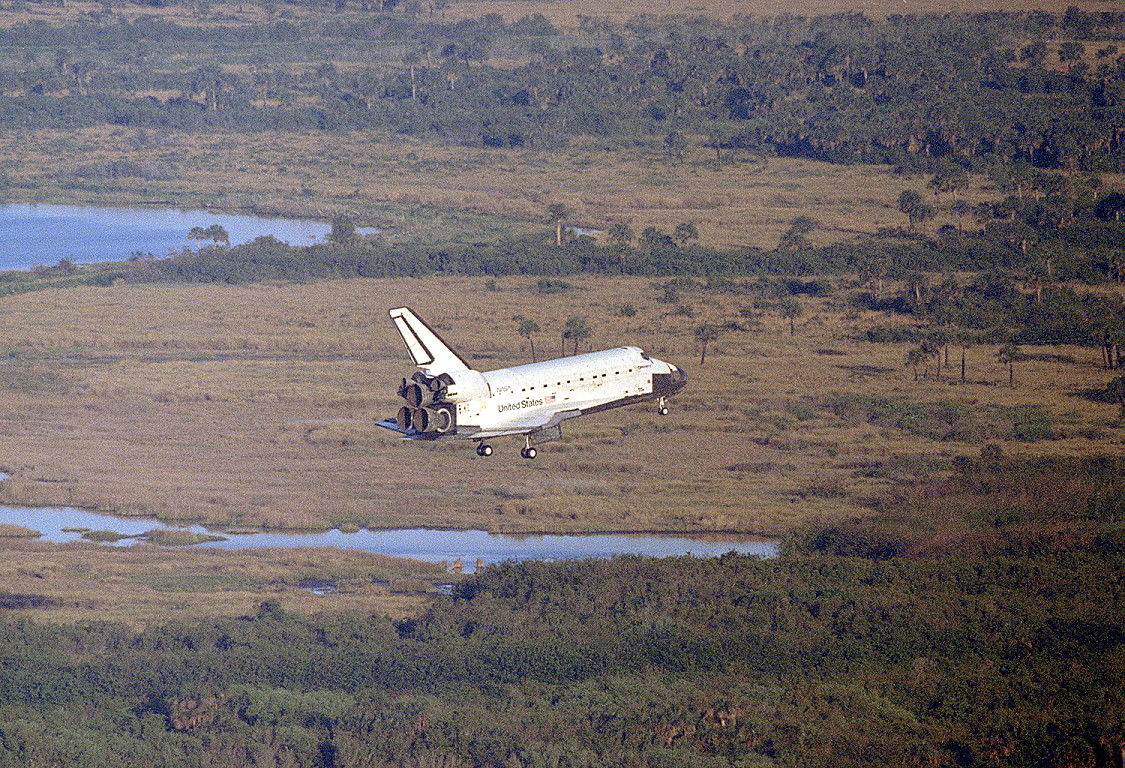
17.04.1993 o 11:37:19 Discovery wylądował na bieżni SLF (RW33) KSC .

 Kenneth Dale "Taco" Cockrell, Colin Michael Foale, Ellen Ochoa,
Stephen Scot Oswald, Kenneth Donald Cameron.Space Shuttle Flight 54 (STS-56) Post FlightSpace Shuttle STS-56 Mission Highlights“Even Better at Night”: Remembering Discovery’s Earth-Watching Mission, 30 Years Onby Ben Evans April 8, 2023
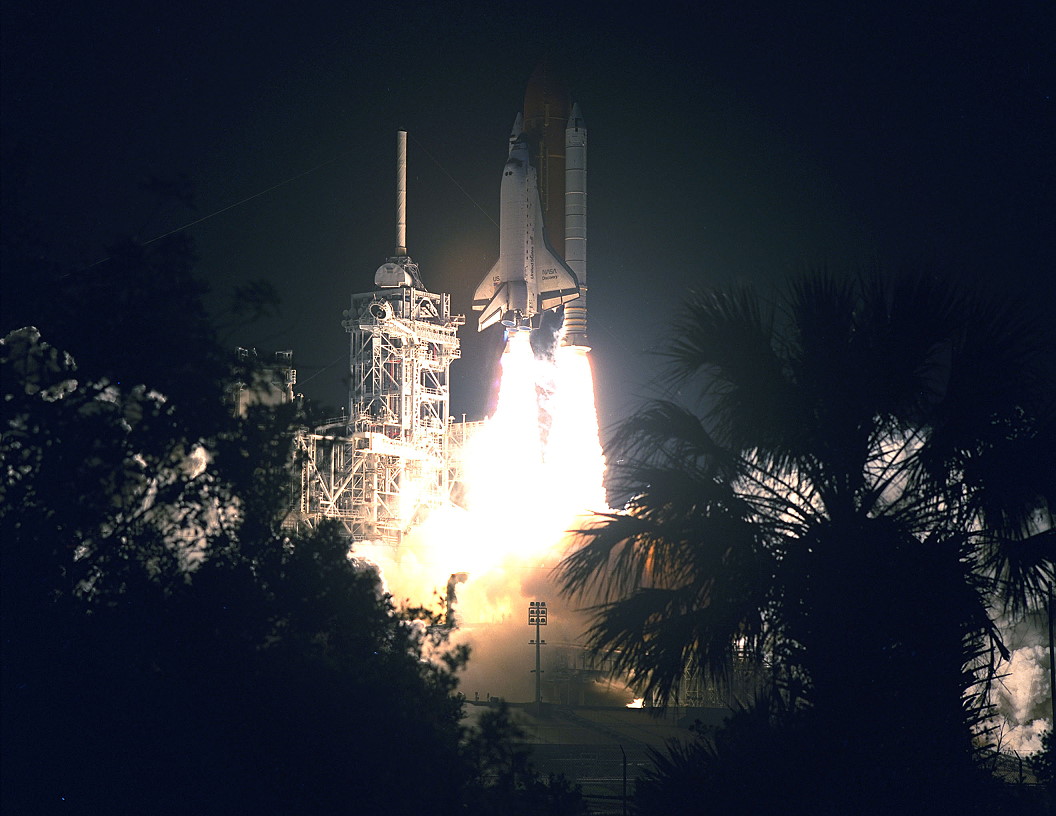
 1) Thirty years ago, tonight, after one false start only seconds before liftoff, Discovery roared into the night on a Mission to Planet Earth. Photo Credit: NASA, via Joachim Becker/SpaceFacts.de
2)Discovery approaches Runway 33 for touchdown on 17 April 1993, wrapping up the nine-day STS-56 mission. Photo Credit: NASA, via Joachim Becker/SpaceFacts.de(...) The countdown on the night of 6 April proceeded smoothly until the built-in hold at T-9 minutes, when an issue arose relating to higher-than-expected temperatures on a valve in Discovery’s No. 1 SSME. The clock was held for more than an hour, before controllers finally resumed the count at 1:23 a.m. EDT on the 7th. (...)
At T-11 seconds, abruptly, the countdown was automatically halted and the launch attempt scrubbed. It subsequently became apparent that the hydrogen high-point bleed valve’s “closed” indicator was not present and—although the cause was traced to an instrumentation error, not a hardware malfunction—it breached Launch Commit Criteria (LCC) rules. (...)
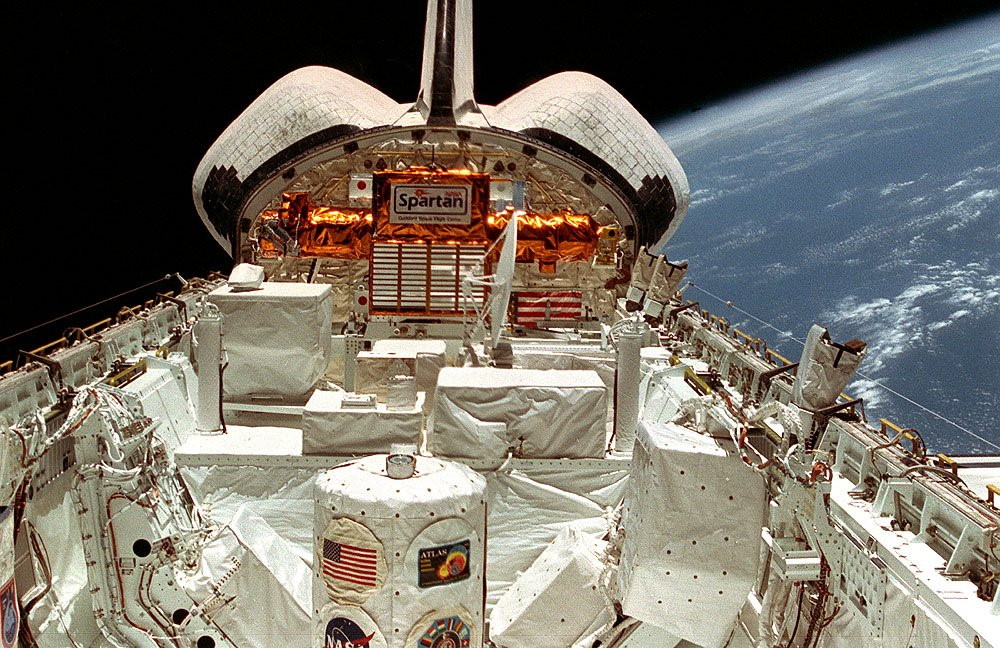
1) View of the ATLAS-2 pallet in the foreground, with Spartan berthed at the rear of Discovery’s payload bay. Photo Credit: NASA, via Joachim Becker/SpaceFacts.de
2)
The Spartan solar physics satellite is pictured during its two days of free flight during STS-56. Photo Credit: NASA, via Joachim Becker/SpaceFacts.de(...) The box-shaped Spartan, which now resides on display at the National Air and Space Museum (NASM) in Washington, D.C., spent two days in free flight, observing the Sun’s corona. The crew performed three separation “burns” to back away from the payload to a distance of 100 miles (160 kilometers). (...)
All told, STS-56 gathered atmospheric data over 94 percent of Earth, including detailed stratospheric measurements of the Arctic Region. (...)
https://www.americaspace.com/2023/04/07/even-better-at-night-remembering-sts-56-thirty-years-on/https://www.flickr.com/photos/nasacommons/9458241019https://www.flickr.com/photos/nasacommons/9461016638/in/photostream/http://www.spacefacts.de/mission/english/sts-56.htmhttp://www.astronautix.com/s/sts-56.htmlhttps://en.wikipedia.org/wiki/STS-56https://pl.wikipedia.org/wiki/STS-56https://www.nasa.gov/mission_pages/shuttle/shuttlemissions/archives/sts-56.htmlhttps://science.nasa.gov/missions/spartanhttps://umbra.nascom.nasa.gov/spartan/spacecraft.htmlhttps://airandspace.si.edu/collection-objects/payload-scientific-spartan-201/nasm_A20040121000Spartan 201 (1360 kg)
https://space.skyrocket.de/doc_sdat/spartan-201.htmhttps://souvenirsdespace.lebonforum.com/t451-8-avril-1993-20eme-anniversaire-mission-sts-56https://twitter.com/spacemen1969/status/1644584608556621824https://twitter.com/ron_eisele/status/17770615534575495968 April 1993. 05.29.00 UTC/GMT. Launch of STS-56, NASA Space Shuttle Discovery. The primary payload was the Atmospheric Laboratory for Applications and Science-2, collecting data on the relationship between the sun's energy output and Earth's middle atmosphere.
 Wątek: Kalendarium historycznych wydarzeń (Przeczytany 621481 razy)