Autor Wątek: Starty rakiet (IV kwartał 2018 roku)  (Przeczytany 100024 razy)

0 użytkowników i 2 Gości przegląda ten wątek.

Online Orionid

  • Weteran
  • *****
  • Wiadomości: 28939
  • Very easy - Harrison Schmitt
Odp: Starty rakiet (IV kwartał 2018 roku)
« Odpowiedź #150 dnia: Grudnia 16, 2018, 09:57 »
Wystartowała rakieta Electron
  16.12. o 06:44 z Onenui Station wystrzelona została RN Electron/Curie, która wyniosła w T+51' 30" na orbitę
o parametrach: hp=500 km, ha=500 km, i=85° satelity projektu ELaNa XIX: ALBUS, CeREs, CHOMPTT,
CubeSail, DaVinci, ISX, NMTSat, RSat, Shields-1, STF-1 oraz TOMSat EagleScout (AeroCube 11A), TOMSat R3
(AeroCube 11B) i SHFT.
http://lk.astronautilus.pl/n181216.htm#01


Udany start rakiety Electron (16.12.2018)
BY MICHAŁ MOROZ ON 17 GRUDNIA 2018


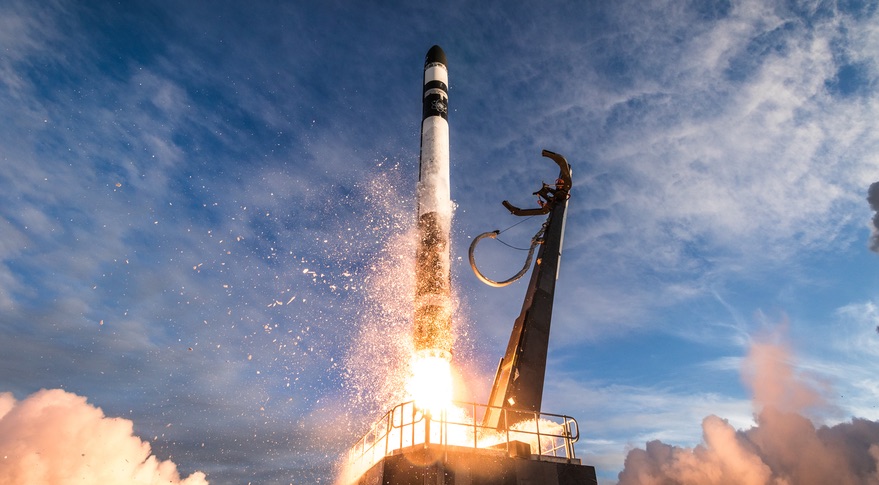
Start rakiety Electron z 16 grudnia 2018 / Rocket Lab

W niedzielę 16 grudnia z leżącego w Nowej Zelandii stanowiska Oneneui Station wystartowała mała rakieta nośna Electron. Był to już trzeci udany lot rakiety i jednocześnie druga misja operacyjna zrealizowana przez startup Rocket Lab.

Po 51 minutach i 30 sekundach lotu na orbitę o parametrach 495 na 511 km i inklinację 83 stopni wyniesionych zostało 13 małych satelitów technologicznych zbudowanych w większości przez różne centra NASA. Lot został zakupiony przez amerykańską agencję kosmiczną w ramach CubeSat Launch Initiative.

ALBus (Advanced eLectrical Bus), CubeSat 3U zbudowany przez centrum NASA w Glenn. Demonstracja nowego systemu zasilania oraz paneli słonecznych.

CeREs (Compact Radiation Belt Explorer), CubeSat 3U zbudowany przez centrum NASA w Goddard. Celem misji jest wykonanie pomiarów promieniowania kosmicznego.

CHOMPTT (CubeSat Handling Of Multisystem Precision Time Transfer), CubeSat 3U zbudowany przez Uniwersytet Florydy. Misja zademonstruje technologie precyzyjnego określenia upływu czasu.

DaVinci, edukacyjny CubeSat 3U zbudowany przez studentów North Idaho STEM Charter Academy.

ISX, CubeSat 3U zbudowany przez NASA JPL do pomiaru nieregularności w plazmie kosmicznej.

NMTSat, CubeSat 3U zbudowany przez New Mexico Institute of Mining and Technology w celu monitoringu pogody kosmicznej.

RSat-P (Repair Satellite-Prototype), CubeSat 3U zbudowany przez US Naval Academy Satellite Lab. Demonstrator technologii naprawy satelitów na orbicie.

Shields 1, CubeSat 3U zbudowany przez centrum NASA w Langley. Demonstrator nowych materiałów przystosowanych do pracy w warunkach przestrzeni kosmicznej.

STF 1 (Simulation to Flight 1), CubeSat 3U zbudowany w ramach programu NASA IV&V (Independent Validation and Verification) we współpracy z West Virginia Space Grant Consortium oraz West Virginia University. Jest to platforma demonstracyjna dla przyszłych technologii CubeSatowych.


Wizualizacja misji CubeSail

CubeSail misja żagla słonecznego zbudowana przez studentów Uniwersytetu w Illinois. Dwa CubeSaty 1,5U rozdzielą się i rozwiną długi na 260 metrów żagiel o powierzchni 20 metrów kwadratowych.

TOMSat EagleScout oraz TOMSat R3, dwa CubeSaty 3U zbudowane przez Aerospace Corporation demonstrujące czujniki obserwujące Ziemię w paśmie widzialnym. Celem demonstracji jest pokazanie, że czujniki na małych satelitach mogą świadczyć pomiary podobnej jakości jak w przypadku Landsata.

SHIFT, CubeSat 3U zbudowany przez DARPA we współpracy z NASA JPL do pomiarów promieniowania kosmicznego.

Cele firmy Rocket Lab

Celem spółki jest obsługa rosnącego rynku małych satelitów. Rakieta Electron w jednym locie będzie mogła wynieść ładunek o masie do 150 kg na orbitę synchronizowaną słonecznie (SSO) o wysokości 500 km. Przy obecnie realizowanych lotach może być możliwe wyniesienie kilkudziesięciu najmniejszych satelitów taką rakietą.

Spółka otrzymała również szereg inwestycji. Ostatnia Runda D zakończyła się pozyskaniem łącznie 148 mln dolarów kapitału, przy wycenie spółki na ponad 1 mld dolarów. Nieznane są wartości uzbieranego kapitału w Rundzie B (2015 rok) oraz Rundzie C.

Uzyskany kapitał przeznaczony zostanie na zwiększenie mocy produkcyjnej przy rakiecie Electron. W nowej siedzibie głównej firmy w Huntington Beach (Kalifornia, USA) zbudowana została hala montażowa, w której składane będą silniki rakiety Electron oraz systemy elektroniczne.

Same rakiety będą dalej montowane w Nowej Zelandii, chociaż nie wyklucza się, że w przyszłości na potrzeby realizacji startów z portów kosmicznych w Stanach Zjednoczonych, rakiety Electron będą składane również w Kalifornii. Rocket Lab ma przeprowadzać loty kosmiczne również z nowego kosmodromu budowanego w Szkocji.

(PFA, XL)
https://kosmonauta.net/2018/12/udany-start-rakiety-electron-16-12-2018/

Rocket Lab preps to launch flock of NASA-funded CubeSats
December 12, 2018 Stephen Clark


(...) Ten of the CubeSats set to launch on NASA’s Electron mission are part of the agency’s Educational Launch of Nanosatellites, or ELaNa, program. The Electron launch is numbered ELaNa 19, following a series of past CubeSat missions that hitched rides aboard Dragon and Cygnus supply ships bound for the International Space Station, and as secondary payloads on Antares, Atlas 5, Delta 2, Falcon 9 and Minotaur rockets.

NASA typically accepts proposals every year from CubeSat developers at U.S. universities and research organizations, then funds the launch of the best projects. Launch costs for CubeSats can sometimes match, or even exceed, the expense of building the spacecraft itself.

ELaNa 19 is the first dedicated launch for the program, which Skrobot helped kick off a decade ago. The Electron rocket and a Curie upper stage will place the 10 ELaNa-sponsored CubeSats, and three more U.S.-owned CubeSats, into a circular 310-mile-high orbit inclined 85 degrees to the equator, more than 50 miles above the orbit of the International Space Station. (...)
https://spaceflightnow.com/2018/12/12/rocket-lab-preps-to-launch-flock-of-nasa-funded-cubesats/

NASA, Rocket Lab partner on successful satellite launch from New Zealand
December 17, 2018 Stephen Clark


The CeREs CubeSat, or the Compact Radiation Belt Explorer, is loaded inside its deployment canister at Rocket Lab’s facility in Huntington Beach, California. Credit: NASA

(...) NASA took a hands-off approach with the Venture Class Launch Services contractors, a change from the agency’s close-up oversight of launch companies it pays to send more costly satellites into space — providers such as United Launch Alliance and SpaceX.

Rather than dispatching a team of engineers, managers and technicians to the Rocket Lab launch base in New Zealand, Skrobot said NASA sent one employee from KSC.

“The whole concept behind this is it’s an FAA-licensed (commercial) launch, so we want to keep the crews very small, so we don’t have a lot of insight and oversight,” Skrobot said. “So we sent one individual, an integration engineer/mission manager-type who went down there, and we do have one contractor with him that is supporting the spacecraft.”

Rocket Lab’s launch contract with NASA for Sunday’s flight was valued at $6.9 million, more than an order of magnitude less than what the space agency pays for launches on bigger rockets. (...)

The CubeSats launched aboard the Electron rocket through NASA’s ELaNa program are:

- ALBus, a 3-unit CubeSat from NASA’s Glenn Research Center in Cleveland, Ohio, will test technology for a high power density CubeSat and the deployment of solar arrays and antennas using resettable shape memory alloy mechanisms.

- CeREs, also known as the Compact Radiation Belt Explorer, is a 3-unit CubeSat from NASA’s Goddard Space Flight Center in Greenbelt, Maryland. CeREs will examine the radiation belt and how electrons are energized and lost, particularly during events called microbursts — when sudden swarms of electrons stream into the atmosphere, according to NASA.

- CHOMPTT, also known as the CubeSat Handling of Multisystem Precision Time Transfer mission, is a 3-unit CubeSat from the University of Florida in Gainesville, Florida. CHOMPTT will test time transfer technology using on-board atomic clocks synchronized with a ground clock using a laser signal. Time transfer is useful for satellite navigation applications.

- CubeSail consists of two 1.5-unit CubeSats launched together, which will separate once in orbit and unspool a 250-meter (820-foot) solar sail ribbon between the two spacecraft. The CubeSail experiment was developed at the University of Illinois at Urbana-Champaign to test novel approaches to using solar sails for propulsion.

- DaVinci is a 3-unit CubeSat from the North Idaho STEM Charter Academy in Rathdrum, Idaho. DaVinci was developed primarily as an educational tool for Idaho students, but the spacecraft also carries a camera and will test satellite-to-satellite Internet communications through the Globalstar network.

- ISX, or the Ionospheric Scintillation Explorer, is a 3-unit CubeSat developed by SRI International and Cal Poly at San Luis Obispo, California. ISX will study plasma irregularities in the upper atmosphere by measuring its affect on digital TV signals produced on the ground.

- NMTSat is a 3-unit CubeSat from the New Mexico Institute of Mining and Technology in Socorro, New Mexico. NMTSat carries instruments to collect data on Earth’s magnetic field and high altitude plasma density, take atmospheric weather measurements, and conduct an optical beacon experiment.

- RSat is a 3-unit CubeSat from the U.S. Naval Academy in Annapolis, Maryland. The RSat spacecraft includes two articulating miniature robotic arms, which will be tested in orbit to assess their suitability for latching onto other satellites in orbit for inspection and repair.

- Shields 1 is a 3-unit CubeSat from NASA’s Langley Research Center in Hampton, Virginia. Shields 1 will test new radiation shielding technologies that could be used on future small satellites.

- STF 1, or Simulation-to-Flight 1, is a 3-unit CubeSat developed through a collaboration between NASA’s Independent Verification and Validation Program, West Virginia University, and West Virginia small businesses. STF 1 is the first spacecraft to be built in West Virginia, and it will serve as a testbed for new satellite software that can be developed on any laptop or desktop computer.

“The CubeSats of ELaNa 19 represent a large variety of scientific objectives and technology demonstrations,” said Justin Treptow, NASA’s ELaNa 19 mission manager. “With this the first launch of a Venture Class Launch Service on the Rocket Lab Electron, NASA now has an option to match our small satellite missions with a dedicated small launch vehicle to place these satellites in an optimal orbit to achieve big results.”

In addition to the 10 CubeSats launched through NASA’s ELaNa program, three more nanosatellites flew into orbit on top of the Electron rocket Sunday. NASA also provided a launch opportunity for:

- AeroCube 11 consists of two nearly identical 3-unit CubeSats developed by the Aerospace Corp. in El Segundo, California. The AeroCube 11 mission’s two CubeSats, named TOMSat EagleScout and TOMSat R3, will test miniaturized imagers. One of the CubeSats carries a pushbroom imager to collect vegetation data for comparison to the much larger Operational Land Imager aboard the Landsat series of satellites, and the other TOMSat CubeSat has a focal plane array on-board to take pictures of Earth, the moon and stars.

- SHFT 2, also known as the Space-Based High Frequency Testbed, is a 3-unit CubeSat owned by the Defense Advanced Research Projects Agency and developed in partnership with NASA’s Jet Propulsion Laboratory. The CubeSat launching with Rocket Lab is the second of the JPL-designed satellites, according to DARPA spokesperson Jared Adams, and will study variations in the plasma density of the ionosphere by collecting high-frequency radio signals, including those from natural galactic background emissions, from Jupiter, and from transmitters on Earth. (...)
https://spaceflightnow.com/2018/12/17/nasa-rocket-lab-partner-on-successful-satellite-launch-from-new-zealand/

https://spaceflightnow.com/2018/12/13/electron-elana-19-mission-status-center/
https://spaceflightnow.com/2018/12/13/mission-timeline-for-rocket-labs-launch-of-nasas-elana-19-cubesats/

Rocket Lab launches cubesats for NASA
by Jeff Foust — December 16, 2018


A Rocket Lab Electron carrying 13 cubesats lifts off Dec. 16 from the company's Launch Complex 1 in New Zealand. Credit: Rocket Lab/Trevor Mahlmann

WASHINGTON — A Rocket Lab Electron rocket successfully launched a group of cubesats Dec. 16 on a mission funded by NASA as the company looks ahead to more frequent launches in the next year.

The Electron rocket lifted off from the company’s Launch Complex 1 on New Zealand’s Mahia Peninsula at 1:33 a.m. Eastern. The rocket placed a kick stage containing the 13 satellites into orbit nine minutes after launch. About 40 minutes, later, the kick stage ignited for a 90-second burn, after which the satellites were placed into 500-kilometer circular orbits at an inclination of 85 degrees.

“All payloads deployed!! Perfect mission,” Peter Beck, chief executive of Rocket Lab, tweeted after the satellites were deployed.

NASA purchased the launch for its CubeSat Launch Initiative program, which provides launches for cubesats developed by academic institutions and NASA centers. This particular flight, known as Educational Launch of Nanosatellites (ELaNa) 19, features three satellites built by NASA centers, six by universities and one by a charter school in Idaho.

The satellites range from those built primarily to give students experience in satellite development to those testing advanced technologies. RSat, developed at the U.S. Naval Academy, will test robotic arms planned for future satellite-servicing spacecraft. CubeSat, from the University of Illinois, will test soil sail technology. The Advanced Electrical Bus, or ALBus, satellite from NASA’s Glenn Research Center will demonstrate new power systems and solar array deployment technologies.

The launch carried three satellites in addition to the 10 that were part of ELaNa-19. Two of the satellites, collectively known as AeroCube 11, were developed by the Aerospace Corporation to test advanced imaging technologies. The third, Space-Based High Frequency Testbed 2, was developed by the Jet Propulsion Laboratory and Defense Advanced Research Projects Agency to demonstrate using high-frequency radio signals to study the ionosphere.

NASA awarded Rocket Lab a contract for the launch in October 2015 through its Venture Class Launch Services program, an effort to develop dedicated launch services for cubesats and other smallsats. Previous ELaNa missions all used secondary payload, or rideshare, accommodations on NASA and other government launches, reducing the control they had over schedule and orbit.

“Matching ELaNa-19 with the Electron rocket gives these advanced scientific and educational satellites first-class tickets to space while providing valuable insight for potential NASA missions in the future,” said Justin Treptow, NASA ELaNa-19 mission manager, prior to the launch.

NASA also awarded Venture Class Launch Services contracts in 2015 to Firefly Space Systems and Virgin Galactic. Firefly lost its contract when the company went through bankruptcy, reemerging as Firefly Aerospace.

Virgin Orbit, the company spun off from Virgin Galactic to develop and operate the LauncherOne air-launch system, is nearing its first launch. The NASA contract will be flown on the second LauncherOne flight, on a mission called ELaNa-20 scheduled no earlier than March 2019. That mission will carry 11 cubesats for universities and NASA’s Ames Research Center.

This launch was the third for Rocket Lab this year and second in a little more than one month. The company called this launch “This One’s for Pickering” in honor of the late William Pickering, the New Zealand-born scientist who served as director of JPL from 1954 to 1976.

The company said in a post-launch statement that its next Electron “will be on the pad” in January, but didn’t identify the customer. Company officials have previously said they expect to increase their launch cadence in 2019, flying missions at a rate of at least once per month. The company recently opened a factory in Auckland, New Zealand, designed to support the production of one Electron rocket per week.

“Regular and reliable launch is now a reality for small satellites. The wait is over,” Beck said in the statement. “We’re providing small satellite customers with more control than they’ve ever had, enabling them to launch on their own schedule, to precise orbits, as frequently as they need to.”

Rocket Lab announced a $140 million Series E round Nov. 15 that will help support that increased launch rate. The funding will support, among other efforts, construction of additional launch pads at Launch Complex 1 and the new Launch Complex 2 the company announced in October at the Mid-Atlantic Regional Spaceport on Wallops Island, Virginia.

“This funding also enables the continued aggressive scale-up of Electron production to support our targeted weekly flight rate,” Beck said in a statement then about the new funding round. “It will also see us build additional launch pads and begin work on three major new R&D programs.” The company said it will disclose details about those unspecified research and development efforts “in the new year.”
https://spacenews.com/rocket-lab-launches-cubesats-for-nasa/
https://spacenews.com/rocket-lab-scrubs-electron-launch-after-last-second-abort/

Rocket Lab Electron launches ELaNa-XIX mission
written by Thomas Burghardt December 15, 2018


https://www.nasaspaceflight.com/2018/12/rocket-lab-nasa-mission-electron-elana-xix/

http://www.forum.kosmonauta.net/index.php?topic=2210.msg126098#msg126098

https://space.skyrocket.de/doc_sdat/ceres.htm
https://space.skyrocket.de/doc_sdat/albus.htm
https://space.skyrocket.de/doc_sdat/chomptt.htm
https://space.skyrocket.de/doc_sdat/da-vinci.htm
https://space.skyrocket.de/doc_sdat/isx.htm
https://space.skyrocket.de/doc_sdat/nmtsat.htm
https://space.skyrocket.de/doc_sdat/rsat-p.htm
https://space.skyrocket.de/doc_sdat/shields-1.htm
https://space.skyrocket.de/doc_sdat/stf-1.htm
https://space.skyrocket.de/doc_sdat/cubesail.htm (1 i 2)
https://space.skyrocket.de/doc_sdat/aerocube-11-r3.htm (11A i 11B)
https://space.skyrocket.de/doc_sdat/shft-1.htm
« Ostatnia zmiana: Września 04, 2021, 18:10 wysłana przez Orionid »

Offline JSz

  • Weteran
  • *****
  • Wiadomości: 6854
Odp: Starty rakiet (IV kwartał 2018 roku)
« Odpowiedź #151 dnia: Grudnia 17, 2018, 22:28 »
W ciągu niepełnej doby z 18 na 19 grudnia będziemy obserwować cztery starty orbitalne i jeden suborbitalny (godziny w UTC):

1) najpierw Falcon 9 o 14:11,
2) potem Blue Origin z suborbitalną próbą New Sheparda o 14:30,
3) trochę później europejski Sojuz o 16:37,
4) w nocy już następnej doby (19 grudnia) o 1:58 długo odkładana Delta 4 Heavy,
5) a rano o 10:30 indyjska GSLV Mk2!

Ciekawe ile z tego dojdzie do skutku...

Offline astropl

  • Moderator
  • *****
  • Wiadomości: 5357
  • Zmieściłem się w Sojuzie :)
    • Loty Kosmiczne
Odp: Starty rakiet (IV kwartał 2018 roku)
« Odpowiedź #152 dnia: Grudnia 18, 2018, 06:38 »
Ze względu na pogodę jest tylko 20% szans na start Delty w tym dniu.
Waldemar Zwierzchlejski
http://lk.astronautilus.pl

Offline kanarkusmaximus

  • Administrator
  • *****
  • Wiadomości: 24189
  • Ja z tym nie mam nic wspólnego!
    • Kosmonauta.net
Odp: Starty rakiet (IV kwartał 2018 roku)
« Odpowiedź #153 dnia: Grudnia 18, 2018, 13:19 »
Mam nadzieję, że takie serie rakietowe nie będą wyjątkowe. :) Powinny się odbywać raz na tydzień! :)

Polskie Forum Astronautyczne

Odp: Starty rakiet (IV kwartał 2018 roku)
« Odpowiedź #153 dnia: Grudnia 18, 2018, 13:19 »

Offline astropl

  • Moderator
  • *****
  • Wiadomości: 5357
  • Zmieściłem się w Sojuzie :)
    • Loty Kosmiczne
Odp: Starty rakiet (IV kwartał 2018 roku)
« Odpowiedź #154 dnia: Grudnia 18, 2018, 15:23 »
Start Sojuza opóźniony o 24 godziny.

Start Falcona również opóźniony o 24 godziny.

Delta, zgodnie z przewidywaniami, też leci dobę później.
« Ostatnia zmiana: Grudnia 18, 2018, 21:38 wysłana przez astropl »
Waldemar Zwierzchlejski
http://lk.astronautilus.pl

Offline artpoz

  • Weteran
  • *****
  • Wiadomości: 5399
Odp: Starty rakiet (IV kwartał 2018 roku)
« Odpowiedź #155 dnia: Grudnia 18, 2018, 21:39 »
Dziś odwołano 4 starty.

Offline artpoz

  • Weteran
  • *****
  • Wiadomości: 5399
Odp: Starty rakiet (IV kwartał 2018 roku)
« Odpowiedź #156 dnia: Grudnia 19, 2018, 10:40 »
Dziś trzy starty rakiet
1) 11:40 - GSLV Mk 2 z satelitą GSat-7

2) 15:07 - Falcon 9 z satelitą GPS trzeciej generacji

3) 17:37 - Sojuz-STA/Fregat-MT z satelitą SCO-1
« Ostatnia zmiana: Grudnia 19, 2018, 10:57 wysłana przez artpoz »

Offline astropl

  • Moderator
  • *****
  • Wiadomości: 5357
  • Zmieściłem się w Sojuzie :)
    • Loty Kosmiczne
Odp: Starty rakiet (IV kwartał 2018 roku)
« Odpowiedź #157 dnia: Grudnia 19, 2018, 17:38 »

PAŹDZIERNIK 2018

08    02:21:28          Vandenberg 4E     Falcon-9R           SAOCOM-1A
09    02:43:04          Jiuquan 43/94     CZ-2C/YZ-1S         Yaogan-32 Grupa 1 A, B
11    08:40:15          Bajkonur 1/5      Sojuz-FG            Sojuz MS-10
15    04:23:04          Xichang           CZ-3B/YZ-1          Beidou-3 M15, M16
17    04:15:00          Canaveral 41      Atlas-5/551         AEHF-4
20    01:45:35          Kourou 3          Ariane-5ECA         BepiColombo
24    22:57             Taiyuan 9         CZ-4B               Haiyang-2B
25    00:15             Plesieck 43/4     Sojuz-2.1b          Kosmos 2528 (Lotos-S1 No.3)
27    08:00             Jiuquan           Zhuque-1            Weilai-1
29    00:43:13          Jiuquan 43/94     CZ-2C               CFOSAT,  Zhaojin-1, Tiange-1, Hongyan-1,
                                                              Tianfuguoxing-1, Changshagaoxin,
                                                              Xiaoxiang-1 (02), CubeBel-1
29    04:08:01          Tanegashima Y/1   H-2A/202            Ibuki-2 (GOSAT-2), KhalifaSat, DIWATA-2B,
                                                              PROITERES-2, Tenkou, Stars-AO, AUTcube2
LISTOPAD 2018

01    15:57:05          Xichang           CZ-3B/G2            Beidou-3 GEO-1
03    20:17:53          Plesieck 43/4     Sojuz-2.1/Fregat-M  Kosmos 2529 (Uragan-M)
07    00:47:28          Kourou ELS        Sojuz-STB/Fregat-M  MetOp-C
11    03:50             Onenui 1          Electron/Curie      CICERO, Lemur-2 x 2, IRVINE01, NABEO,
                                                              Proxima x 2
14    11:38:00          Sriharikota S     GSLV Mk3            GSat-29
15    20:46             KSC 39A           Falcon-9R           Es'hail 2
16    18:14:09          Bajkonur 1/5      Sojuz-FG            Progress MS-10
17    09:01:32          Wallops 0A        Antares-230         Cygnus-10
18    18:07:04          Xichang           CZ-3B/YZ-1          Beidou-3 M17, M18
19    23:40:04          Jiuquan 43/94     CZ-2D               Shiyan-6, Tianzhi-1, Jiaping-1, Tianping-1A,
                                                              Tianping-1B
21    01:42:31          Kourou Z          Vega                Mohammed VI-B
29    04:27:30          Sriharikota F     PSLV-CA             HySIS, Centauri, Kepler, FACSAT,
                                                              Reaktor Hello World, InnoSAT-2, HIBER-1,
                                                              3Cat-1, Flock 3R x 16, HSAT-1, Global-1,
                                                              LEMUR x 4, CICERO-8
30    02:37             Plesieck 133/3    Rokot/Briz-KM       Kosmos 2530-32 (Rodnik-S x 3)

GRUDZIEŃ 2018

03    11:31:53          Bajkonur 1/5      Sojuz-FG            Sojuz MS-11
03    18:34:05          Vandenberg 4E     Falcon-9R           ORS 7A, ORS 7B, MinXSS 2, Audacy 0, Eu:CROPIS,
                                                              BlackSky Global 2, STPSat-5, SkySat 14,
                                                              SkySat 15, NEXTSat 1, Hawk A, B, C, Fox 1C,
                                                              KNACKSAT, Elysium-Star 2, JY1-Sat, KazSTSAT,
                                                              KazSciSat, Al-Farabi-2, ICEYE X2, CSIM-FD,
                                                              Orbital Reflector, PW-Sat 2, Hiber 2,
                                                              Centauri 2, Eaglet 1, SpaceBEE 9-11, ENOCH,
                                                              AISTECHSAT 2, Al-Farabi 2, Astrocast 0.1,
                                                              BeeSat 5-7, BlackHawk, BRIO, Capella 1, ESEO,
                                                              eXCITe, ExseedSat 1, FalconSat 6, ICE-Cap,
                                                              Irvine 02, ITASAT-1,K2SAT, Landmapper-BC 4 v2,
                                                              ORS 1, RAAF M1, RANGE A, RANGE B, SeaHawk 1,
                                                              SeeMe, SIRION Pathfinder 2, SNUGLITE,
                                                              SNUSAT 2, Suomi-100, THEA, VESTA, VisionCube,
                                                              WeissSat 1, Flock-3s 1-3, MOVE 2
04    20:37             Kourou 3          Ariane-5ECA         GSAT-11, GEO-KOMPSAT-2A
05    18:16:16          Canaveral 40      Falcon-9R           Dragon-16
07    04:12:05          Jiuquan 43/94     CZ-2D               SaudiSAT-5A, 5B, Tianyi x 3, Ladybug x 6, ?
07    18:23             Xichang 2         CZ-3B/G2            Chang'e-4
16    06:33             Onenui 1          Electron/Curie      ALBUS, CeREs, CHOMPTT, CubeSail, DaVinci, ISX,
                                                              NMTSat, RSat, Shields-1, STF-1, TOMSat R3,
                                                              TOMSat EagleScout, SHFT
19    10:40:00          Sriharikota S     GSLV Mk 2           GSat-7
19    16:37:14          Kourou S          Sojuz-STA/Fregat-MT CSO-1
__________________________________________________________________________________________
20    01:44             Vandenberg 6      Delta-4H            NRO L-71 (Imp. Crystal Block 5 #1)
20    14:03-14:30       Canaveral 40      Falcon-9            GPS-3 F1
21    00:15-00:30       Bajkonur 81/24    Proton-M/Briz-M     Kosmos (Błagowiest 3)
21    ??:??             Jiuquan           CZ-11               Lingque x 2
25    ??:??             Xichang 3         CZ-3c/G2            TJS-2
27    02:07             Wostocznyj 1S     Sojuz-2.1a/Fregat-M Kanopus-W No. 5, 6, SAMSON x 3, Flock-w x 12,
                                                              ? x 30
29    ??:??             Jiuquan 43/94     CZ-2D               Hongyan-1, ? x ?
« Ostatnia zmiana: Grudnia 21, 2018, 07:24 wysłana przez astropl »
Waldemar Zwierzchlejski
http://lk.astronautilus.pl

Online Orionid

  • Weteran
  • *****
  • Wiadomości: 28939
  • Very easy - Harrison Schmitt
Odp: Starty rakiet (IV kwartał 2018 roku)
« Odpowiedź #158 dnia: Grudnia 19, 2018, 21:27 »
Jeszcze jeden start GSLV
  19.12. o 10:40:00 ze Sriharikota wystrzelona została RN GSLV Mk 2, która wyniosła w T+19' 03" na orbitę
o parametrach: hp=172 km, ha=39000 km, i=19,36° satelitę GSat-7.
http://lk.astronautilus.pl/n181216.htm#02


Start indyjskiej rakiety z telekomunikacyjnym GSat-7A
BY MICHAŁ MOROZ ON 19 GRUDNIA 2018

W środę 19 grudnia o godzinie 12:40 czasu polskiego Indie wystrzeliły ciężką rakietę nośną GSLV Mk.2. Na pokładzie znajdował się wojskowy satelita telekomunikacyjny GSat-7A.

Start rakiety rozpoczął się z kosmodromu Satish Dhawan Space Center z wyspy Sriharikota. Po 19 minutach i trzech sekundach lotu trzystopniowej rakiety satelita został umieszczony na orbicie transferowej ku geostacjonarnej o parametrach 171 na 39 000 km i inklinacji 19,37 stopnia. Następnie samodzielnie trafi na orbitę geostacjonarną.


Infografika Misji GSat-7A / ISRO

Mający pracować przez następne 8 lat satelita został zbudowany przez Indyjską Agencję Kosmiczną ISRO na potrzeby wojskowe. Operatorem satelity będą Indyjskie Siły Powietrzne. Na pokładzie ważącego 2250 kg satelity znajduje się 10 transponderów w paśmie Ku.


Nagranie startu GSLV Mk.2 z 18.12.2018 / ISRO

Był to już siódmy start indyjskiej rakiety w 2018 roku.

(SpaceFlightNow, Gunter’s Space Page)
https://kosmonauta.net/2018/12/start-indyjskiej-rakiety-z-telekomunikacyjnym-gsat-7a/

GSLV-F11 successfully launches GSAT-7A
Dec 19, 2018

(...) GSLV is ISRO’s fourth generation launch vehicle with three stages. The four liquid strap-ons and a solid rocket motor at the core form the first stage. The second stage is equipped with a high thrust engine using liquid fuel. The cryogenic upper stage forms the third and final stage of the vehicle. GSLV-F11 was the seventh flight carrying indigenously developed cryogenic upper stage.

GSAT-7A is the 39th Indian communication satellite of ISRO to provide services to the users in Ku-band over the Indian region. Most of the functional requirements of the communication payloads and the other systems have been derived from ISRO’s earlier geostationary INSAT/GSAT satellites.

Today’s launch was the 7th mission of ISRO from SDSC in the year 2018. This was the 13th flight of GSLV-MkII.
https://www.isro.gov.in/update/19-dec-2018/gslv-f11-successfully-launches-gsat-7a

Indian space program closes out year with launch of upgraded GSLV
December 19, 2018 Stephen Clark


India’s GSLV Mk.2 climbs into space Wednesday with nearly 1.8 million pounds of thrust. Credit: ISRO

(...) ISRO ends 2018 with seven successful space launches from India’s spaceport, tying a record set in 2016 for the most Indian space launches in a year. (...)


India’s GSLV Mk.2 rolls out of its assembly building on the way to its launch pad on Sriharikota Island, India. Credit: ISRO


The GSAT 7A spacecraft during ground testing, with its solar arrays extended. Credit: ISRO

The Times of India, a major English-language newspaper in the country, reported that the GSAT 7A satellite will serve the Indian Air Force by connecting ground radar stations, airbases and airborne command and control aircraft. GSAT 7A will also support Indian Air Force drone operations, helping convert the military’s remotely-piloted aircraft from ground control to satellite control networks.

The upgrades to the Indian military’s drone control infrastructure comes as India acquires U.S.-built satellite-controlled drones, including armed Predator B or Sea Guardian drones capable of high-altitude, long-endurance missions, according to the Times of India.

GSAT 7A was preceded by the GSAT 7 satellite launched in 2013. GSAT 7 was built to provide communications for the Indian Navy.

In a press brochure released for Wednesday’s launch, ISRO said GSAT 7A will provide Ku-band communications services over India during an eight-year design life. The spacecraft’s solar panels will generate 3.3 kilowatts of electrical power once unfurled after launch.

Indian officials said in remarks Wednesday that GSAT 7A carries four steerable antennas and a shaped beam to cover the Indian subcontinent with 10 transponders.
https://spaceflightnow.com/2018/12/19/indian-space-program-closes-out-year-with-launch-of-upgraded-gslv/

https://spaceflightnow.com/2018/12/18/india-preps-military-communications-satellite-for-launch-wednesday/
https://spaceflightnow.com/2018/12/19/gslv-f11-mission-status-center/
https://www.nasaspaceflight.com/2018/12/gslv-lofts-gsat-7a-india/
https://www.isro.gov.in/gslv-f11-gsat-7a-mission/gslv-f11-gsat-7a-mission-gallery
https://www.gadgetsnow.com/tech-news/isro-puts-into-orbit-gsat-7a-military-satellite-for-indian-air-force/articleshow/67164387.cms

https://space.skyrocket.de/doc_sdat/gsat-7a.htm
« Ostatnia zmiana: Grudnia 19, 2018, 22:14 wysłana przez Orionid »

Online Orionid

  • Weteran
  • *****
  • Wiadomości: 28939
  • Very easy - Harrison Schmitt
Odp: Starty rakiet (IV kwartał 2018 roku)
« Odpowiedź #159 dnia: Grudnia 19, 2018, 21:27 »
Francuski zwiadowca
  19.12. o Kourou wystrzelona została RN Sojuz-ST-A/Fregat-M, która wyniosła w T+55' 44" na orbitę o parametrach:
hp=800 km, ha=800 km, i=98,6° francuskiego satelitę zwiadowczego CSO 1 (Composante Spatiale Optique-1).
http://lk.astronautilus.pl/n181216.htm#03


Udany start rakiety Sojuz z CSO 1
BY KRZYSZTOF KANAWKA ON 20 GRUDNIA 2018


Start Sojuza STA z CSO 1 - 18.12.2018 / Credits - Arianespace

Dziewiętnastego grudnia europejska wersja rakiety Sojuz wyniosła na orbitę francuskiego satelitę CSO 1.

Do startu rakiety Sojuz w konfiguracji STA z górnym stopniem Fregat-MT doszło 19 grudnia o godzinie 17:37 CET. Miejscem startu był europejski kosmodrom Kourou w Gujanie Francuskiej. Start przebiegł prawidłowo i Sojuz umieścił satelitę Composante Spatiale Optique 1 (CSO 1) na orbicie o parametrach 480 x 800 km.

CSO 1 to francuski wojskowy satelita zwiadu optycznego. Satelita ma zastąpić innego francuskiego satelitę obserwacji Ziemi – Helios 2, który znalazł się na orbicie w grudniu 2009 roku. Zadaniem CSO 1 będzie dostarczanie obrazów naszej planety z rozdzielczością sięgającą nawet 20 – 35 cm na pasmach widzialnym i podczerwonym. Z dostępnych informacji wynika, że CSO 1 jest bardzo zaawansowanym satelitą, o masie startowej 3500 kg.

(NSF, PFA)
https://kosmonauta.net/2018/12/udany-start-rakiety-sojuz-z-cso-1/

SOYUZ FLIGHT VS20 with CSO-1

For its 11th and final launch of the year – and the third with the Soyuz medium launcher — Arianespace will send the CSO-1 Earth observation satellite, intended for defense and security applications, into Sun-synchronous orbit for the French CNES (Centre National d’Etudes Spatiales) space agency and the DGA (Direction générale de l’armement) defense procurement agency on behalf of the French Ministry of Defense.

This also will be the 20th mission carried out by Soyuz since it began operating at the Guiana Space Center (CSG) in October 2011.

With this latest launch at the service of France’s defense requirements, as well as for the capacity needs of several partner countries, Arianespace once again guarantees French and European autonomous access to space – a strategic priority, and a key element for sovereignty.

CSO-1


CSO-1 is the first satellite of the Optical Space Component (CSO – Composante Spatiale Optique) program, a constellation of three satellites dedicated to Earth observation for defense and security. They will be placed into polar orbit at different altitudes, and will carry out two different missions: reconnaissance for CSO-1 and CSO-3, and identification for CSO-2.

The French CNES space agency is delegated as the contracting authority for the Optical Space Component (CSO) program and its mission ground segment, as well as being the overall system co-architect. CNES also is responsible for orbital positioning, in-orbit acceptance testing and satellite operation. France’s DGA defense procurement agency is contracting authority for the construction and through-life maintenance of the user ground segment, and will serve as the interface between the sensors deployed in space and the operators. The French armed forces headquarters is the operating authority for CSO.

The successor to the Helios 1 and 2 systems, CSO will address France and Europe’s operational needs for global intelligence and strategic surveillance, knowledge of the geographic environment and support for operational deployments.

As France’s third generation of military satellites, CSO was developed in a national framework and will remain accessible to European partners. Indeed, Germany, Sweden and Belgium already have joined the CSO community, and an agreement with Italy is expected shortly.

The CSO-1 satellite will be placed in a Sun-synchronous orbit at an altitude of 800 km. It will be used to take 3D pictures and acquire very-high-resolution images in the visible and infrared bandwidths, day or night and in fair weather, and using a variety of imaging modes to meet as many operational requirements as possible.
http://www.arianespace.com/mission/ariane-flight-vs20/

Spy satellite launch on Soyuz rocket begins refresh of French military space capabilities
December 21, 2018 Stephen Clark


The Soyuz ST-A rocket lifts off from French Guiana with France’s CSO 1 military observation satellite Wednesday. Credit: ESA/CNES/Arianespace – Photo Optique Video du CSG – P. Piron

(...) French Minister of Armed Forces Florence Parly spoke at an event in Paris celebrating the launch, saying that the CSO satellites will place France at the “absolute vanguard of space-based observation.”

“Just a few moments ago, our space technology, our capability and our intelligence services have made a great leap forward,” Parly said. “Just a few moments ago, the fight against terrorism, the success of our operations and our strategic autonomy have also made a great stride forward. The space-based optical component is a challenge that we have successfully risen to. France has placed the most high-power observation system in the world in orbit.

“CSO represents our reaffirmation of our control, the reinforcement of our operational superiority,” Parly continued. “This is only one step in the process, but it’s a determining step.”

Designed for a 10-year mission, the CSO 1 satellite will be joined in 2020 or 2021 another CSO spacecraft launched on a Soyuz rocket flight into a lower orbit around 300 miles (480 kilometers) in altitude, enabling it to collect even sharper imagery for analysis by European military officials. A third CSO satellite, made possible with German financial support, will be launched by Europe’s next-generation Ariane 6 rocket in the 2022 timeframe. (...)


This animation still shows separation of the CSO 1 satellite from the Fregat upper stage. Credit: Arianespace
https://spaceflightnow.com/2018/12/21/spy-satellite-launch-on-soyuz-rocket-begins-refresh-of-french-military-space-capabilities/
https://spaceflightnow.com/2018/12/18/live-coverage-french-spy-satellite-set-for-launch-on-soyuz-rocket/

https://www.nasaspaceflight.com/2018/12/arianespace-soyuz-st-cso-1-launch/

https://space.skyrocket.de/doc_sdat/cso-1.htm
« Ostatnia zmiana: Grudnia 23, 2018, 17:20 wysłana przez Orionid »

Offline astropl

  • Moderator
  • *****
  • Wiadomości: 5357
  • Zmieściłem się w Sojuzie :)
    • Loty Kosmiczne
Odp: Starty rakiet (IV kwartał 2018 roku)
« Odpowiedź #160 dnia: Grudnia 20, 2018, 07:07 »
Nie mamy w ostatnich dniach szczęścia z tymi startami. Delta znów miała w nocy przerwanie startu, a dzisiejszy start Falcona mało prawdopodobny, bo pogoda daje tylko 20% szans. Zatem pierwszy pewnie poleci Proton, chyba, że Chińczycy. Z nimi jest większe, niż zwykle zamieszanie, naprawdę nie wiadomo co, czym i kiedy poleci, pewny jest tylko start z Xichang.

EDIT: Im dalej w las... Falcon dwa dni do tyłu, Delta najwcześniej na Sylwestra.
« Ostatnia zmiana: Grudnia 20, 2018, 20:16 wysłana przez astropl »
Waldemar Zwierzchlejski
http://lk.astronautilus.pl

Offline astropl

  • Moderator
  • *****
  • Wiadomości: 5357
  • Zmieściłem się w Sojuzie :)
    • Loty Kosmiczne
Odp: Starty rakiet (IV kwartał 2018 roku)
« Odpowiedź #161 dnia: Grudnia 21, 2018, 07:23 »

PAŹDZIERNIK 2018

08    02:21:28          Vandenberg 4E     Falcon-9R           SAOCOM-1A
09    02:43:04          Jiuquan 43/94     CZ-2C/YZ-1S         Yaogan-32 Grupa 1 A, B
11    08:40:15          Bajkonur 1/5      Sojuz-FG            Sojuz MS-10
15    04:23:04          Xichang           CZ-3B/YZ-1          Beidou-3 M15, M16
17    04:15:00          Canaveral 41      Atlas-5/551         AEHF-4
20    01:45:35          Kourou 3          Ariane-5ECA         BepiColombo
24    22:57             Taiyuan 9         CZ-4B               Haiyang-2B
25    00:15             Plesieck 43/4     Sojuz-2.1b          Kosmos 2528 (Lotos-S1 No.3)
27    08:00             Jiuquan           Zhuque-1            Weilai-1
29    00:43:13          Jiuquan 43/94     CZ-2C               CFOSAT,  Zhaojin-1, Tiange-1, Hongyan-1,
                                                              Tianfuguoxing-1, Changshagaoxin,
                                                              Xiaoxiang-1 (02), CubeBel-1
29    04:08:01          Tanegashima Y/1   H-2A/202            Ibuki-2 (GOSAT-2), KhalifaSat, DIWATA-2B,
                                                              PROITERES-2, Tenkou, Stars-AO, AUTcube2
LISTOPAD 2018

01    15:57:05          Xichang           CZ-3B/G2            Beidou-3 GEO-1
03    20:17:53          Plesieck 43/4     Sojuz-2.1/Fregat-M  Kosmos 2529 (Uragan-M)
07    00:47:28          Kourou ELS        Sojuz-STB/Fregat-M  MetOp-C
11    03:50             Onenui 1          Electron/Curie      CICERO, Lemur-2 x 2, IRVINE01, NABEO,
                                                              Proxima x 2
14    11:38:00          Sriharikota S     GSLV Mk3            GSat-29
15    20:46             KSC 39A           Falcon-9R           Es'hail 2
16    18:14:09          Bajkonur 1/5      Sojuz-FG            Progress MS-10
17    09:01:32          Wallops 0A        Antares-230         Cygnus-10
18    18:07:04          Xichang           CZ-3B/YZ-1          Beidou-3 M17, M18
19    23:40:04          Jiuquan 43/94     CZ-2D               Shiyan-6, Tianzhi-1, Jiaping-1, Tianping-1A,
                                                              Tianping-1B
21    01:42:31          Kourou Z          Vega                Mohammed VI-B
29    04:27:30          Sriharikota F     PSLV-CA             HySIS, Centauri, Kepler, FACSAT,
                                                              Reaktor Hello World, InnoSAT-2, HIBER-1,
                                                              3Cat-1, Flock 3R x 16, HSAT-1, Global-1,
                                                              LEMUR x 4, CICERO-8
30    02:37             Plesieck 133/3    Rokot/Briz-KM       Kosmos 2530-32 (Rodnik-S x 3)

GRUDZIEŃ 2018

03    11:31:53          Bajkonur 1/5      Sojuz-FG            Sojuz MS-11
03    18:34:05          Vandenberg 4E     Falcon-9R           ORS 7A, ORS 7B, MinXSS 2, Audacy 0, Eu:CROPIS,
                                                              BlackSky Global 2, STPSat-5, SkySat 14,
                                                              SkySat 15, NEXTSat 1, Hawk A, B, C, Fox 1C,
                                                              KNACKSAT, Elysium-Star 2, JY1-Sat, KazSTSAT,
                                                              KazSciSat, Al-Farabi-2, ICEYE X2, CSIM-FD,
                                                              Orbital Reflector, PW-Sat 2, Hiber 2,
                                                              Centauri 2, Eaglet 1, SpaceBEE 9-11, ENOCH,
                                                              AISTECHSAT 2, Al-Farabi 2, Astrocast 0.1,
                                                              BeeSat 5-7, BlackHawk, BRIO, Capella 1, ESEO,
                                                              eXCITe, ExseedSat 1, FalconSat 6, ICE-Cap,
                                                              Irvine 02, ITASAT-1,K2SAT, Landmapper-BC 4 v2,
                                                              ORS 1, RAAF M1, RANGE A, RANGE B, SeaHawk 1,
                                                              SeeMe, SIRION Pathfinder 2, SNUGLITE,
                                                              SNUSAT 2, Suomi-100, THEA, VESTA, VisionCube,
                                                              WeissSat 1, Flock-3s 1-3, MOVE 2
04    20:37             Kourou 3          Ariane-5ECA         GSAT-11, GEO-KOMPSAT-2A
05    18:16:16          Canaveral 40      Falcon-9R           Dragon-16
07    04:12:05          Jiuquan 43/94     CZ-2D               SaudiSAT-5A, 5B, Tianyi x 3, Ladybug x 6, ?
07    18:23             Xichang 2         CZ-3B/G2            Chang'e-4
16    06:33             Onenui 1          Electron/Curie      ALBUS, CeREs, CHOMPTT, CubeSail, DaVinci, ISX,
                                                              NMTSat, RSat, Shields-1, STF-1, TOMSat R3,
                                                              TOMSat EagleScout, SHFT
19    10:40:00          Sriharikota S     GSLV Mk 2           GSat-7
19    16:37:14          Kourou S          Sojuz-STA/Fregat-M  CSO-1
21    00:20             Bajkonur 81/24    Proton-M/Briz-M     Kosmos 2533 (Błagowiest 3)
__________________________________________________________________________________________
22    13:55-14:21       Canaveral 40      Falcon-9            GPS-3 F1
21    ??:??             Jiuquan           CZ-11               Lingque x 2
25    ??:??             Xichang 3         CZ-3c/G2            TJS-2
27    02:07             Wostocznyj 1S     Sojuz-2.1a/Fregat-M Kanopus-W No. 5, 6, Flock-w x 12, ZACube-2,
                                                              GRUS 1, UWE 4, AISTECHSAT 1, Lemur-2 x 8,
                                                              LUME-1,  D-Star ONE x 2
29    ??:??             Jiuquan 43/94     CZ-2D               Hongyan-1, ? x ?
31    00:??             Vandenberg 6      Delta-4H            NRO L-71 (Imp. Crystal Block 5 #1)
Waldemar Zwierzchlejski
http://lk.astronautilus.pl

Online Orionid

  • Weteran
  • *****
  • Wiadomości: 28939
  • Very easy - Harrison Schmitt
Odp: Starty rakiet (IV kwartał 2018 roku)
« Odpowiedź #162 dnia: Grudnia 21, 2018, 08:48 »
Trzeci Błagowiest
  21.12. o 00:20 z Bajkonuru wystrzelona została RN Proton-M/Briz-M, która wyniesie w T+9h na orbitę o parametrach:
hp=35508 km, ha=35769 km, i=0,09° trzeciego wojskowo-cywilnego satelitę telekomunikacyjnego z serii Błagowiest.
Otrzymał on nazwę Kosmos 2533.
http://lk.astronautilus.pl/n181216.htm#05


Udany start rakiety Proton-M (21.12.2018)
BY KRZYSZTOF KANAWKA ON 22 GRUDNIA 2018


Start Protona-M - 21.12.2018 / Credit -RIA Novosti/Alexei Filippov

Rakieta Proton-M wyniosła 21 grudnia rosyjskiego wojskowego satelitę Błagowiest-3. Był to dopiero drugi w tym roku start Protona.

Do startu rakiety Proton-M doszło 21 grudnia o godzinie 01:20 CET. Start nastąpił z kosmodromu Bajkonur w Kazachstanie. Na pokładzie znalazł się wojskowy satelita telekomunikacyjny Błagowiest-3. Lot przebiegł prawidłowo i po 9 godzinach od startu ogłoszony został sukces. Rosyjski satelita został umieszczony na orbicie geostacjonarnej (GEO). Otrzymał także oznaczenie Kosmos 2533.

Błagowiest-3 ma służyć do wojskowej wymiany informacji. Odbiorcą usług tego satelity jest wojsko Federacji Rosyjskiej. O możliwościach satelity dość mało wiadomo, aczkolwiek jest pewne, że Kosmos 2533 jest zdolny do transmisji danych na pasmach Ka i Q. Satelita został zbudowany na bazie platformy Ekspress 2000.

Był to dopiero drugi start Protona w 2018 roku. Poprzedni start odbył się 19 kwietnia – wówczas także został wyniesiony satelita Błagowiest. O ile na początku tej dekady rakieta Proton-M latała często (i dość często doświadczała awarii), o tyle w 2017 roku doszło do jedynie czterech startów, zaś w 2016 roku jedynie do trzech. Coraz częściej pojawiają się zarzuty co do zawodności tych rakiet. Przykładowo, w kwietniu 2017 okazało się, że niemal wszystkie silniki rakiet Proton mają defekty – ponad 70 silników RD-0210 i RD-0212 wyprodukowanych dla NPO Energomasz przez Zakłady Mechaniczne Woroneż z przeznaczeniem do wykorzystania na drugim i trzecim stopniu rakiety Proton wymagały kompletnego remontu.

W 2016 roku odbyły się tylko trzy starty Protonów, z czego jeden dla Europejskiej Agencji Kosmicznej (ESA) w ramach misji ExoMars. Co do tamtego lotu też pojawiły się wątpliwości, czy rakieta wykonała prawidłową pracę.

W najbliższych latach powinny wejść do służby nowe wersje rakiety Proton. Nie jest jednak pewne, czy ta konstrukcja będzie w stanie wywalczyć sobie dobrą pozycję na rynku w świetle szybkiego rozwoju rakiet takich jak Falcon 9. Jedną z największych przeszkód jest odpływ doświadczonych kadr. Średnia wieku w rosyjskim przemyśle kosmicznym jest dosyć wysoka, a coraz więcej osób pamiętających jeszcze pracę w Związku Radzieckim odchodzi na emeryturę. Jednocześnie rosyjski sektor kosmiczny od lat zmaga się z dużym poziomem korupcji i złym zarządzaniem co dodatkowo zwiększa zawodność tej branży.

(LK, PFA)
https://kosmonauta.net/2018/12/udany-start-rakiety-proton-m-21-12-2018/

Proton-M launches with Blagovest No.13L
written by William Graham December 20, 2018

(...) Blagovest No.13L is the third satellite to be launched for Russia’s Blagovest communications system. Designed to provide dedicated satellite links between the country’s military bases, Blagovest spacecraft are equipped with Ka and Q-band transponders. The satellites are intended for dual military and civilian use, supporting commercial telephony, high-speed internet and broadcasting services, although the military role is their primary mission.

The Russian Ministry of Defence intends to deploy a constellation of at least four Blagovest into geostationary orbit, using slots at 45 and 128 degrees East. The spacecraft have been constructed by ISS Reshetnev and are based around the Ekspress 2000 platform. While their military nature means that few details of their capabilities have been made public, it is understood that each satellite is expected to operate for at least fifteen years. (...)
https://www.nasaspaceflight.com/2018/12/proton-m-launches-with-blagovest-no-13l/

Ракета "Протон-М" с космическим аппаратом для Минобороны стартовала с Байконура
21 ДЕК, 01:28Обновлено 21 дек, 01:41

(...) "В пятницу, 21 декабря, в 03 часа 20 минут мск с космодрома Байконур (Казахстан) успешно осуществлен пуск ракеты-носителя тяжелого класса "Протон-М" с космическим аппаратом в интересах Минобороны России", - сообщили в департаменте. (...)
https://tass.ru/kosmos/5939074
https://www.roscosmos.ru/25882/

https://space.skyrocket.de/doc_sdat/blagovest-1.htm
« Ostatnia zmiana: Grudnia 23, 2018, 10:30 wysłana przez Orionid »

Offline astropl

  • Moderator
  • *****
  • Wiadomości: 5357
  • Zmieściłem się w Sojuzie :)
    • Loty Kosmiczne
Odp: Starty rakiet (IV kwartał 2018 roku)
« Odpowiedź #163 dnia: Grudnia 22, 2018, 09:04 »

PAŹDZIERNIK 2018

08    02:21:28          Vandenberg 4E     Falcon-9R           SAOCOM-1A
09    02:43:04          Jiuquan 43/94     CZ-2C/YZ-1S         Yaogan-32 Grupa 1 A, B
11    08:40:15          Bajkonur 1/5      Sojuz-FG            Sojuz MS-10
15    04:23:04          Xichang           CZ-3B/YZ-1          Beidou-3 M15, M16
17    04:15:00          Canaveral 41      Atlas-5/551         AEHF-4
20    01:45:35          Kourou 3          Ariane-5ECA         BepiColombo
24    22:57             Taiyuan 9         CZ-4B               Haiyang-2B
25    00:15             Plesieck 43/4     Sojuz-2.1b          Kosmos 2528 (Lotos-S1 No.3)
27    08:00             Jiuquan           Zhuque-1            Weilai-1
29    00:43:13          Jiuquan 43/94     CZ-2C               CFOSAT,  Zhaojin-1, Tiange-1, Hongyan-1,
                                                              Tianfuguoxing-1, Changshagaoxin,
                                                              Xiaoxiang-1 (02), CubeBel-1
29    04:08:01          Tanegashima Y/1   H-2A/202            Ibuki-2 (GOSAT-2), KhalifaSat, DIWATA-2B,
                                                              PROITERES-2, Tenkou, Stars-AO, AUTcube2
LISTOPAD 2018

01    15:57:05          Xichang           CZ-3B/G2            Beidou-3 GEO-1
03    20:17:53          Plesieck 43/4     Sojuz-2.1/Fregat-M  Kosmos 2529 (Uragan-M)
07    00:47:28          Kourou ELS        Sojuz-STB/Fregat-M  MetOp-C
11    03:50             Onenui 1          Electron/Curie      CICERO, Lemur-2 x 2, IRVINE01, NABEO,
                                                              Proxima x 2
14    11:38:00          Sriharikota S     GSLV Mk3            GSat-29
15    20:46             KSC 39A           Falcon-9R           Es'hail 2
16    18:14:09          Bajkonur 1/5      Sojuz-FG            Progress MS-10
17    09:01:32          Wallops 0A        Antares-230         Cygnus-10
18    18:07:04          Xichang           CZ-3B/YZ-1          Beidou-3 M17, M18
19    23:40:04          Jiuquan 43/94     CZ-2D               Shiyan-6, Tianzhi-1, Jiaping-1, Tianping-1A,
                                                              Tianping-1B
21    01:42:31          Kourou Z          Vega                Mohammed VI-B
29    04:27:30          Sriharikota F     PSLV-CA             HySIS, Centauri, Kepler, FACSAT,
                                                              Reaktor Hello World, InnoSAT-2, HIBER-1,
                                                              3Cat-1, Flock 3R x 16, HSAT-1, Global-1,
                                                              LEMUR x 4, CICERO-8
30    02:37             Plesieck 133/3    Rokot/Briz-KM       Kosmos 2530-32 (Rodnik-S x 3)

GRUDZIEŃ 2018

03    11:31:53          Bajkonur 1/5      Sojuz-FG            Sojuz MS-11
03    18:34:05          Vandenberg 4E     Falcon-9R           ORS 7A, ORS 7B, MinXSS 2, Audacy 0, Eu:CROPIS,
                                                              BlackSky Global 2, STPSat-5, SkySat 14,
                                                              SkySat 15, NEXTSat 1, Hawk A, B, C, Fox 1C,
                                                              KNACKSAT, Elysium-Star 2, JY1-Sat, KazSTSAT,
                                                              KazSciSat, Al-Farabi-2, ICEYE X2, CSIM-FD,
                                                              Orbital Reflector, PW-Sat 2, Hiber 2,
                                                              Centauri 2, Eaglet 1, SpaceBEE 9-11, ENOCH,
                                                              AISTECHSAT 2, Al-Farabi 2, Astrocast 0.1,
                                                              BeeSat 5-7, BlackHawk, BRIO, Capella 1, ESEO,
                                                              eXCITe, ExseedSat 1, FalconSat 6, ICE-Cap,
                                                              Irvine 02, ITASAT-1,K2SAT, Landmapper-BC 4 v2,
                                                              ORS 1, RAAF M1, RANGE A, RANGE B, SeaHawk 1,
                                                              SeeMe, SIRION Pathfinder 2, SNUGLITE,
                                                              SNUSAT 2, Suomi-100, THEA, VESTA, VisionCube,
                                                              WeissSat 1, Flock-3s 1-3, MOVE 2
04    20:37             Kourou 3          Ariane-5ECA         GSAT-11, GEO-KOMPSAT-2A
05    18:16:16          Canaveral 40      Falcon-9R           Dragon-16
07    04:12:05          Jiuquan 43/94     CZ-2D               SaudiSAT-5A, 5B, Tianyi x 3, Ladybug x 6, ?
07    18:23             Xichang 2         CZ-3B/G2            Chang'e-4
16    06:33             Onenui 1          Electron/Curie      ALBUS, CeREs, CHOMPTT, CubeSail, DaVinci, ISX,
                                                              NMTSat, RSat, Shields-1, STF-1, TOMSat R3,
                                                              TOMSat EagleScout, SHFT
19    10:40:00          Sriharikota S     GSLV Mk 2           GSat-7
19    16:37:14          Kourou S          Sojuz-STA/Fregat-M  CSO-1
21    00:20             Bajkonur 81/24    Proton-M/Briz-M     Kosmos 2533 (Błagowiest 3)
21    23:51             Jiuquan 01-100    CZ-11               Hongyun
__________________________________________________________________________________________
22    13:55-14:21       Canaveral 40      Falcon-9            GPS-3 F1
25   ~17:00             Xichang 3         CZ-3c/G2            TJS-2
27    02:07             Wostocznyj 1S     Sojuz-2.1a/Fregat-M Kanopus-W No. 5, 6, Flock-w x 12, ZACube-2,
                                                              GRUS 1, UWE 4, AISTECHSAT 1, Lemur-2 x 8,
                                                              LUME-1,  D-Star ONE x 2
29    ??:??             Jiuquan 43/94     CZ-2D               Hongyan-1, NuSat-6, -7, -8, ? x ?
31    00:??             Vandenberg 6      Delta-4H            NRO L-71 (Imp. Crystal Block 5 #1)
« Ostatnia zmiana: Grudnia 22, 2018, 14:55 wysłana przez astropl »
Waldemar Zwierzchlejski
http://lk.astronautilus.pl

Online Orionid

  • Weteran
  • *****
  • Wiadomości: 28939
  • Very easy - Harrison Schmitt
Odp: Starty rakiet (IV kwartał 2018 roku)
« Odpowiedź #164 dnia: Grudnia 22, 2018, 14:14 »
Satelitarne WiFi
21.12. o o 23:51:00,2280 z Jiuquan wystrzelona została RN CZ-11, która wyniosła na orbitę o parametrach: hp=1063 km,
ha=1975 km, i=99,9° pierwszego satelitę konstelacji Hongyun (tęczowe chmury), który jest prekursorem satelitarnego
systemu dostępu do internetu, w skład którego wejdzie 156 jednostek.
http://lk.astronautilus.pl/n181216.htm#06


Udany start CZ-11 z Chin
BY MICHAŁ MOROZ ON 24 GRUDNIA 2018


Start CZ-11 z 22.12.2018

W nocy z 21 na 22 grudnia z kosmodromu Jiuquan wystartowała rakieta nośna Długi Marsz 11. Wyniesiony został pierwszy satelita konstelacji Hongyun.

Start rozpoczął się 22 grudnia 51 minut po północy czasu polskiego. Rakieta wyniosła prototypowego Hongyun na orbitę o parametrach 1063 na 1975 km i inklinację 99,9 stopni.

Zbudowany przez CASIC (China Aerospace Science and Industry Corporation), jest pierwszym z konstelacji 156 satelitów dostarczających niskokosztowe usługi dostępu do internetu na całej planecie. Zostaną one uruchomione w 2022 roku. Każdy z satelitów konstelacji będzie w stanie transmitować dane z prędkością 500 MB na sekundę.


Nagranie startu pierwszego satelity Hongyun

Po wykonaniu demonstracyjnej misji pierwszego Hongyun, pod koniec 2020 roku Chiny wystrzelą kolejne cztery satelity tej serii, które stworzą testową sieć konstelacji. Następnie, po uzyskaniu prawidłowych wyników, rozpocznie się wynoszenie satelitów operacyjnych.

Był to 108 udany start rakiety w 2018 roku.
https://kosmonauta.net/2018/12/udany-start-cz-11-z-chin/

China launches experimental satellite for broadband communication
Source: Xinhua| 2018-12-22 09:22:22|Editor: Liangyu
 

A Long March-11 rocket carrying a tech-experimental satellite as part of the Hongyun Project, a low-orbit broadband communication satellite system, blasts off from the Jiuquan Satellite Launch Center in northwest China at 7:51 a.m. on Dec. 22, 2018. The satellite successfully entered its preset orbit. The successful launch signifies the substantial progress of China in mapping the low-orbit broadband communication satellite system. (Xinhua/Li Jin)

JIUQUAN, Dec. 22 (Xinhua) -- China launched a tech-experimental satellite as part of the Hongyun Project, a low-orbit broadband communication satellite system on Saturday morning.

A Long March-11 rocket carrying the experimental satellite blasted off from the Jiuquan Satellite Launch Center in northwest China at 7:51 a.m.. It successfully entered its preset orbit.

It was also the first satellite of the Hongyun Project. The successful launch signifies the substantial progress of China in mapping the low-orbit broadband communication satellite system, said developer China Aerospace Science and Industry Corporation (CASIC).
http://www.xinhuanet.com/english/2018-12/22/c_137690927.htm

Chinese Long March 11 launches with the first Hongyun satellite
written by Rui C. Barbosa December 21, 2018

(...) Developed by the China Aerospace Science and Industry Corporation (CASIC), this is the fist satellite of a vast space-based communications network capable of covering every corner on the Earth, including the Arctic and Antarctica. The satellite mission is to verify low-orbit broadband communication technologies to be used on the Hongyun satellite constellation.

Announced by CASIC in September 2016, the Hongyun project has the goal of building a space-based communications network of 156 communications satellites into low Earth orbit, at an altitude of 160 to 2,000 km. Each satellite of the network will be able to transmit 500 megabytes of data per second. It will become operational in 2022. (...)
https://www.nasaspaceflight.com/2018/12/chinese-long-march-11-launches-hongyun-satellite/

https://gbtimes.com/long-march-11-launches-chinas-first-hongyun-low-earth-orbit-communications-satellite?cat=chinas-space-program
« Ostatnia zmiana: Września 02, 2021, 16:04 wysłana przez Orionid »

Polskie Forum Astronautyczne

Odp: Starty rakiet (IV kwartał 2018 roku)
« Odpowiedź #164 dnia: Grudnia 22, 2018, 14:14 »