Po 13. locie testowym nadal największym problemem jest TPS, co znacząco ogranicza częste wykorzystywanie pojazdu.
Experts warn current Starship heat shield tech is a “dead end” for rapid reuseEric Berger – 27 lip 2026 20:34
NASA has not made substantial investments in thermal protection research for decades.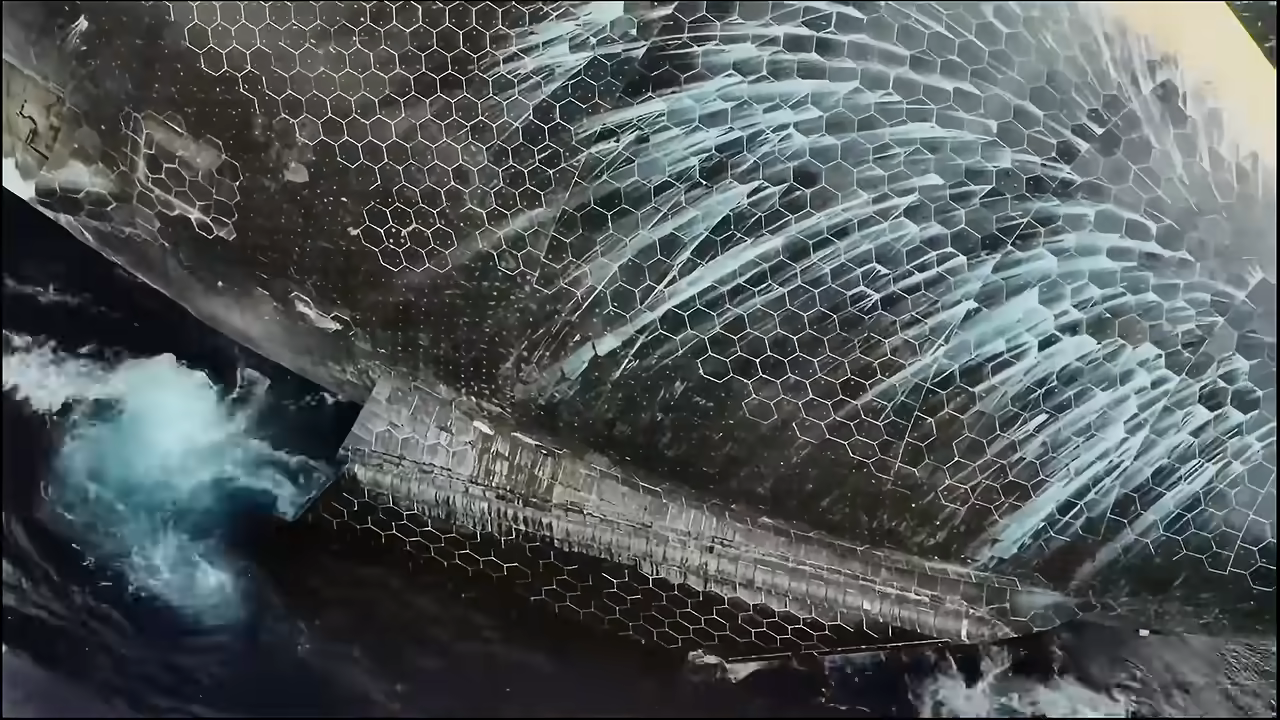 A close-up of Starship's heat shield after it landed in the Indian Ocean last week. Credit: SpaceX
SpaceX successfully launched its Starship vehicle on Friday and appeared to demonstrate important and credible steps toward fulfilling the massive rocket’s immense promise. As soon as the vehicle’s next flight, Starship could go orbital, begin delivering satellites into space, and potentially return to the launch site to be ‘caught’ by the tower.
All of this is impressive engineering on a gigantic scale. But despite the marked progress with the 13th test flight of Starship, one key issue—probably the key issue when it comes to Starship’s future—remains unresolved.
This concerns Starship’s heat shield, the roughly 18,000 ceramic tiles that protect the vehicle’s underbelly during its fiery return through Earth’s atmosphere. And some experts say SpaceX’s current approach may not get Starship to its ultimate goal of flying frequently, at low cost. (...)
However, according to a new analysis by Rasky and two other space industry officials, former NASA astronaut Charles Camarda and the head of the NASA transition team for the Trump-Vance White House, Charles Miller, significant challenges remain for rapidly reusing Starship.
A need for rapid reuseFollowing Flight 13 last week, the experts noted that
only a few of Starship’s ceramic tiles were lost during the flight, obviously a good thing. And the heat shield protected Starship during the reentry process such that it made a controlled descent and landing.
However in SpaceX’s drone footage of the landed Starship in the Indian Ocean, there were notable white streaks across the heat shield. All of these appeared to originate at boundaries between tiles, suggesting hot gas may have penetrated these boundaries. There were also indications of cracked tiles and broken edges. (...)
The problem is that, with the signs of damage, such a heat shield would appear to require a fair amount of inspection and refurbishment before another launch. In other words, SpaceX has a ways to go to reach “full and rapid” reuse of Starship. “Full” means reusing both the booster and the Starship upper stage, and “rapid” reuse means turning each Starship around in days or weeks, instead of months, at considerable expense. (...)
As such, SpaceX’s heat shield will likely be good enough to deploy a next-generation Starlink constellation. But the experts are concerned that it will be unable to hit the high flight rate needed—several hundred to thousands of low-cost launches annually—for large settlements on the Moon and Mars, orbital data centers, or large-scale space-based solar power. (...)
https://arstechnica.com/space/2026/07/despite-recent-successes-rapid-reuse-of-starship-remains-a-tough-nut-to-crack/Ship 40’s flawless flight promotes next mission catch potentialwritten by Ryan Weber July 28, 2026
SpaceX’s Starship Flight 13 demonstrated that the Ship can complete its mission and return intact, surviving water impact without destruction. The Booster, however, remains a work in progress as SpaceX continues refining the clean-sheet Block 3 design.
Building on a series of targeted splashdowns, the Ship’s strong performance has prompted SpaceX to evaluate whether the next catch attempt will involve a subsequent Ship rather than the Booster.
https://www.nasaspaceflight.com/2026/07/ship-40-catch-potential/
Space Intelligence @SpaceIntel101 11:28 AM · Jul 24, 2026
Starship suborbital launch No. 2 of 2026 🇺🇸🚀⭐️🛳️
IFT 13 | SpaceX | July 24 | 2245 UTC
@SpaceX to launch the 13th Starship suborbital test flight with it's redesigned V3 Starship S40 + V3 Superheavy booster B20, 2nd launch from the new redesigned Pad 2 at @StarbaseTX, Texas.
In addition to the mission targets of the first V3 flight, it will carry 20 functional next-gen V3 @Starlink 🛰️s instead of dummies, demonstrating solar array deployment, testing the Starlink-to-Starlink Laserlink connection, and ground station communication.
https://x.com/SpaceIntel101/status/2080585826887516590Nieco szczegółów o przyszłym artefakcie muzealnym.
On 7 August, Elon Musk said Ship 40's ocean recovery was “not looking good.” Eleven days later, on 18 August, it was towed intact to waters off Christmas Island — the first Starship upper stage ever recovered intact after returning from space.By Mission Notes · Edited by Lachlan Brown Published August 19, 2026 ·
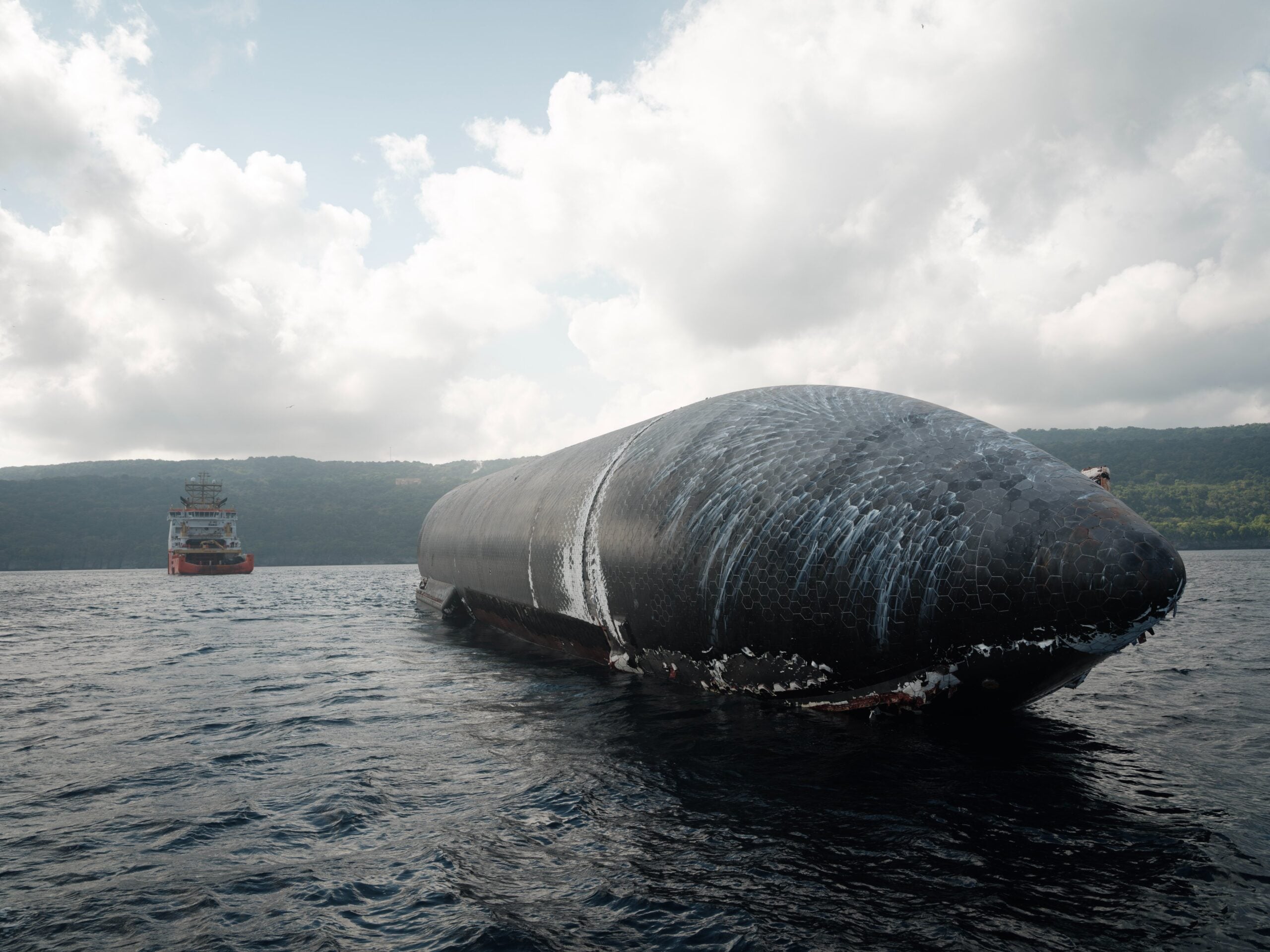 Ship 40 floating just off Christmas Island after approximately 24 days at sea following Starship Flight 13. The vehicle remained in the water while engineers prepared to inspect it in calmer conditions. Credit: SpaceX. Source post.After 24 days at sea, recovery crews guided the first intact Starship upper stage to calmer water off Christmas Island, preserving an unprecedented post-flight test article.A Starship is a terrible boat
The name makes the image sound almost natural: a ship floating at sea. In practice, a Starship is about as awkward a tow as maritime crews could be asked to manage.
It has no crew to pass a line, no steering while cold and inactive, and no conventional hull shaped to remain comfortably stable in waves. Its broad flaps were built to control a falling spacecraft, not to absorb days of irregular ocean loads. Its stainless-steel tanks are enormous lightweight pressure vessels rather than the heavily framed hull of a cargo ship. Thousands of ceramic tiles cover the windward side, each important during re-entry and each vulnerable to impacts and abrasion afterward.
The recovery team had to approach that partly submerged structure, establish a secure connection and influence its movement without tearing away useful hardware or putting people unnecessarily close to it. A vehicle roughly as tall as a 17-storey building can also present a huge area to waves and current even while lying on its side. (...)
There is still a demanding second act. Engineers must understand the state of the tanks, trapped water, residual hazards, attachment points and weakened exterior before deciding how the spacecraft can be moved. Getting a floating cylinder beside an island is not the same problem as lifting it, securing it for ocean transport and carrying it thousands of kilometres without causing a breakup. (...)
A recovered Ship 40 can be measured, photographed and sampled. Engineers can inspect tile gaps and attachment hardware, map abrasion across the heat shield, study flap edges and hinges, look for distortion around welds, and examine engine and plumbing hardware that travelled all the way through re-entry and splashdown. (...)
The official image near Christmas Island already hints at the work ahead. Large areas of the tile surface look weathered or stripped. Some of that damage may have occurred during re-entry, some at splashdown, and some during nearly three and a half weeks of waves, salt water and towing. Separating those causes will not be simple. (...)
The goal is for a Starship upper stage to return to its launch site, be caught by the tower, undergo limited inspection and fly again. A stage drifting and being towed for 24 days cannot demonstrate that turnaround. Salt-water exposure is hostile to engines, valves, electronics and every interface that would need to be trusted on another flight. There is no public indication that SpaceX plans to refly Ship 40. (...)
The clearest conclusion is therefore neither that Starship is now reusable nor that the stage came through unharmed. It is that SpaceX has preserved the first complete Starship upper stage ever available for inspection after returning from space. If engineers can eventually move it from the water and study it closely, Ship 40 may answer questions that no telemetry trace can settle by itself. (...)
https://spacedaily.com/t-ship40-ocean-recovery-christmas-island/ Wątek: Artykuły o Starship (Przeczytany 11454 razy)