Autor Wątek: The Space Review  (Przeczytany 134780 razy)

0 użytkowników i 2 Gości przegląda ten wątek.

Offline Orionid

  • Weteran
  • *****
  • Wiadomości: 28832
  • Very easy - Harrison Schmitt
Odp: The Space Review
« Odpowiedź #345 dnia: Grudnia 07, 2021, 21:50 »
23/VI 2019 [97-101]

97) Review: Moon Rush
by Jeff Foust Monday, June 10, 2019


Moon Rush: The New Space Race
by Leonard David
National Geographic, 2019
hardcover, 224 pp., illus.
ISBN 978-1-4262-2005-0
US$26.00
https://www.amazon.com/exec/obidos/ASIN/1426220057/spaceviews

Well, that was close.

For a time Friday afternoon, it appeared that President Trump was bringing NASA’s accelerated return to the Moon to a sudden halt. “For all of the money we are spending, NASA should NOT be talking about going to the Moon - We did that 50 years ago,” he tweeted Friday afternoon on his way back from a trip to Europe. “They should be focused on the much bigger things we are doing, including Mars (of which the Moon is a part), Defense and Science!”
https://www.thespacereview.com/article/3727/1

98) Who speaks for the night sky?
by A.J. Mackenzie Monday, June 10, 2019


Astronomers waited until after the launch of the first Starlink satellites to start worrying about their effects on the night sky. (credit: SpaceX)

SpaceX launched the first of their Starlink communications satellites last month. Within a day of their launch, amateur astronomers reported observing them in a distinct and relatively bright line across the sky. It was a remarkable sight even for veteran the satellite observers who have spent decades scanning the skies for everything from classified NRO satellites to the International Space Station.
https://www.thespacereview.com/article/3728/1

99) Top man on the Saturn V
by Thomas Frieling Monday, June 10, 2019


David Shomper (circled) and his crew—barely visible—atop the Mobile Service Structure prior to Apollo 11’s launch with the Q-Ball cover in place. (credit: NASA)

David Shomper began working on the Gemini Program right after graduating from Carnegie Tech (later Carnegie Mellon) in 1965 and moved on to the Apollo program, working on pneumatics and hydraulics systems for Boeing at the Kennedy Space Center. He arrived in time to witness the first Saturn V launch on November 9, 1967. He was on console in the Launch Control Center at Launch Complex 39, supporting Apollo 11’s countdown on July 16, 1969.
https://www.thespacereview.com/article/3729/1

100) Dancing in the pale moonlight: CIA monitoring of the Soviet manned lunar program
by Dwayne A. Day Monday, June 10, 2019

Apollo Revisited


A CIA model of the Soviet N-1 launch complex, which the CIA labeled “Complex J.” Visible are two N-1 rockets, and a Saturn V and the Washington Monument for scale. (credit: CIA)

During the height of the race to the Moon in the 1960s, the Central Intelligence Agency and the rest of the US intelligence community sought to keep tabs on Soviet progress in reaching the Moon. That story has been discussed here before (see “Webb’s Giant”, The Space Review, July 19, 2004; “A taste of Armageddon (part 1),” The Space Review, January 3, 2017, and Part 2; and “Dagger of the mind,” The Space Review, December 19, 2016.) But the question still remains open: to what extent did CIA monitoring of the Soviet manned lunar program during the 1960s play a role in the Apollo program, particularly its schedule? Several dozen documents, including the “manned lunar file” from the CIA’s reading room, shed some light on this subject.
https://www.thespacereview.com/article/3730/1

101) NASA tries to commercialize the ISS, again
by Jeff Foust Monday, June 10, 2019


Part of NASA's new low Earth orbit commercialization effort includes offering a docking port on the ISS that could be used by companies to attach commercial modules to the station. (credit: Bigelow Aerospace)

When NASA decided to announce its long-awaited new initiative to support commercial activities on the International Space Station and low Earth orbit, it eschewed NASA Headquarters or its other centers as the venue for its announcement. Instead, the agency went to New York City, holding the announcement at the Nasdaq exchange, a form of stage-setting to argue that the station was open for business.
https://www.thespacereview.com/article/3731/1
« Ostatnia zmiana: Grudnia 14, 2024, 09:23 wysłana przez Orionid »

Offline Orionid

  • Weteran
  • *****
  • Wiadomości: 28832
  • Very easy - Harrison Schmitt
Odp: The Space Review
« Odpowiedź #346 dnia: Grudnia 07, 2021, 21:50 »
24/VI 2019 [102-107]

102) Review: Gravity’s Century
by Jeff Foust Monday, June 17, 2019


Gravity’s Century: From Einstein’s Eclipse to Images of Black Holes
by Ron Cowen
Harvard Univ. Press, 2019
hardcover, 192 pp., illus.
ISBN 978-0-674-97496-8
US$26.95
https://www.amazon.com/exec/obidos/ASIN/0674974964/spaceviews

Our understanding of the universe changed on May 29, 1919, although no one knew it quite yet. Two teams of astronomers, one in Brazil and the other on the island Principe off the coast of Africa, observed a solar eclipse. Their interest was not with the eclipse itself, but rather with the ability to see stars near the Sun that would otherwise be lost in the Sun’s glare. Months later, the astronomers reported that the positions of the stars had shifted compared to observations taken in the night sky. Those shifts were by the amount expected had the starlight been deflected by the Sun’s gravity as predicted by Albert Einstein’s theory of general relativity.
https://www.thespacereview.com/article/3732/1

103) For All Mankind provides a look into a different space race
by Mark R. Whittington Monday, June 17, 2019


The upcoming series For All Mankind examines an alternative history where the Soviets were the first to land a man on the Moon. (credit: Apple)

Apple recently released the first full trailer of what appears to be its flagship series, For All Mankind, for its upcoming Apple TV+ streaming service. The series is a creation of Ron Moore, a former Star Trek producer who previously created a reboot of Battlestar Galactica and the current time travel romance Outlander.
https://www.thespacereview.com/article/3733/1

104) Icarus falling: Apollo nukes an asteroid
by Dwayne A. Day Monday, June 17, 2019

Apollo Revisited


The proposal to deflect Icarus would have used several Saturn V rockets equipped with 100-megaton bombs encased in fairings like that used for the Skylab launch. (credit: NASA)

In the late 1960s, as the Apollo program was in full-swing, a group of engineers in training at the Massachusetts Institute of Technology designed a defense against an asteroid heading toward Earth. Their plan would have involved a half-dozen Saturn V rockets carrying some really big bombs, aimed at an asteroid named Icarus.
https://www.thespacereview.com/article/3734/1

105) Streamlining the space industry’s regulatory streamlining
by Jeff Foust Monday, June 17, 2019


A SpaceX Falcon Heavy lifts off in April. SpaceX is among the companies concerned about provisions in a notice of proposed rulemaking intended to streamline commercial launch regulations. (credit: SpaceX)

One of the hallmarks of the Trump Administration, for better or for worse, has been a zeal for regulatory reform. Throughout the government, the administration has sought to roll back regulations in a variety of areas, arguing that doing so will benefit the economy.
https://www.thespacereview.com/article/3735/1

106) Doomed from the start: The Manned Orbiting Laboratory and the search for a military role for astronauts
by Dwayne A. Day Monday, June 17, 2019


Simulators like this were the closest astronauts got to flying the MOL. (credit: USAF)

Last week marked the 50th anniversary of the cancellation of the Manned Orbiting Laboratory program. MOL was to be equipped with a powerful and top-secret reconnaissance camera system known as DORIAN. But the program kept slipping in schedule and increasing in cost until, finally, it proved unaffordable for a Nixon administration fighting a costly war in Southeast Asia and trying to fund other major space programs. MOL was facing many challenges, including an identity crisis—what was it supposed to do and why did that matter?—and increasing criticism within the intelligence community.
https://www.thespacereview.com/article/3736/1

107) A new accounting for Apollo: how much did it really cost?
by Casey Dreier Monday, June 17, 2019


Fifty years after Apollo 11, it's still difficult to calculate just how much the Apollo program cost. (credit: NASA)

Nestled within one of the half-dozen boxes of Apollo budget documents at NASA’s historical reference collection in Washington, DC, is a piece of paper outlining a “loose agenda”—sadly undated[1] —for a meeting intriguingly titled Apollo Cost Consensus. Among the goals stated by the agenda are for “the cost estimating community to reach consensus on Apollo costs.”
https://www.thespacereview.com/article/3737/1
« Ostatnia zmiana: Grudnia 16, 2024, 10:19 wysłana przez Orionid »

Offline Orionid

  • Weteran
  • *****
  • Wiadomości: 28832
  • Very easy - Harrison Schmitt
Odp: The Space Review
« Odpowiedź #347 dnia: Grudnia 14, 2021, 11:13 »
25/VI 2019 [108-112]

108) Review: One Giant Leap
by Jeff Foust Monday, June 24, 2019


One Giant Leap: The Impossible Mission That Flew Us to the Moon
by Charles Fishman
Simon & Schuster, 2019
hardcover, 480 pp., illus.
ISBN 978-1-5011-0629-3
US$29.99
https://www.amazon.com/exec/obidos/ASIN/1501106295/spaceviews

This summer is one of celebration of the 50th anniversary of the Apollo 11 landing, including the series of books about the mission and events around the country, as well as product tie-ins on everything from beer to Oreo cookies. But in the back of minds of many, though, is the realization that while we will celebrate this summer the landing of the first humans on the Moon, in three and a half years we will commemorate the 50th anniversary of the landing of the last humans—to date—on the Moon. Even with the acceleration of NASA’s Artemis program, and private efforts, it’s highly unlikely there will be any humans on the Moon before the 50th anniversary of Apollo 17 in December 2022.
https://www.thespacereview.com/article/3738/1

109) Inside the mind of the visionary who pioneered wireless power transmission
by Paul Jaffe Monday, June 24, 2019


For reasons not entirely clear, in the spring of 1964 something moved William C. Brown to begin keeping a journal to capture his involvement and developments concerning microwave power transmission. He persisted in writing regular entries for the subsequent 35 years, leaving a technological, sociological, and deeply personal treasure trove of information. The result is a poignant and rich exploration not only of the underpinnings of this potentially revolutionary technology, but of the struggles and mindset of its creator. Anyone with even a passing interest in the philosophy of innovation, the origins of wireless power, or the realities of trying to birth new concepts and paradigms will find this work compelling.
https://www.thespacereview.com/article/3739/1

110) How low can launch costs go?
by Sam Dinkin Monday, June 24, 2019


A solo flight to orbit will likely continue to cost tens of millions of dollars well after launch costs drop below ten million per launch. But with competing carriers, each launching hundreds of passengers to orbit daily, seats might eventually be available for less than $100,000 per person. (credit: NASA)

A paper published earlier this month by the Reason Foundation had an astonishing back-of-the envelope calculation for the minimum cost of a round-trip ticket to orbit in a mature market. It struck me that if SpaceX’s Super Heavy and Starship meet Elon Musk’s ambitious cost goals, then a mature-market cost may be able to arrive sooner than people think—but not necessarily a mature-market ticket price.
https://www.thespacereview.com/article/3740/1

111) Going big: catching a Saturn V first stage with a helicopter
by Dwayne A. Day Monday, June 24, 2019

Apollo Revisited


Hiller’s concept for a giant helicopter that could ferry Saturn V first stages and catch them in midair.

Hiller Aircraft was a helicopter company based in Palo Alto, California, that thrived in the middle of last century, but was denied a U.S. Army helicopter contract as a result of shady—probably illegal—actions taken by Howard Hughes. Hughes’ OH-6A Cayuse—better known as “the Loach”—became the Army’s standard light scout helicopter of the Vietnam War, and although Hughes lost substantial money on the Army deal, the Loach’s descendants proved highly successful. Hiller’s proposal, the OH-5A, lost the Army contract and never succeeded as a commercial helicopter. Hiller was absorbed into Fairchild and eventually the company faded away. Today very few of its products remain flying, and its primary legacy is a small but history-packed museum off Route 101 in Palo Alto.
https://www.thespacereview.com/article/3741/1

112) Waiting for the future for 15 years
by Jeff Foust Monday, June 24, 2019


Fifteen years ago, Mike Melvill celebrated a successful suborbital spaceflight on SpaceShipOne that, at the time, appeared to herald the beginning of a new era in commercial human spaceflight. (credit: J. Foust)

Sometimes the future takes us by surprise, advancing in different directions or at faster speeds than expected. (Take, for example, the smartphone you might be using to read this article, or the social media post that directed you to it.) Sometimes the future lingers out of reach, its promises unfulfilled for years or decades. Think of flying cars, for example, or fusion power. Or, commercial human spaceflight.
https://www.thespacereview.com/article/3742/1
« Ostatnia zmiana: Grudnia 20, 2024, 10:48 wysłana przez Orionid »

Offline Orionid

  • Weteran
  • *****
  • Wiadomości: 28832
  • Very easy - Harrison Schmitt
Odp: The Space Review
« Odpowiedź #348 dnia: Grudnia 14, 2021, 11:13 »
26/VII 2019 [113-118]

113) Reviews: Apollo 11 in graphic detail
by Jeff Foust Monday, July 1, 2019


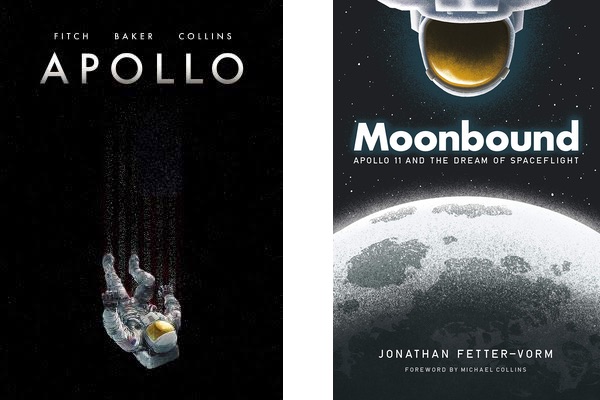
Apollo
by Matt Fitch, Chris Baker, and Mike Collins
SelfMadeHero, 2018
hardcover, 176 pp., illus.
ISBN 978-1-910593-50-9
US$24.99
https://www.amazon.com/exec/obidos/ASIN/1910593508/spaceviews

Moonbound: Apollo 11 and the Dream of Spaceflight
by Jonathan Fetter-Vorm
Hill and Wang, 2019
paperback, 256 pp., illus.
ISBN 978-0-374-53791-3
US$19.95
https://www.amazon.com/exec/obidos/ASIN/0374537917/spaceviews

The upcoming 50th anniversary of Apollo 11 has generated recollections and reexaminations of the mission across a wide range of media. That includes documentaries, television shows, and traditional nonfiction books. Not to be left out, though, are graphic novels, which offer their own unique examinations of the mission through a mix of text and illustrations for adults.
https://www.thespacereview.com/article/3743/1

114) Why the next Space Policy Directive needs to be to the Secretary of Energy
by Peter Garretson Monday, July 1, 2019
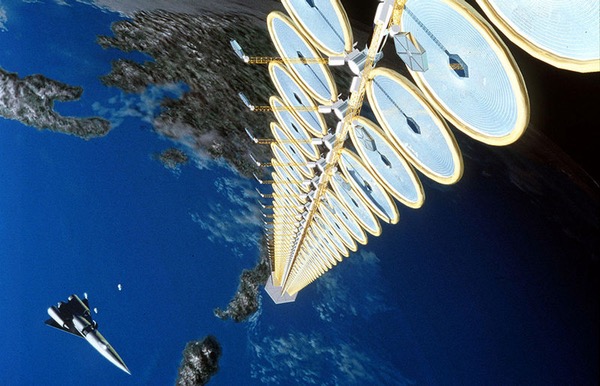

Space-based solar power is an idea whose time may have come, at least in the views of some in China, requiring the US to respond appropriately. (credit: NASA)

For the first time in decades, the United States faces a serious challenge. A new space race is upon us to secure the benefits of a vast and expanding space economy. Whether it was grain for horses and soldiers; wind and waterwheels for factories; coal for railroads; coal or oil for steamships; petroleum for cars, tanks, and airplanes; or atomic energy for cities and submarines, energy has been central to both commerce and military power.
https://www.thespacereview.com/article/3744/1

115) Astronomers and Apollo
by Jeff Foust Monday, July 1, 2019


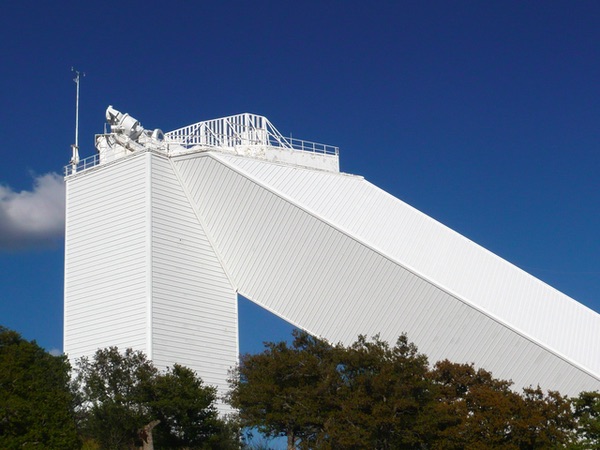
The McMath-Pierce Solar Telescope observed the Sun by day, but during the Apollo program it was also used at night to give Apollo astronauts unique views of the Moon. (credit: NoobX at English Wikipedia)

Getting two Americans—Neil Armstrong and Buzz Aldrin—on the surface of the Moon 50 years ago this month required the efforts of tens of thousands of others. There were the engineers who designed the launch vehicles and spacecraft, the workers who built them, the staff of Mission Control who oversaw the missions, and those who did all the other support work, from accountants to secretaries to janitors, to make it all possible.
https://www.thespacereview.com/article/3745/1

116) The Eagle has crashed: the top secret UPWARD program and Apollo disasters
by Dwayne A. Day Monday, July 1, 2019

Apollo Revisited
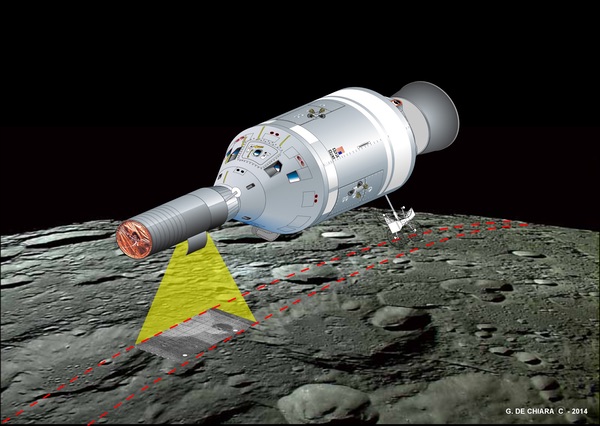

The Lunar Mapping and Survey System would have photographed the Moon at high resolution. (credit: G. De Chiara)

During the height of the race to the Moon, NASA considered the possibility that the Apollo 11 Lunar Module with Neil Armstrong and Buzz Aldrin aboard could crash on the surface without leaving sufficient telemetry about what had gone wrong. In such a situation, NASA might have to send a high-powered camera, derived from a top-secret reconnaissance satellite, to image the crash site, a sort of secret crash scene investigation. Of course, that never happened, but NASA had nearly finished the hardware to accomplish the mission by the time they canceled the program in summer 1967.
https://www.thespacereview.com/article/3746/1

117) Déjà vu or sea change? Comparing two generations of large satellite constellation proposals
by Stephen J. Garber and James A. Vedda Monday, July 1, 2019
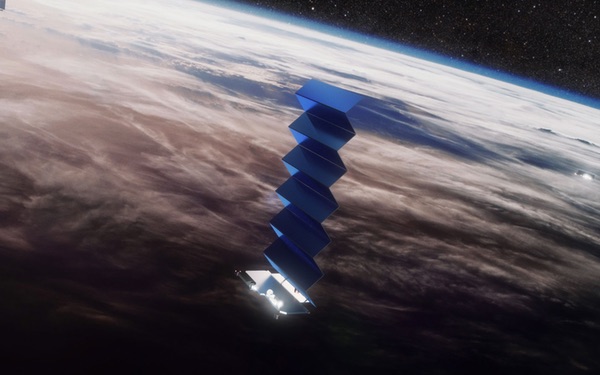

SpaceX launched its first 60 Starlink satellites in May, with plans to eventally deploy more than 10,000 to provide broadband Internet access. (credit: SpaceX)

Disclaimer: the views expressed in this article are solely those of the authors, not of NASA or of the Aerospace Corporation.

In the mid-to-late 1990s, there was considerable discussion of numerous large “constellations” of spacecraft in low Earth orbit (LEO) that would revolutionize the space industry, lower costs to launch payloads to orbit, and provide worldwide communications on an unprecedented scale. Approximately ten companies with names such as Iridium, Globalstar, and Teledesic each aimed to launch and operate groups of 12 to 840 satellites, potentially “darkening the skies” with spacecraft. Most of these systems either went bankrupt or never got off the ground, either literally or figuratively.
https://www.thespacereview.com/article/3747/1

118) Top Secret DAMON: the classified reconnaissance payload planned for the fourth space shuttle mission
by Dwayne A. Day Monday, July 1, 2019


The shuttle Columbia launched in June 1982 on the STS-4 mission, but without an NRO reconnaissance payload once planned for it. (credit: NASA)

The first military/intelligence payload ever scheduled to fly aboard the Space Shuttle was a top-secret photographic reconnaissance system code-named DAMON and managed by the National Reconnaissance Office (NRO). DAMON would have operated inside the shuttle’s payload bay for several days, photographing the Earth below, before the shuttle astronauts brought it back along with its precious cargo of exposed film.
https://www.thespacereview.com/article/3748/1
« Ostatnia zmiana: Grudnia 21, 2024, 10:11 wysłana przez Orionid »

Polskie Forum Astronautyczne

Odp: The Space Review
« Odpowiedź #348 dnia: Grudnia 14, 2021, 11:13 »

Offline Orionid

  • Weteran
  • *****
  • Wiadomości: 28832
  • Very easy - Harrison Schmitt
Odp: The Space Review
« Odpowiedź #349 dnia: Grudnia 14, 2021, 11:13 »
27/VII 2019 [120-124]

120) Review: Chasing the Moon
by Jeff Foust Monday, July 8, 2019


Chasing the Moon: The People, the Politics, and the Promise That Launched America into the Space Age
by Robert Stone and Alan Andres
Ballatine, 2019
hardcover, 384 pp., illus.
ISBN 978-1-5247-9812-3
US$32.00
https://www.amazon.com/exec/obidos/ASIN/1524798126/spaceviews

As the 50th anniversary celebrations of Apollo 11 reach their crescendo this month, television is getting into the act. A number of documentaries and other special programming is scheduled for the coming weeks, such as a version of the Apollo 11 film that appeared in theaters earlier this year (see “Review: Apollo 11”, The Space Review, March 4, 2019) that will be on CNN July 20. PBS, meanwhile, is airing a three-night, six-hour documentary, starting July 8, as part of its American Experience series called Chasing the Moon that examines the events that led up to Apollo 11.
https://www.thespacereview.com/article/3749/1

121) Apollo 11’s greatest hits and misses: a short reader’s guide
by Thomas J. Frieling Monday, July 8, 2019


A Man on the Moon and Apollo: The Race to the Moon are among the now-classic accounts of the Apollo program.

Members of the space community are eagerly devouring the spate of new books and documentaries marking the fifty-year Apollo anniversaries, some of them noted here at The Space Review. At the same time for many others, these new accounts represent their introduction to the Apollo story.

Most likely, some of these new contributions to the literature will stand the test of time, while others will end up in the bargain bin.
https://www.thespacereview.com/article/3750/1

122) When a chimpanzee landed on the Moon: the saga of Boris (part 1)
by Dwayne A. Day Monday, July 8, 2019

Apollo Revisited


The story of a chimp named Boris landing on the Moon started as a tall tale on the Internet but took on a life of its own.

Right after Neil Armstrong and Buzz Aldrin landed on the Moon, the Soviet Union landed a spacecraft carrying a chimpanzee named Boris 504. The Soviet plan was to have Boris leave his spacecraft and walk on the Moon right after the American astronauts did, simultaneously mocking and stealing some of the publicity from the American achievement. But despite a successful landing, a malfunctioning hatch prevented Boris from leaving his spacecraft. He died on the Moon when his oxygen ran out, angrily banging a wrench against a faulty hatch.
https://www.thespacereview.com/article/3751/1

123) The first future MOL
by John B. Charles, Ph.D. Monday, July 8, 2019
Note: An earlier version of this article was previously published in Spaceflight, February 2018.


This illustration is the one most commonly associated with the Manned Orbiting Laboratory, but is just one of many in historical collections of the Air Force. (credit: USAF)

On a pleasant spring day in 2016, I entered the formidable security of the Pentagon in Washington, DC, to see some space art. A friend of a friend had arranged my visit with the director of operations for the Air Force Art Collection (AFAC):[1] over 10,000 historical and educational paintings featuring aircraft or other related subjects. Since the program’s beginning in 1950, this collection has informed the military and the public of the roles and diverse capabilities of the United States Air Force through the universal language of art. The collection comprises the products of the Air Force Art Program,[2] some of which are displayed on the many, many walls in the Pentagon and on air bases in the US and in other countries.
https://www.thespacereview.com/article/3752/1

124) One small leap for Orion
by Jeff Foust Monday, July 8, 2019


A refurbished Peacekeeper booster lifts off from Launch Complex 46 July 2, carrying a boilerplate Orion spacecraft and its launch abort system. (credit: NASA/Tony Gray and Kevin O’Connell)

If, five years ago, you were told Orion would fly in 2019, you might imagine the long-awaited (and delayed) first flight of the Space Launch System, sending an uncrewed Orion out into cislunar space. Perhaps, if you were an optimist, you might predict it would be the first crewed Orion flight, sending astronauts beyond low Earth orbit for the first time since 1972.

Instead, the Orion that flew last week lifted off on a very different vehicle from the SLS—and splashed down in the Atlantic Ocean just a few minutes later. Just as NASA planned.
https://www.thespacereview.com/article/3753/1
« Ostatnia zmiana: Grudnia 22, 2024, 08:01 wysłana przez Orionid »

Offline Orionid

  • Weteran
  • *****
  • Wiadomości: 28832
  • Very easy - Harrison Schmitt
Odp: The Space Review
« Odpowiedź #350 dnia: Grudnia 14, 2021, 11:13 »
28/VII 2019 [125-129]

125) Review: Eight Years to the Moon
by Jeff Foust Monday, July 15, 2019


Eight Years to the Moon: The History of the Apollo Mission
by Nancy Atkinson
Page Street Publishing, 2019
hardcover, 240 pp., illus.
ISBN 978-1-62414-490-5
US$35.00
https://www.amazon.com/exec/obidos/ASIN/162414490X/spaceviews

The surge of books published in recent months tied to the 50th anniversary of Apollo 11 has typically included similar casts of characters. There’s Armstrong, Aldrin, and Collins, of course; John F. Kennedy and other political figures; NASA leadership like James Webb and Wernher von Braun; and some of the other astronauts and engineers involved with the program.
https://www.thespacereview.com/archive33.html

126) Fifty books about the Moon (which aren’t about Apollo)
by Ken Murphy Monday, July 15, 2019


A sampling of the volumes in this Top 50 list of books about the Moon.

With the 50th anniversary of the greatest human achievement ever rapidly approaching, and the flood of Apollo-related materials appurtenant thereto, I thought it might be helpful to ponder the target of the Apollo program: our Moon. Delving into the Lunar Library, one can find many works that focus on our celestial sister itself, and the many mysteries and wonders thereof.
https://www.thespacereview.com/article/3755/1

127) When a chimpanzee landed on the Moon: the saga of Boris (part 2)
by Dwayne A. Day Monday, July 15, 2019

Note: Part 1 appeared last week.

Apollo Revisited


The story of a chimp named Boris landing on the Moon started as a tall tale on the Internet but took on a life of its own.

Padrobnosti Sovietskoy Programmiy Posadki na Lunu Necheloveko Opraznikh
“Details of the Soviet Primate Lunar Landing Program”


The Soviet primate program was secret and very little information on it has been made public, particularly in the West. Early speculation by noted Soviet space experts like Phillip Clark and Jim Oberg was based upon scant evidence. The late Charles Sheldon, of the Congressional Research Service, only devoted a single line in an early 70s congressional report to this program. It has been completely overlooked in most histories of the space race. Jim Hartford’s excellent biography of Korolev, for instance, contains nothing on the primate program, despite the fact that Korolev was its sponsor. However, a recent article in the acclaimed Russian space journal Novosti Kosmonavtiki (“Cosmonautics News”), by Oleg Adulbaz, sheds much more light on this program. Although I don’t speak or read Russian, a colleague of mine provided a rough translation, which I am going to summarize here.
https://www.thespacereview.com/article/3756/1

128) The NASA-Vatican relationship models a bridge between science and religion
by Deana L. Weibel Monday, July 15, 2019


A copy of the famous “Earthrise” photo given by astronaut Frank Borman to Father Daniel O’Connell, who was the Director of the Vatican Observatory from 1952–1970.

The anniversary of the Apollo 11 Moon landing serves as a reminder that a much of the apparent incompatibility between science and religion is illusory. While the two perspectives may seem opposed, in practice, they are often found side by side. After all, as Neil Armstrong and Buzz Aldrin guided the Eagle down onto the lunar surface, the eyes of 600 million[1] people were upon them, and a great many of those eyes saw the event through a religious lens.
https://www.thespacereview.com/article/3757/1

129) An exploration shakeup
by Jeff Foust Monday, July 15, 2019


As the nation prepares to celebrate the 50th anniversary of Apollo 11, including a light show on the National Mall, NASA got caught up in issues with its return to the Moon. (credit: NASM)

This is a week NASA planned to focus on its past, not its future, until the present intervened.

This is the week that the 50th anniversary celebrations of Apollo reach their climax. Events around the country will commemorate the launch of Apollo 11 and its landing on the Moon, from the Space Coast of Florida to Seattle’s Museum of Flight. In Washington DC, a series of events are planned at the National Air and Space Museum and on the National Mall, including a light show that will project a full-sized Saturn V rocket onto the Washington Monument.
https://www.thespacereview.com/article/3758/1
« Ostatnia zmiana: Grudnia 23, 2024, 11:11 wysłana przez Orionid »

Offline Orionid

  • Weteran
  • *****
  • Wiadomości: 28832
  • Very easy - Harrison Schmitt
Odp: The Space Review
« Odpowiedź #351 dnia: Grudnia 21, 2021, 16:32 »
29/VII 2019 [130-135]

130) Review: Reaching for the Moon
by Jeff Foust Monday, July 22, 2019


Reaching for the Moon: A Short History of the Space Race
by Roger D. Launius
Yale Univ. Press, 2019
hardcover, 256 pp., illus.
ISBN 978-0-300-23046-8
US$30.00
https://www.amazon.com/exec/obidos/ASIN/030023046X/spaceviews

Well, we’ve almost made it: we’re near the end of all the events associated with the 50th anniversary of Apollo 11. The last several days saw the celebrations reach their climax, from a stunning show on the National Mall that projected the Saturn V and other imagery onto the Washington Monument, to events in Florida, Houston, Huntsville, and elsewhere. A few more are planned in the coming days to mark the successful return to Earth of the spacecraft and its three astronauts, but that will be about it for the mission—and for Apollo itself for the most part, since the subsequent missions, with the possible exception of Apollo 13, are unlikely to attract much public attention.
https://www.thespacereview.com/article/3759/1

131) Advancing the jurisdiction of the US federal court system to address disputes between private space actors
by Michael J. Listner Monday, July 22, 2019


New commercial space activities will trigger disputes that will present new legal challenges. (credit: Bryan Versteeg/Deep Space Industries)

Not a day goes by without headlines about commercial space, including the vaunted value of the present space economy and the speculative value of resources within celestial bodies, including the Moon. Interspersed within these headlines and in academia is thought about the legal and political issues that will manifest themselves as private space activities increase to include how they will be regulated.
https://www.thespacereview.com/article/3760/1

132) Why the Space Corps needs to use naval rank
by Brent D. Ziarnick Monday, July 22, 2019


Former Air Force Secretary Heather Wilson was among those that apeared to want to shape the Space Corps in the mold of the Air Force, rather than have it create its own culture. (credit: U.S. Air Force Photo by Adrian Cadiz)

Regardless of whether the Senate or the House wins on whether it will be called the Space Force or the Space Corps (hereafter referred to as the Space Corps), the sixth military branch of the armed services will be organized like the US Marine Corps (USMC): it will be the junior partner in a military department that manages two services. Like the USMC in the Department of the Navy, the US Space Corps under the Department of the Air Force will need a strong, proud, and fiercely independent sense of identity if it is to succeed in creating a successful military space culture that the President, Congress, and defense leaders demand. Civilian leadership, whether by Congressional or Presidential action, can perform one last great service to the newly-independent military space culture: direct the Space Corps to adopt naval officer rank immediately upon establishment.
https://www.thespacereview.com/article/3761/1

133) Is ISRO’s “cryogenic curse” finally over?
by Ajey Lele Monday, July 22, 2019


ISRO’s GSLV Mark III rocket lifts off July 22 carrying the Chandrayaan-2 lunar mission. (credit: ISRO)

Just two days after the world celebrated the 50th anniversary of the Apollo 11 landing, India’s second mission to the Moon, Chandrayaan-2, began its 48-day journey to the Moon. Chandrayaan-2, an orbiter and a lander and rover system, launched from Indian soil using an Indian rocket called GSLV Mark III on the afternoon of July 22.
https://www.thespacereview.com/article/3762/1

134)
The big white bird: the flights of Helo 66
by Dwayne A. Day Monday, July 22, 2019

Apollo Revisited


Helo 66 was used to recover several Apollo missions, including Apollo 11. (credit: US Navy)

In the recent documentary Apollo 11, there is some wonderful film footage taken on the aircraft carrier USS Hornet as the crew prepared to recover the returning astronauts. In some of the scenes Navy technicians are shown attaching television cameras to the side of a white Sikorsky Sea King helicopter. That helicopter, with a big “66” painted on its side, achieved iconic status in countless newspaper, magazine, and television accounts of the mission. The helicopter did not have a specific name, just a US Navy Bureau Number (like a serial number) and a more notable squadron number—“Helo 66” is only an unofficial nickname.
https://www.thespacereview.com/article/3763/1

135) And now, the next 50 years
by Jeff Foust Monday, July 22, 2019


Crowds gathered on the National Mall for a show commemorating Apollo 11’s 50th anniversary. But that public interest doesn’t necessarily translate to the agency’s future plans in space exploration. (credit: NASA/Bill Ingalls)

It was a sight that brought chills on even a muggy night. The National Mall was transformed into a unique outdoor theater to commemorate the 50th anniversary of Apollo 11. Crowds gathered on a several-block stretch of the Mall, looking west towards the Washington Monument, which was converted into a projection screen that, thanks to the skill of the show’s producers, appeared perfectly suited to host full-sized images of the Saturn V on the pad and in flight. It was an event so unusual it literally required an act of Congress—a resolution that sped through the House and Senate quietly and without opposition, calling upon the Secretary of the Interior to allow such a commemoration—to be possible.
https://www.thespacereview.com/article/3764/1
« Ostatnia zmiana: Grudnia 26, 2024, 14:35 wysłana przez Orionid »

Offline Orionid

  • Weteran
  • *****
  • Wiadomości: 28832
  • Very easy - Harrison Schmitt
Odp: The Space Review
« Odpowiedź #352 dnia: Grudnia 21, 2021, 16:32 »
30/VII 2019 [136-140]

136) Review: Escape from Earth
by Jeff Foust Monday, July 29, 2019


Escape from Earth: A Secret History of the Space Rocket
by Fraser MacDonald
PublicAffairs, 2019
hardcover, 384 pp.
ISBN 978-1-61039-871-8
US$30.00
https://www.amazon.com/exec/obidos/ASIN/1610398718/spaceviews

One of the shows on the CBS All Access streaming service—best known for Star Trek: Discovery and, soon, Star Trek: Picard—is the series Strange Angel. It is a dramatized account of the life of Jack Parsons, an early rocket engineer who helped found both the Jet Propulsion Laboratory and Aerojet while also being involved in the occult. In the series’ first episode, for example, Parsons is working at a chemical factory while pursuing rocketry on the side, hoping to win support from Caltech, while also intrigued about a mysterious neighbor and the ceremony he attended.
https://www.thespacereview.com/article/3765/1

137) Apollo as viewed from a jungle
by Ajay Kothari Monday, July 29, 2019


Fifty years ago, a boy in India listened to the radio as Apollo returned to Earth, and was inspired. (credit: NASA)

I still remember—although details are somewhat cloudy now, the gist of it is still clear as bell —the night when my teen and toddler brother and sisters, my father, some workers on the farm, and I sat around a fire, on a somewhat cold night, in the middle of a jungle, and with an occasional indication of a panther passing through the farm, listening to an old decrepit Phillips radio, battery operated as there was no electricity either. Television was still too far away and we were too poor to afford it even if it was not! It was the late 1960s in Western India, on my father's farm, and we were all very excited.
https://www.thespacereview.com/article/3766/1

138) The Apollo 11 50th anniversary at EAA AirVenture
by Eric R. Hedman Monday, July 29, 2019


Charlie Precourt, Joe Engle, and Mike Collins on stage at EAA AirVenture. (credit: E. Hedman)

The 50th anniversary of Apollo 11 has come and gone. I suspect the media attention will fade away quickly. The attention was nice while it lasted and brought back some great memories. At the annual EAA AirVenture event last week in Oshkosh, Wisconsin, the tribute to Apollo 11’s 50th anniversary was held on Friday night at the Theater in the Woods (video embedded below.) It started with a session called, “Designing and Flying the Lunar Module”. It was hosted by Charlie Precourt, the retired astronaut who is also a board member of the Experimental Aircraft Association. The panel was supposed to include James McDivitt of Apollo 9. I’ve discovered it isn’t unusual for guys approaching 90 years old not to be able to make it for one reason or another. He was replaced by Douglas Terrier, the current chief technologist at NASA. The rest of the panel included NASA Chief Historian Bill Barry, space author Robert Godwin, and Dick Smith, who worked on the Lunar Module at Grumman as an engineer.
https://www.thespacereview.com/article/3767/1

139) How space technology benefits the Earth
by Jeff Greenblatt and Al Anzaldua Monday, July 29, 2019


Reductions in launch costs can open up new space activities, like manufacturing and assembly in space. (credit: NASA)

The purpose of this paper is to clarify and explain current and potential benefits of space-based capabilities for life on Earth from environmental, social, and economic perspectives, including:

  1. Space activities having a positive impact today (such as Earth observation for weather and climate)

  2. Space activities that could have a positive impact in the next 5 to 20 years (such as communications satellite megaconstellations)

  3. Space activities that could have a positive impact in the more distant future (such as widespread space manufacturing and industrialization)

In what follows, we describe nearly 30 types of activities that either confer significant benefits now, or could provide positive impacts in the coming decades.
https://www.thespacereview.com/article/3768/1

140) A new path for space investment?
by Jeff Foust Monday, July 29, 2019


Virgin Galactic hopes the investment deal will fuel the company into commercial operations and expansion. (credit: MarsScientific.com and Trumbull Studios)

Over the last few years, several billion dollars of investment has flowed into the commercial space industry. A few companies account for the most of it: various rounds by SpaceX and megaconstellation company OneWeb, as well as Jeff Bezos’ annual billion-dollar infusions into Blue Origin. Smaller companies, though, have raised tens to hundreds of millions for launch vehicles, satellite systems, and related applications.
https://www.thespacereview.com/article/3769/1
« Ostatnia zmiana: Grudnia 27, 2024, 11:14 wysłana przez Orionid »

Offline Orionid

  • Weteran
  • *****
  • Wiadomości: 28832
  • Very easy - Harrison Schmitt
Odp: The Space Review
« Odpowiedź #353 dnia: Grudnia 21, 2021, 16:32 »
31/VIII 2019 [141-145]

141) Review: Origins of 21st-Century Space Travel
by Jeff Foust Monday, August 5, 2019


Origins of 21st-Century Space Travel: A History of NASA's Decadal Planning Team and the Vision for Space Exploration 1999–2004
by Glen R. Asner and Stephen J. Garber
NASA, 2019
258 pp., illus.
SP-2019-4415
Free
https://www.nasa.gov/history/history-publications-and-resources/nasa-history-series/origins-of-21st-century-space-travel/

For the moment, things have quieted down in the space policy world, at least on the surface. Congress started its August recess last week after passing a budget deal that avoids another rewound of automatic budget cuts, instead lifting spending caps on defense and non-defense discretionary spending. Work is now underway among Senate appropriators to craft spending bills for fiscal year 2020 that fit within those spending caps, which will be debated when senators return after Labor Day and then be reconciled with House bills passed earlier this summer. NASA, meanwhile, is on the hunt for a new leader of its human spaceflight division after the unexpected reassignment last month of Bill Gerstenmaier, and the agency is pressing ahead with various initiatives related to its Artemis program, like procurement of a lunar lander through a public-private partnership.
https://www.thespacereview.com/article/3770/1

142) The role of the Universal Declaration of Human Rights in supporting space property rights
by Wes Faires Monday, August 5, 2019


Uncertainty in international space law about private property rights in space could be alleviated when taking into account another UN document. (credit: Brian Versteeg/Deep Space Industries)

A long-discussed issue has been the absence of provisions pertaining to private entities under the 1967 Outer Space Treaty. Interpretations in favor of private property rights hold that the purpose of Article II’s ban on “national appropriation” was to place a limitation on member nations’ attempts to exercise territorial and political sovereignty over any part of outer space: to restrict territorial disputes between countries from extending beyond Earth. Without an explicit prohibition of private property rights in the treaty, their development with respect to private entities is unencumbered.
https://thespacereview.com/article/3771/1

143) The International Lunar Decade: A strategy for sustainable development
by Vidvuds Beldavs Monday, August 5, 2019


International cooperation in lunar exploration could help identify what lunar resources, if any, are truly feasible to support activities in space or on Earth. (credit: Anna Nesterova/Alliance for Space Development)

The Moon is often referred to as the Eight Continent, a chunk of the Earth ejected as a result of a collision of the primeval Earth. The material content of the Moon is largely similar to Earth, raising the question about the value of lunar resources if the same stuff exists on Earth. Part of the value of lunar resources is that they are outside of the Earth’s gravity well and that the cost of launch from Earth could be avoided, if uses can be developed for the materials in space.
https://www.thespacereview.com/article/3772/1

144) China’s grand strategy in outer space: to establish compelling standards of behavior
by Namrata Goswami Monday, August 5, 2019


China is leveraging its space program, like its planned space station, as tools to influence other nations and establish standards of behavior. (credit: China Manned Space Agency)

Invoking Sun Tzu’s The Art of War to understand China—notwithstanding the fact that the China of today is a polity inspired by German philosopher Karl Marx and his political ideology of Marxism—offers significant insights. Sun Tzu’s advice to the Commander during the Warring Period (476–221 BC) was to imbibe the spirit of a comprehensive grand strategy for success. These includes an understanding of the power of norms (moral legitimacy), heaven, earth (physical conditions), leadership, and finally, method and discipline (assessment of military capability, context, relative power potential/difference, logistics, resources). Once all elements come together, a state can benefit from a grand strategy for success.
https://www.thespacereview.com/article/3773/1

145) Solar sailing, at long last
by Jeff Foust Monday, August 5, 2019


An image returned from the LightSail 2 spacecraft during deployment of its solar sail July 23. (credit: The Planetary Society)

For decades, The Planetary Society and its founders had sought to demonstrate the viability of solar sailing. The technology offers the opportunity to explore the solar system without the limitations of a conventional propulsion system, able to travel using the power of sunlight alone.
https://www.thespacereview.com/article/3774/1
« Ostatnia zmiana: Grudnia 28, 2024, 15:40 wysłana przez Orionid »

Offline Orionid

  • Weteran
  • *****
  • Wiadomości: 28832
  • Very easy - Harrison Schmitt
Odp: The Space Review
« Odpowiedź #354 dnia: Grudnia 21, 2021, 16:32 »
32/VIII 2019 [146-150]

146) Review: Heroes of the Space Age
by Jeff Foust Monday, August 19, 2019


Heroes of the Space Age: Incredible Stories of the Famous and Forgotten Men and Women Who Took Humanity to the Stars
by Rod Pyle
Prometheus, 2019
paperback, 315 pp., illus.
ISBN 978-1-63388-524-0
US$18.00
https://www.amazon.com/exec/obidos/ASIN/1633885240/spaceviews

One of the reasons that the Apollo 11 50th anniversary got so much attention last month was often unstated yet quietly understood: it was a goodbye of sorts. Many of the people involved with the lunar landings are still with us today, thanks in part to astronauts who were in their thirties then and flight controllers in their twenties. But you don’t need to consult actuarial tables to know that by the next major anniversary—say, the 60th in 2029—far fewer will still be with us, sadly.
https://www.thespacereview.com/article/3775/1

147) The future of commercial space transportation
by Dallas Bienhoff Monday, August 19, 2019


The term "commercial space transportation" is evolving from simply launch vehicles like the Atlas 5 (above) to other means to move payloads around in Earth orbit and beyond. (credit: ULA)

Today, commercial space transportation primarily means launch to Earth orbit. In the near future, it will include commercial in-space transportation systems and their support infrastructure. In fact, there are commercial in-space transportation companies now. One can book payload delivery to the Moon on expendable commercial lunar landers today with Astrobotic for $1.2 million per kilogram. In addition, Momentus is offering expendable space tug services in Earth orbit for small payloads. Reusable space tugs and Moon shuttles with propellant depots and on-orbit refueling are coming. Commercial space transportation is evolving to more diverse and more reusable launch systems as well as expanding to encompass orbit transfer vehicles and Moon landers.
https://www.thespacereview.com/article/3776/1

148) An “operationally ready” spaceport
by Jeff Foust Monday, August 19, 2019


Virgin Galactic’s WhiteKnightTwo flies over Spaceport America and its Gateway to Space building during a media tour August 15. (credit: J. Foust)

New Mexico’s newest upscale restaurant is hard to get into—or to get to.

It’s highly unlikely you can call up Spaceport America and get a reservation for two for the dining facility at Virgin Galactic’s Gateway to Space. It will be limited to the company’s customers and their guests, as well as special visitors to the facility, like a media tour the company arranged of the spaceport last week. That tour featured a lunch that spanned several courses, from an appetizer of shrimp and seared tuna to a dollop of sherbet for dessert.
https://www.thespacereview.com/article/3777/1

149) Macron’s Space Force: Why now?
by Taylor Dinerman Monday, August 19, 2019


French President Macron, speaking in July, announced plans to establish a space force as part of his country’s armed forces. (credit: Elysee.fr)

For decades France has led Europe’s various space programs. France was the driving force behind the creation of the Ariane series of launch vehicles. Until Elon Musk and SpaceX came along, these rockets dominated the world’s commercial launch services industry. France also pushed hard to compete with the US in building communications satellites and made an all-out effort to control the vital satellite insurance business.
https://www.thespacereview.com/article/3778/1

150) Turning a corner on Mars
by Van R. Kane and Pat Nealon Monday, August 19, 2019


Concepts for Mars sample return missions, like this, have been around for decades, but there is now new and growing momentum to return samples from the Red Planet. (credit: NASA/JPL-Caltech)

In November 2018, NASA Associate Administrator for Science Thomas Zurbuchen announced the selection of Jezero Crater as the landing site of the Mars 2020 rover. Mars 2020—which will most likely be renamed next year to something a bit catchier—will launch in July 2020 and land on Mars on February 18, 2021. It will then rove around Jezero, using a highly sophisticated sampling system to gather pieces of Mars and seal them in tubes each about the size of a pencil. But this isn’t just another Mars mission. Mars 2020 represents the most concrete step in achieving a goal that has been a top priority for American planetary scientists for nearly 50 years: returning samples from Mars. Launching and landing Mars 2020 will not only be an important engineering achievement, but a major psychological one. After decades of false starts and even reversals, the goal of Mars sample return—or MSR as it has long been known in planetary circles—now has real momentum.
https://www.thespacereview.com/article/3779/1
« Ostatnia zmiana: Grudnia 29, 2024, 13:36 wysłana przez Orionid »

Offline Orionid

  • Weteran
  • *****
  • Wiadomości: 28832
  • Very easy - Harrison Schmitt
Odp: The Space Review
« Odpowiedź #355 dnia: Stycznia 04, 2022, 15:24 »
33/VIII 2019 [151-154]

151) Review: Spies in Space
by Dwayne Day Monday, August 26, 2019


Spies in Space: Reflections on National Reconnaissance and the Manned Orbiting Laboratory
by Courtney V.K. Homer
Government Publishing Office, 2019
104 pages
GPO Stock Number: 008-000-01348-9
ISBN 978-0-16-095038-4
$21.00
https://bookstore.gpo.gov/user/login?destination=node/16177

In late 1963, the United States Air Force and the National Reconnaissance Office began work on the Manned Orbiting Laboratory (MOL) program. MOL quickly evolved into a reconnaissance satellite with a large camera system, soon named DORIAN, that would operate for approximately one month in orbit. Two astronauts would ride inside a Gemini spacecraft at the front of the MOL atop a powerful Titan IIIM rocket launched from California’s Vandenberg Air Force Base into a polar orbit. The astronauts would look through spotting scopes at targets on the ground that MOL was about to pass over and feed instructions into a computer that would direct the DORIAN camera to take high-resolution photographs. As MOL progressed, the Air Force selected 17 astronauts to fly aboard it during multiple missions. By mid-1969, however, MOL was behind schedule and over budget and President Richard Nixon canceled it. Although parts of MOL were public, its mission and most of its technology was highly classified. It was not until October 2015 that the NRO declassified a large number of documents about MOL and allowed the surviving MOL astronauts to talk about the program.
https://www.thespacereview.com/article/3780/1

152) Revectoring the small launch vehicle industry
by Jeff Foust Monday, August 26, 2019


Vector performed a low-altitude suborbital launch of its Vector-R rocket from the proposed site of Spaceport Camden in Georgia in 2017, but had delayed its first orbital launch to at least late this year prior to its recent financial problems. (credit: Vector)

It’s become conventional wisdom in the industry—accepted with little dispute—that there are far more small launch vehicles under development than even the most optimistic forecasts for demand can support. A shakeout is inevitable, everyone agrees, with the only questions being when it will happen and how many ventures will survive.
https://www.thespacereview.com/article/3781/1

153) Huge cash prizes and the abdication of public oversight
by Casey Dreier Monday, August 26, 2019


Former Speaker of the House Newt Gingrich proposed last week a $2 billion prize for a commercial human lunar mission, but prizes like that may not be the best solution to the problems facing government human spaceflight efforts. (credit: J. Foust)

Newt Gingrich caused a minor stir in the space policy world last week after POLITICO reported he and a small group of space advocates were pitching the idea of a $2 billion prize to the first entity to establish human access to the surface of the Moon. Elon Musk tweeted that it was a “great idea.” But is it?
https://www.thespacereview.com/article/3782/1

154) The curious case of the transgressing tardigrades (part 1)
by Christopher D. Johnson, Daniel Porras, Christopher M. Hearsey, and Sinead O’Sullivan Monday, August 26, 2019


The Beresheet lunar lander being prepared for launch. Unbeknownst to SpaceIL, the “Lunar Library” payload on the lander provided by the Arch Mission Foundation included tardigrades, setting off a space law controversy when their presence was ultimately disclosed. (credit: IAI)

The Curious Case of the Transgressing Tardigrades is still developing, but this essay (the first of two parts) attempts to collect in one place various perspectives on the issues involved. These perspectives include an international legal context of the situation, domestic regulatory and business perspectives, geopolitical and diplomatic implications, as well as a basic discussion of the astrobiological norms and social considerations which shape and inform the previous topics.
https://www.thespacereview.com/article/3783/1
« Ostatnia zmiana: Stycznia 01, 2025, 14:08 wysłana przez Orionid »

Offline Orionid

  • Weteran
  • *****
  • Wiadomości: 28832
  • Very easy - Harrison Schmitt
Odp: The Space Review
« Odpowiedź #356 dnia: Stycznia 04, 2022, 15:25 »
34/IX 2019 [155-158]

155) Review: Space Settlements
by Jeff Foust Tuesday, September 3, 2019


Space Settlements
by Fred Scharmen
Columbia Books on Architecture and the City, 2019
paperback, 424 pp., illus.
ISBN 978-1-94133-249-8
US$24.00
https://www.amazon.com/exec/obidos/ASIN/1941332498/spaceviews

The concept of space colonies (or space settlements, as they’re now more frequently called) has become almost iconic in the space field, even if they’ve advanced little in the last four decades. In the 1970s, there was a burst of energy about developing giant habitats not on the Moon or Mars but instead in free space, like the Earth-Moon L-5 Lagrange point, that could be designed and built to support tens of thousands of people. While NASA support for such studies lasted only briefly, a small but devoted group of space activists continues to carry the torch for space settlements to this day.
https://www.thespacereview.com/article/3784/1

156) Solving the commercial passenger spaceflight puzzle (part 1)
by Mike Snead, P.E. Tuesday, September 3, 2019


Illustration of the Orion III spaceliner from the movie 2001: A Space Odyssey. (credit: J. M. Snead)

In 1968, a year prior to the Apollo 11 landing on the Moon, as a teenager I traveled to New York City for the first time. Growing up in a middle-class suburb in middle America, this was a remarkable experience—almost an alien encounter given the tremendous lifestyle differences between NYC and my quiet suburban city.
https://www.thespacereview.com/article/3785/1

157) The curious case of the transgressing tardigrades (part 2)
by Christopher D. Johnson, Daniel Porras, Christopher M. Hearsey, Sinead O’Sullivan, and Monica Vidaurri Tuesday, September 3, 2019


The Beresheet lunar lander being prepared for launch. Unbeknownst to SpaceIL, the “Lunar Library” payload on the lander provided by the Arch Mission Foundation included tardigrades, setting off a space law controversy when their presence was ultimately disclosed. (credit: IAI)

The Curious Case of the Transgressing Tardigrades is still developing, but this essay (the second in a series) attempts to collect various perspectives on the issues involved. In part one, after a recitation of the facts (as we know them, based on what is publicly available), we discussed the international legal context and applicable space law, some business perspectives, and basic tenets of astrobiology and planetary protection. In this part, we delve deeper into domestic US regulation via the FAA’s payload review process, and how it might have operated in the Beresheet mission.
https://www.thespacereview.com/article/3786/1

158) Will LandSpace be China’s SpaceX?
by Chen Lan and Jacqueline Myrrhe Tuesday, September 3, 2019


A test of LandSpace’s 80-tonne methalox engine TQ-12 on May 17 at LandSpace’s test range in the Meinyu Mountains, 20 kilometers from Huzhou. (credit: LandSpace)

On July 25, a Chinese NewSpace company, Interstellar Glory (also known as i-Space or Space Honor), made a successful orbital launch, sending two smallsats into a 300-kilometer orbit. Before that, two other companies, LandSpace and OneSpace, made similar but unsuccessful attempts in October 2018 and March 2019. Interstellar Glory got the glory by winning the race about the first commercial space launch in China. But this was not end of the race. Instead, it marks beginning of a new race: to launch a liquid-propellant medium-class launcher that is able to meet most of the market demand. A small solid launcher is just a ticket to space, while a medium liquid launcher is the key to win the market.
https://www.thespacereview.com/article/3787/1
« Ostatnia zmiana: Stycznia 02, 2025, 16:42 wysłana przez Orionid »

Offline Orionid

  • Weteran
  • *****
  • Wiadomości: 28832
  • Very easy - Harrison Schmitt
Odp: The Space Review
« Odpowiedź #357 dnia: Stycznia 04, 2022, 15:25 »
35/IX 2019 [159-162]

159) Review: Atomic Age Declassified: Spies in Space
by Dwayne A. Day Monday, September 9, 2019


Footage from “Spies in Space” helps convey the size of MOL.

In 2008, seven years before the Manned Orbiting Laboratory program was declassified, PBS produced a documentary called “Astrospies” which dealt both with the MOL program and the Soviet equivalent, named Almaz. Unlike MOL, Almaz flew three times between 1973 and 1976 and also had the novelty of carrying a cannon for attacking American satellites. In retrospect, considering the limitations of the source material—the MOL program had not yet been declassified—“Astrospies” was a reasonably good documentary, and the segments on Almaz were very informative. The documentary can be found streaming online.
https://www.thespacereview.com/article/3788/1

160) Schrödinger’s lander
by Jeff Foust Monday, September 9, 2019


The Vikram lander, which carried a small rover called Pragya, being prepared for launch earlier this year. ISRO lost contact with the lander during its descent to the lunar surface Friday. (credit: ISRO)

As it rolled out its plans to support commercial lunar lander missions last year, NASA officials often talked about taking “shots on goal.” The idea was to accept there would be some level of failures: just as not every soccer ball or hockey puck fired at a goal makes it into the net, not every lander will make it to the surface intact. It’s a good way to set expectations and deal with missions that don’t make it—so long as the failure rate isn’t 100 percent.
https://www.thespacereview.com/article/3789/1

161) Solving the commercial passenger spaceflight puzzle (part 2)
by Mike Snead, P.E. Monday, September 9, 2019


Illustration of the Orion III spaceliner from the movie 2001: A Space Odyssey. (credit: J. M. Snead)

In 1968, the movie 2001: A Space Odyssey forecast routine and frequent commercial passenger spaceflight to, from, and within space within three decades. Most in the aerospace community likely saw this as a reasonable forecast given the rapid advancement of human spaceflight capabilities in only a decade. Yet, five decades later, such commercial passenger spaceflight remains a puzzling, elusive goal.
https://www.thespacereview.com/article/3790/1

162) Intersections in real time: the decision to build the KH-11 KENNEN reconnaissance satellite (part 1)
by Dwayne A. Day Monday, September 9, 2019


Recently declassified image of an Iranian rocket launch site produced by a US reconnaissance satellite launched in 2011. Many news sources referred to the satellite as a “KH-11,” but that designation ceased many years ago. It is the descendant of a type of real-time reconnaissance satellites first launched in 1976 after many years of debate and development.

On August 30, the US president released a remarkably detailed photograph of an Iranian rocket launch site. Very quickly, satellite spotters identified the American satellite that took it and numerous internet posts and news articles identified it as a “KH-11” satellite. That designation was discontinued decades ago, but the satellite is almost certainly a direct-line descendant of a satellite series that was first launched nearly 43 years ago and designated the KH-11 KENNEN.
https://www.thespacereview.com/article/3791/1
« Ostatnia zmiana: Stycznia 04, 2025, 12:34 wysłana przez Orionid »

Offline Orionid

  • Weteran
  • *****
  • Wiadomości: 28832
  • Very easy - Harrison Schmitt
Odp: The Space Review
« Odpowiedź #358 dnia: Stycznia 04, 2022, 15:25 »
36/IX 2019 [163-167]

163) Review: Fire in the Sky
by Jeff Foust Monday, September 16, 2019


Fire in the Sky: Cosmic Collisions, Killer Asteroids, and the Race to Defend Earth
by Gordon L. Dillow
Scribner, 2019
hardcover, 288 pp., illus.
ISBN 978-1-5011-8774-2
US$27.00
https://www.amazon.com/exec/obidos/ASIN/1501187740/spaceviews

Hardly a week goes by without some kind of story about an asteroid making a close approach—relatively speaking—to the Earth. While these specific objects never pose an imminent threat of impact, they are nonetheless sometimes sensationalized in tabloids and websites into a “terror from the skies” kind of story. (This seems especially true these days in British tabloids, perhaps either to provide some relief from stories about Brexit or a desire to end the debate, once and for all.)
https://www.thespacereview.com/article/3792/1

164) Chandrayaan 2’s Moon illusion
by Ajey Lele Monday, September 16, 2019


The Vikram lander, which carried a small rover called Pragya, being prepared for launch earlier this year. ISRO lost contact with the lander during its descent to the lunar surface earlier this month. (credit: ISRO)

At the time this article is going to press no change has occurred in the status of Chandrayaan 2, India’s second mission to Moon. The last update was on September 10 when the Indian Space Research Organisation’s (ISRO) website stated that “Vikram lander has been located by the orbiter of Chandrayaan-2, but no communication with it yet. All possible efforts are being made to establish communication with lander.” (Vikram is named after Vikram Sarabhai, the father on India’s space program.) India’s second mission to the Moon started on a cautious note and ended up with limited success. Chandrayaan 2’s journey for 48 days was challenging and demanding and ISRO successfully ensured that the craft would reach safely the Moon’s surface as per the plan.
https://www.thespacereview.com/article/3793/1

165) The curious case of the transgressing tardigrades (part 3)
by Christopher D. Johnson, Daniel Porras, Christopher M. Hearsey, Sinead O’Sullivan, and Monica Vidaurri
Monday, September 16, 2019


The Beresheet lunar lander being prepared for launch. Unbeknownst to SpaceIL, the “Lunar Library” payload on the lander provided by the Arch Mission Foundation included tardigrades, setting off a space law controversy when their presence was ultimately disclosed. (credit: IAI)

The Curious Case of the Transgressing Tardigrades is still developing, but this week’s essay (the third and hopefully final part) attempts to collect various perspectives on the issues involved. In Part 1, after a recitation of the facts (as we know them, based on what is publicly available), we discussed the international legal context, some business perspectives, and some basic tenets of astrobiology and planetary protection. In Part 2 we delved deeper into domestic US regulation via the FAA’s payload review process and how it might have operated in the Beresheet mission. Part 2 also includes a discussion of US policy issues and choices in the regulation of commercial space.
https://www.thespacereview.com/article/3794/1

166) Intersections in real time: the decision to build the KH-11 KENNEN reconnaissance satellite (part 2)
by Dwayne A. Day Monday, September 16, 2019

(Note: Part 1 appeared last week.)


Artist impression of the KH-11 KENNEN satellite. The KH-11 KENNEN was approved in 1971, launched in 1976, and descendants of the satellite still operate today.

In March 1969, President Richard Nixon canceled the HEXAGON satellite program in favor of the Manned Orbiting Laboratory (MOL) and its DORIAN camera system. By May 1969, influential intelligence advisor Edwin “Din” Land wrote Nixon recommending that he cancel MOL and continue development of a very high resolution camera that exploited DORIAN advances. Land also urged that most reconnaissance R&D be concentrated on near-real-time reconnaissance. He urged the President to start “highest priority” development of a “simple, long-life imaging satellite, using an array of photosensitive elements to convert the image to electrical signals for immediate transmission.” [1] CIA director Richard Helms also appealed to Nixon on behalf of HEXAGON, and Nixon reinstated the program. A few months later Nixon canceled MOL/DORIAN. The next three years proved to be a turbulent time of debate over the development of a near-real-time reconnaissance satellite, with the technology slowly advancing while senior intelligence officials disagreed about the best way to get reconnaissance photos back faster.
https://www.thespacereview.com/article/3795/1

167) Solving the commercial passenger spaceflight puzzle (part 3)
by Mike Snead, P.E. Monday, September 16, 2019


Illustration of the Orion III spaceliner from the movie 2001: A Space Odyssey. (credit: J. M. Snead)

Recently, I casually discussed the topic of space with a millennial professional working outside the aerospace community. I related watching the Apollo 11 mission when I had just graduated from high school. After I answered the surprising question of what year that happened, this very nice person wondered out loud about why so little had happened since then. This observation is valid. Fifty years after landing on the Moon, we are still taking “expeditions” to low Earth orbit—the uniqueness of which has long since faded away.
https://www.thespacereview.com/article/3796/1
« Ostatnia zmiana: Stycznia 06, 2025, 13:50 wysłana przez Orionid »

Offline Orionid

  • Weteran
  • *****
  • Wiadomości: 28832
  • Very easy - Harrison Schmitt
Odp: The Space Review
« Odpowiedź #359 dnia: Stycznia 11, 2022, 11:00 »
37/IX 2019 [168-171]

168) The long night: Project Van Winkle comes to an end
by Dwayne A. Day Monday, September 23, 2019


Previously unpublished photo of a KH-7 GAMBIT-1 satellite after removal from storage after over 40 years. Two such satellites were placed in storage in the late 1960s with the intent of eventually displaying them in the Smithsonian Institution and the National Museum of the United States Air Force, where they reside today. Source: JP II

People who work in the intelligence community do so with the knowledge that they will probably never be able to tell their friends or family what they do. This is certainly true for those who build and launch and operate highly classified reconnaissance satellites. Right now, across the United States, there is probably a group of engineers sitting in a secure conference room going over the design specs of a new satellite, or a technician attaching circuit boards to an electrical system, or an optical engineer measuring a high precision mirror—in Los Angeles, Denver, Rochester, Mountain View—and yet they cannot tell anybody what they are doing unless that person also has a top security clearance and is in a secure facility.
https://www.thespacereview.com/article/3797/1

169) America’s incoherent Moon strategy is weakening its space leadership
by Namrata Goswami Monday, September 23, 2019


Since President Trump signed Space Policy Directive 1, formally directing NASA to return humans to the Moon, in December 2017, he has provided mixed messages on the value of the Moon versus going straight to Mars. (credit: NASA/Aubrey Gemignani)

On December 11, 2017, the Trump Administration issued Space Policy Directive 1, where NASA was directed to go back to the Moon. Since then, the US is no better off than it was on December 10, 2017 with regard to the Moon. Vice President Mike Pence stated as much when he lamented in his March 26, 2019, speech at the fifth meeting of the National Space Council in Huntsville, Alabama:

In Space Policy Directive-1, the President directed NASA to create a lunar exploration plan. But as of today, more than 15 months later, we still don’t have a plan in place. But Administrator Bridenstine told me, five minutes ago [emphasis added], we now have a plan to return to the moon…The truth is, despite the dedication of the men and women who are designing and building and testing the SLS [Space Launch System], you all know the program has been plagued by bureaucratic inertia, by what some call the “paralysis of analysis.”
https://www.thespacereview.com/article/3798/1

170) “The slaughter of the innocents” redux
by Roger Handberg Monday, September 23, 2019


Getting astronauts on the Moon by 2024 may be technically feasible, but the cost of doing so could force cuts elsewhere in the agency. (credit: NASA)

The Artemis program is emerging into the sunlight of congressional scrutiny. That has been the critical stage for all new US human space exploration initiatives since the announcement of the Space Exploration Initiative (SEI) in 1989. That program crashed and burned in large measure due to its $400 billion price tag. Congress was uninterested in pursuing such a dream at that price. Space as a realm for human exploration is much touted in the abstract, but asking for money runs into the politics of the federal budget. NASA’s history is one of big dreams and even larger budgets, so congressional hesitation if not hostility is common. A dollar for the Moon means a dollar less for one’s constituents, unless the member has a NASA installation locally. The money must come somewhere, a lesson space scientists have learned bitterly.
https://www.thespacereview.com/article/3799/1

171) Keeping satellites from going bump in the night
by Jeff Foust Monday, September 23, 2019


An illustration showing the close approach that ESA’s Aeolus satellite would have made to a Starlink satellite on September 2, which led to ESA performing a maneuver to shift the orbit of Aeolus. (credit: ESA)

The controversy started, like so many these days, with a tweet.

On September 2, the European Space Agency’s operations account announced that ESA’s Aeolus spacecraft, an Earth science mission launched a year earlier, had performed a collision avoidance maneuver earlier that day to avoid a SpaceX Starlink satellite. This was, ESA said, the first such maneuver to avoid a “megaconstellation” satellite.

The maneuver was a success—Aeolus raised its orbit slightly to avoid the Starlink satellite—but the discussion was only starting. “As the number of satellites in orbit increases, due to ‘mega constellations’ such as #Starlink comprising hundreds or even thousands of satellites, today's ‘manual’ collision avoidance process will become impossible,” ESA tweeted.
https://www.thespacereview.com/article/3800/1
« Ostatnia zmiana: Stycznia 09, 2025, 13:33 wysłana przez Orionid »

Polskie Forum Astronautyczne

Odp: The Space Review
« Odpowiedź #359 dnia: Stycznia 11, 2022, 11:00 »