9/III 2025 [33-36]33)
Evolving intelligent life took billions of years, but it may not have been as unlikely as many scientists predictedby Daniel Brady Mills, Jason Wright, and Jennifer L. Macalady Monday, March 3, 2025
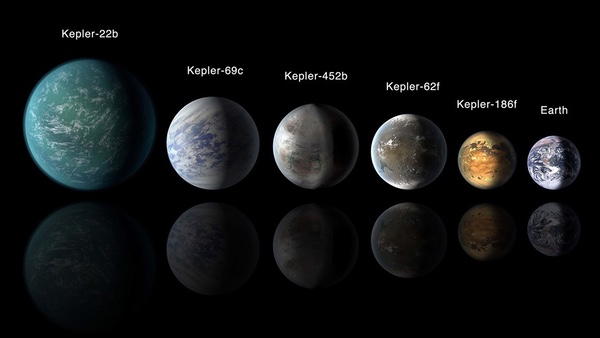 There are exoplanets that may be similar to Earth, but could any life there evolve to become intelligent? (credit: NASA/Ames/JPL-Caltech)
A popular model of evolution concludes that it was incredibly unlikely for humanity to evolve on Earth, and that extraterrestrial intelligence is vanishingly rare. But as experts on the entangled history of life and our planet, we propose that the coevolution of life and Earth’s surface environment may have unfolded in a way that makes the evolutionary origin of humanlike intelligence a more foreseeable or expected outcome than generally thought.
https://www.thespacereview.com/article/4944/134)
US space resources law needs clarification by Congressby Camisha L. Simmons Monday, March 3, 2025
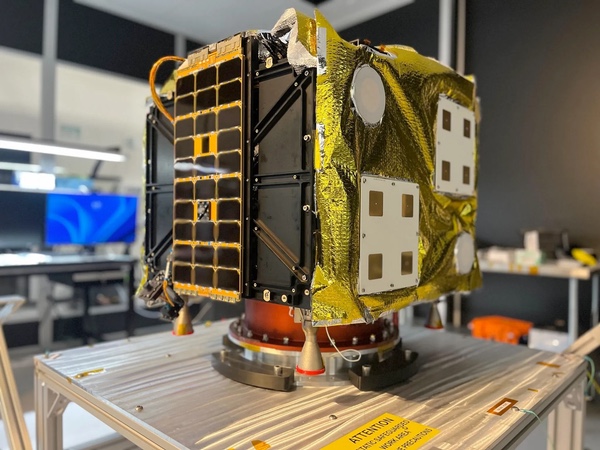 AstroForge, an asteroid mining startup, launched its Odin spacecraft (above) last week to fly by an asteroid it may later attempt to mine. (credit: AstroForge)
On January 20, during his inaugural address, President Trump proclaimed that we (the US) “will pursue our manifest destiny into the stars, launching American astronauts to plant the Stars and Stripes on the planet Mars.”[1] The proclamation was bold. The certain vision is even bolder. However, in contrast, what’s not so certain is the law that will enable robust commercial activity and eventual human settlement in outer space.
https://www.thespacereview.com/article/4945/135)
Mystery solved! The CALSAT satelliteby Dwayne A. Day Monday, March 3, 2025
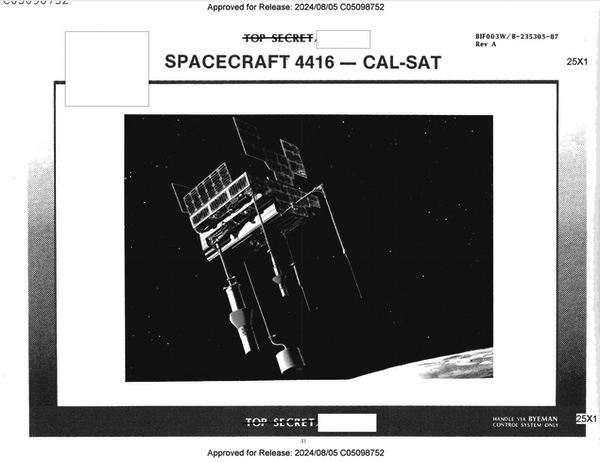 Declassified image of a satellite that was never secret, but was associated with many other top secret satellites of the 1960s. CALSAT was developed for calibrating satellite tracking networks. It was built but never flown, and in the early 1970s was donated to the National Museum of the United States Air Force, where it was displayed without explanation. (credit: NRO)
In the 1970s, the National Museum of the United States Air Force put a satellite on display with little fanfare and little explanation. It has taken 50 years to finally figure out what it is.
Starting in 1963, the Air Force began deploying a series of suitcase-sized satellites off larger satellites launched from Vandenberg Air Force Base in California. The satellites were classified at the time, and it was not until recently that the National Reconnaissance Office, which was responsible for overseeing their development, declassified a significant amount of information about them. The satellites, initially part of Program 11 and nicknamed P-11s, were covered with antennas and spun in their near-polar orbits, gathering up radar and sometimes other signals over the Soviet Union before transmitting them down to ground stations. Nearly two dozen of them were launched during the 1960s, with a wide range of radar targets.
https://www.thespacereview.com/article/4946/136)
Firefly lands on the Moonby Jeff Foust Monday, March 3, 2025
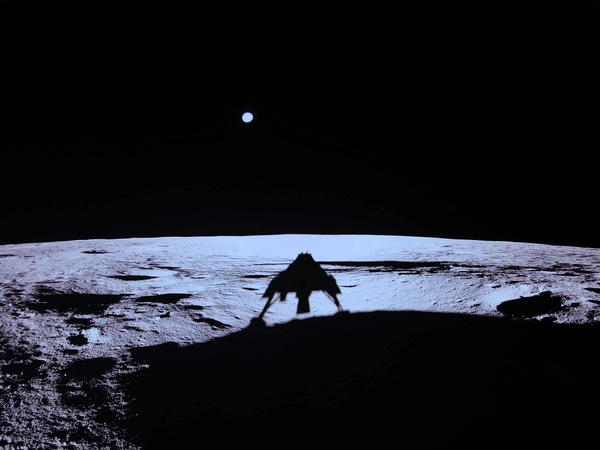 An image from Blue Ghost 1 taken shortly after its March 2 landing, casting a shadow on the lunar surface with the Earth in the distance. (credit: Firefly Aerospace)
There’s no shortage of live music options on a Saturday night in Austin, Texas. That included, last Saturday, one venue in the suburb of Cedar Park where someone arriving late in the evening would have found a packed parking lot and a crowd inside, enjoying the music and availing themselves of the bar.
https://www.thespacereview.com/article/4947/110/III 2025 [37-40]37)
Bennu asteroid reveals its contents to scientists with clues about how the building blocks of life on Earth may have been seededby Timothy J. McCoy and Sara Russell Monday, March 10, 2025
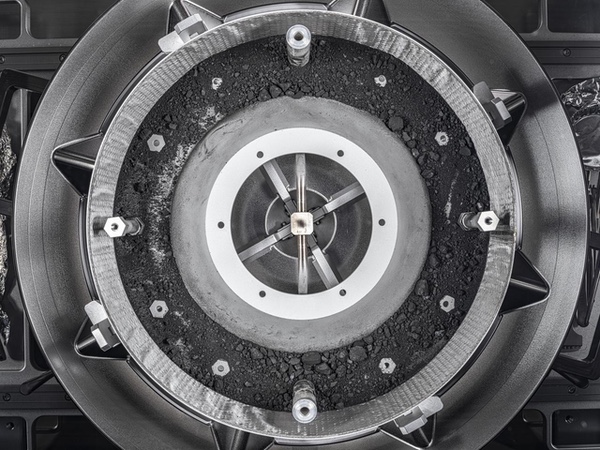 Some of the material from the asteroid Bennu returned by NASA’s OSIRIS-REx mission. (credit: NASA/Erika Blumenfeld & Joseph Aebersold)
A bright fireball streaked across the sky above mountains, glaciers and spruce forest near the town of Revelstoke in British Columbia, Canada, on the evening of March 31, 1965. Fragments of this meteorite, discovered by beaver trappers, fell over a lake. A layer of ice saved them from the depths and allowed scientists a peek into the birth of the solar system.
https://www.thespacereview.com/article/4948/138)
The European Space Tug 1970–1972by Hans Dolfing Monday, March 10, 2025
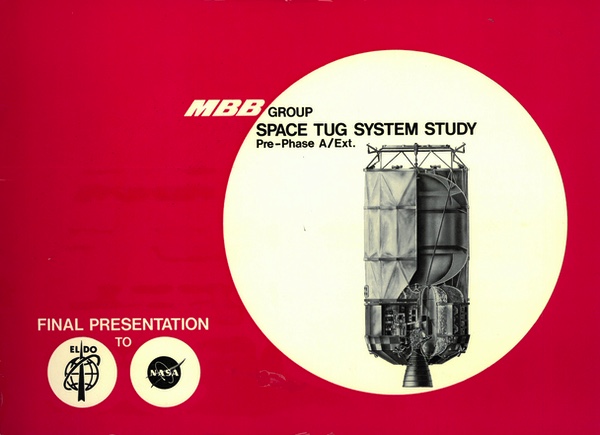 Figure 1 : MBB presentation. (credit: © Airbus Heritage [1])
The story of the reusable European space tug studies goes back to at least 1969, even before Apollo 11 landed on the Moon. At the direction of new American President Richard Nixon, the Space Task Group (STG) was tasked with a study on NASA’s post-Apollo future between February and September 1969. An Integrated Program Plan (IPP), also named Space Transportation System (STS), was presented which included tugs and shuttles and a lot more. However, with declining budgets, the plan was in jeopardy from the beginning.
https://www.thespacereview.com/article/4949/139)
A whole other spacefaring countryby Jeff Foust Monday, March 10, 2025
 Funding from the Texas Space Commission will help Starlab Space develop test facilities for its proposed commercial space station. State officials have suggested they could later help finance development of commercial stations like Starlab’s. (credit: Starlab Space)
Speaking on a panel late last month at the AIAA’s ASCENDxTexas conference, held in a hotel near NASA’s Johnson Space Center, Greg Bonnen recalled comments he made at another event at the same venue a few weeks earlier. “There are a couple countries that are going to be landing on the Moon in this calendar year,” he said. “Japan and Texas.”
https://www.thespacereview.com/article/4950/140)
Stars in the sky: The top secret URSALA, RAQUEL, and FARRAH satellites from the 1970s to the 21st centuryby Dwayne A. Day Monday, March 10, 2025
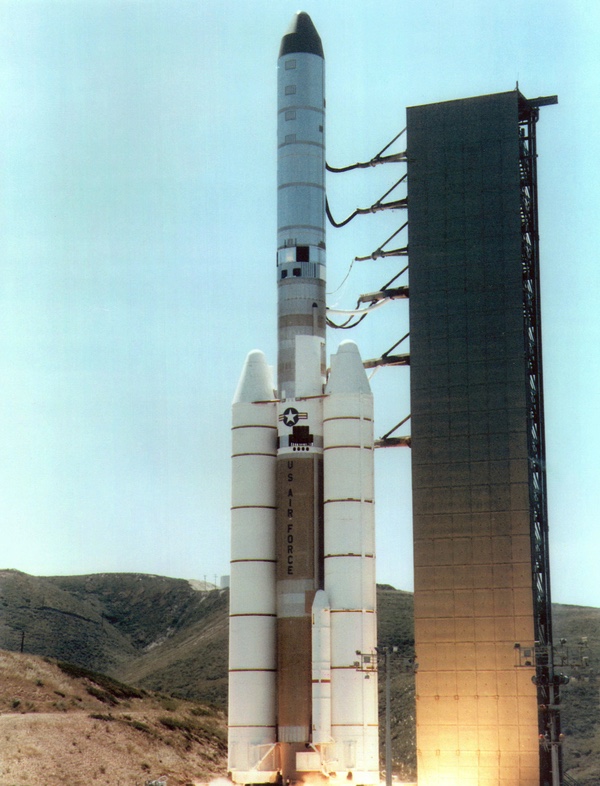 Twenty HEXAGON satellites were launched from California between 1971 and 1986, with one failure. HEXAGON was a big photo-reconnaissance satellite, but often carried Program 989 subsatellites that were deployed in orbit. (credit: Peter Hunter)
In 1963, the Air Force launched the first “hitchhiker” off the side of a larger satellite. This began a secretive program that lasted more than 40 years under a variety of names and designations. The satellites, about the size of a large suitcase, were festooned with antennas and spun rapidly as they orbited the Earth, sweeping their antennas over the ground and gathering radar and other signals, so-called electronic intelligence, or ELINT. They usually recorded the signals for later transmission to the ground, but occasionally directly re-transmitted them to a ground station.
https://www.thespacereview.com/article/4951/111/III 2025 [41-44]41)
Review: Lunar Commerceby Jeff Foust Monday, March 17, 2025
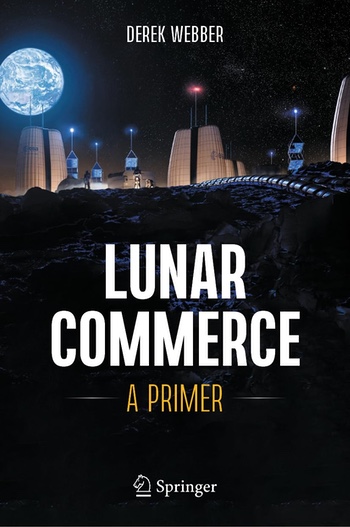 Lunar Commerce: A Primer
by Derek Webber
Springer, 2024
hardcover, 208 pp., illus.
ISBN 978-3-031-53420-1
US$39.99
https://www.amazon.com/exec/obidos/ASIN/3031534204/spaceviewsCommercial activities are off to a shaky start on the Moon. So far only one company can claim a fully successful (or reasonably close) lunar landing: Firefly Aerospace, whose Blue Ghost 1 lander signed off Sunday night shortly after sunset at its Mare Crisium landing site. Israel’s SpaceIL and Japan’s ispace crashed attempting to landing on the Moon (a second ispace lander is enroute for a landing in June), Astrobotic’s Peregrine suffered a propulsion malfunction that kept it from attempting a landing, and Intuitive Machines’ two landers both landed on the Moon but ended up on their sides, with its second mission earlier this month causing the mission to end barely 12 hours after landing.
https://www.thespacereview.com/article/4952/142)
ATLAC and the early emergence of lunar governanceby Dennis O’Brien Monday, March 17, 2025
The development of commercial capabilities like Firefly Aerospace’s Blue Ghost 1 lander is providing new urgency to efforts to coordinate and even govern such activities on the Moon. (credit: Firefly Aerospace)At its February meeting, the United Nations Committee on Peaceful Uses of Outer Space (COPUOS) formally created ATLAC, the Action Team on Lunar Activities Consultation. In doing so, it may have provided the missing piece in the evolving framework of governance for the Moon, and perhaps beyond. ATLAC’s mandate, along with the efforts of the Working Group on Legal Aspects of Outer Space Resources, give us an early glimpse into how the international community will govern activity on the Moon.
https://www.thespacereview.com/article/4953/143)
Is the Moon in America’s future?Monday, March 17, 2025
Unpacking the strategic debate by Bhavya Lal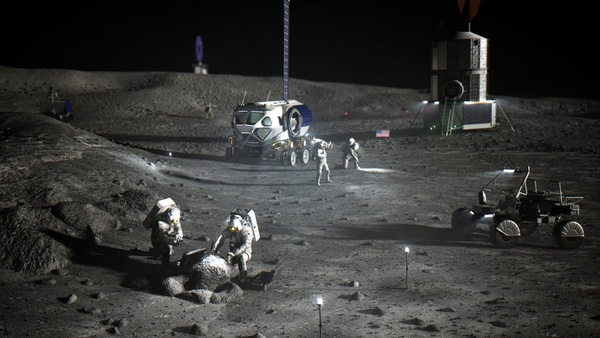 Exploring the Moon has value on its own, and can also help accelerate missions to Mars. (credit: NASA)
As the current administration contemplates America’s future in human spaceflight, it faces a crucial strategic choice: should we return to the Moon first, or push directly for Mars? This critical decision will shape not just the future of space exploration, but humanity’s path to bringing the solar system into our sphere. Climate change, pandemics, and other existential risks make expanding beyond Earth increasingly critical. Yet reasonable observers disagree sharply on the best path forward.
https://www.thespacereview.com/article/4954/144)
The new wave of asteroid mining venturesby Jeff Foust Monday, March 17, 2025
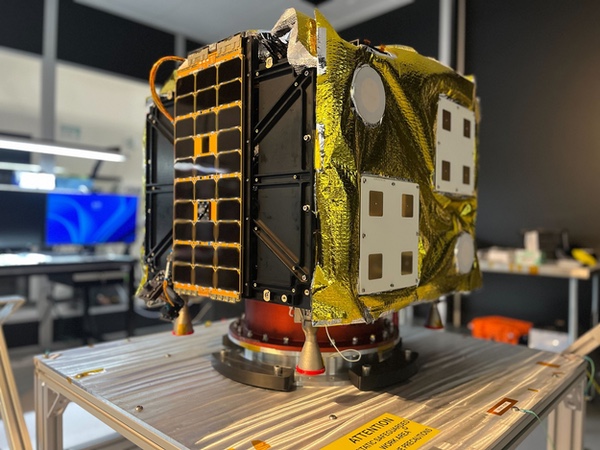 AstroForge’s Odin spacecraft before launch as a secondary payload on the IM-2 mission. The spacecraft suffered technical problems after launch that will keep it from prospecting a near Earth asteroid. (credit: AstroForge)
For Matt Gialich, being scared wasn’t just acceptable. It was a requirement.
“I told everybody in the company that, if you’re not scared when we launch, we went too slow,” Gialich, cofounder and CEO of AstroForge, said in an interview a month before the launch of the company’s Odin spacecraft.
https://www.thespacereview.com/article/4955/112/III 2025 [45-48]45)
Review: Space Piracyby Jeff Foust Monday, March 24, 2025
 Space Piracy: Preparing for a Criminal Crisis in Orbit
by Marc Feldman and Hugh Taylor
Wiley, 2025
hardcover, 256 pp., illus.
ISBN 978-1-394-24020-3
US$30
https://www.amazon.com/exec/obidos/ASIN/1394240201/spaceviewsThe term “space piracy” most likely brings to mind science fiction, and probably not great science fiction at that (such as the mid-80s movie The Ice Pirates.) The authors of the new book Space Piracy acknowledge that and even embrace it, but they are very serious about the subject. “Space piracy is a future problem that is starting to show itself in small-scale hacks,” they write, but add that “the probability of space piracy and crime becoming serious issues facing space industry and national security organizations” means it’s time to start planning for it.
https://www.thespacereview.com/article/4956/146)
3D printing will help space pioneers make homes, tools, and other stuff they need to colonize the Moon and Marsby Sven Bilén Monday, March 24, 2025
 One concept for Martian habitats that could be built using 3D printing technologies. (credit: Team SEArch+/Apis Cor)
Throughout history, when pioneers set out across uncharted territory to settle in distant lands, they carried with them only the essentials: tools, seeds, and clothing. Anything else would have to come from their new environment.
So, they built shelter from local timber, rocks, and sod; foraged for food and cultivated the soil beneath their feet; and fabricated tools from whatever they could scrounge up. It was difficult, but ultimately the successful ones made everything they needed to survive.
https://www.thespacereview.com/article/4957/147)
Boeing’s early lunar base concept of 1959by Hans Dolfing Monday, March 24, 2025
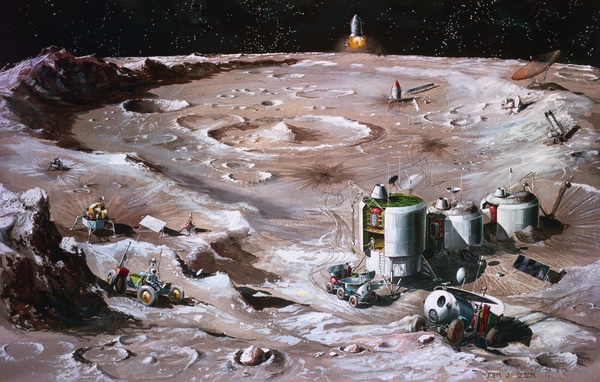 Figure 1: Boeing’s early lunar base concept (credit: Copyright © Boeing 2025 [22])
In the late 1950s after Sputnik, America went head over heels into the space race: rockets, space stations, winged spacecraft, logistics, the works. Everything was studied from a military point of view as well through civilian eyes via a fledgling NASA.
To obtain the ultimate high ground, the US Air Force studied the what, how, and when of military lunar bases. One of the System Requirement (SR) studies to prepare USAF long-range plans was SR-183. On November 13, 1957, Gen. Bernhard Schriever (AFBMD) ordered preparation of a plan for a 10- to 15-year program leading to development of man-carrying vehicle systems for space exploration.[21] Meanwhile, the bill to create NASA as a civilian space agency was drafted and submitted to Congress on April 2, 1958.[20]
https://www.thespacereview.com/article/4958/1Lot astronautów został rekordowo wydłużony.
Misja o dynamicznej fabule przeszła do historii.
48)
A final twist in the Starliner sagaby Jeff Foust Monday, March 24, 2025
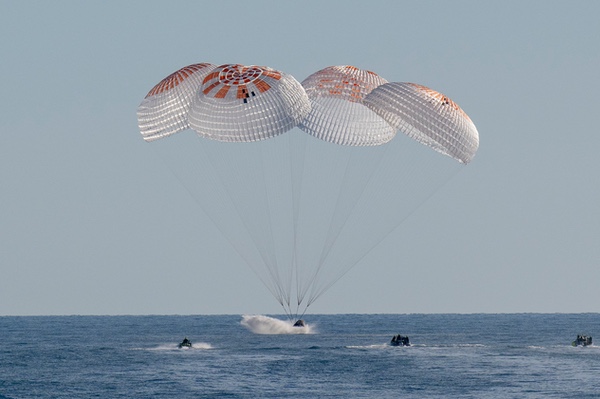 The Crew Dragon spacecraft Freedom splashes down off the Florida coast March 18 to conclude the Crew-9 mission. (credit: NASA/Keegan Barber)
Their return to Earth, at least from a technical point of view, was all but flawless.
The Crew Dragon spacecraft Freedom undocked from the International Space Station in the early morning hours last Tuesday. More than 16 hours later, it reentered the atmosphere, deploying two drogue chutes, followed by four main parachutes, in clear blue skies. A drone captured stunning high-definition video of the descending capsule as it splashed down off the Florida coast south of Tallahassee. About a half-hour later, the capsule was aboard the SpaceX recovery ship, a process monitored not just the ships’ crews but also a pod of dolphins in the water, evidently curious about the ruckus. (...)
Musk has repeated the claim that he offered the Biden Administration a plan for an earlier return of the two astronauts, but has not provided any details such as who he contacted at the White House and when, as well as what the plan was itself. Also unclear was why Musk would directly go to the White House, given his poor relationship with the Biden Administration at the time, rather than contact NASA. Former agency leaders, such as administrator Bill Nelson and deputy administrator Pam Melroy, said they were unaware of any proposals Musk might have made to the White House. (...)
https://www.thespacereview.com/article/4959/113/III 2025 [49-52]49)
Review: The Moonwalkers and a Kennedy Center space festivalby Jeff Foust Monday, March 31, 2025
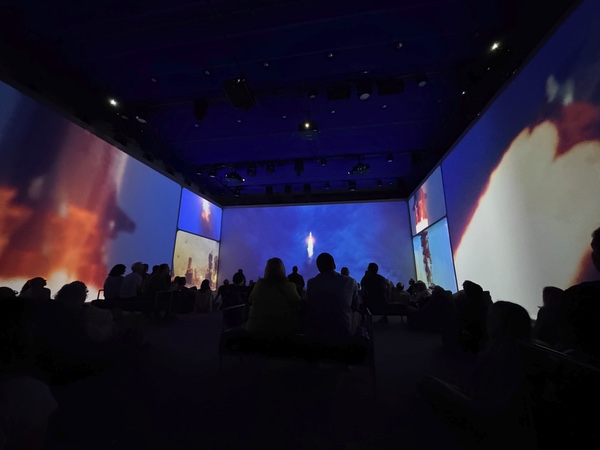 An audience is treated to a Saturn V launch in The Moonwalkers at the Kennedy Center. (credit: J. Foust)
Even more than 50 years after Gene Cernan and Harrison Schmitt lifted off from the Moon, the appetite for Apollo nostalgia is unsated. There continues to be films, books, and more about the original race to the Moon even as a new one shapes up involving the United States and China, one that promises to finally return humans to the lunar surface late this decade, perhaps.
https://www.thespacereview.com/article/4960/150)
Preparing for the EU Space Act and its potential influence on the future of space traffic managementby Michael P. Gleason Monday, March 31, 2025
 The European Commission, including Andrius Kubilius (second from left), commissioned for defense and space, plan to pushing an EU Space Act in the coming weeks. (credit: EC - Audiovisual Service)
The European Union (EU) expects to release the first EU Space Act in the second quarter of 2025.[1] It will likely require non-EU commercial space companies providing satellite services within the EU marketplace, including US companies, to comply with the law and regulations it will impose.[2]
https://www.thespacereview.com/article/4961/151)
Europe’s launch challengeby Jeff Foust Monday, March 31, 2025
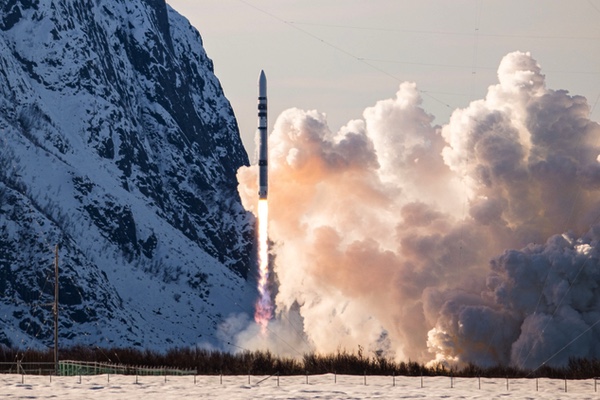 Isar Aerospace’s Spectrum lifts off on its inaugural flight March 30. (credit: Brady Kenniston/Isar Aerospace)
On Sunday at 12:30pm local time, a rocket lifted off from a seaside pad called Andøya Spaceport in northern Norway into blue skies. With a snow-covered mountain in the background, the Spectrum rocket developed by Isar Aerospace slowly ascended. The launch appeared to be going well enough one could take a second to appreciate a scenic view far different than Cape Canaveral or Baikonur. So far, so good.
https://www.thespacereview.com/article/4962/152)
Fate is in the stars: the PARCAE ocean surveillance satellitesby Dwayne A. Day Monday, March 31, 2025
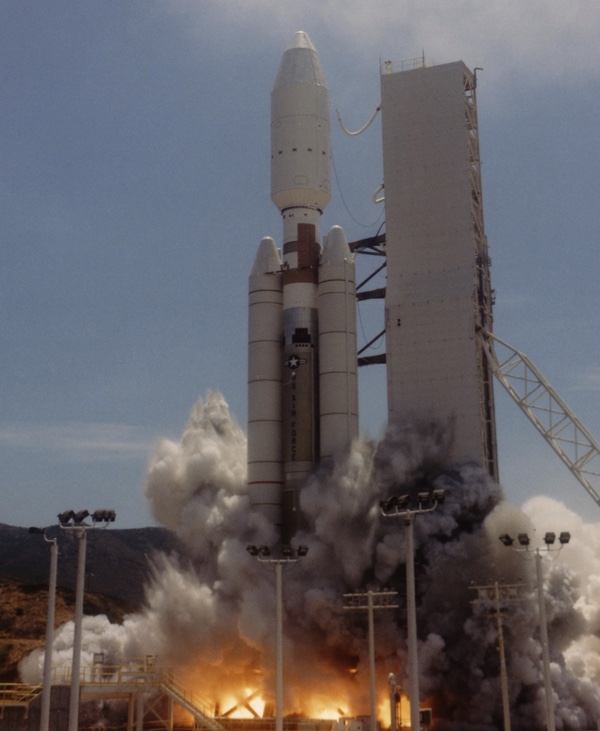 Launch of an Improved PARCAE atop a Titan IV rocket from Vandenberg Air Force Base in 1993 ended in failure. The failure was reported to cost over $800 million, although it is unclear if this cost also included the Titan IV. (credit: Peter Hunter)
On April 30, 1976, an Atlas F rocket lifted off from Vandenberg Air Force Base carrying a new type of satellite into space. Upon reaching its orbit of approximately 1,050 by 1,150 kilometers, the satellite dispenser ejected three suitcase-sized satellites that deployed solar panels and a boom that used gravity to orient them towards the Earth. They were placed into a triangular cluster separated by 30 to 240 kilometers from each other, and their orbits inclined 63 degrees to the Equator maximized their travel over the Earth’s oceans.
https://www.thespacereview.com/article/4963/1
 Wątek: The Space Review (Przeczytany 195252 razy)