Space Station 20th: Thanksgiving Celebrations in SpaceNov. 23, 2020
The Thanksgiving holiday typically brings families and friends together in a celebration of common gratitude for all the good things that have happened during the previous year. People celebrate the holiday in various ways, with parades, football marathons, and attending religious services, but food remains the over-arching theme. For astronauts embarked on long-duration space missions, separation from family and friends is inevitable and they rely on fellow crew members to share in the tradition and enjoy the culinary traditions as much as possible. In this most unusual of years when the pandemic may alter typical Thanksgiving gatherings, it seems appropriate to review how astronauts over the years have celebrated the holiday during their time in space. Enjoy the stories and photographs from orbital Thanksgiving celebrations over the years.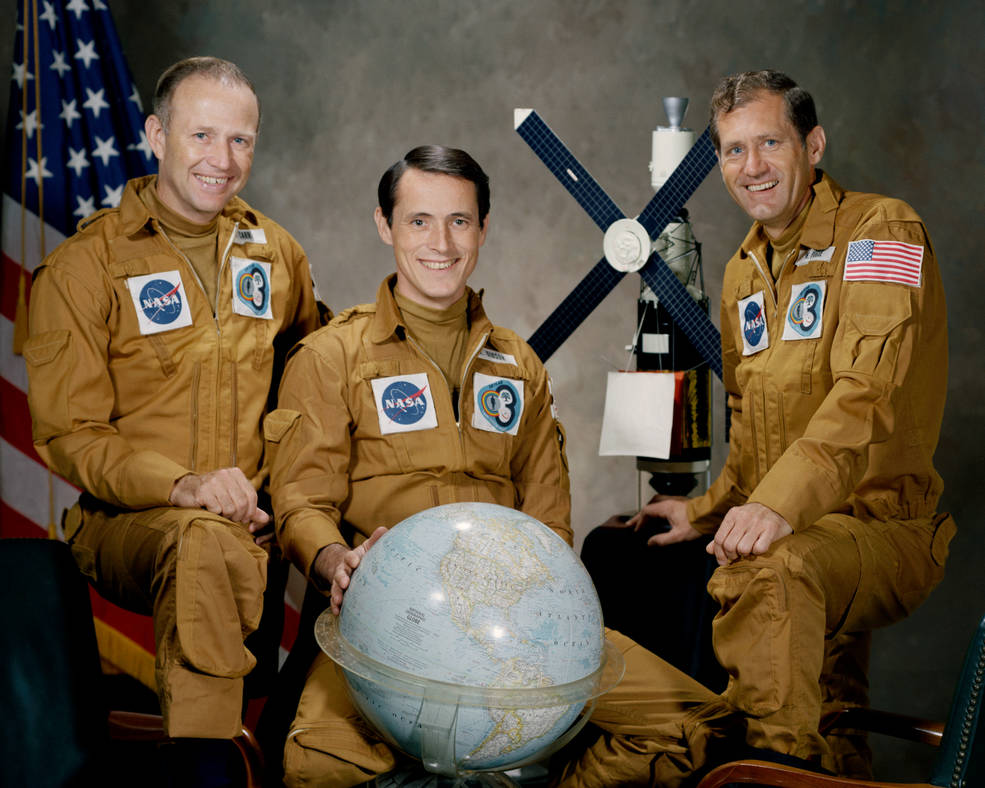
 Thanksgiving 1973. Left: Skylab 4 astronauts Gerald P. Carr, Edward G. Gibson, and William R. Pogue, the first crew to celebrate Thanksgiving in space.
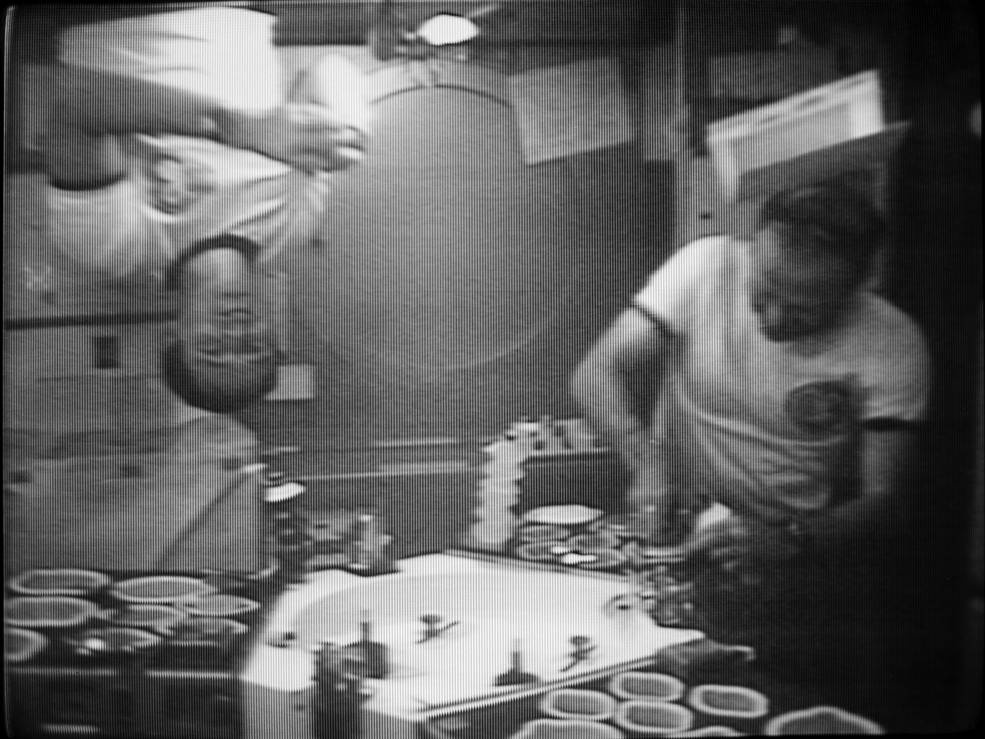
Right: Gibson, left, and Carr demonstrate eating aboard Skylab.Skylab 4 astronauts Gerald P. Carr, Edward G. Gibson, and William R. Pogue were the first crew to celebrate Thanksgiving in space on Nov. 22, 1973. On that day, their seventh of an 84-day mission, Gibson and Pogue completed a 6-hour and 33-minute spacewalk, while Carr remained in the Multiple Docking Adaptor with no access to food. All three made up for missing lunch by consuming two meals at dinner time, although neither included special items for Thanksgiving.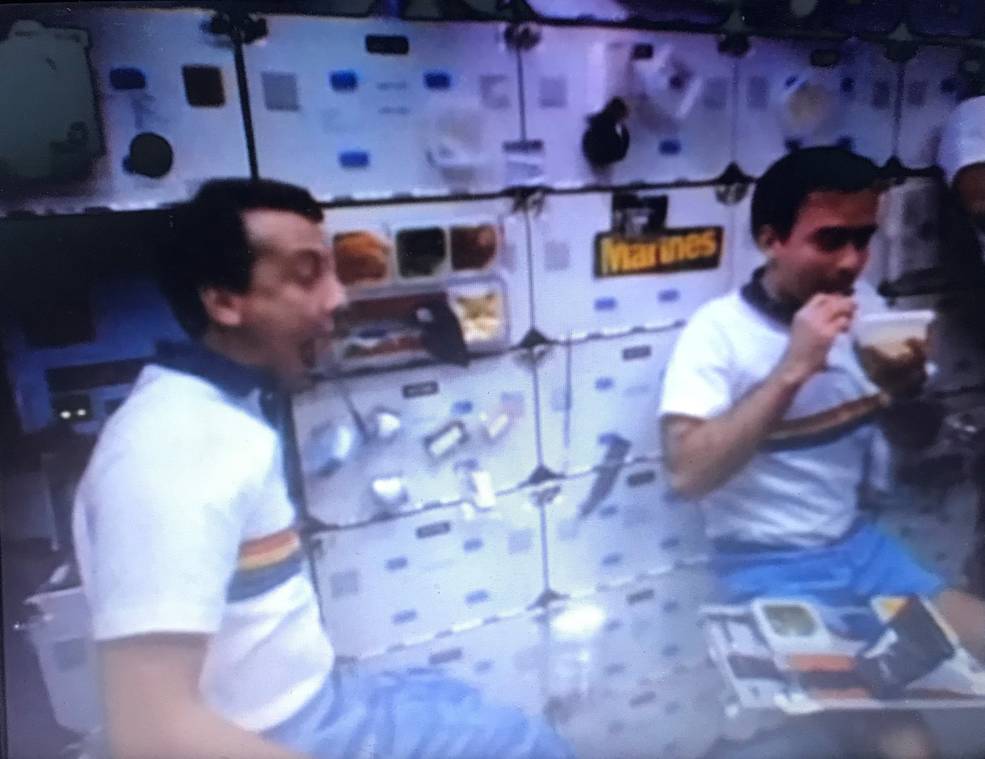
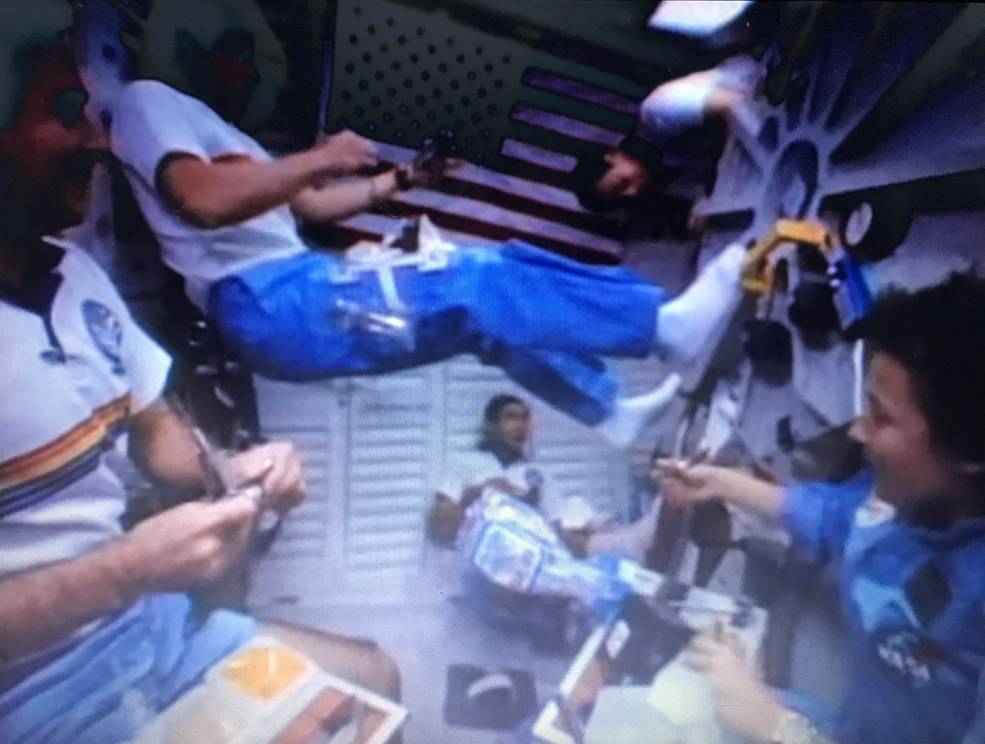 Thanksgiving 1985. Left: STS-61B payload specialists Charles D. Walker, left, and Rodolfo Neri Vela enjoy the first Thanksgiving aboard a space shuttle in Atlantis’ middeck.
Right: The STS-61B crew enjoying their Thanksgiving dinner while floating in Atlantis’ middeck. 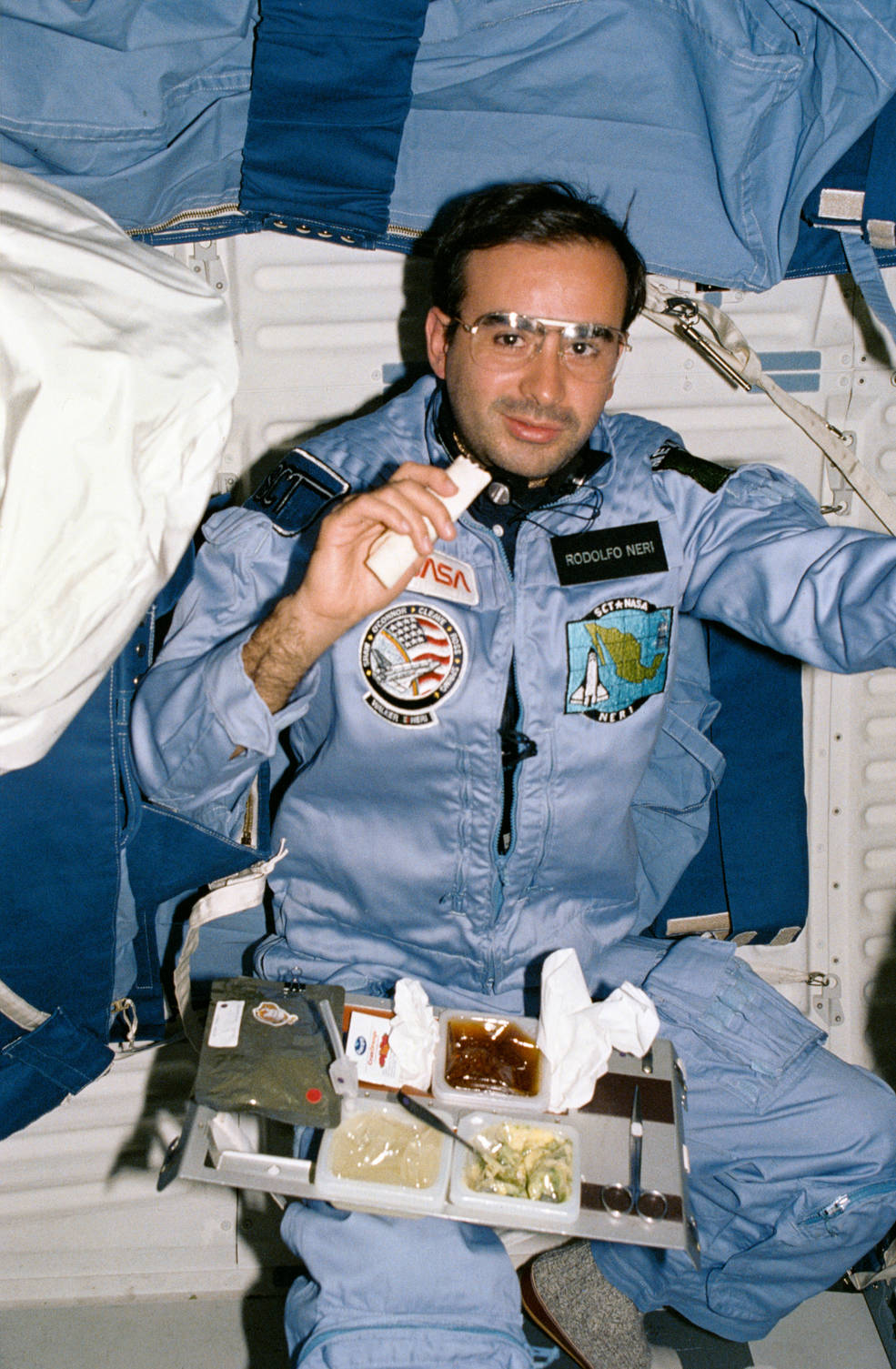 Mexican payload specialist Neri Vela, who introduced tortillas to space menus.Twelve years passed before the next orbital Thanksgiving celebration. On Nov. 28, 1985, the seven-member crew of STS-61B, Brewster H. Shaw, Bryan D. O’Connor, Jerry L. Ross, Mary L. Cleave, Sherwood C. “Woody” Spring, Charles D. Walker, and Rodolfo Neri Vela, feasted on shrimp cocktail, irradiated turkey, and cranberry sauce aboard the space shuttle Atlantis. Neri Vela, a payload specialist from Mexico, introduced tortillas to space, and they have remained favorites among astronauts ever since. Unlike regular bread, tortillas do not create crumbs and have multiple uses for any meal of the day. The crew of STS-33, Frederick D. Gregory, John E. Blaha, Manley L. “Sonny” Carter, F. Story Musgrave, and Kathryn C. Thornton, celebrated Thanksgiving aboard space shuttle Discovery in 1989. Gregory and Musgrave celebrated their second Thanksgiving in space two years later, joined by fellow STS-44 astronauts Terrence T. “Tom” Henricks, James S. Voss, Mario Runco, and Thomas J. Hennen aboard space shuttle Atlantis.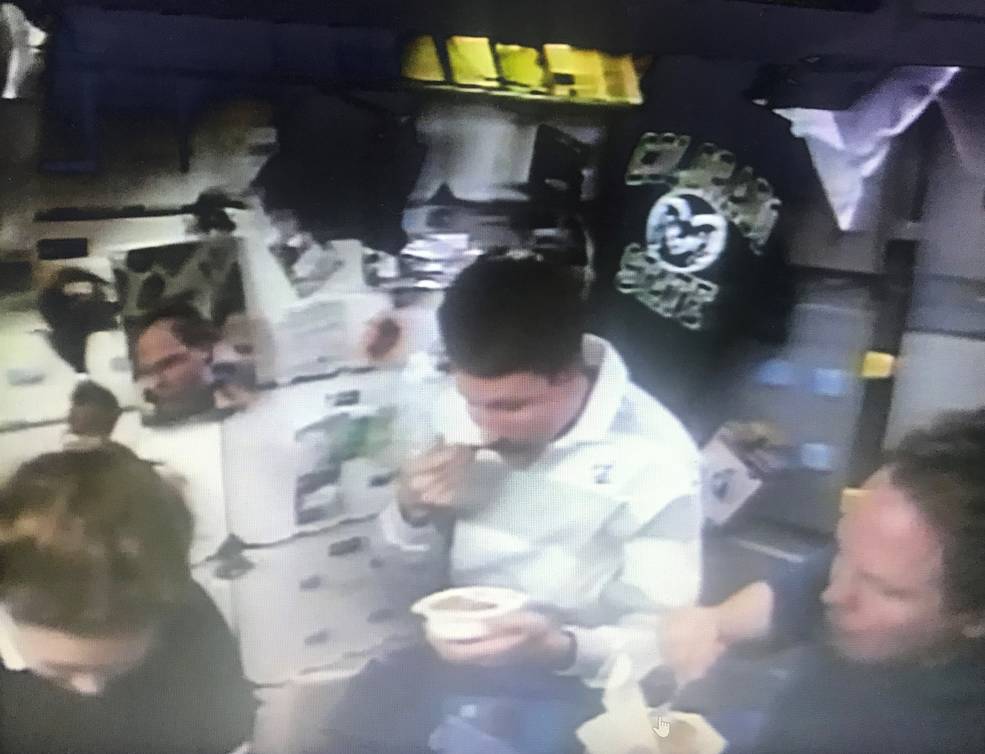
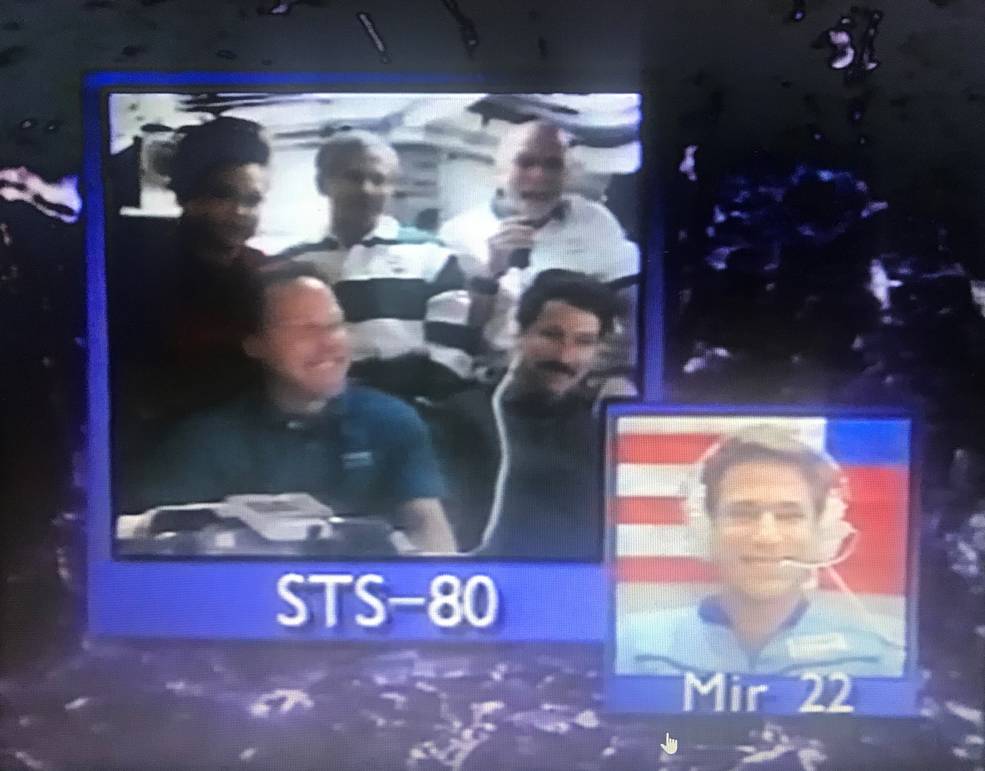 Thanksgiving 1996. Left: STS-80 astronauts Tamara E. Jernigan, left, Kent V. Rominger, and Thomas D. Jones enjoy Thanksgiving dinner in Columbia’s middeck.
Right: The STS-80 crew during aboard Columbia exchanging Thanksgiving greetings with John E. Blaha aboard the Mir space station.In 1996, Blaha celebrated his second Thanksgiving in space with Russian cosmonauts Valeri G. Korzun and Aleksandr Y. Kaleri aboard the space station Mir. Blaha watched the beautiful Earth through the Mir windows rather than his usual viewing fare of football. The STS-80 crew of Kenneth D. Cockrell, Kent V. Rominger, Tamara E. Jernigan, Thomas D. Jones, and Musgrave, now on his third turkey day holiday in orbit, celebrated Thanksgiving aboard space shuttle Columbia. Although the eight crew members were in different spacecraft in different orbits, they exchanged holiday greetings via space-to-space radio. This marked the largest number of people in space on Thanksgiving Day up to that time. One year later, astronaut David A. Wolf celebrated Thanksgiving with his Russian crewmates Anatoli Y. Solovev, who translated the holiday into Russian as den blagodarenia, and Pavel V. Vinogradov aboard Mir. They enjoyed smoked turkey, freeze-dried mashed potatoes, peas, and milk. Also in orbit at the time was the crew of STS-87, Kevin R. Kregel, Steven W. Lindsey, Kalpana Chawla, Winston E. Scott, Takao Doi, Leonid K. Kadenyuk aboard Columbia. The nine crew members aboard the two spacecraft broke the one-year-old record for the largest number of people in space at one time for Thanksgiving.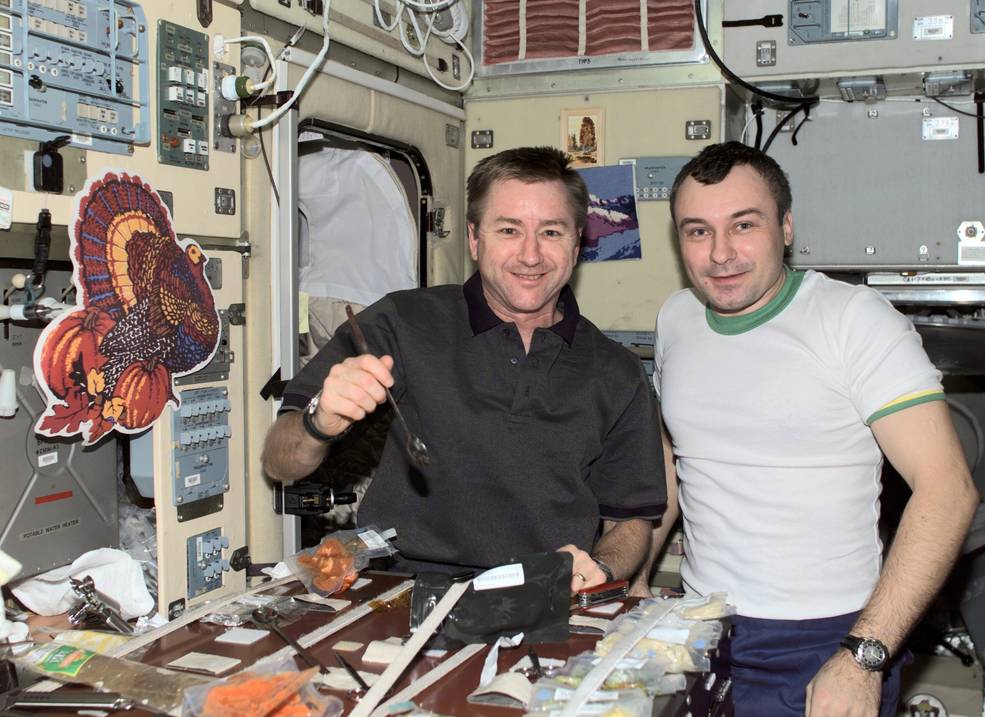
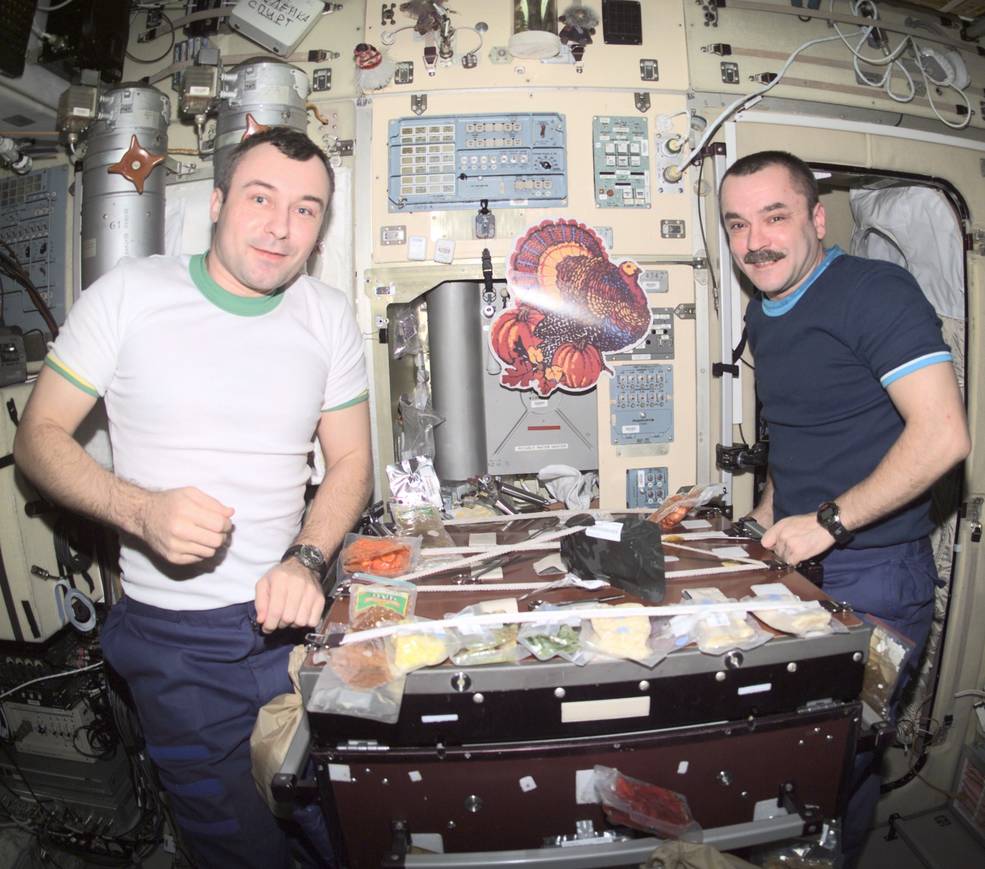 Thanksgiving 2001, Expedition 3 crewmembers enjoying Thanksgiving dinner. Left: Frank L. Culbertson, left, and Vladimir N. Dezhurov.
Right: Dezhurov, left, and Mikhail V. Tyurin. 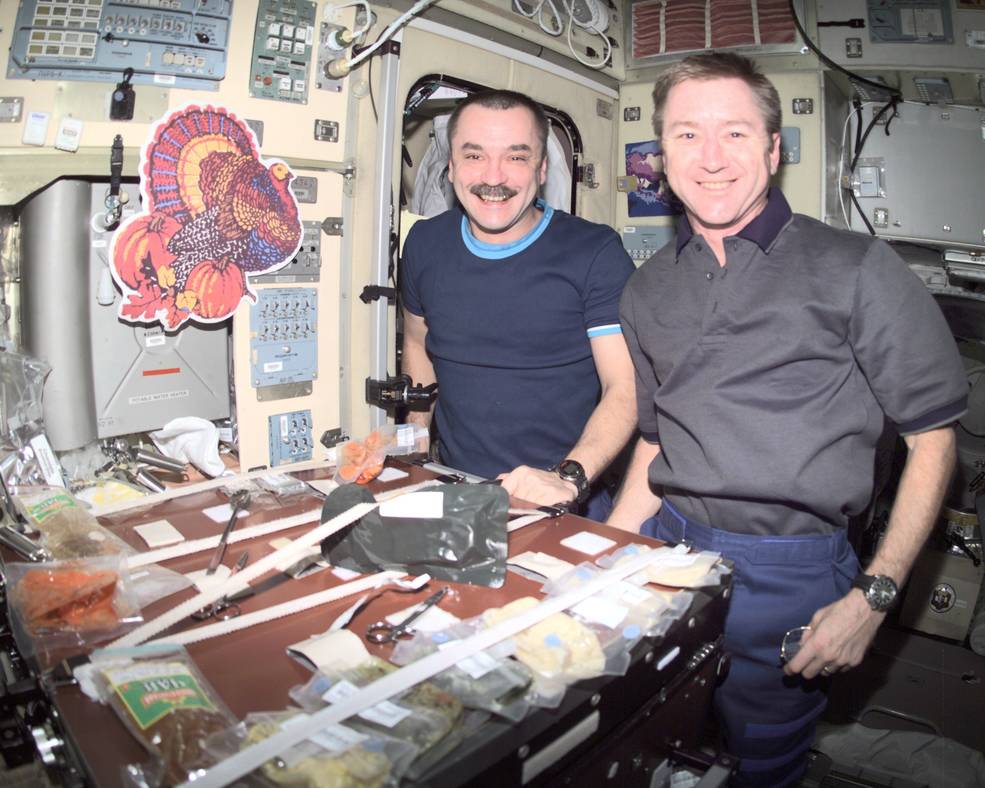 Tyurin, left, and Culbertson.The Expedition 1 crew of William M. Shepherd, Yuri P. Gidzenko, and Sergei K. Krikalev celebrated the first Thanksgiving aboard the International Space Station (ISS) on Nov. 23, 2000, three weeks after their arrival aboard the facility. The crew took time out of their busy schedule to enjoy ham and smoked turkey and send words of thanks to people on the ground who provided excellent support to their flight. Crews have celebrated Thanksgiving in space every November since then. In 2001, Expedition 3 crew members Frank L. Culbertson, Vladimir N. Dezhurov, and Mikhail V. Tyurin enjoyed the first real Thanksgiving aboard ISS, complete with a cardboard turkey as decoration. The following year’s orbital Thanksgiving celebration included the largest number of people to that time, the combined 10 crewmembers of Expedition 5, STS-113, and Expedition 6. After a busy day that included the first Thanksgiving Day spacewalk aboard ISS, the crews settled down to a dinner of smoked turkey, mashed potatoes, and green beans with mushrooms. Blueberry-cherry cobbler rounded out the meal.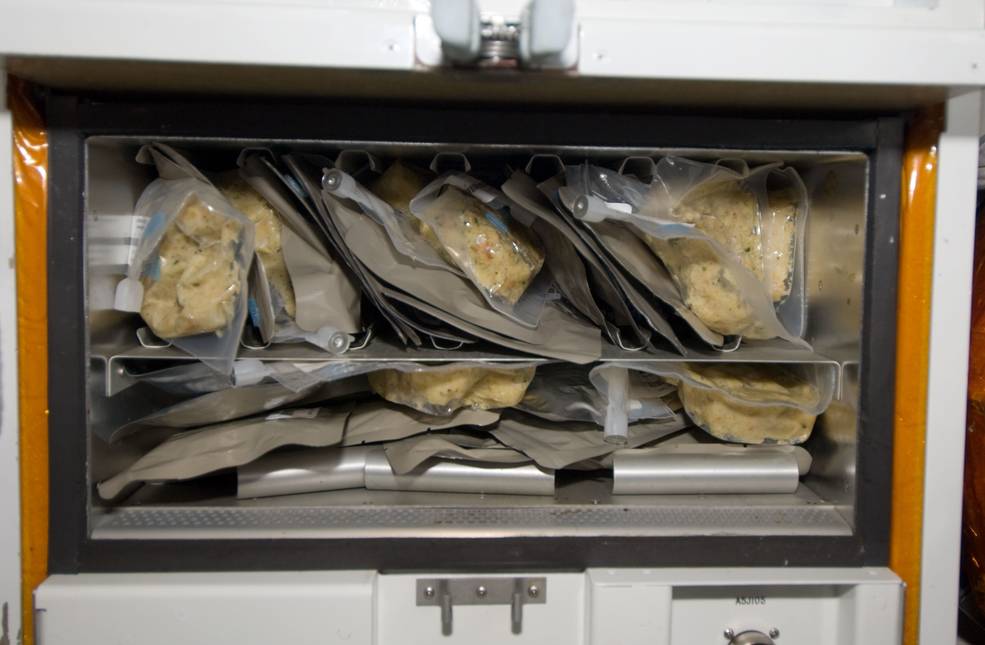
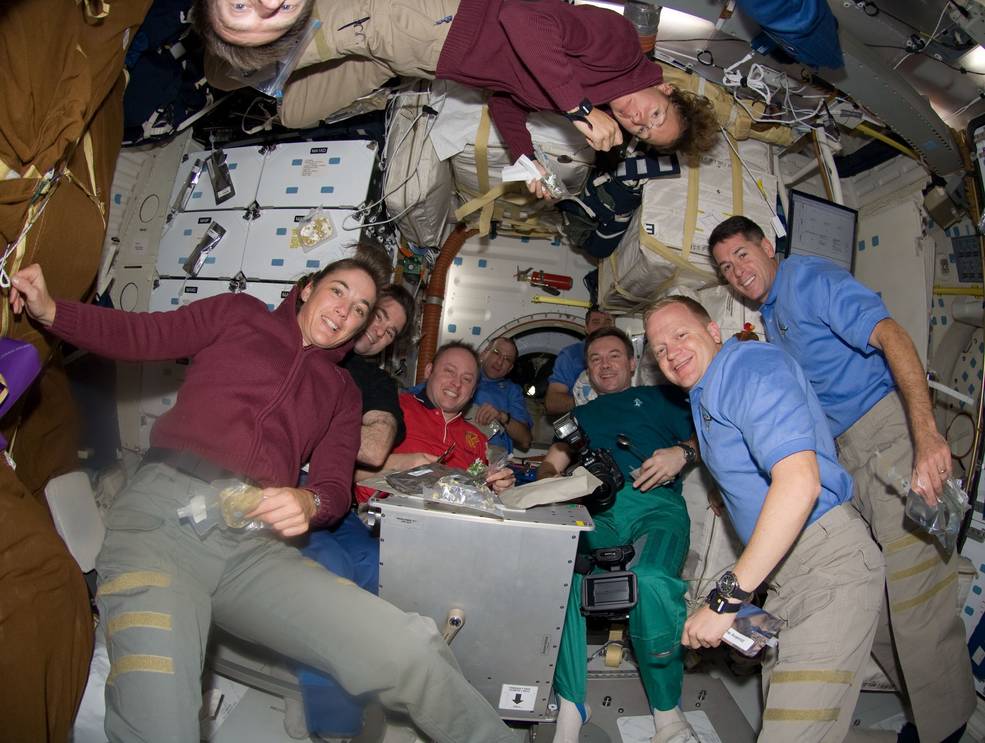 Thanksgiving 2008. Left: The Thanksgiving dinner reheating in space shuttle Endeavour’s food warmer.
Right: The crews of Expedition 18 and STS-126 share a meal in the space shuttle middeck.Expedition 18 crew members E. Michael Fincke, Yuri V. Lonchakov, and Gregory E. Chamitoff welcomed the STS-126 crew of Christopher J. Ferguson, Eric A. Boe, Heidemarie M. Stefanyshyn-Piper, Donald R. Pettit, Stephen G. Bowen, R. Shane Kimbrough, and Sandra H. Magnus during Thanksgiving in 2008. They dined in the space shuttle Endeavour’s middeck on smoked turkey, candied yams, green beans and mushrooms, cornbread dressing and a cranapple dessert. 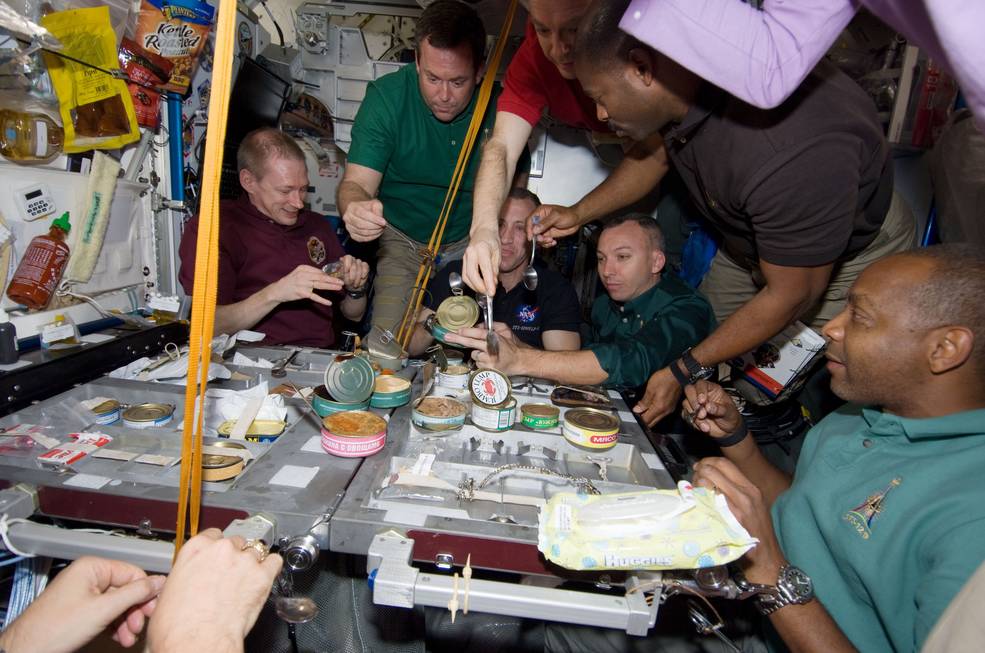
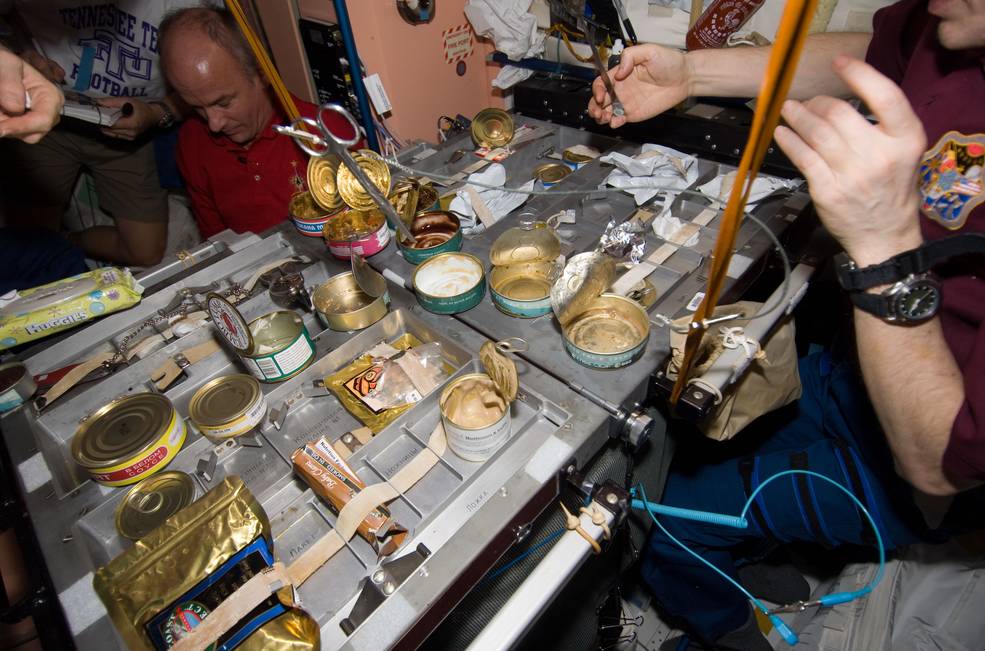 Thanksgiving 2009. Left: Crew members from Expedition 21 and STS-129 share an early
Thanksgiving meal. Right: The Thanksgiving dinner for the Expedition 21 and STS-129 crews.The following year saw the largest and internationally most diverse group celebrated Thanksgiving in space. The six Expedition 21 crew members, Jeffrey N. Williams, Maksim V. Suraev, Nicole P. Stott, Roman Y. Romanenko, Frank L. DeWinne, and Robert B. Thirsk hosted the six members of the STS-129 crew, Charles O. Hobaugh, Barry E. Wilmore, Michael J. Foreman, Robert L. Satcher, Randolph J. Bresnik, and Leland D. Melvin. The twelve assembled crew members represented the United States, Russia, Belgium, and Canada. The celebration took place two days early, since the shuttle undocked from the ISS on Thanksgiving Day.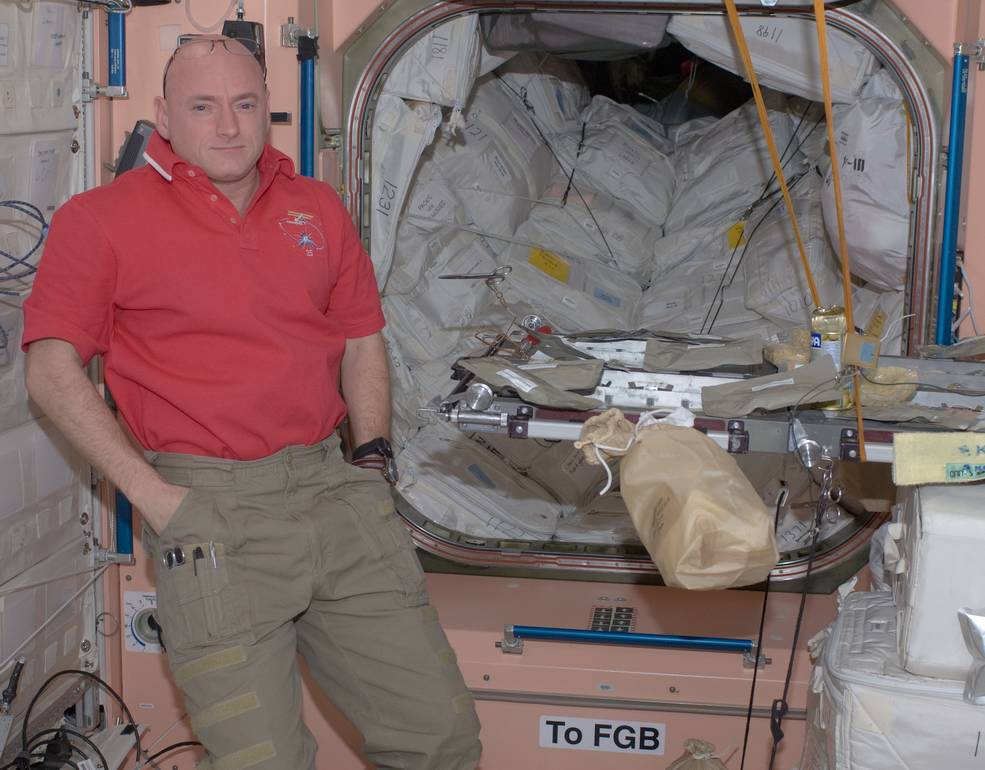
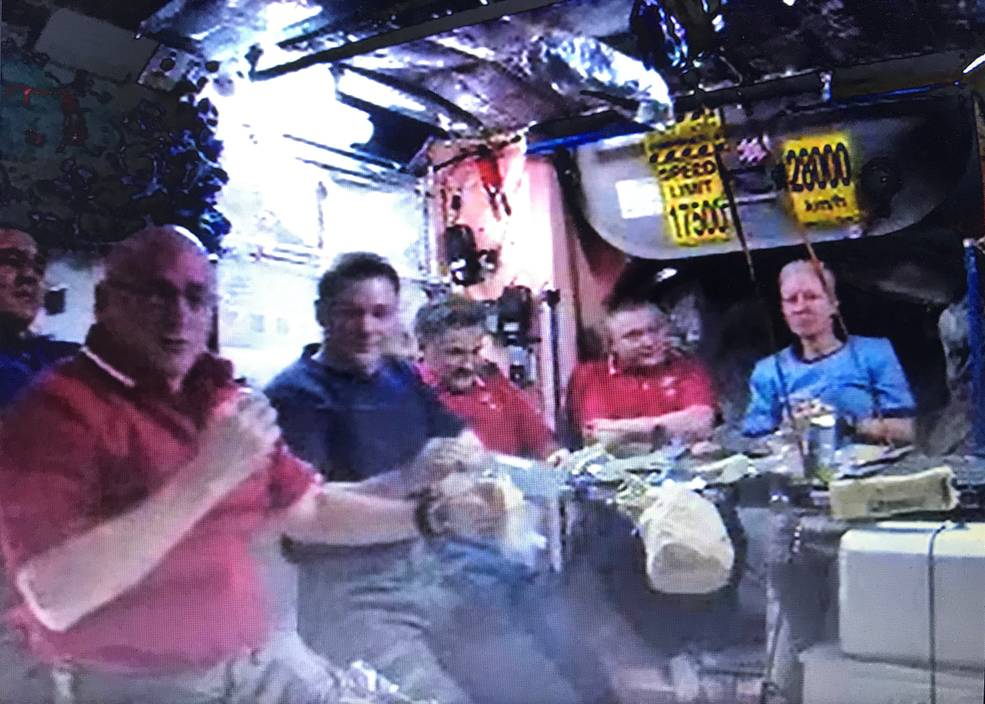 Thanksgiving 2010. Left: Expedition 25 commander Scott J. Kelly awaits his crewmates at the Thanksgiving dinner table.
Right: Expedition 25 crew of Oleg I. Skripochka, left, Kelly, Douglas H. Wheeler, Aleksandr Y. Kaleri, Fyodor N. Yurchikhin, and Shannon Walker sending Thanksgiving greetings to the ground before digging into their dinner.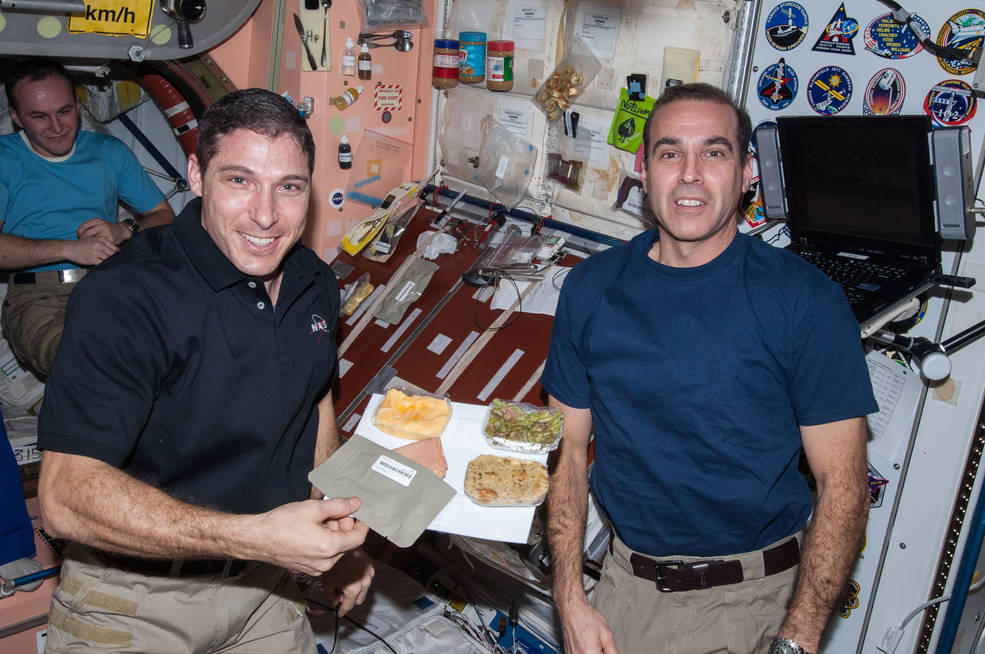
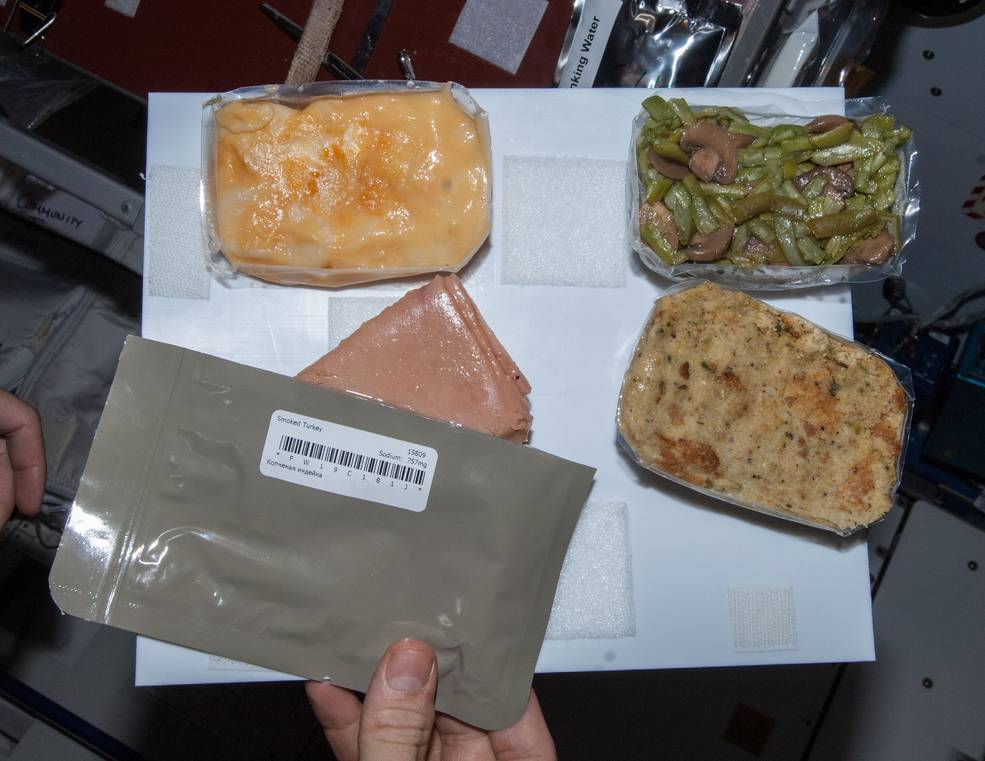 Thanksgiving 2013. Left: Expedition 38 astronauts Michael S. Hopkins, left, and Richard A. Mastracchio showing off food items destined for the Thanksgiving Day dinner.
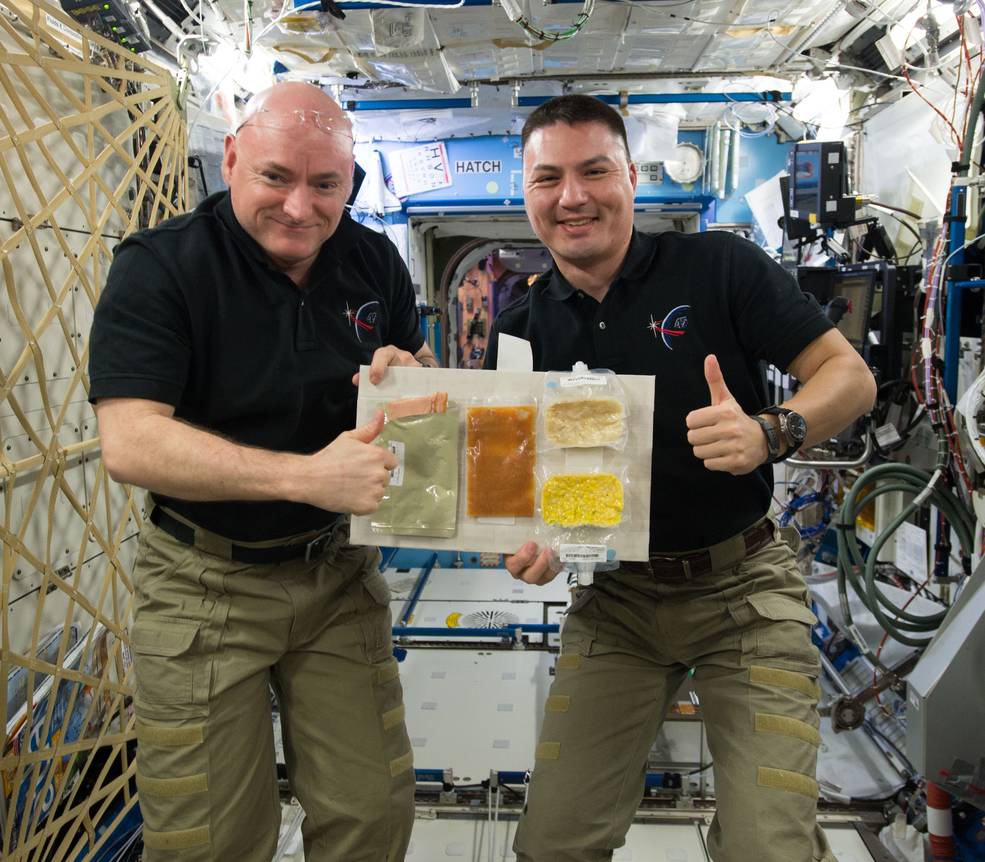
Right: Close-up of the Thanksgiving dinner items, including turkey, ham, macaroni and cheese, green beans and mushrooms, and dressing.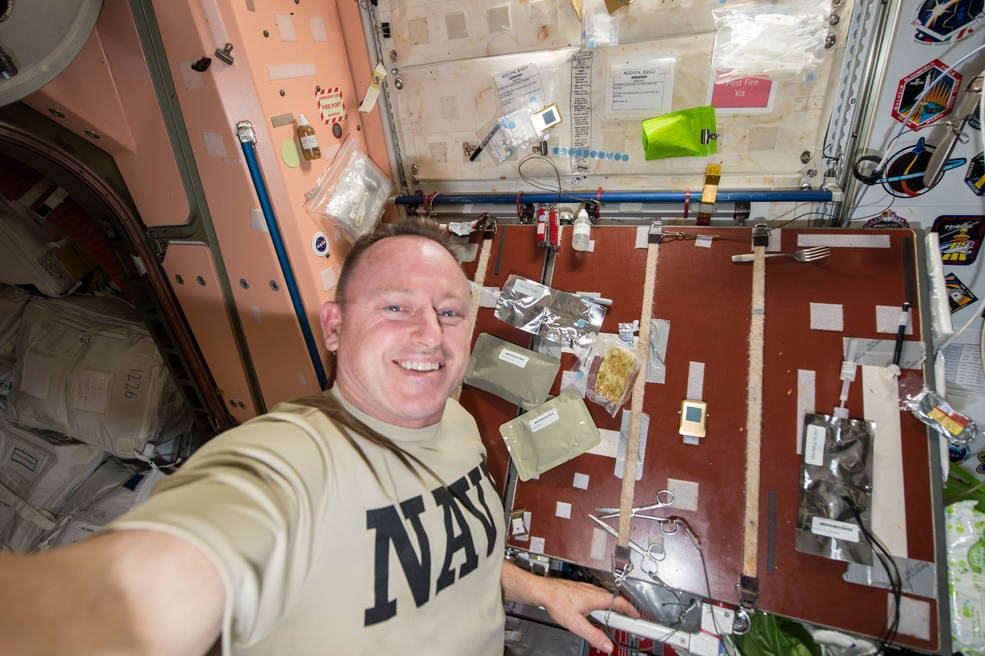
 Thanksgiving 2014. Left: Eager for Thanksgiving, Expedition 42 commander Barry E. “Butch” Wilmore sets out his meal several days in advance.
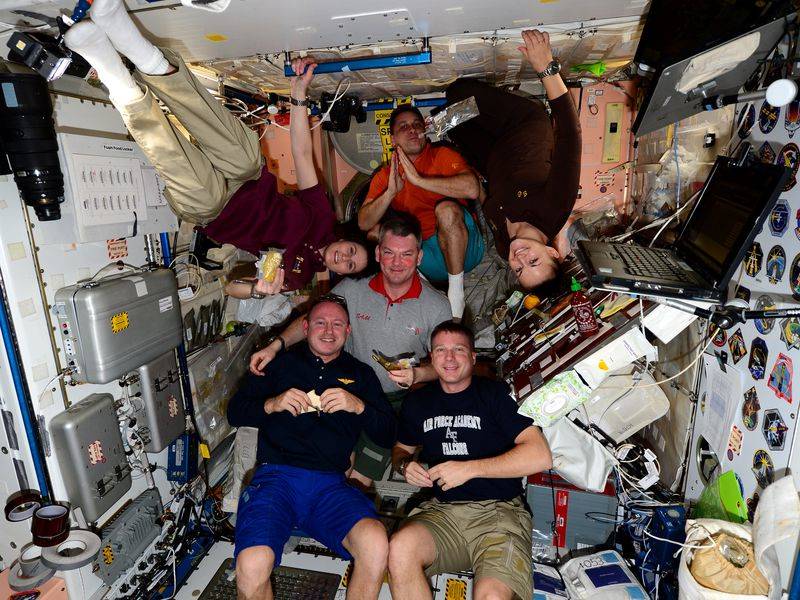
Right: Expedition 42 crew members Wilmore, left, Samantha Cristoforetti, Aleksandr M. Samokutyayev, Anton N. Shkaplerov, Terry W. Virts, and Elena O. Serova enjoy the Thanksgiving Day dinner.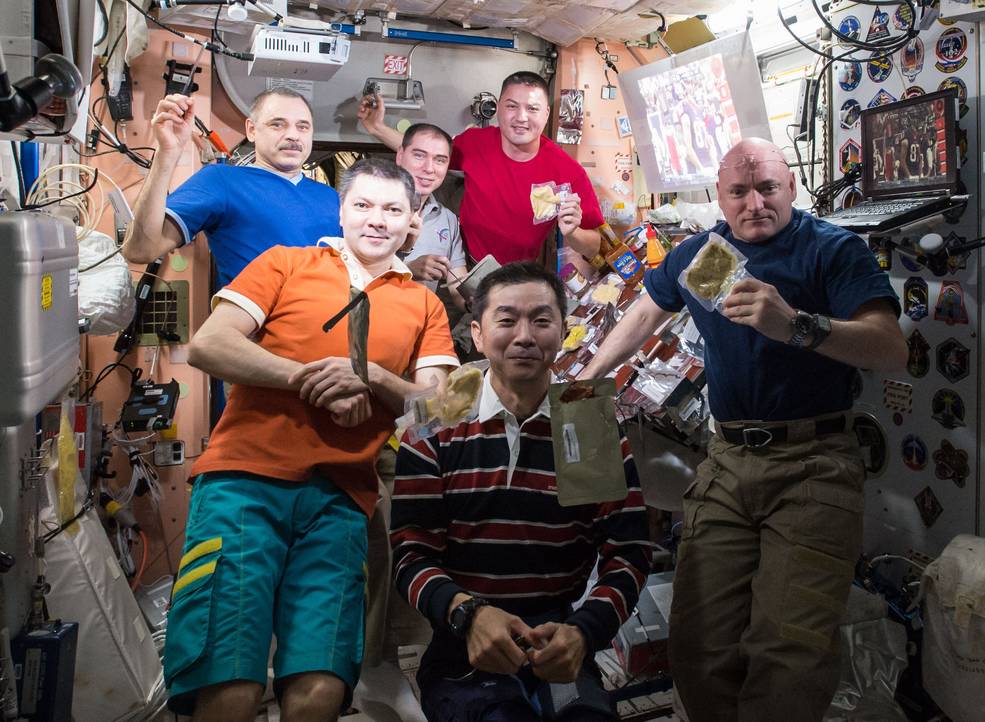
 Thanksgiving 2015. Left: Expedition 45 crew members Mikhail B. Korniyenko, left, Oleg D. Kononenko, Sergei A. Volkov, Kjell N. Lindgren, Kimiya Yui, and Scott J. Kelly pose before the Thanksgiving dinner table.
Right: Kelly, left, and Lindgren show off the Thanksgiving dinner items.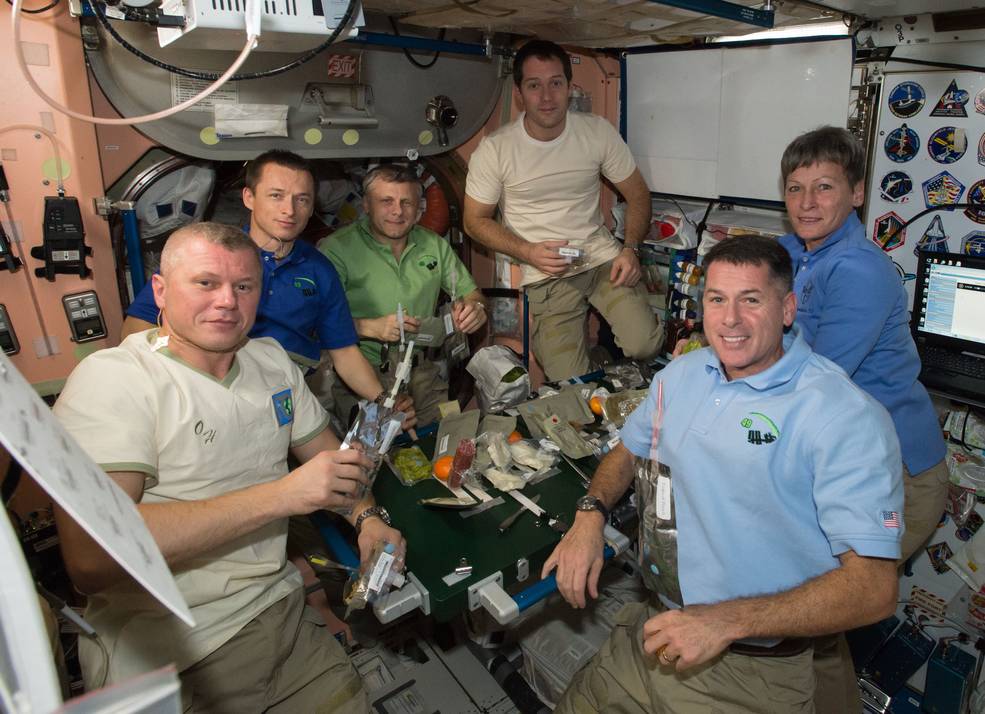
 Thanksgiving 2016. Left: Expedition 50 crew members Oleg V. Novitsky, left, Sergei N. Ryzhikov, Andrei I. Borisenko, Thomas G. Pesquet, R. Shane Kimbrough, and Peggy A. Whitson pose before the Thanksgiving dinner table.
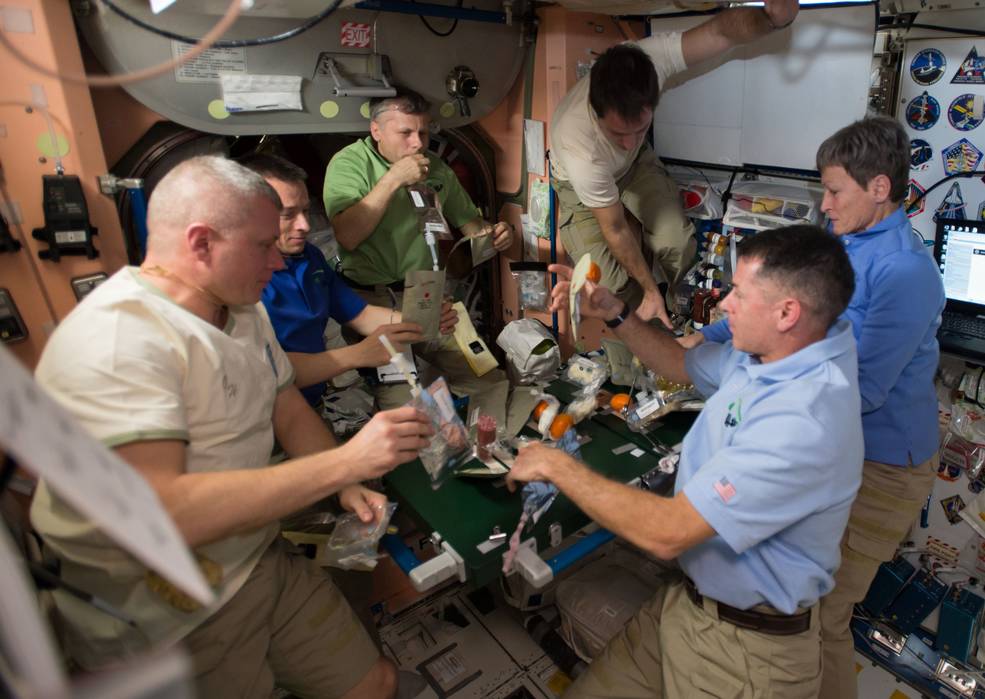
Right: Expedition 50 crew tucks into the feast.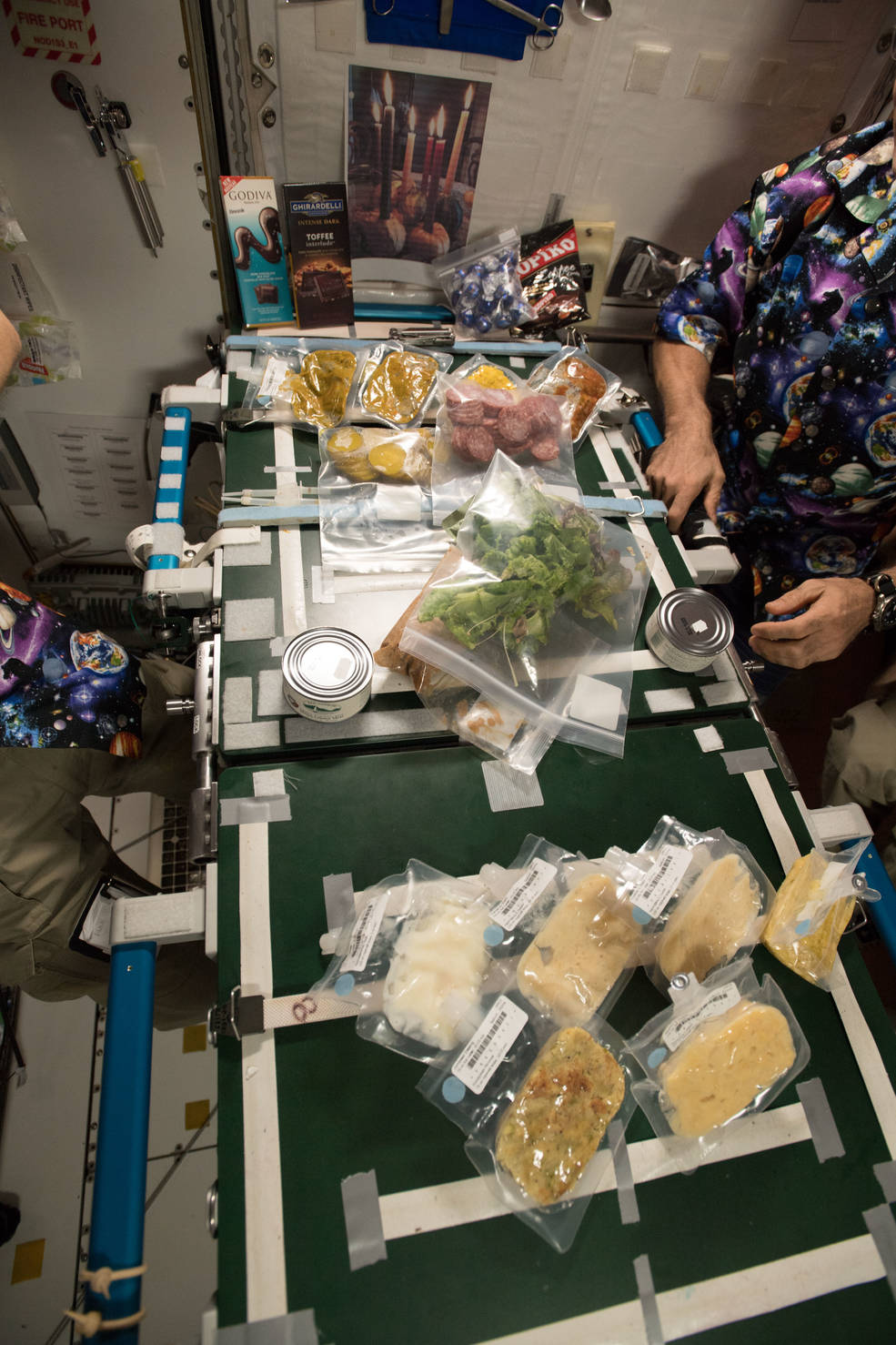
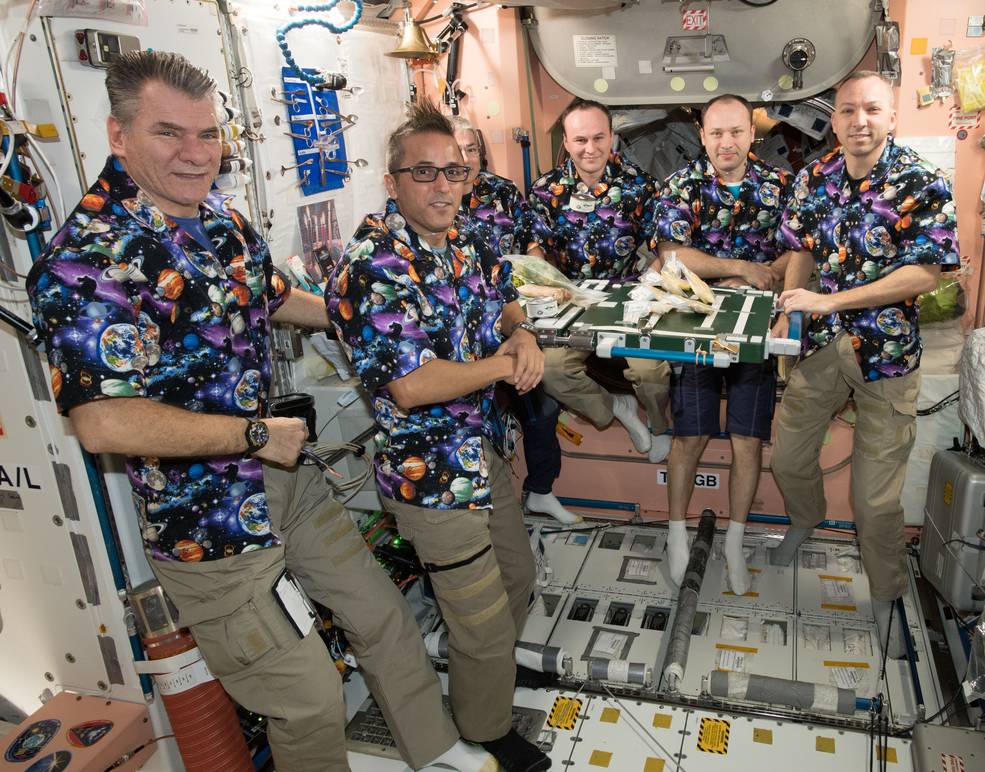
Thanksgiving 2017. Left: The Thanksgiving table is set.
Right: Expedition 53 crew of Paolo A. Nespoli, left, Joseph M. Acaba, Mark T. Vande Hei, Sergei N. Ryazansky, Aleksandr A. Misurkin, and Randolph J. Bresnik patiently awaits the start of the dinner.
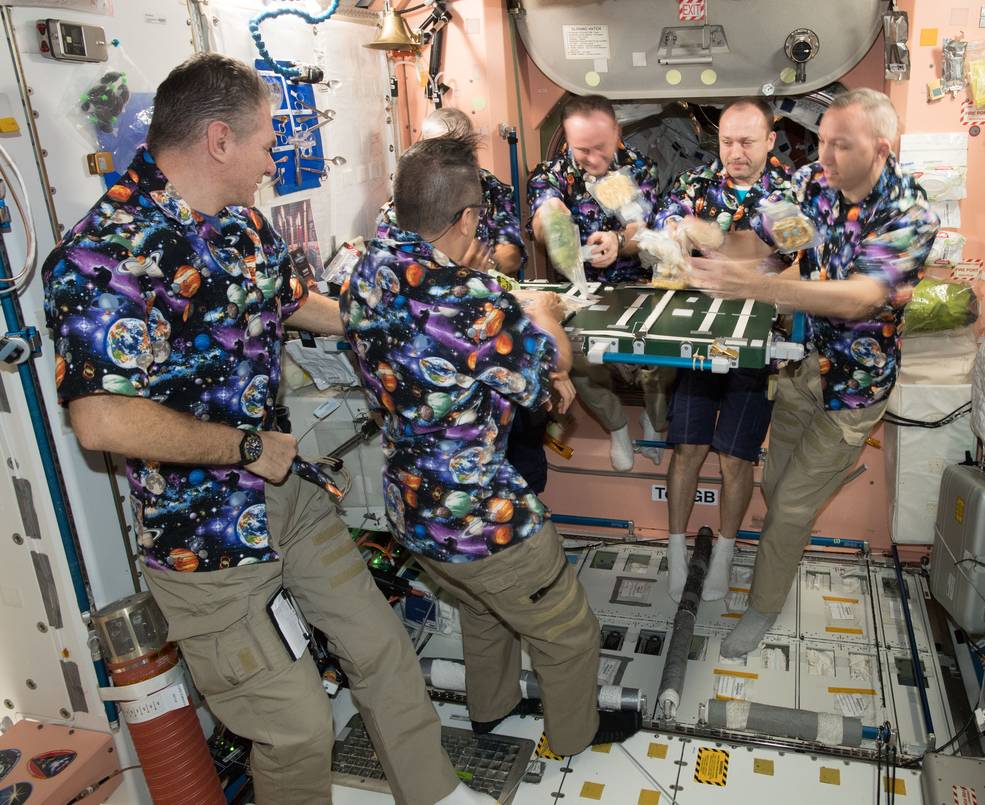 Expedition 53 crew digs in.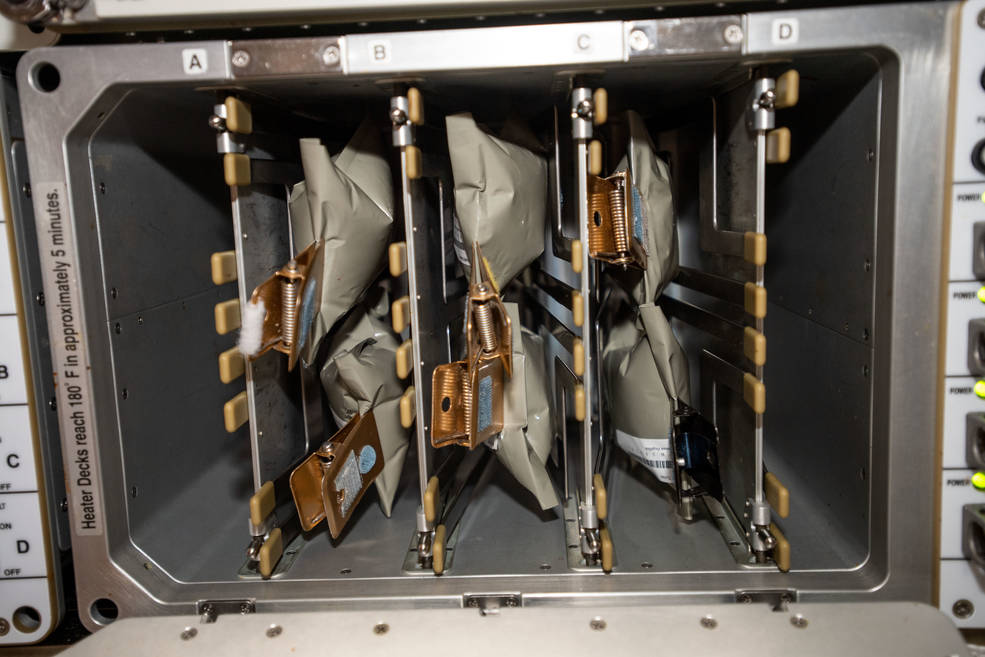
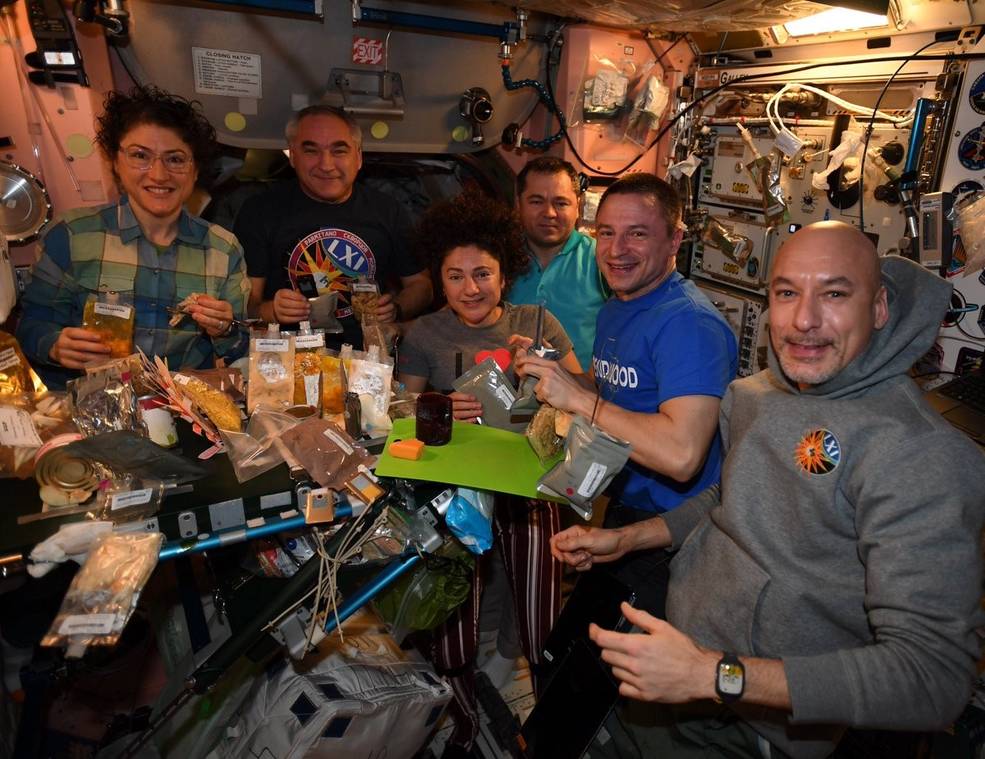 Thanksgiving 2019. Left: The turkey is in the oven, or more precisely the smoked turkey packages are in the Galley Food Warmer.
Right: Expedition 61 crew members Christina H. Koch, left, Aleksandr A. Skvortsov, Jessica U. Meir, Oleg I. Skripochka,
Andrew R. Morgan, and Luca S. Parmitano celebrate Thanksgiving aboard the ISSWe hope you enjoyed these stories and photographs from Thanksgivings celebrated in orbit. We would like to wish everyone here on the ground and the seven-member crew of Expedition 64 aboard the ISS a very happy Thanksgiving!Source:
https://www.nasa.gov/feature/space-station-20th-thanksgiving-celebrations-in-space
 Wątek: [NASA] Space Station 20th: Food on ISS (Przeczytany 3831 razy)