1) CSS ma zostać uzupełniona o moduł wielofunkcyjny z 6 portami cumującymi, jak zostało to pokazane na wystawie w Chińskim Muzeum Narodowym.
Zatem tyle będzie miał węzłów co Tianhe-1. Pozwoli to znacząco rozbudować stację.
https://twitter.com/CNSpaceflight/status/1629145713304297472China Focus: China unveils ambitious plans to expand its space stationSource: XinhuaEditor: huaxia 2023-02-28 20:34:30
BEIJING, Feb. 28 (Xinhua) -- During an ongoing exhibition at the National Museum of China, it was revealed that China plans to expand its space station in near-Earth orbit by launching a new module that will dock with the existing structure and create a cross-shaped combination.
At the exhibition of achievements in China's manned space program of 30 years, the China Manned Space Agency (CMSA) made public its follow-up plans after the assembly and construction of the space station's T-shape structure last year.
The new module, which will function as a node cabin, will have multiple docking ports like the core module Tianhe, allowing the space station to accommodate more spaceships, according to the CMSA.
The agency added that China plans to extend the in-orbit operation of its space station by implementing updates and upgrades.
The exhibition also showcased China's development of a new-generation reusable near-Earth crewed spacecraft with the capacity to carry four to seven astronauts into space and bring back over 700 kg of payloads to Earth. The country's existing spaceship can launch three astronauts into space and bring back 50 kg of payloads.
The space station will shift its priority from technological breakthroughs in the building stage to the performance of space applications. A slew of experiments is currently underway or poised to begin, in the space station. Some of them are aimed at figuring out how to resist microbes that may damage spacecraft metals, produce oxygen from algae in space, and convert heat energy into electricity.
Recently, the in-orbit Chinese astronauts of the Shenzhou-15 crew successfully obtained 3D structural images of their skin cells with the country's self-developed two-photon microscope, which is the first of its kind in the world.
In the coming years, over 1,000 applications across 65 projects will be implemented on the space station. This effort aims to advance key technologies in special material preparation, stem cell and regenerative medicine, high-precision time-frequency systems, and quantum precision measurement, according to the CMSA.
Chinese Survey Space Telescope, also known as the Chinese Space Station Telescope (CSST), will be launched as a part of the space station project, and the telescope, during its normal observations, will fly independently in the same orbit as China's space station.
The CSST is a space-based optical observatory for astronomers to carry out sky surveys, capturing a general map or images of the sky. It can dock with the space station for refueling and servicing as scheduled or as needed, making its maintenance more affordable than Hubble.
This flagship telescope of China is projected to survey an all-sky area with 17,500 square degrees in 10 years after its operation, in order to explore frontier sciences like the accelerating expansion of the universe, dark matter and dark energy, according to the CMSA.
During this exhibition, the CMSA also unveiled China's blueprint for human lunar exploration, which aims to send three astronauts into lunar orbit and allow two to land on the Moon.
Plans are underway for a lunar probe and sample return that will involve collaboration between humans and machines.
A scale-down model of the Long March-10 rocket was also displayed at the exhibition. The new-generation launcher will be used to bring no less than 27-tonne payloads including the lunar lander and moon craft into Earth-Moon transfer orbit.
The rocket measuring 88.5 meters in height, will have a liftoff thrust of about 2,678 tonnes and will be powered by liquid hydrogen, liquid oxygen and kerosene.
According to the exhibit profile, a rectified version of the rocket, without roll boosters and with a liftoff thrust of approximately 873 tonnes, is planned for the space station's manned and freight missions. Additionally, a portion of the rocket will be designed for reusability.
The miniature models of the lunar lander and moon craft have also been put on display at the exhibition, which began on Friday and will run for three months.
The museum's central hall showcases a variety of exhibits, including a same-sized replica of the space station's core module, the re-entry capsule of the Shenzhou-13 spaceship, rocket engines, spacesuits, and other life-supporting facilities in space, drawing a constant stream of visitors. ■
https://english.news.cn/20230228/f746f3afe62f46fca7d0d69d54498be7/c.html2) EDIT 01.03.23
Z Tianzhou-5 do Mengtian astronauci przenieśli ładunek. czyżby z powodu czekającej Tianzhou-5 deorbitacji ?
The Chinese crew aboard Tiangong are packing the new Mengtian module with cargo bags. Storage space is an issue up there or they are close to de-orbiting the Tianzhou-5 cargo ship and needed to empty it before hand.

https://twitter.com/ShuttleAlmanac/status/16305041854217871373) EDIT 03.03.23 2 marca (?) chiński niezapowiadany spacer
https://twitter.com/CNSpaceflight/status/1631201370241110017Blurred CCTV news snapshot shows the two astronauts wore the red suit A and blue suit B
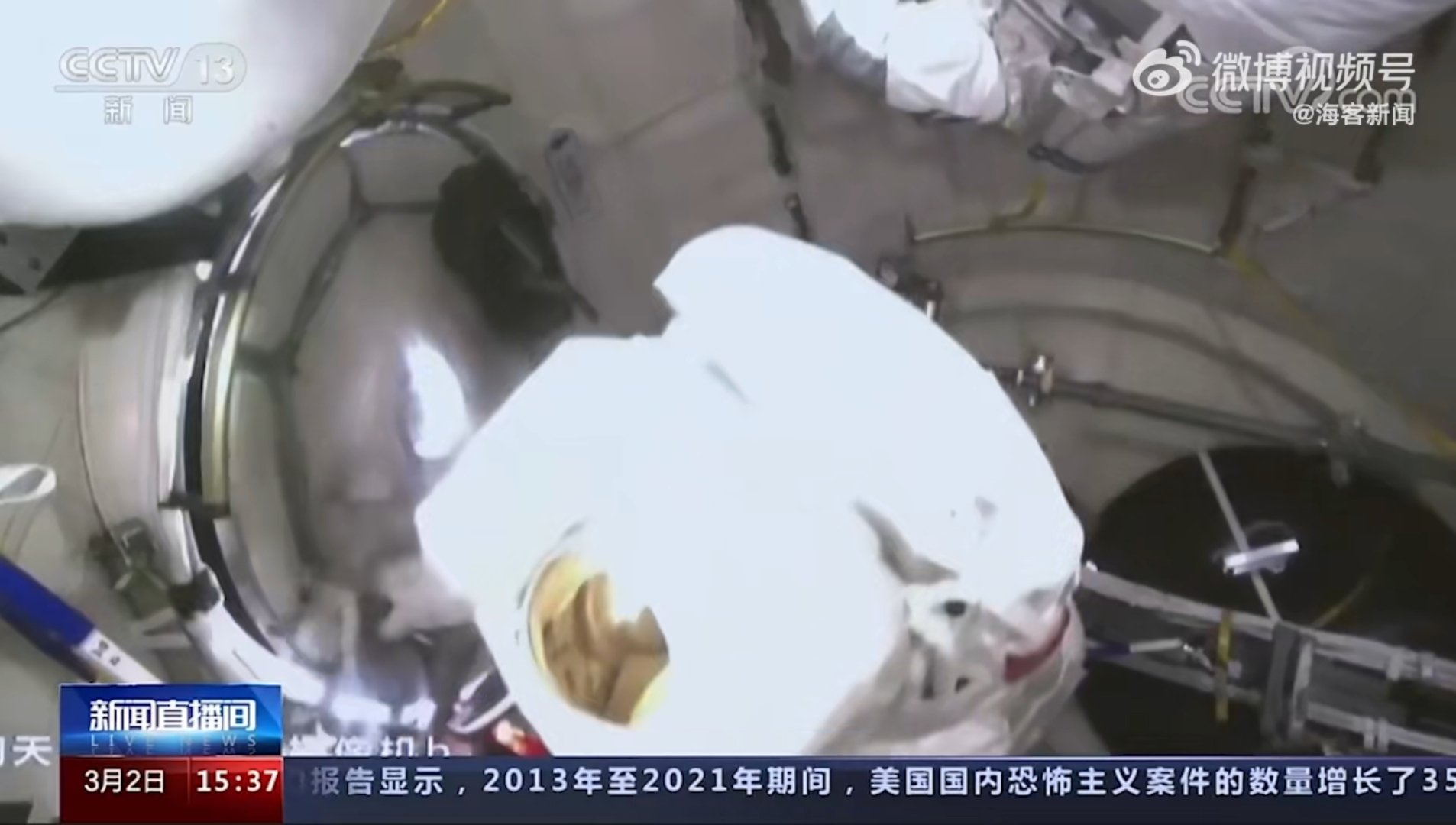
https://twitter.com/CNSpaceflight/status/1631207534924288000https://twitter.com/ShuttleAlmanac/status/1631810624023040001Shenzhou-15 taikonauts complete their second spacewalkSource: XinhuaEditor: huaxia2023-03-02 18:05:15
BEIJING, March 2 (Xinhua) -- The Shenzhou-15 taikonauts on board the orbiting Chinese Tiangong space station recently completed their second spacewalk, according to the China Manned Space Agency.
Fei Junlong and Zhang Lu, together with Deng Qingming who worked inside the space station to support his crewmates, collaborated to accomplish all set tasks. Fei and Zhang safely returned to the Wentian lab module.
The three-man crew have been living in orbit for three months since they entered the space station combination on Nov. 30, 2022.
They have completed various tasks, including two extravehicular activities, continuous maintenance of the manned environment, the assembling and testing of the scientific experiment cabinets of the Wentian and Mengtian lab modules, and sending cargo outboard. ■
https://english.news.cn/list/china-science.htm4)
https://twitter.com/ImAstroNana/status/16284151510315868175)
https://twitter.com/SegerYu/status/16332458998865920006)
Algunos de los emblemas candidatos para la próxima misión tripulada Shenzhou 16:


https://twitter.com/Eurekablog/status/16335875273061703727)
CMSA: Shenzhou-15 will return in June
https://twitter.com/CNSpaceflight/status/16351264371613368338 )
https://twitter.com/ShuttleAlmanac/status/16355461730660556859)
Vote for the best designs of Tianzhou-6, Shenzhou-16 and Shenzhou-17 mission patches


Three emblem designs of the three missions to China Space Station this year that received the most votes.

https://twitter.com/CNSpaceflight/status/163591909845356134610)
Chiny Aerospace 3-19 17:09
[Chińska Stacja Kosmiczna przeprowadzi eksperymenty z kulturą in vitro na wczesnych embrionach ssaków] System hodowli in vitro wczesnych embrionów ssaków jest częścią platformy eksperymentów związanych z hodowlą życia. System jest kompatybilny z różnymi próbkami pochodzącymi od ssaków (gryzonie, naczelne) i może równolegle kontrolować co najmniej trzy warunki doświadczalne oraz jest w stanie jednocześnie przeprowadzać eksperymenty z obciążeniem dla wielu grup próbek doświadczalnych, takich jak grupa kontrolna, grupa doświadczalna i eksperymentalna grupa leków.
Kosmiczny inkubator zarodków waży 140-180 kg i zostanie wysłany na stację kosmiczną statkiem kosmicznym Tianzhou w celu przeprowadzenia eksperymentów z kulturą in vitro wczesnych embrionów ssaków.
Od: Ogłoszenie o przetargu publicznym na projekt zamówienia systemu hodowli in vitro wczesnych zarodków ssaków, Centrum Inżynierii i Technologii Zastosowań Kosmicznych Chińskiej Akademii Naukl
https://m.weibo.cn/status/488115770517261211) 2023 mar 24 15:30 Kosmonauta.net
Embriony ssaków na chińskiej stacji kosmicznej
Chiny zaczynają badania embrionów ssaków w warunkach mikrograwitacji. Czy to droga do zrozumienia procesów rozwoju embrionów w przestrzeni kosmicznej?
https://twitter.com/CNSAWatcher/status/163769245255858585612)
Logos for three major space missions in 2023 revealedChina Daily | Updated: 2023-03-24 09:54 Xinhua

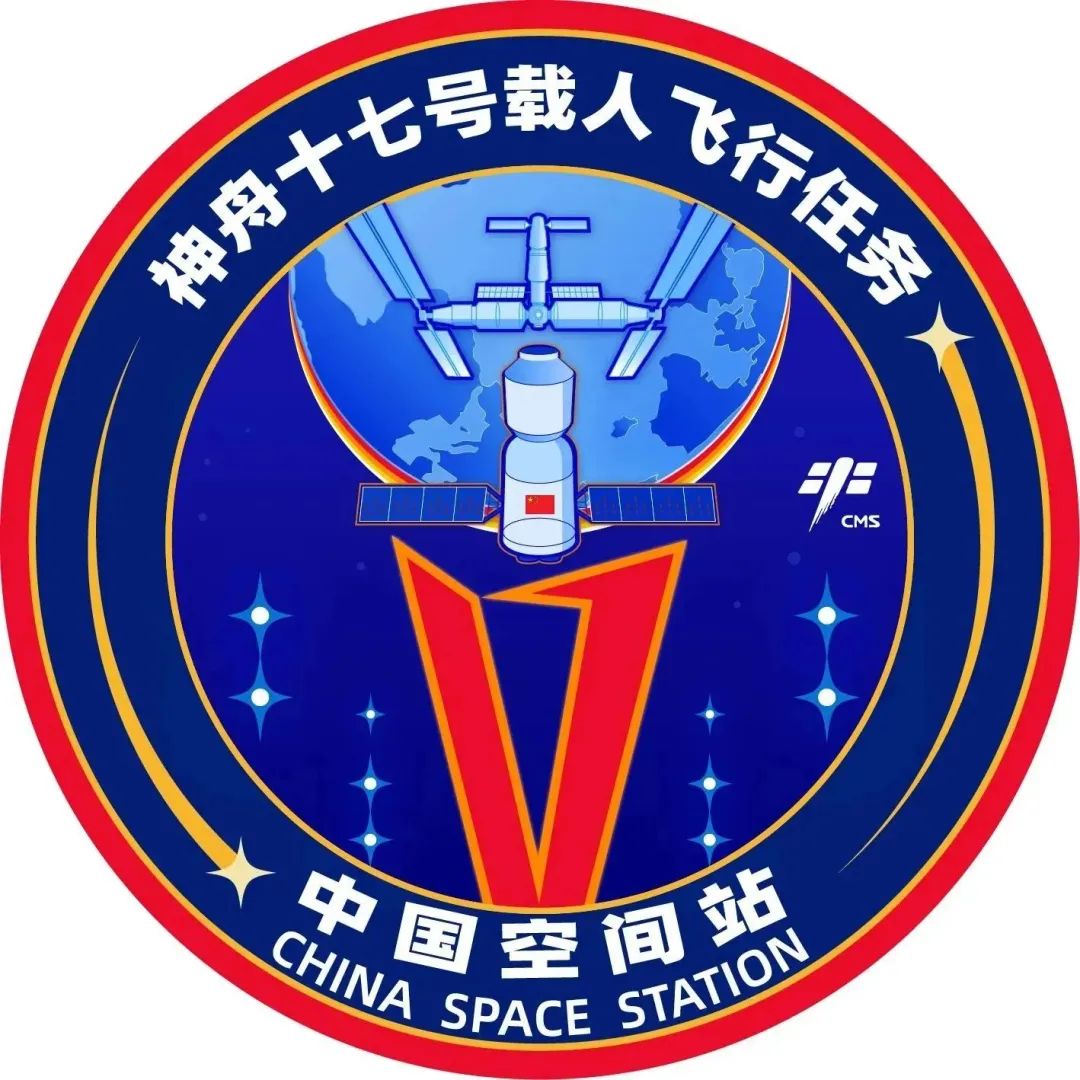
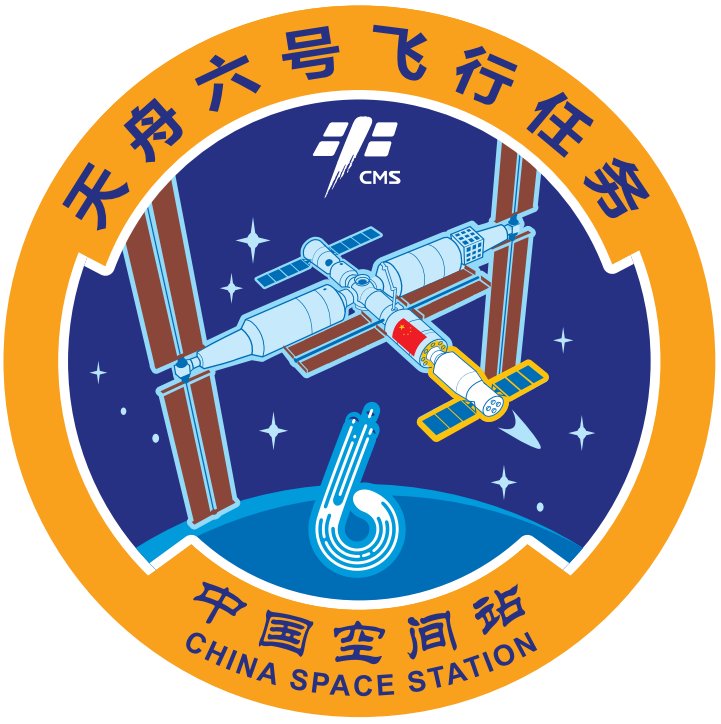
The China Manned Space Agency has revealed logos for three missions of China's manned space program this year — the launches of the cargo craft Tianzhou 6, and the crewed spaceships Shenzhou XVI and Shenzhou XVII.
According to the CMSA, since the call out for logo designs on Feb 15, it has received more than 1,500 submissions from over 500 organizations and individuals across China.

After preliminary selection, online voting and final validation, three logos, which were designed by Xiaoao Tiangong Culture and Art (Beijing) Center, the Beijing Institute of Space Science and Technology Information, and a postgraduate student at Sichuan Fine Arts Institute, were officially released.
The selected logos were well designed and filled with the best wishes for China's space station. The logo of the Shenzhou XVI mission even incorporates the kun, a sacred animal from Chinese mythology, which flies extremely high, far and steadily.
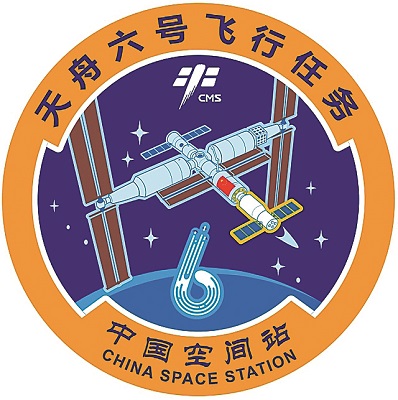
It was the first open logo solicitation of China's manned space program, said the CMSA.
The Tianzhou 6 cargo craft is expected to launch in May. The Shenzhou XVI and Shenzhou XVII spaceships will launch in May and October, respectively, and will dock with the space station to form a combination of three modules and three spaceships, according to an earlier announcement made by the CMSA.
http://www.chinadaily.com.cn/a/202303/24/WS641d02cfa31057c47ebb651f.htmlChina's human spaceflight agency has published the mission patches for Shenzhou-16, Shenzhou-17 and Tianzhou-6 following a public contest to design them. This is the 1st time CMSA has taken this approach; says it received 1,500 submissions. Source: https://mp.weixin.qq.com/s/0zt3uJLEn-5a8Y5ntl8Uug

https://twitter.com/AJ_FI/status/163813693041923686513)
To jest ramię robota na chińskiej stacji kosmicznej. Służy głównie do przenoszenia zapasów, sprzętu, a nawet astronautów.

https://twitter.com/wulei2020/status/1642717520766570498 Wątek: Chińska Stacja Kosmiczna (CSS) - budowa i rozruch 2021-2024 (Przeczytany 139246 razy)