Jeszcze jeden lot Pegasusa 13.06. około 07:10 z Vandenberg AFB wystartował samolot L-1011 "Stargazer". Podwieszona pod nim rakieta Pegasus-XL została zrzucona o 08:11:05, kilka sekund po zrzucie nastąpił zapłon silnika jej pierwszego stopnia. Wyniosła ona na orbitę o parametrach: hp=405 km, ha=452 km, i=97,48° satelitę wojskowego TacRL-2 (Tactically Responsive Launch, Odyssey).
http://lk.astronautilus.pl/n210601.htm#06Pegasus XL launched TacRL-22517 wyświetleń•14 cze 2021
Northrop Grumman’s Pegasus rocket launches U.S. Space Force missionby Sandra Erwin — June 13, 2021
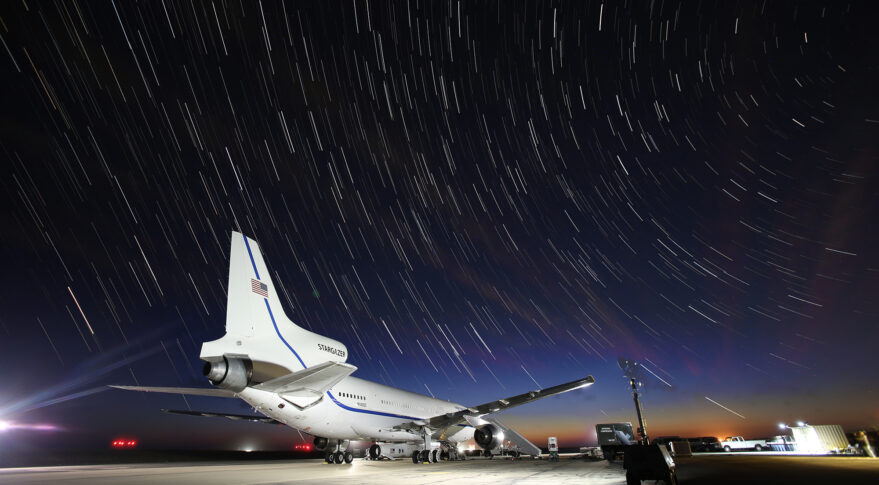 The U. S. Space Force on June 13, 2021, launched the Tactically Responsive Launch-2 (TacRL-2) mission on a Northrop Grumman Pegasus XL rocket from Vandenberg Space Force Base, California. Credit: U.S. Space Force
(...) TacRL-2 is a technology demonstration satellite to be used for space surveillance. The Space and Missile Systems Center’s Space Safari office integrated the satellite built and operated by the Air Force Research Laboratory and Utah State University Space Dynamics Laboratory.
TacRL-2 is named after the Space Force’s tactically responsive launch program, an effort to figure out ways to shrink the timelines for planning space missions. This was the first mission supported by SMC’s new Space Safari program office. (...)
https://spacenews.com/northrop-grummans-pegasus-rocket-launches-u-s-space-force-mission/Pegasus rocket successful in responsive launch demonstrationJune 13, 2021 Stephen Clark
 Northrop Grumman’s L-1011 carrier aircraft with the Pegasus XL rocket under its belly at Vandenberg Space Force Base. Credit: U.S. Space Force/Northrop Grumman
(...) The flight crew commanded release of the 55-foot-long (17-meter) at 4:11 a.m. EDT (1:11 a.m. PDT; 0811 GMT) as the L-1011 flew at an altitude of 39,000 feet (11,900 meters).
After a five-second free fall, the Pegasus ignited its solid-fueled first stage Orion 50S XL motor to begin the climb into space.
The first stage, fitted with a wing and steering fins, generated more than 160,000 pounds of thrust and fired more than a minute before burning out. The Pegasus then jettisoned its first stage and fired its Orion 50 XL and Orion 38 second and third stage motors to reach orbit with the Odyssey satellite. (...)
Building and launching a spacecraft in less than a year could pave the way for the Space Force to quickly deploy a satellite to respond to an emerging threat, or to replace a critical satellite in wartime.
“This is a first experiment, and I’m proud of the team,” Raymond said.
Once the satellite was built, the Space Force kept in storage until May, when officials called it up for launch.
“We kind of had it on the shelf. We just gave them a 21 day call-up, saying get ready to launch in 21 days,” Raymond said Thursday.
“The space domain is defined by speed,” Raymond said in a statement after Sunday’s launch. “And with this effort, we demonstrated the kind of speed it will take to win. We executed a ‘21-day call-up’ to get a satellite on orbit — pulling the payload, mating it with the rocket and integrating the combined package onto the aircraft. (...)
 A Northrop Grumman Pegasus XL rocket inside its hangar at Vandenberg Space Force Base, California. Credit: NASA/Randy Beaudoin
(...) Developed commercially by Orbital Sciences, now part of Northrop Grumman, the Pegasus rocket flew its 45th satellite delivery mission. Since the rocket’s debut in 1990, Pegasus missions have been staged from Vandenberg, Edwards Air Force Base, Cape Canaveral, Wallops Island in Virginia, Kwajalein Atoll in the Pacific Ocean, and the Canary Islands.
The most recent Pegasus launch staged from Vandenberg was in 2013. (...)
https://spaceflightnow.com/2021/06/13/pegasus-rocket-successful-in-responsive-launch-demonstration/https://www.nasaspaceflight.com/2021/06/pegasus-responsive-launch-demo/https://space.skyrocket.de/doc_sdat/odyssey_tacrl-2.htm
 Wątek: Starty rakiet (II kwartał 2021 roku) (Przeczytany 57583 razy)