George David Low (19.02.1956-15.03.2008)George David Low został wyselekcjonowany w ramach
NASA grupa 10 (1984).
Zmarł w 2008, zaledwie 5 lat, po odbyciu swego ostatniego lotu kosmicznego.
Wczoraj przypadła 67. rocznica jego urodzin.
225. człowiek w kosmosie.
Odbył 3 loty kosmiczne na pokładzie 3. promów kosmicznych, które trwały łącznie 29d 18h 06m 56s:
09.01.1990-20.01.1990
STS-32 Columbia/F-9 010:21:00:36
02.08.1991-11.08.1991
STS-43 Atlantis/F-9 008:21:21:25
21.06.1993-01.07.1993
STS-57 Endeavour/F-4 009:23:44:55
Wykonał 1 spacer kosmiczny, który trwał 05h 50m.
Podczas misji
STS-32 Columbia w 1990 roku miało miejsce przechwycenie i sprowadzenie na Ziemię LDEF (Long Duration Exposure Facility).
AA
https://www.forum.kosmonauta.net/index.php?topic=3897.msg140107#msg140107Pierwszy
Cygnus, który został wyniesiony do ISS został nazwany na jego cześć.
Jego ojciec
George Low pełnił obowiązki administratora NASA przez 222 dni.
https://www.smithsonianmag.com/air-space-magazine/apollo-8-george-low-profile-180970807/https://www.britannica.com/biography/George-Lowhttps://www.nasa.gov/wp-content/uploads/2023/06/low-g-david-0.pdfhttp://www.spacefacts.de/bios/astronauts/english/low_david.htmhttp://www.astronautix.com/l/low.htmlhttps://www.worldspaceflight.com/bios/l/low-g.phphttps://mek.kosmo.cz/bio/usa/00224.htmhttps://www.kozmo-data.sk/kozmonauti/low-david-george.htmlhttps://www.astronaut.ru/index/in_pers/13_180.htmhttps://www.april12.eu/usaastron/low225ru.htmlhttps://en.wikipedia.org/wiki/G._David_Lowhttps://pl.wikipedia.org/wiki/George_Low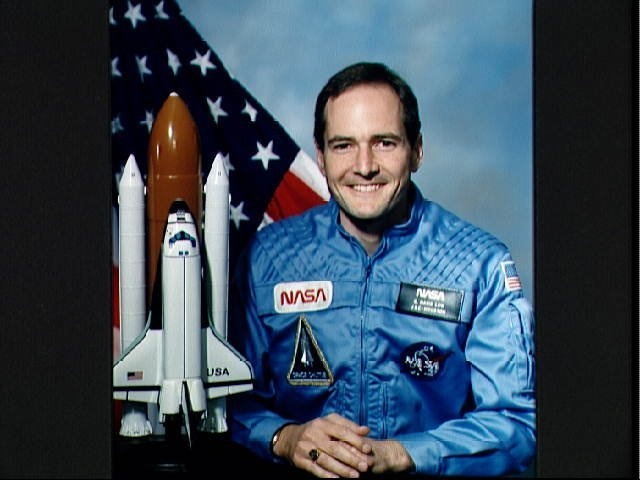 https://www.dvidshub.net/image/702425/official-portrait-astronaut-g-david-lowhttps://twitter.com/ASE_Astronauts/status/1627473205031043072Astronaut Shannon Lucid Speaks About G. David Low and CygnusShuttle astronaut G. David Low, 52, dies
March 17, 2008 — A former NASA astronaut who first joined the space agency to work on interplanetary probes and who later led a commercial effort to launch supplies to the International Space Station, G. David Low died on Saturday at age 52 as a result of a chronic illness.
Selected to be an astronaut in May 1984, Low first went to work for NASA four years earlier at the Jet Propulsion Laboratory in Pasadena, Calif. There, he contributed to the systems design for the 1989-2003 Galileo mission to Jupiter, prior to his role as principal spacecraft systems engineer for the Mars Geoscience/Climatology Observer. (...)
http://www.collectspace.com/news/news-031708a.htmlIn Honor of David: The Astronaut Who Inspired Orbital’s First Cygnus Mission (Part 1)by Ben Evans 9 years ago
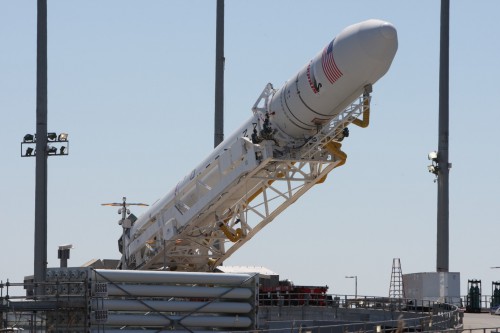 Orbital Sciences will honor the memory and achievements of G. David Low with its second Antares launch and the culmation of the Commercial Orbital Transportation Services (COTS) contract with NASA. Photo Credit: Mark Usciak / AmericaSpacehttps://www.americaspace.com/2013/09/14/in-honor-of-david-the-astronaut-who-inspired-orbitals-spaceship-david-low-part-1/In Honor of David: The Astronaut Who Inspired Orbital’s First Cygnus Mission (Part 2)
by Ben Evans 9 years ago
 The Cygnus 1 spacecraft is seen here being integrated onto the Antares launch vehicle. Cygnus 1 has been renamed in honor of the late David G. Low. Photo Credit: NASA / Orbital
(...) As part of AmericaSpace’s coverage of this important mission for Orbital, this weekend’s history articles will focus on the larger-than-life character, legacy, and space missions of Low, who died in 2008.
Aged just 33 in January 1990, George David Low formed part of the STS-32 crew which deployed an important communications satellite for the U.S. Navy, retrieved NASA’s Long Duration Exposure Facility (LDEF) from orbit, and also set a new shuttle endurance record of almost 11 days in space. Four months later, in May, he was assigned as a Mission Specialist to the STS-43, which would itself expand considerably in duration. Joining Low on the scheduled five-day flight were Commander John Blaha, Pilot Mike Baker, and Mission Specialists Shannon Lucid and Jim Adamson, tasked with the deployment of NASA’s fifth Tracking and Data Relay Satellite (TDRS-E). (...)
https://www.americaspace.com/2013/09/15/in-honor-of-david-the-astronaut-who-inspired-orbitals-first-cygnus-mission-part-2/G. David Low, 52, Astronaut and Aerospace Executive, DiesBy The Associated Press March 30, 2008
RESTON, Va. (AP) G. David Low, an astronaut who flew three space shuttle missions and later became an executive in the space industry, died March 15 near his home in northern Virginia. He was 52.
The cause was complications of colon cancer, said Barron Beneski, a spokesman for the Orbital Sciences Corporation of Dulles, Va., for which Mr. Low was a senior vice president.
An astronaut for 12 years, he circled the Earth more than 540 times.
In January 1990, Mr. Low was a mission specialist in his first space flight, an 11-day mission aboard the space shuttle Columbia in which the crew retrieved a failing science satellite. He carried with him a pair of 159-year-old socks, which had belonged to Ezra Cornell, founder of Cornell University, where Mr. Low received a mechanical engineering degree.
Mr. Low, who was born in Cleveland, also received a bachelor’s degree from Washington & Lee University, and a master’s degree in aeronautics and astronautics from Stanford. NASA selected Mr. Low to be an astronaut in 1984. At the age of 28, he was the youngest in his class. He initially worked on the shuttle’s robot arm system and on plans for future spacewalks. He served as the spacecraft communicator, or “capcom,” at Mission Control for three shuttle missions, including the first flight after the explosion of the space shuttle Challenger in 1986. G. David Low monitoring his heart in 1990 on board the space shuttle Columbia. Credit...NASA-TV, via Associated PressMr. Low’s father, George M. Low, was a former NASA director who first suggested to President John F. Kennedy in 1960 that the United States could send an astronaut to walk on the moon within 10 years.
The younger Mr. Low also was aboard shuttle missions in 1991 and in 1993 when he and a fellow astronaut, Peter J. K. Wisoff, worked outside the shuttle on a spacewalk for nearly six hours.
Mr. Low continued working for NASA after his last flight. In 1993, he was part of the Russian Integration Team that helped coordinate the transition from the old Space Station Freedom to the International Space Station. He also worked in NASA’s legislative affairs office.
Mr. Low joined Orbital Sciences in 1996 to help oversee safety measures and later managed the company’s commercial space transportation program.
Survivors include his wife, JoAnn Andochick Low; three children, Maggie, Christopher and Abigail Low, all of Sterling, Va.; his mother, Mary R. Low of Bethesda, Md.; his brothers, Mark Low of Woodinville, Wash., and John Low of Rockville, Md.; and his sisters, Diane Low Murphy of Bethesda, and Nancy Low Sullivan of Rye, N.Y..https://www.nytimes.com/2008/03/30/science/space/30low.html
 Wątek: George David Low (1956-2008) (Przeczytany 1847 razy)