14/IV 2026 [66-70]66)
Review: Return to Launchby Jeff Foust Monday, April 6, 2026
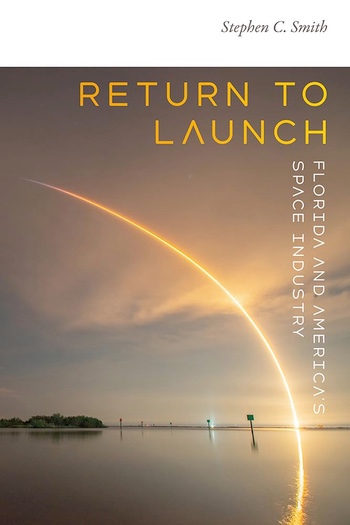 Return to Launch: Florida and America’s Space Industry
by Stephen C. Smith
University of Florida Press, 2026
hardcover, 348 pp., illus.
ISBN 978-1-68340-656-3
US$38
https://www.amazon.com/exec/obidos/ASIN/1683406567/spaceviewsDuring a press conference last Monday in the windowless briefing room at the Kennedy Space Center Press Site, the discussions about preparations for the Artemis 2 launch were interrupted by a rumble. The first thing that came to mind was thunder—it’s Florida, after all—but there were no storms in the vicinity. The rumbled continued far longer than one expected for any storm. A reporter calling into the briefing, unaware of the commotion, continued to ask his question while those in the room smiled, aware of what was going on.
https://www.thespacereview.com/article/5192/167)
Ownership without oversight: Australia’s on-orbit supervision gapby Jeremy Kruckel Monday, April 6, 2026
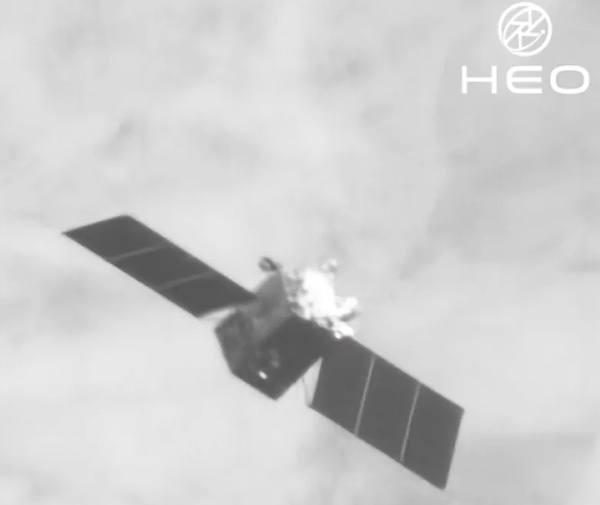 An image of a Chinese satellite taken by Continuum-1, a satellite now owned and operated by Australian company HEO. (credit: HEO)
When HEO acquired full title and operational control of an in orbit satellite from Satellogic in late 2025, Australia gained its first dedicated asset under Australian ownership. The satellite, renamed Continuum-1, was launched years earlier by the United States on a SpaceX Falcon 9 from Cape Canaveral. Australia played no role in its launch and is not a launching state under the Liability Convention.
https://www.thespacereview.com/article/5193/168)
Thirty years later, Mars 96 has not been foundby Dante Sanaei Monday, April 6, 2026
Unprecedented scientific collaboration, catastrophic failure, and an uncertain final resting place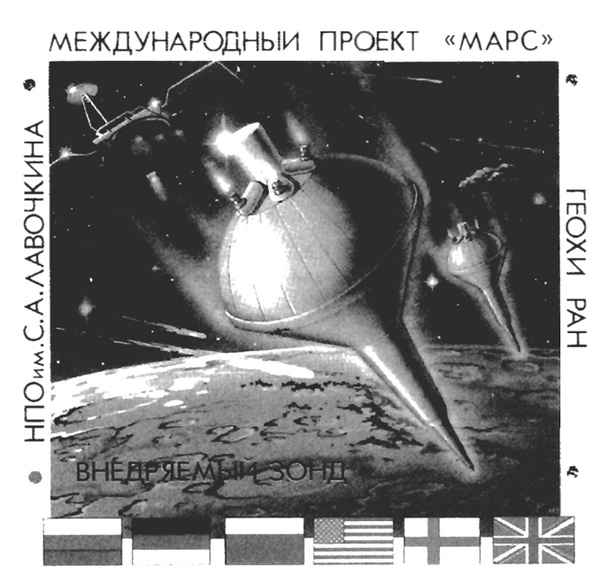 Concept illustration of Mars-96 penetrators descending toward the Martian surface. (credit: NPO Lavochkin / Russian Academy of Sciences, via NASA SP-4515)
On the night of November 16, 1996, a strange light moved slowly across the skies of Chile. Observers in remote mountain regions described a brilliant object traveling horizontally along the horizon, far brighter than any star and leaving behind a luminous trail that lingered in the thin air. Unlike a meteor’s sudden flash, this phenomenon endured. For nearly a minute it crossed the darkness, shedding faint fragments that glowed briefly before fading from view. In the Andes, a landscape defined by silence and vast distances, the event felt both unmistakably real and deeply uncertain—something that did not belong in the usually peaceful night sky.
https://www.thespacereview.com/article/5194/169)
Pinning the tail on the Moskva: POPPY and the dawn of satellite ocean surveillanceby Dwayne A. Day Monday, April 6, 2026
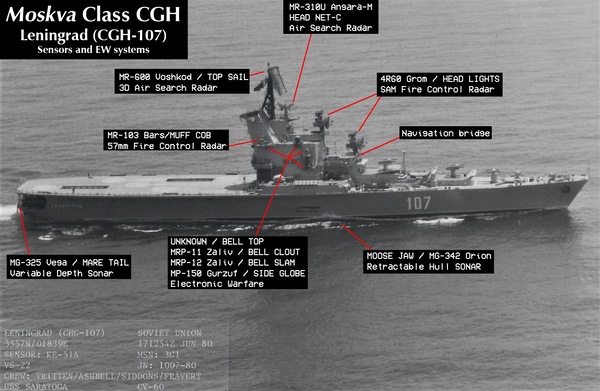 The Moskva's Top Sail radar was new and unique to that ship when it conducted sea trials in the Black Sea in 1967, making it possible for American signals analysts to connect the radar emissions to a specific vessel. This demonstrated that it was possible to track ships at sea from space. (credit: US Navy, modified by Benjamin Claremont)
In 1963, American reconnaissance satellites overflew a shipyard in Mykolayev, Ukraine, on the Black Sea, and photographed evidence of a new large vessel under construction. But it was not until 1965 that satellite photographs revealed it to be “an unusual ship,” in the words of a CIA report. Later that year, it became clear that it “was a helicopter platform, with either an ASW or amphibious assault mission.” It was launched in 1967 and began sea trial inside Soviet waters. This was a time when the Soviet Union was beginning to send its fleet further out to sea, challenging the US Navy, and any new large warship was of great interest to the Navy admirals.
https://www.thespacereview.com/article/5195/170)
Artemis eclipsesby Jeff Foust Monday, April 6, 2026
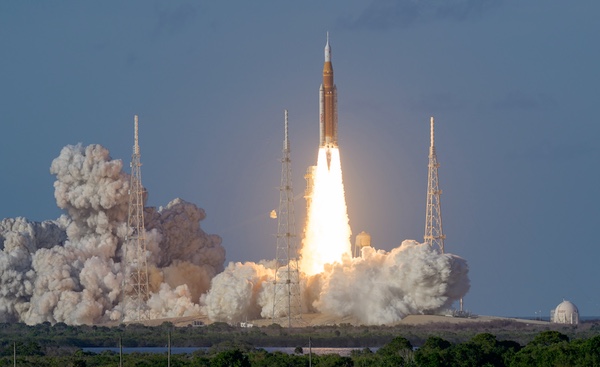 Artemis 2 lifts off from the Kennedy Space Center April 1. (credit: NASA/Bill Ingalls)
At the final pre-launch briefing for the Artemis 2 mission March 31, a reporter asked NASA senior test director Jeff Spaulding if he was aware of any planned pranks for launch day. The launch, after all, was scheduled for April 1—April Fool’s Day—and astronauts have a long track record of practical jokes.
15/IV 2026 [71-75]71)
A tale of two Martian citiesby Thomas Gangale Monday, April 13, 2026
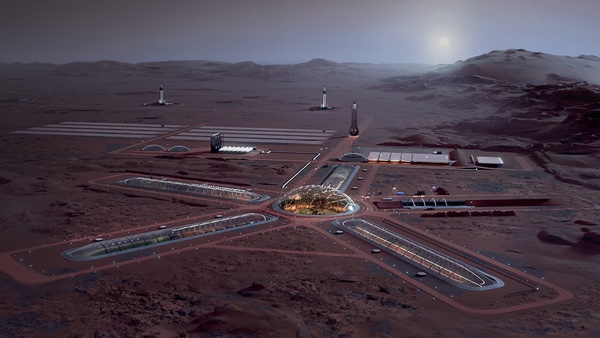 How should future Martian settlements be governed? (credit: SpaceX)
“Quid est enim civitas nisi concors hominum multitudo?” — Marcus Tullius Cicero, De Republica 1.39
“For now we see through a glass, darkly.” No Hari Seldon, as in Isaac Asimov’s Foundation, stands ready with psychohistory to predict humanity’s future on the Red Planet. Yet the choices we make today about governance, rights, and human nature will shape the first permanent settlements on Mars in the 2040s and 2050s—and, by extension, the long-term trajectory of our species beyond Earth. The early decades of the colonial period on Mars will not arrive with a finished constitutional order already in place. Instead, two distinct settlements are likely to emerge, each still in the process of formation.
https://www.thespacereview.com/article/5197/172)
Who watches the birds? Cold War era launch vehicle photographsby Dwayne A. Day Monday, April 13, 2026
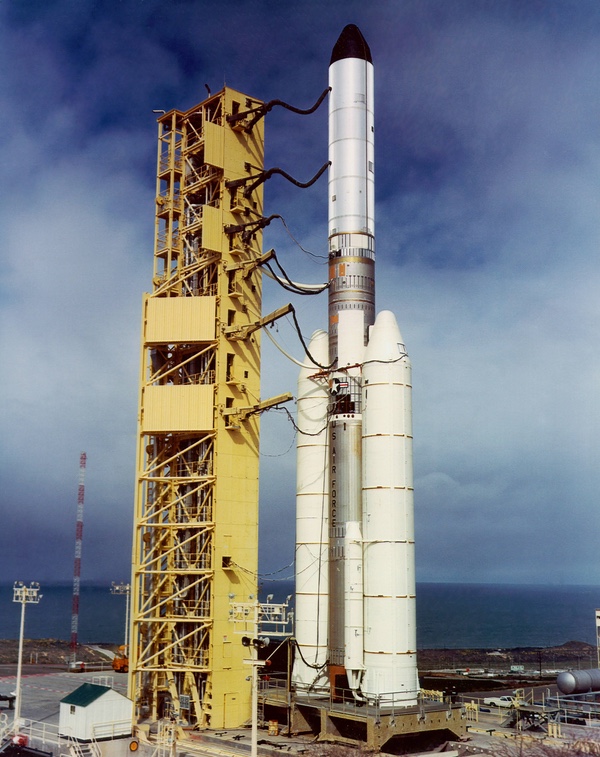 The first HEXAGON reconnaissance satellite sits on its pad at Vandenberg Air Force Base in 1971. Twenty of these schoolbus-size satellites were launched, with one failure. They photographed huge amounts of territory during each mission, enabling photo-interpreters to detect and assess adversary weapons capabilities. (credit: Peter Hunter Collection)
During the Cold War, the US Air Force launched hundreds of rockets from both the East and West Coasts. Usually, the military made some kind of announcement that a launch had occurred, or was about to occur, without releasing any further details, and for many years, rarely releasing any photographs. The result was that many military space launches—probably a significant majority of them—had no public photographic evidence that they happened. But starting in the late 1990s, an Australian space enthusiast by the name of Peter Hunter began collecting photographs of United States Thor, Delta, Atlas, and eventually Titan launches. Hunter was a 747 pilot for Qantas, and during his long layovers in Los Angeles he visited an archive of launch vehicle photos near San Diego. He was able to gain access to it through his professionalism, charm, and Australian accent. Over many years of hard work, he produced a collection of high-resolution scans of as many launches and launch vehicles as possible, later providing copies to multiple museums and historians.
https://www.thespacereview.com/article/5198/173)
Strategic celestography and lunar competition: Artemis, CLEP, and the struggle for positional advantageby Glenn Scofield Monday, April 13, 2026
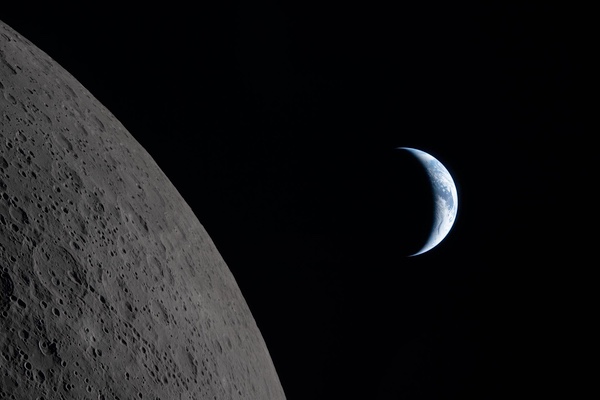 The Moon and Earth seen during the Artemis 2 mission. (credit: NASA)
Human exploration of the Moon is often presented as a scientific endeavor, but the scale and scope of contemporary lunar exploration programs suggest that great power competition is expanding into the broader Earth–Moon system. As the United States and China expand their presence beyond geocentric orbit, lunar resource distribution and cislunar orbital dynamics are shaping a new phase of strategic competition. This rivalry increasingly revolves around two evolving lunar architectures: the US-led Artemis campaign and the Chinese Lunar Exploration Program (CLEP) with its Chang’e series of missions. Both programs seek to expand access, presence, and operational reach throughout the Earth–Moon system, and both will grow more capable as commercial launch systems and autonomous spacecraft operations continue to mature.
https://www.thespacereview.com/article/5199/174)
Opening the path to the lunar surfaceby Jeff Foust Monday, April 13, 2026
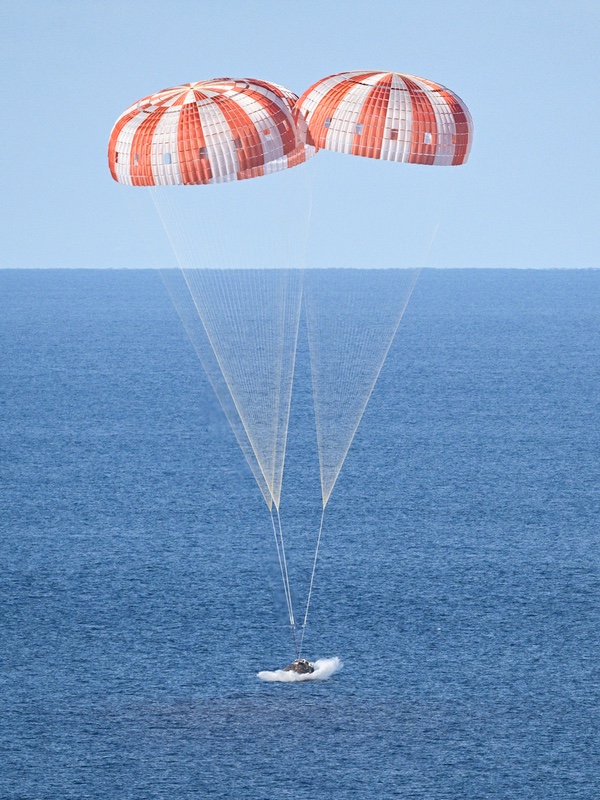 The Orion spacecraft Ingenuity splashes down to conclude the Artemis 2 mission April 10. (credit: NASA/Josh Valcarcel)
The timeline for the Artemis 2 mission included a six-minute blackout during reentry as the Orion spacecraft, entering the atmosphere at nearly 40,000 kilometers per hour, created a plasma sheath the cut off radio communications. Engineers determined exactly when the blackout would begin and when it should end, allowing for communications to resume.
That didn’t mean, though, that controllers weren’t nervous. “Blackout, there’s really no beating around the bush with that,” Rick Henfling, entry flight director, said at a press conference Friday night. “It’s a difficult time because the flight control team wants to see data. We want to look at the data, we want to provide input to the flight crew on how to fly their spaceship. And when we don't have data, we’re trying to figure out what to do with ourselves.”
https://www.thespacereview.com/article/5200/175)
Artemis 2, Apollo 8, and the problem with historyby Dwayne A. Day Monday, April 13, 2026
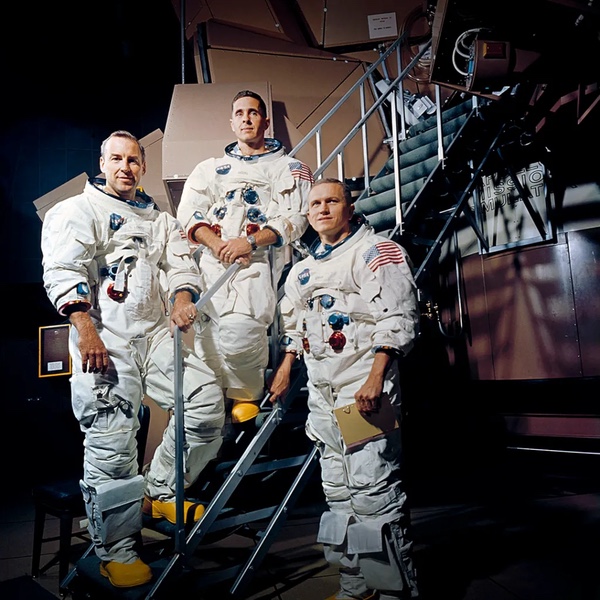 In December 1968, the crew of Apollo 8 flew a risky mission to orbit the Moon for the first time. Was the decision to fly this mission primarily because the LM was not ready and NASA did not want to lose time and momentum, or was it because the CIA concluded that the Soviet Union might attempt such a mission before NASA? (credit: NASA)
Last week, as the Artemis 2 crew looped around the Moon, taking spectacular photos and deftly handling media inquiries, numerous podcasts and news programs had on experts to explain why NASA was conducting this mission, and why it was pursuing the Artemis program to land people on the Moon. The answers were, of course, diverse. There were claims that NASA wants to find and use resources on the Moon like water ice and helium-3. There were statements that this was about competing with China. There were those who pointed out the pork-barrel politics aspects of the program. And, of course, there were the ones who claimed that this was about vision, about exploration, about boldly going where no one has gone before (at least since 1972, anyway.) None of these rationales was convincing, and all of them together are vaguely accurate but unsatisfying. What is lacking today is the clarity of the Cold War and the Apollo program. But even Apollo was a bit less clear than we think.
https://www.thespacereview.com/article/5201/1
 Wątek: The Space Review (Przeczytany 135674 razy)