47/XI 2026 [232-237]232)
Low and clean: very low Earth orbit is space’s self-cleaning frontier for defense, commerce, and scienceby Tim Franta Monday, November 16, 2026
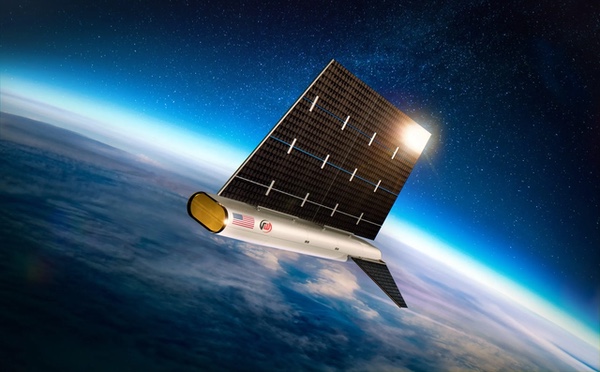 Redwire is among the companies pursuing very low Earth orbit satellites. (credit: Redwire)
Every debate about orbital sustainability seems to come to the same conclusion: we are overcrowding the heavens in dangerous ways and no government has (or seems to want) the authority to enforce any rules to prevent an inevitable catastrophe.
We have spent two decades considering ways to legislate, insure, and engineer our way around this problem with capture systems, graveyard orbits, and incentivized deorbit schemes. These all make sense because a dead satellite at 800 kilometers can circle the Earth for more than a century. A fragment from a collision at that altitude will become a hazard our grandchildren will inherit.
https://www.thespacereview.com/article/5358/1233)
Indian flattop photographed from spaceby Dwayne A. Day and Harry Stranger Monday, November 16, 2026
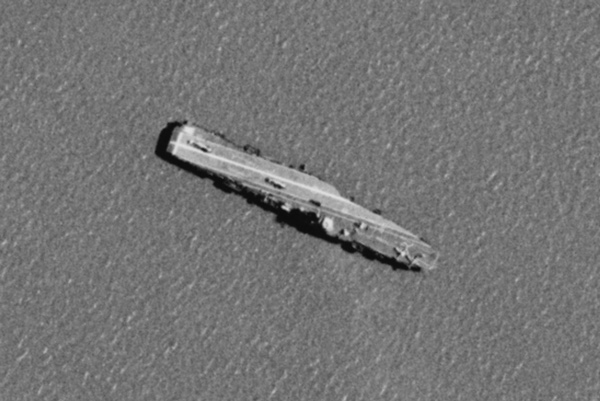 India’s first aircraft carrier, INS Vikrant, was photographed by an American HEXAGON reconnaissance satellite in 1977 as she headed out to sea. The ship played a role in the conflict with Pakistan, and in the 1980s was modernized to operate Harrier jump-jets. (credit: via Harry Stranger)
In the 1970s, numerous countries around the globe were reducing their naval fleets, retiring old and wornout ships built during the Second World War, many of them obtained from the United States and Great Britain. United States intelligence assets monitored these naval forces worldwide. And even though the United States’ primary interest was the Soviet Navy, they continued to keep tabs on other naval forces worldwide. One of the ships of interest to the US intelligence community was India’s first aircraft carrier, INS Vikrant, which had a long career as a workhorse in the Indian Ocean, and played an important role in India’s on-again-off-again conflict with Pakistan.
https://www.thespacereview.com/article/5359/1234)
Project Meridian could reshape lunar bases before cislunar weapons arriveby Zohaib Altaf Monday, November 16, 2026
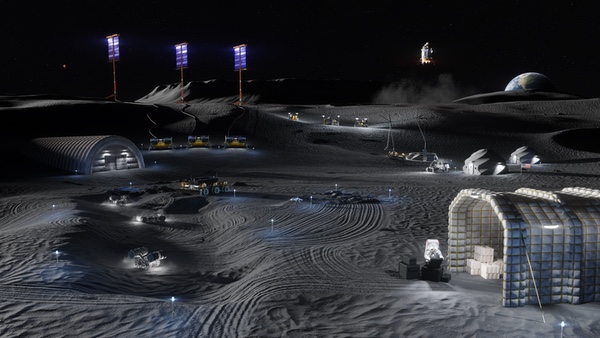 Including cislunar space in a theater of military operations could have implications for civil facilities like a proposed lunar base. (credit: NASA)
On September 30, US Secretary of War Pete Hegseth gave Project Meridian 120 days to examine future battlefields “from subterranean depths to the cislunar frontier.” MITRE will lead the study, with Elon Musk, Palmer Luckey, and Newt Gingrich as co-directors, and issue a public report with a classified annex. Formally, Meridian is a study: it has ordered no cislunar weapon, created no lunar unit, and announced no deployment date. But what makes the project significant is that the Earth-Moon region has entered an official search for future warfighting capability.
https://www.thespacereview.com/article/5360/1235)
You cannot jam your way to space superiorityby Christopher Stone Monday, November 16, 2026
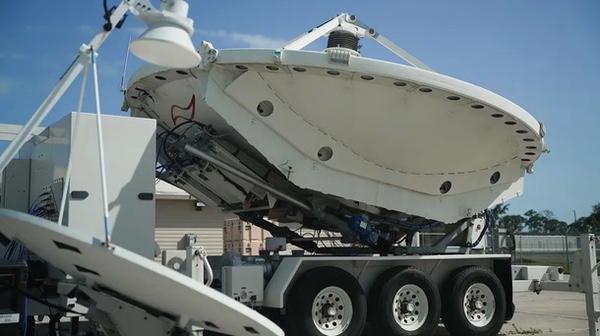 A Meadowlands jammer used by the Space Force to disrupt satellite communications. (credit: L3Harris)
The US Space Force is demonstrating the operational value of electromagnetic warfare. A recent Wall Street Journal report describes electromagnetic warfare systems employed in operations against both countries to protect American troops and degrade enemy satellite capabilities.[1] These are important operational contributions. But they raise a more fundamental question: Are we building a force capable of achieving space superiority against an armed adversary, or are we mistaking the ability to disrupt an enemy for the ability to defeat one?
https://www.thespacereview.com/article/5361/1236)
A modest proposal for orbital debris modelingby Michael Puckett Monday, November 16, 2026
 A Falcon 9 upper stage re-entering the atmosphere above Berlin, Germany, on February 19, 2025.[1] (credit: Gizmodo, Mr. Gerd Baumgarten)
Orbital-breakup models rely on laboratory tests and observations of accidental explosions and collisions. Laboratory tests allow fragments to be recovered and measured. Orbital events occur under representative conditions but are usually detected after the debris cloud has formed. Neither method provides close, multi-angle observations of a complete upper-stage breakup in orbit.
A secondary experiment using a spent Falcon 9 second stage and several inexpensive small satellites or cubesats could provide those observations. The stage would first deliver its working payload. It would then deploy the observer satellites into a very low orbit with a lifetime of no more than a few days. After the satellites assumed their assigned positions, the stage would undergo a controlled energetic breakup.
https://www.thespacereview.com/article/5362/148/XI 2026 [238-242]
 Wątek: The Space Review (Przeczytany 219447 razy)