Autor Wątek: The Space Review  (Przeczytany 162612 razy)

0 użytkowników i 5 Gości przegląda ten wątek.

Offline Orionid

  • Weteran
  • *****
  • Wiadomości: 29378
  • Very easy - Harrison Schmitt
Odp: The Space Review
« Odpowiedź #330 dnia: Listopada 11, 2021, 07:55 »
8/II 2019 [33-36]

33) Review: Ronald Reagan and the Space Frontier
by Jeff Foust Monday, February 25, 2019


Ronald Reagan and the Space Frontier
by John Logsdon
Palgrave Macmillan, 2019
hardcover, 419 pp., illus.
ISBN 978-3-319-98961-7
US$35
https://www.amazon.com/exec/obidos/ASIN/3319989618/spaceviews

Ronald Reagan’s legacy as the 40th President of the United States is well-chronicled. Since he left office three decades ago, various books have explored his presidency through the lens of foreign policy, domestic policy, the economy, and so on. Little, though, has been written about his contributions to space, beyond his administration’s advocacy for a space station, Reagan’s role as consoler-in-chief after the Challenger accident, and the Strategic Defense Initiative (SDI), aka Star Wars.
https://www.thespacereview.com/article/3663/1

34) A Space Service in support of American grand strategy
by Lamont Colucci Monday, February 25, 2019


President Donald Trump announced his intent to establish a Space Force at the National Space Council meeting at the White House in June, which was recently followed by his signing of Space Policy Directive 4 on the topic. (credit: NASA/Bill Ingalls)

Americans have dreamed of going to the stars for generations. The Apollo missions were thought to be the starting point for the United States to be a spacefaring people, but this dream drifted to the backstage as the political class allowed itself to be captured by the winds of pop-culture and perceived expediency.
https://www.thespacereview.com/article/3664/1

35) What should be Japan’s strategy for human space exploration?
by Takashi Uchino Monday, February 25, 2019


Taking part in the lunar Gateway could give Japan benefits from foreign policy to space commercialization, and even allow it to become the second nation to have its astronauts walk on the Moon. (credit: NASA)

In Space Policy Directive-1, NASA invited international partners to join its space exploration plans. Although this campaign is open for all countries with interests, construction of the lunar Gateway will be a role primarily for ISS partners.
https://www.thespacereview.com/article/3665/1

36) Commercial space policy issues for 2019
by Jeff Foust Monday, February 25, 2019


Virgin Galactic’s SpaceShipTwo flies to the edge of space on its latest suborbital test flight February 22. Development of voluntary industry safety standards for commercial spaceflight could be one topic the new Congress will look at. (credit: MarsScientific.com and Trumbull Studios)

This year promises a number of major achievements in commercial spaceflight. That includes commercial crew test flights, like SpaceX’s Demo-1 uncrewed test flight now scheduled for no earlier than the very early morning hours Saturday from the Kennedy Space Center. In the suborbital spaceflight arena, both Blue Origin and Virgin Galactic expect to start flying people this year, with Virgin Galactic performing its latest SpaceShipTwo test flight, with three people on board, last Friday.
https://www.thespacereview.com/article/3666/1
« Ostatnia zmiana: Listopada 23, 2024, 11:15 wysłana przez Orionid »

Offline Orionid

  • Weteran
  • *****
  • Wiadomości: 29378
  • Very easy - Harrison Schmitt
Odp: The Space Review
« Odpowiedź #331 dnia: Listopada 16, 2021, 10:41 »
9/III 2019 [37-40]

37) Review: Review: Apollo 11
by Jeff Foust Monday, March 4, 2019


Apollo 11
Directed by Todd Douglas Miller
93 minutes
https://www.imdb.com/title/tt8760684/mediaindex/?ref_=tt_mv_close

The Apollo 11 mission was arguably the best documented voyage of exploration in human history. The three astronauts had film cameras for still and moving images, and live video was able to capture Neil Armstrong’s famous small step in real time for all the world to see. On Earth, a phalanx of media reported on the preparations for the mission and the launch itself, and followed along from Mission Control as the astronauts traveled to and then returned from the Moon. That mission has become a familiar tale because of all that, told over and over again in different ways
https://www.thespacereview.com/article/3667/1

38) The Moonrush has begun
by Gerald Black Monday, March 4, 2019


Beresheet, the privately funded lunar lander developed by SpaceIL, marks the beginning of a new “Moonrush” of commercial space ventures. (credit: SpaceIL)

The California gold rush was kicked off in 1848 by the discovery of gold in California. Fortune hunters came in droves. Only a small percentage of the miners became wealthy from this and the other gold rushes of the 19th century. But many others became wealthy by providing the settlers with transportation infrastructure, housing, supplies, and bordellos.
https://www.thespacereview.com/article/3668/1

39) Denial, disruption, and development in the space launch business
by John Hollaway Monday, March 4, 2019


Despite advances in performance and reusability, rockets like SpaceX’s Falcon Heavy share most of the same fundamental attributes, and limitations, of rockets developed decades ago. (credit: SpaceX)

The two most useful aphorisms for neophytes in the space business are the same as for any corporate environment:

- Never surprise a vice president
- Hell hath no fury like a head office scorned

For the first point, corporate vice presidents do not want their lives, so near the top of the slippery pole, suddenly disrupted by someone from somewhere lower down with unexpected bad news (or even good news when it changes matters dramatically.) And for the second point, his or her myrmidons, when also facing disruption to the even tenor of their corporate existence from an independently-minded outpost, are likely to respond with disproportionate vigor to the threat.
https://www.thespacereview.com/article/3669/1

40) Commercial crew’s time approaches
by Jeff Foust Monday, March 4, 2019


The first SpaceX Crew Dragon spacecraft holds its position near an International Space Station docking port shortly before docking with the station March 3. (credit: NASA)

Two forty-nine a.m. is in a demilitarized zone of the clock. It’s very late at night, even for night owls, but also very early in the morning, even for early birds. Orbital mechanics, though, doesn’t care about your sleep cycles.

So, at that hour very early Saturday (or very late Friday night), NASA and SpaceX officials, members of the media, and other spectators gathered at the Kennedy Space Center to watch a Falcon 9 lift off from Launch Complex 39A. What brought them out to the center at that late/early hour was not a typical Falcon 9 launch but instead the start of a critical test flight for the commercial crew program, flying the company’s Crew Dragon spacecraft—without a crew on board—for the first time.
https://www.thespacereview.com/article/3670/1
« Ostatnia zmiana: Listopada 24, 2024, 13:40 wysłana przez Orionid »

Offline Orionid

  • Weteran
  • *****
  • Wiadomości: 29378
  • Very easy - Harrison Schmitt
Odp: The Space Review
« Odpowiedź #332 dnia: Listopada 16, 2021, 10:41 »
10/III 2019 [41-44]

41) Review: The Cosma Hypothesis
by Jeff Foust Monday, March 11, 2019


The Cosma Hypothesis: Implications of the Overview Effect
by Frank White
Morgan Brook Media, 2019
paperback, 296 pp.
ISBN 978-1-7328861-3-1
US$19.95
https://www.amazon.com/exec/obidos/ASIN/173288613X/spaceviews

More than three decades ago, Frank White published The Overview Effect, a book that examined the change in worldview that some astronauts experienced upon seeing the Earth the space, one that considers the Earth as a whole, a fragile oasis in the universe. Since then, the Overview Effect has become widely accepted as a relatively common phenomenon experienced by many space travelers, and something of a selling point for future commercial human spaceflight.
https://www.thespacereview.com/article/3671/1

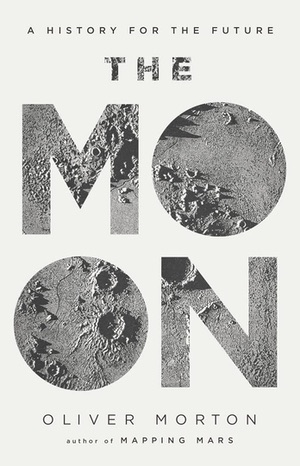
42) The beginning of the end of commercial crew development
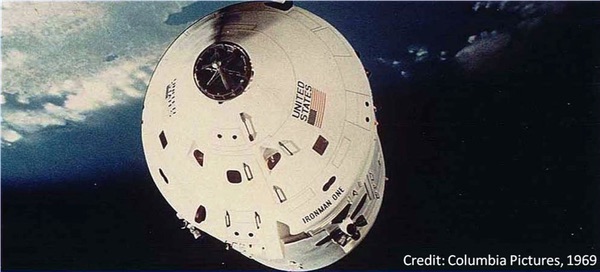
by Jeff Foust Monday, March 11, 2019


The Crew Dragon spacecraft descends under its parachutes shortly before splashing down in the Atlantic Ocean March 8. (credit: NASA/Cory Huston)

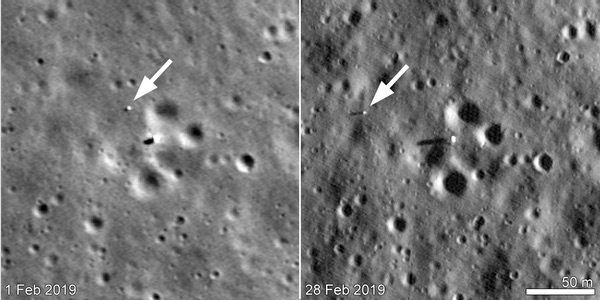
There was a lot of celebration a week ago when SpaceX successfully launched its Crew Dragon spacecraft, which docked with the International Space Station a day later (see “Commercial crew’s time approaches”, The Space Review, March 4, 2019.) Getting there, though, was just part of the mission: a vehicle that can safely deliver astronauts to the station must also be able to safely return them to Earth.
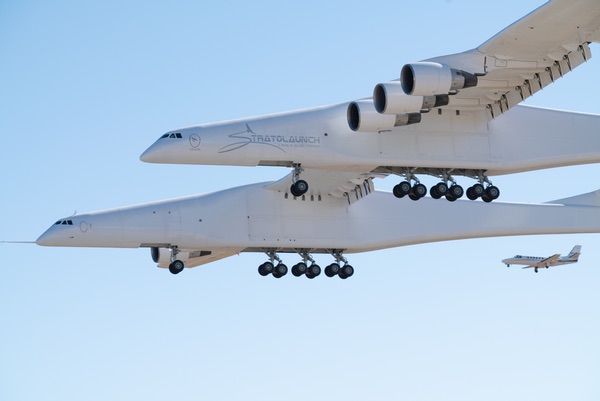
https://www.thespacereview.com/article/3672/1

43) Time for a compromise on space traffic management
by Brian Weeden Monday, March 11, 2019


President Donald Trump shows the signed Space Policy Directive 3 document at a meeting of the National Space Council last June. Progress on implementing that policy has been slowed by disputes regarding which agency should be in the lead for civil space traffic management. (credit: NASA/Bill Ingalls)

Over the last several years, space traffic management (STM) has gone from an obscure topic debated mainly by academics and policy wonks (like myself!) to one at the forefront of US national policy. This is thanks largely to the efforts of Scott Pace and his staff at the National Space Council, who led the interagency efforts that resulted in the first-ever national policy on STM signed by President Trump last June. However, implementation of that policy has stalled, mainly due to disagreements between Congress and the White House over which agency should be in charge. I believe that these disagreements can be overcome and there is enough common ground on which to build a compromise that will yield real benefits for national security, the commercial space industry, and ultimately the American people.
https://www.thespacereview.com/article/3673/1

44) Red Moon revisited
by Dwayne A. Day Monday, March 11, 2019


The landing of the Chang'e-4 mission has triggered a new round of speculation about China's lunar exploration plans, but much of that is not grounded in reality. (credit: CNSA)

Chinese astronauts were supposed to be walking on the Moon by now. Back in 2005, if you read numerous articles about the Chinese space program, you would have noticed various authors claiming that China was going to land taikonauts on the Moon in 2017, and at least one article claimed this would happen as early as 2010. Two common themes that began appearing in space articles back then were that China had an active human lunar program, and they were in a “race” with the United States to send people to the surface of the Moon, neither of which was true. Articles in The Space Review over a decade ago warned about these distortions.
https://www.thespacereview.com/article/3674/1
« Ostatnia zmiana: Listopada 24, 2024, 13:49 wysłana przez Orionid »

Offline Orionid

  • Weteran
  • *****
  • Wiadomości: 29378
  • Very easy - Harrison Schmitt
Odp: The Space Review
« Odpowiedź #333 dnia: Listopada 16, 2021, 10:41 »
11/III 2019 [45-48]

45) Pow, right to the Moon
by Eric R. Hedman Monday, March 18, 2019


The international partnerships planned for the lunar Gateway will help protect the program from future cancellation threats. (credit: ESA)

“Pow, right to the Moon!” Most of us who are ancient enough to remember Apollo are familiar with Ralph Kramden in the Honeymooners threatening to send his wife Alice to the Moon one of these days. Over the past half century NASA has promised from time to time that, one of these days, we would return to the Moon. Once again that is what NASA is promising. According to the latest plans from NASA we may have astronauts taking flight to the lunar surface by 2028. The timeline is in a new document published by NASA last month as part of its human lunar lander study effort. This time it is supposed to be to stay.
https://www.thespacereview.com/article/3675/1

46) NASA’s flawed plan to return humans to the Moon
by Gerald Black Monday, March 18, 2019


NASA’s plans for landing humans on the Moon by 2028 using the Gateway and a three-stage lunar lander system. (credit: NASA)

On February 14, NASA provided long-awaited details about its plan to return humans to the lunar surface. The agency released a Broad Agency Announcement detailing its plan and requesting proposals for Phase A studies. Proposals are due March 25, with awardee selections in May and contract awards in July.
https://www.thespacereview.com/article/3676/1

47) An enigma behind the curtain: the Tallinn anti-ballistic missile system and satellite intelligence
by Chris Manteuffel Monday, March 18, 2019


Images of a Soviet missile system, taken from an intelligence report, that officials thought in the 1960s were being used as ABMs.

For the first two decades of the Cold War, the Soviet Union was far behind the US in nuclear weapons and relied on deception as its main deterrent. They managed to deceive the US first that there was a bomber gap, then a missile gap, and that the US was falling further and further behind. In 1961, the Soviets had just four intercontinental ballistic missile (ICBMs) launch pads, at a time when the US deployed almost 200, but the Soviets claimed to be building missiles “like sausages from a machine” and that they had outstripped US production.[1] Then American spy technology—the U-2 plane and satellites—proved US stockpiles were massively superior to the Soviet arsenal and the US happily reduced missile production.[2]
https://www.thespacereview.com/article/3677/1

48) Rethinking EM-1, and SLS
by Jeff Foust Monday, March 18, 2019


NASA is studying the possibility of flying the EM-1 mission using a pair of commercial rockets instead of the SLS. (credit: NASA)

The big space industry news last week were the comments by NASA administrator Jim Bridenstine at a Senate Commerce Committee last Wednesday that the agency was considering using commercial rockets, rather than the Space Launch System, for the uncrewed Exploration Mission (EM) 1 in mid-2020. But the signs that mission was in jeopardy started to become clear more than a week earlier, in another room in a nearby Senate office building.
https://www.thespacereview.com/article/3678/1
« Ostatnia zmiana: Listopada 25, 2024, 13:29 wysłana przez Orionid »

Polskie Forum Astronautyczne

Odp: The Space Review
« Odpowiedź #333 dnia: Listopada 16, 2021, 10:41 »

Offline Orionid

  • Weteran
  • *****
  • Wiadomości: 29378
  • Very easy - Harrison Schmitt
Odp: The Space Review
« Odpowiedź #334 dnia: Listopada 16, 2021, 10:42 »
12/III 2019 [49-52]

49) Review: Come Fly with Us
by Jeff Foust Monday, March 25, 2019


Come Fly with Us: NASA’s Payload Specialist Program
by Melvin Croft and John Youskauskas
Univ. of Nebraska Press, 2019
hardcover, 456 pp., illus.
ISBN 978-0-8032-7892-9
US$36.95
https://www.amazon.com/exec/obidos/ASIN/0803278926/spaceviews

Not all astronauts are created equal—or, at least, perceived equally, even among themselves. For much of the shuttle era, particularly the time before the Challenger accident, missions included both career astronauts, such as pilots and mission specialists, as well as temporary “payload specialists” often representing companies or countries with payloads on those missions. To the average person there was no difference, but within NASA, and its astronaut corps, there certainly was.
https://www.thespacereview.com/article/3679/1

50) Could suborbital point-to-point really be worth $20 billion a year in 2030?
by Sam Dinkin Monday, March 25, 2019


SpaceX said in 2017 is was considering using its next-generation vehicle, then known as BFR, for point-to-point transportation, although the business case for it may not be as optimistic as one recent report projects. (credit: SpaceX)

How much have we made out of Skyblast Freight and Antipodes Transways?
-Robert Heinlein’s character D.D. Harriman in “The Man Who Sold the Moon”, 1950

Robert Heinlein implied in a short story that suborbital freight and passengers would be a market that would mature well before the first lunar flight. In a sense he was partially right—if you count standby capacity to deliver intercontinental ballistic missiles, which first went operational in 1959. In another sense, commercial lunar transportation may occur with a SpaceX-launched private or NASA passenger flight soon. In another sense, both lunar and suborbital tourism may both comprise a portion of the $3 billion/year market for space tourist flights in 2030, according to a recent estimate by UBS, that have exclusively been orbital flights since Dennis Tito’s flight in 2001. More controversially, UBS estimates that point-to-point suborbital transportation will be potentially a $20 billion/year market.
https://www.thespacereview.com/article/3680/1

51) Cost challenges continue for NASA science missions
by Jeff Foust Monday, March 25, 2019


For the second year in a row, NASA’s budget request proposes to cancel the WFIRST astrophysics flagship mission. (credit: NASA)

The release of the administration’s fiscal year 2020 budget request for NASA focused a lot of attention on the Space Launch System, given plans to defer work on its Block 1B version and move payloads off the vehicle, scrutiny that only increased when administrator Jim Bridenstine announced days later that the agency was studying alternatives to using the SLS for the next flight of the Orion spacecraft (see “Rethinking EM-1, and SLS”, The Space Review, March 18, 2019.) This week’s meeting of the National Space Council in Huntsville, Alabama, will likely include an update on those studies amid a desire to accelerate NASA’s human spaceflight program.
https://www.thespacereview.com/article/3681/1

52) Human spaceflight, exploration and the jobs specter
by Roger Handberg Monday, March 25, 2019


NASA emphasizes the value of exploration for its human spaceflight program, but what sustains those key elements, like SLS and Orion, are the jobs they create. (credit: NASA/Aubrey Gemignani)

Going to the Moon or Mars is often explained as a nod toward the human desire to explore the unknown: the endless frontier perspective much cited in explaining why humans go over the next hill to see what is there. Human spaceflight since its beginnings—once shed of the Cold War-derived motivations—has been a constant quest to extend humans’ reach into the unknown. There are gestures toward practicality in the calls for planetary exploration so that we can see why Mars turned into a desert and Venus a hell of intense heat and pressure. Why those planets moved in different directions becomes an intellectual puzzle whose answers may serve as vehicles for surviving a possibly catastrophic future here on Earth. This, in turn, often bolsters the case for pursuing human spaceflight: the Moon or Mars as refuge from a dying Earth. The fight therefore is to keep the space science and other missions running because of their long-term social utility, not necessarily profit in the traditional sense of economic profit and loss.
https://www.thespacereview.com/article/3682/1
« Ostatnia zmiana: Listopada 25, 2024, 13:37 wysłana przez Orionid »

Offline Orionid

  • Weteran
  • *****
  • Wiadomości: 29378
  • Very easy - Harrison Schmitt
Odp: The Space Review
« Odpowiedź #335 dnia: Listopada 23, 2021, 15:19 »
13/IV 2019 [53-57]

53) Review: Shoot for the Moon
by Jeff Foust Monday, April 1, 2019


Shoot for the Moon: The Space Race and the Extraordinary Voyage of Apollo 11
by James Donovan
Little, Brown and Company, 2019
hardcover, 464 pp., illus.
ISBN 978-0-316-34178-3
US$30
https://www.amazon.com/exec/obidos/ASIN/0316341789/spaceviews

The calendar says it’s now spring in the Northern Hemisphere, but for the book publishing world it’s also Apollo book season. With the 50th anniversary of Apollo 11 less than four months away, publishers are releasing a growing wave of titles about the mission specifically, or the Apollo program and lunar exploration more generally.
https://www.thespacereview.com/article/3683/1

54) Destination Moon: China’s first mover advantage and America’s second mover advantage
by John Hickman Monday, April 1, 2019


Vice President Mike Pence made clear the administration’s desire for humans on the Moon by 2024 in a speech last week. (credit: White House)

Any remaining doubt that the United States and China are engaged in a new space race drowned in the applause given to Vice President Mike Pence’s March 26, 2019 speech during the fifth meeting of the National Space Council in Huntsville, Alabama. Pence’s choice of words could not have been any more straightforward:

Now, make no mistake about it: We’re in a space race today, just as we were in the 1960s, and the stakes are even higher. Last December, China became the first nation to land on the far side of the Moon and revealed their ambition to seize the lunar strategic high ground and become the world’s preeminent spacefaring nation.
https://www.thespacereview.com/article/3684/1

55) Déjà vu as space policy
by Roger Handberg Monday, April 1, 2019


Like President George W. Bush’s Vision for Space Exploration, NASA is being directed to return to the Moon, but on a much faster timescale. (credit: White House)

Moving out of low Earth orbit remains a human space exploration quest that remains just out of touch for reasons of policy, capability, and cost. For the United States, this hiatus has become a source of dismay given that 50 years ago the first human, an American, set foot on the lunar surface. Despite this exploit, the United States has not returned to the Moon or any other celestial body. Since at least the George H.W. Bush Administration this has been an aspiration at least rhetorically, one that has waxed and waned over the years.
https://www.thespacereview.com/article/3685/1

56) The implications of India’s ASAT test
by Ajey Lele Monday, April 1, 2019


India’s test of an anti-satellite weapon has heightened concerns about both harming the space environment and destabilizing the South Asia region. (credit: DRDO)

On March 27, India conducted Mission Shakti, an anti-satellite missile test. This was a technological mission carried out by the Defence Research and Development (DRDO). During this test, India targeted one of its own satellites with a ground-based missile. With this successful demonstration, India becomes the fourth country to test an ASAT after China, Russia, and the United States.
https://www.thespacereview.com/article/3686/1

57) Lunar whiplash
by Jeff Foust Monday, April 1, 2019


Vice President Mike Pence directed NASA to land humans on the south pole of the Moon by 2024 in a speech last Tuesday in Huntsville, Alabama. (credit: White House)

The rapidly evolving landscape of NASA’s human spaceflight plans was illustrated during a panel discussion last Tuesday afternoon at the National Academies, part of its annual Space Science Week event. David Parker, director of human and robotic exploration at the European Space Agency, showed a chart NASA had released in February illustrating how it could carry out a mission in 2028 to land humans on the Moon using a combination of the Space Launch System, Orion, commercial or international vehicles, and a lunar lander.
https://www.thespacereview.com/article/3687/1
« Ostatnia zmiana: Listopada 27, 2024, 12:56 wysłana przez Orionid »

Offline Orionid

  • Weteran
  • *****
  • Wiadomości: 29378
  • Very easy - Harrison Schmitt
Odp: The Space Review
« Odpowiedź #336 dnia: Listopada 23, 2021, 15:19 »
14/IV 2019 [58-61]

58) Reviews: Photography and Apollo
by Jeff Foust
Monday, April 8, 2019


The Space-Age Presidency of John F. Kennedy: A Rare Photographic History
by John Bisney and J.L. Pickering
Univ. of New Mexico Press, 2019
hardcover, 224 pp., illus.
ISBN 978-0-8263-5809-7
US$45.00
https://www.amazon.com/exec/obidos/ASIN/0826358098/spaceviews

Picturing Apollo 11: Rare Views and Undiscovered Moments
by J.L. Pickering and John Bisney
Univ. Press of Florida, 2019
hardcover, 272 pp., illus.
ISBN 978-0-8130-5617-3
US$45.00
https://www.amazon.com/exec/obidos/ASIN/0813056179/spaceviews

The race to the Moon in the 1960s, and the Apollo 11 mission in particular, offers many iconic photographs familiar to those with even just a passing familiarity with the program, like those of Buzz Aldrin standing on the lunar surface. There are, though, many more images, taken by NASA and by other photographers, that offer alternative perspectives or capture lesser-known events during that mission or the broader program.
https://www.thespacereview.com/article/3688/1

59) India’s ASAT test and changing perceptions of space warfare
by Taylor Dinerman Monday, April 8, 2019


The test of an Indian anti-satellite missile last month, and the reaction to it, suggests that space warfare is something that military planners will have to accept. (credit: DRDO)

India’s reasons for deciding to perform their direct-ascent anti-satellite (ASAT) weapon test, Mission Shakti, no doubt include a desire to send a strong signal to both Beijing and Islamabad that Delhi is not to be trifled with. There is also the Indian need to have a seat at the table when international space governance decisions are being made. Moreover, this is an election year in India and demonstrating national strength in a technologically demanding area won’t hurt the government’s case for remaining in power.
https://www.thespacereview.com/article/3689/1

60) Astronauts vs. mortals: space workers, Jain ascetics, and NASA’s transcendent few
by Deana L. Weibel Monday, April 8, 2019


The newest NASA astronaut class on stage at the Johnson Space Center for their debut in June 2017. Astronauts, with their exceptional physical and mental skills, are often treated with almost a religious reverence. (credit: NASA/Bill Ingalls)

The “immortality” of astronauts

As I sat in a lecture hall at the NASA Human Research Project Workshop in January of this year, watching a physician discuss how medical tests are conducted on the International Space Station, I paused in taking my notes to smile. The speaker had put up a slide whose title read, “Astronauts vs Mortals”. Obviously, this was meant to be funny, but I noticed it because I was there doing research on the religious beliefs (or lack thereof) of people involved in space exploration, both in space and on the ground. The idea of comparing astronauts to “mortals,” those of us who live ordinary lives and don’t go floating around in microgravity far above the Earth, was using religious language to describe a secular idea.
https://www.thespacereview.com/article/3690/1

61) Science, commerce, and the Moon
by Jeff Foust Monday, April 8, 2019


The far side of the Moon as seen by SpaceIL’s Beresheet lander as it entered orbit around the Moon April 4, a week before its scheduled landing. (credit: SpaceIL)

On Thursday, a spacecraft called Beresheet will attempt to land in Mare Serenitatis, or the Sea of Serenity, on the Moon. Launched in February as a 600-kilogram secondary payload on a SpaceX Falcon 9, the Israeli spacecraft performed a series of maneuvers to widen its initial transfer orbit around the Earth, eventually increasing its apogee to more than 400,000 kilometers. Last Thursday, the spacecraft passed close to the Moon and fired its main engine for six minutes, slowing it down enough to enter orbit around the Moon in preparation for that landing attempt.
https://www.thespacereview.com/article/3691/1
« Ostatnia zmiana: Listopada 27, 2024, 13:07 wysłana przez Orionid »

Offline Orionid

  • Weteran
  • *****
  • Wiadomości: 29378
  • Very easy - Harrison Schmitt
Odp: The Space Review
« Odpowiedź #337 dnia: Listopada 23, 2021, 15:20 »
15/IV 2019 [62-66]

62) Review: Space 2.0
by Jeff Foust Monday, April 15, 2019


Space 2.0: How Private Spaceflight, a Resurgent NASA, and International Partners are Creating a New Space Age
by Rod Pyle
BenBella Books, 2019
paperback, 300 pp., illus.
ISBN 978-1-944648-45-9
US$21.95
https://www.amazon.com/exec/obidos/ASIN/1944648453/spaceviews

Space, it seems, has a version control problem. Some in Europe, including the European Space Agency, have adopted the term “Space 4.0” to describe the current era of spaceflight. Intended to parallel “Industry 4.0”—the fourth industrial revolution, another term common in Europe but less so elsewhere—it represents the current era of emerging commercial as well as international partners. (For the record, Space 1.0 is the early study of astronomy, Space 2.0 the initial space age and race to the Moon, and Space 3.0 the international cooperation exemplified by the International Space Station.)
https://www.thespacereview.com/article/3692/1

63) Rationale for a national “astroelectricity” program
by Mike Snead Monday, April 15, 2019


NASA 1976 illustration of a GEO space solar power platform under construction. (Original image credit: NASA. Modified image credit: J. M. Snead)

The “Green New Deal” proposal, as it addresses fossil fuel energy use and the environment, is causing substantial political turmoil because it proposes to do what many Americans believe necessary but proposes to do it in a manner that could produce social and economic chaos. Hence, while it has elevated the public’s desire for effective action to the national political stage, it does not propose an effective engineering plan of what specifically to do.
https://www.thespacereview.com/article/3693/1

64) If at first you don’t succeed…
by Jeff Foust Monday, April 15, 2019


One of the last images taken by Beresheet before it crashed on the Moon was this “selfie” during descent, showing part of the lander and the lunar surface beneath. (credit: SpaceIL)

The good news last Thursday was that SpaceIL provided a live webcast from its mission control is the Israeli city of Yehud. Viewers were able to see the controllers at their consoles while, on the other side of a giant window, guests that included Israeli prime minister Benjamin Benjamin Netanyahu gathered to follow the landing. People would be able to see in real time what transpired with the historic landing attempt.
https://www.thespacereview.com/article/3694/1

65) It’s time to speak out about India’s reckless anti-satellite test
by Jessica West Monday, April 15, 2019


There’s been little reaction from other governments about India’s anti-satellite test last month. (credit: DRDO)

India used its advanced anti-ballistic missile defence capability to conduct a kinetic anti-satellite test (“Mission Shakti”) against one of its own satellites on March 27. India became the fourth state, after the United States, Russia, and China, to demonstrate an ASAT capability and only the third to conduct a direct intercept of an object in space.
https://www.thespacereview.com/article/3695/1

66) Delayed takeoff
by Jeff Foust Monday, April 15, 2019


The Stratolaunch aircarft takes off on its first flight from the Mojave Air and Space Port in California April 13. (credit: Stratolaunch)

The plane, at least, can fly, even if the business may not.

On Saturday, Stratolaunch’s giant aircraft finally took the skies above the Mojave Air and Space Port. Shortly before 7 am local time, the plane rolled down the runway, much as it had in a series of taxi tests dating back more than a year, most recently in January. This time, though, Scaled Composites test pilot Evan Thomas throttled up and pulled back on the stick, and the plane took to the skies for the first time.
https://www.thespacereview.com/article/3696/1
« Ostatnia zmiana: Listopada 28, 2024, 13:01 wysłana przez Orionid »

Offline Orionid

  • Weteran
  • *****
  • Wiadomości: 29378
  • Very easy - Harrison Schmitt
Odp: The Space Review
« Odpowiedź #338 dnia: Listopada 23, 2021, 15:20 »
16/IV 2019 [67-70]

67) Review: Our Universe
by Jeff Foust Monday, April 22, 2019


Our Universe: An Astronomer’s Guide
by Jo Dunkley
The Belknap Press of Harvard University Press, 2019
hardcover, 312 pp., illus.
ISBN 978-0-674-98428-8
US$29.95
https://www.amazon.com/exec/obidos/ASIN/0674984285/spaceviews

Earlier this month, astronomers announced they had, for the first time ever, taken an image of a black hole. A network of radio observatories called the Event Horizon Telescope coordinated observations of the center of galaxy M87, producing an image of the supermassive black hole in the heart of that galaxy, billions of times as massive as the sun. The effort to create the Event Horizon Telescope was described in Einstein’s Shadow, a book published last year prior to the outcome of the observational campaign that produced that historic image (see “Review: Einstein’s Shadow”, The Space Review, December 3, 2018.)
https://www.thespacereview.com/article/3697/1

68) The Notre Dame fire and the space movement
by Jeffrey Liss Monday, April 22, 2019


A satellite image of the Cathedral of Notre Dame in Paris taken April 17, two days after the fire that heavily damaged it. (credit: satellite image ©2019 Maxar Technologies)

The discussion about the hundreds of millions of dollars and euros that have already been pledged to rebuild the Cathedral of Notre Dame in Paris has ramifications for the space movement. If instead of devoting all those resources to restoring one old building, some ask, what if that money would be used to provide food, health care, housing, and so one for those without it, or even for infrastructure? Where are the priorities?

Similar questions are frequently raised about spending on space efforts, about how there are so many “more pressing needs down on Earth.” There is a particular argument applicable to both Notre Dame and the space movement.
https://www.thespacereview.com/article/3698/1

69) How safe is safe enough for point-to-point suborbital?
by Sam Dinkin Monday, April 22, 2019


Business travelers are unlikely to fly on point-to-point suborbital flights unless their employers approve. (credit: SpaceX)

With the 737 MAX in the news for being risky, it is timely to remember that airline travel in general is astonishingly safe. As of 2018, the overall risk of death was one fatal accident per three million flights. It will take many decades, at the earliest, for suborbital travel to reach this safety milestone. Regular Mars service may be able to match the safety rate per kilometer traveled (one death per 80 billion passenger-kilometers) with less than 1,500 non-fatal trips in a row given the minimum Earth-Mars distance of 54.6 million kilometers.
https://www.thespacereview.com/article/3699/1

70) The ghosts of flagships past and future
by Jeff Foust Monday, April 22, 2019


An illustration of LUVOIR, one of the large space telescope missions under consideration in the 2020 astrophysics decadal survey. (credit: NASA)

The good news for astronomers is that they are going into their next decadal survey, known as “Astro2020,” better prepared than ever. Studies of four proposed large missions, laying out their scientific rationale and their technical feasibility, are nearing completion to support the deliberations of the Astro2020 steering committee, whose membership is expected to be announcing in the next few weeks (see “Selecting the next great space observatory”, The Space Review, January 21, 2019). Those studies, astronomers have said, will give the committee confidence that not only can those missions perform “transformational” science, but can be built on their proposed schedule and budget.
https://www.thespacereview.com/article/3700/1
« Ostatnia zmiana: Listopada 28, 2024, 13:09 wysłana przez Orionid »

Offline Orionid

  • Weteran
  • *****
  • Wiadomości: 29378
  • Very easy - Harrison Schmitt
Odp: The Space Review
« Odpowiedź #339 dnia: Listopada 30, 2021, 11:33 »
17/IV 2019 [71-74]

71) Review: American Moonshot
by Jeff Foust Monday, April 29, 2019


American Moonshot: John F. Kennedy and the Great Space Race
by Douglas Brinkley
Harper, 2019
hardcover, 576 pp., illus.
ISBN 978-0-06-265506-6
US$35.00
https://www.amazon.com/exec/obidos/ASIN/006265506X/spaceviews

The space community’s opinions of John F. Kennedy have varied over the decades. During the race to the Moon, and the years that followed, Kennedy was seen as a brilliant visionary and passionate advocate for space exploration because of his support for the effort that led to the Apollo lunar landings. He was virtually canonized by space enthusiasts who believed someone like him was needed to enable a return to the Moon or similar feats in space exploration.
https://www.thespacereview.com/article/3701/1

72) Satellite constellations and radio astronomy
by Adam Kimbrough Monday, April 29, 2019


Radio observatories like the Very Large Array have to increasingly contend with interference from satellites in additional to terrestrial sources. (credit: Adam Kimbrough)

In the San Augustine Plains of central New Mexico, 27 radio telescopes stand tall, operating nearly 24 hours a day, seven days a week, capturing extremely weak signals emitted from all over the universe. This flat and vast land, once a seabed, sits at an altitude of more than 2,100 meters and is surrounded by 360 degrees of mountains. Despite the ideal conditions of this location, listening to these faint radio emissions is becoming increasingly difficult as the Earth becomes “noisier” in the same direction in which these dish antennas are pointed, the sky.
https://www.thespacereview.com/article/3702/1

73) If the Saturn V went boom: The effects of a Saturn V launch pad explosion
by Dwayne A. Day Monday, April 29, 2019

Note: This is the first in a series of articles about the Apollo program leading up to the 50th anniversary of the Apollo 11 landing.

Apollo Revisited


The explosion of an Antares rocket shortly after liftoff in October 2014. Had a Saturn V rocket suffered a similar fate, the results would have been far more devastating. (credit: NASA)

Early in the evening on October 28, 2014, an Antares rocket lifted off its launch pad on Virginia’s Wallops Island and, only 15 seconds into flight, it started to fall back, then blew up, raining fiery hell on the launch pad below. This spectacular explosion was a reminder that when rocket launches go bad, they can go very, very bad. That was something that was on the minds of those running the Apollo program who had watched dozens of missiles blow up in the 1950s and early 1960s.
https://www.thespacereview.com/article/3703/1

74) A dark cloud on commercial crew’s horizon
by Jeff Foust Monday, April 29, 2019


A SpaceX Crew Dragon prototype during an earlier test of the vehicle’s SuperDraco thrusters, implicated in the incident at Cape Canaveral April 20. (credit: SpaceX)

It wasn’t clear at first what caused the dark cloud spotted that sunny Saturday afternoon on Florida’s Space Coast, but it couldn’t have been good.

On that afternoon, surfers and other beachgoers, as well as one newspaper photographer, saw a dark, reddish cloud rising from somewhere in the vicinity of Cape Canaveral Air Force Station. With no launches or other test activities publicized in advance, what caused it was initially a mystery.
https://www.thespacereview.com/article/3704/1
« Ostatnia zmiana: Listopada 29, 2024, 18:21 wysłana przez Orionid »

Offline Orionid

  • Weteran
  • *****
  • Wiadomości: 29378
  • Very easy - Harrison Schmitt
Odp: The Space Review
« Odpowiedź #340 dnia: Listopada 30, 2021, 11:34 »
18/V 2019 [75-79]

75) Review: The Mission of a Lifetime
by Jeff Foust Monday, May 6, 2019


The Mission of a Lifetime: Lessons from the Men Who Went to the Moon
by Basil Hero
Grand Central Publishing, 2019
hardcover, 304 pp., illus.
ISBN978-1-5387-4851-0
US$22.00
https://www.amazon.com/exec/obidos/ASIN/1538748517/spaceviews

Ever since NASA selected the Mercury Seven astronauts six decades ago, they, and the groups of astronauts that followed during the early Space Age, were placed on a pedestal by the agency, the media, and the public. They were heroes of that era who could do no wrong—the personification of American values in the race with the Soviets to the Moon—even though they were, like the rest of us, imperfect.
https://www.thespacereview.com/article/3705/1

76) Going to the Moon within five years and on the cheap: yes, it is possible
by Dr. Ajay Kothari and Congressman Todd Rokita (ret.) Monday, May 6, 2019


Reusing upper stages for missions to the Moon can dramatically cut costs for human landings.

In the 1960s, President Kennedy successfully challenged us to land an American on the Moon and return him safely to the Earth within a decade. Today, President Trump and Vice President Pence have issued a much greater challenge: do the same in five years, but in a manner that supports “long-term exploration and utilization,” or, in NASA administrator Jim Bridenstine’s words, “this time to stay.”
https://www.thespacereview.com/article/3706/1

77) Present at the creation: debating sending Apollo to the Moon
by Dwayne A. Day Monday, May 6, 2019


While President Kennedy was confident in his September 1962 speech at Rice University, the situation was different at an April 1961 meeting of his advisors that a journalist also attended.

Apollo Revisited

When high-level space policy decisions get made, it is often messy and complex and rarely straightforward. Even John F. Kennedy’s decision to send humans to the Moon in 1961 was somewhat disorderly. But it has also been better recorded and analyzed than other major space policy decisions, like George H.W. Bush’s 1989 Space Exploration Initiative, George W. Bush’s Vision for Space Exploration, or the Obama administration’s decision to cancel the Constellation program and pursue several different initiatives instead.
https://www.thespacereview.com/article/3707/1

78) NASA’s plan for a human lunar landing in 2024 takes shape
by Jeff Foust Monday, May 6, 2019


NASA is starting to reveal plans for landing humans on the Moon in 2024, but hasn’t disclosed any costs yet. (credit: NASA)

Some time in 2024, a Space Launch System rocket will lift off from the Kennedy Space Center, carrying an Orion spacecraft. That mission, just the third for the SLS/Orion combination, and only the second with astronauts on board, will send the Orion to the vicinity of the Moon. There, it will dock with a vehicle with the grandiose name Gateway, but consisting of just a power and propulsion module and a docking node. Astronauts will then transfer to a lunar module already docked to the Gateway, and from there head down to the south pole of the Moon, becoming the first astronauts to step on the lunar surface since Gene Cernan and Jack Schmitt in 1972.
https://www.thespacereview.com/article/3708/1

79) Russia’s secret satellite builder
by Bart Hendrickx Monday, May 6, 2019


The CNIIHM building on the outskirts of Moscow (credit: CNIIHM)

Some ten kilometers south of Red Square in Moscow’s Nagatino-Sadovniki District is a drab-looking ten-story building that is unlikely to attract the attention of any casual passers-by. Anyone interested in finding out what goes on inside will learn little more from the name inscribed in a gold-colored plate hanging near the entrance: Central Scientific Research Institute of Chemistry and Mechanics Named After D.I. Mendeleyev (Cyrillic initials ЦНИИХМ, transliterated either as CNIIHM or TsNIIKhM). At first sight, there is nothing to suggest that it has anything to do with the Russian space program. However, plenty of evidence has emerged from open-source intelligence that CNIIHM has become one of the most important satellite builders outside the structure of Roscosmos, specializing in the development of small sаtellites for military purposes, including what likely is a new Russian co-orbital anti-satellite system.
https://www.thespacereview.com/article/3709/1
« Ostatnia zmiana: Listopada 29, 2024, 18:33 wysłana przez Orionid »

Offline Orionid

  • Weteran
  • *****
  • Wiadomości: 29378
  • Very easy - Harrison Schmitt
Odp: The Space Review
« Odpowiedź #341 dnia: Listopada 30, 2021, 11:34 »
19/V 2019 [80-83]

80) Review: The Case for Space
by Jeff Foust Monday, May 13, 2019


The Case for Space: How the Revolution in Spaceflight Opens Up a Future of Limitless Possibility
by Robert Zubrin
Prometheus Books, 2019
hardcover, 405 pp., illus.
ISBN 978-1-63388-534-9
US$25.00
https://www.amazon.com/exec/obidos/ASIN/1633885348/spaceviews

In the event last week in Washington to discuss the Blue Moon lunar lander being developed by Blue Origin, company founder Jeff Bezos used the event to discuss his vision for the future of humanity in space. While he had discussed elements of that in the past, like his desire to see millions of people living and working in space, tapping into the resources of the solar system, he spent much of the hour-long event laying out his thoughts in detail, from moving heavy industry off Earth and tapping into space solar power to the development of space settlements inspired by Gerard K. O’Neill.
https://www.thespacereview.com/article/3710/1

81) Should India pursue a Space Force?
by Ajey Lele Monday, May 13, 2019


Now that India has demonstrated its ASAT capabilities, it its time for the country to provide military space the attention, and organization structure, needed for any major space power. (credit: DRDO)

On March 27, India successfully conducted an anti-satellite (ASAT) test. India received both praise and flak for undertaking this test. Many nations recognized the rationale for India conducting this test, but some assessments indicated that a few debris pieces reached higher altitudes and would remain there for longer than the government initially claimed.
https://www.thespacereview.com/article/3711/1

82) Apollo’s shadow: the CIA and the Soviet space program during the Moon race
by Dwayne A. Day Monday, May 13, 2019


By the late 1960s, American reconnaissance satellites were so powerful that they enabled highly-detailed photographs of Soviet rockets to be taken from over 150 kilometers away. These images of Soviet rockets are degraded due to classification requirements, but offer a hint of just how good American intelligence collection about the Soviet space program became by the latter 1960s. (credit: NRO)

Sputnik was not a strategic surprise for the CIA. Unlike Pearl Harbor, the intelligence community had plenty of data about what was happening inside the Soviet Union in the months before October 1957 and, in fact, had warned the White House that the Soviet Union was planning on launching a satellite into Earth orbit very soon. The CIA had also warned that a successful satellite could become a propaganda victory for the Soviet Union. It was not the intelligence community that failed the American government with Sputnik; the failure was the inability of senior American political leadership, notably President Dwight D. Eisenhower, to understand how the American public—and the rest of the world—would respond.
https://www.thespacereview.com/article/3712/1

83) Blue Moon and the infrastructure of space settlement
by Jeff Foust Monday, May 13, 2019


Jeff Bezos unveils a full-scale mockup of the Blue Moon lunar lander May 9 in Washington. (credit: Blue Origin)

There had to be a lunar lander behind that curtain.

That was the thought most people had last Thursday afternoon as they stepped into a ballroom at the Washington Convention Center for an event by Blue Origin. They had been invited by the company for an event “where we will give you an update on our progress and share our vision” but offered no further details.
https://www.thespacereview.com/article/3713/1
« Ostatnia zmiana: Grudnia 05, 2024, 08:07 wysłana przez Orionid »

Offline Orionid

  • Weteran
  • *****
  • Wiadomości: 29378
  • Very easy - Harrison Schmitt
Odp: The Space Review
« Odpowiedź #342 dnia: Listopada 30, 2021, 11:34 »
20/V 2019 [84-87]

84) Review: Apollo’s Legacy
by Jeff Foust Monday, May 20, 2019


Apollo’s Legacy: Perspectives on the Moon Landings
by Roger Launius
Smithsonian Books, 2019
hardcover, 264 pp., illus.
ISBN 978-1-58834-689-0
US$27.95
https://www.amazon.com/exec/obidos/ASIN/1588346498/spaceviews

With two months to go, preparations for the 50th anniversary of the Apollo 11 landing are shifting into high gear, including in the publishing world. A wave of books is hitting bookshelves (or their electronic equivalents) on all aspects of the mission and the race to the Moon a half-century ago. Some will simply rehash the well-known history of either the overall Apollo program or Apollo 11 specifically, while others will dive deep into some technical, social, or other aspect of the Moon landing.
https://www.thespacereview.com/article/3714/1

85) How defense and civil space offices can work together to on space situational awareness and space commerce
by Alfred B. Anzaldua Monday, May 20, 2019


Space traffic management is an increasingly important issue which requires tapping into expertise outside of government to solve. (credit: ESA)

Long-standing technological and cost barriers to space are falling, enabling more countries and commercial firms to participate in satellite manufacturing, launch, space exploration, and human spaceflight. Although these advancements are creating new opportunities, new risks for space-enabled services are emerging. In particular, the number of satellites and debris in orbit is growing, making tracking satellites, discriminating threats from non-threats, and predicting and preventing collisions a daunting challenge. Consequently, state and commercial space actors increasingly depend on information about the space domain to avoid such risks. Therefore, accurate space-based information has become crucial for military, commercial, and civil operations.
https://www.thespacereview.com/article/3715/1

86) The launch industry prepares for a shakeout
by Jeff Foust Monday, May 20, 2019


SpaceX still expects to perform about 20 launches this year and a similar number next year, not counting launches for its own Starlink satellites. (credit: SpaceX)

There’s a long-running tension in the commercial space industry between launch service providers and their customers, primarily commercial satellite operators. Those customers have sought to encourage more launch companies to enter the market, giving companies more flexibility and lower prices. Launch providers, on the other hand, warn that there’s not enough demand to support more companies, threatening the stability of companies and even their ability to safely launch.
https://www.thespacereview.com/article/3716/1

87) Have Moonsuit, will travel
by Dwayne A. Day Monday, May 20, 2019

Apollo Revisited


An x-ray of the glove of Neil Armstrong’s Apollo 11 spacesuit from his historic moonwalk, taken as part of the restoration process. The Apollo astronauts have many lessons to provide to NASA as it works to develop new moonwalking suits. (credit: NASM)

In July, Neil Armstrong’s Apollo Moon suit will go on display in the Smithsonian’s National Air and Space Museum after undergoing extensive renovation. The Apollo Moon spacesuit is practically an iconic object, appearing in hundreds of photos and hours of movie and television footage taken on the Moon. But those spacesuits represented a first try at a planetary spacesuit, and unfortunately, they remain the only proven planetary spacesuits.
https://www.thespacereview.com/article/3717/1
« Ostatnia zmiana: Grudnia 11, 2024, 23:22 wysłana przez Orionid »

Offline Orionid

  • Weteran
  • *****
  • Wiadomości: 29378
  • Very easy - Harrison Schmitt
Odp: The Space Review
« Odpowiedź #343 dnia: Grudnia 07, 2021, 21:50 »
21/V 2019 [88-91]

88) Review: Mysteries of Mars
by Jeff Foust Tuesday, May 28, 2019


Mysteries of Mars
by Fabio Vittorio De Blasio
Springer Praxis, 2018
paperback, 204 pp., illus.
ISBN 978-3-319-74783-5
US$29.99
https://www.amazon.com/exec/obidos/ASIN/3319747835/spaceviews

This summer is shaping up to be the summer of the Moon. The 50th anniversary of Apollo 11 is the major reason for that interest, although NASA’s accelerated push to return humans to the Moon—now by 2024, rather than 2028—is also playing a key role. The surge of books about the Moon has put even Mars, which has dominated mindshare in recent years thanks to its past as a potentially habitable world and its future as a destination for human exploration, into the background for a change.
https://www.thespacereview.com/article/3718/1

89) Crew safety during an early lunar return
by John K. Strickland Tuesday, May 28, 2019


The Apollo Lunar Module, an expendable spacecraft shown here on the Moon, can serve as a model for a much safer reusable lunar spacecraft. (credit: NASA)

During the Apollo lunar missions and landings 50 years ago, there was a real risk of losing a crew during each mission. For the launch phase, the risk was relatively small due to an effective launch abort system with an escape tower. During the passage to the Moon, the crew would have had the option of using the Lunar Module’s engine to return to Earth, as was done so successfully during Apollo 13. However, once a crew was in orbit around the Moon, or had landed on the Moon, the risk level was multiplied: a loss of vehicle control or failure of the propulsion system for Earth return or, worse, a failure during descent to or ascent from the lunar surface.
https://www.thespacereview.com/article/3719/1

90) Secret Apollos
by Dwayne A. Day Tuesday, May 28, 2019

Apollo Revisited


Apollo 9 in Earth orbit. NASA developed contingency plans if Apollo missions bound for the Moon instead had to remain in Earth orbit, but not everyone was pleased with what the agency proposed to do on those missions. (credit: NASA)

During the Apollo program NASA officials tried to plan for every possible failure that could happen during a mission. Some of the failures might not even be catastrophic: “mission failures” rather than crew fatalities. One such possibility might be the Saturn rocket’s third stage engine not firing to take the crew to the Moon. In that case the spacecraft would be restricted to Earth orbit. The crew could still return, but they could not perform their primary mission. NASA officials sought to find other things that a crew could do so that the mission would not be a complete waste. They wanted to take their lemons and make lemonade. Surprisingly, one of the things they did was plan to conduct reconnaissance operations in Earth orbit, which brought them into contact—and sometimes conflict—with the secretive organization that did that on a regular basis.
https://www.thespacereview.com/article/3720/1

91) Suborbital space tourism nears its make-or-break moment
by Jeff Foust Tuesday, May 28, 2019


Virgin Galactic’s WhiteKnightTwo aircraft, with SpaceShipTwo attached, takes off from the Mojave Air and Space Port on its latest test flight in February. (credit: Virgin Galactic)

At the Space Symposium, the annual conference held by the Space Foundation in Colorado Springs, it’s easy to get jaded by the high-profile attendees: a space agency leader here, a corporate CEO there, a general over that way, all blending together in their business suits and uniforms.
https://www.thespacereview.com/article/3721/1
« Ostatnia zmiana: Grudnia 12, 2024, 14:21 wysłana przez Orionid »

Offline Orionid

  • Weteran
  • *****
  • Wiadomości: 29378
  • Very easy - Harrison Schmitt
Odp: The Space Review
« Odpowiedź #344 dnia: Grudnia 07, 2021, 21:50 »
22/VI 2019 [92-96]

92) Review: The Moon
by Jeff Foust Monday, June 3, 2019


The Moon: A History for the Future
by Oliver Morton
The Economist, 2019
hardcover, 352 pp., illus.
ISBN 978-1-5417-7432-2
US$28.00
https://www.amazon.com/exec/obidos/ASIN/1541774329/spaceviews

In this summer of the Moon, the majority of the books being published are mostly backwards-looking, revisiting the Apollo program and the race to the Moon a half-century ago. Some do look ahead at the future of lunar exploration—by NASA, other space agencies, or the private sector—and others focus on the study of the Moon or other ancillary aspects.
https://www.thespacereview.com/article/3722/1

93) Saving Colonel Pruett
by John B. Charles Monday, June 3, 2019

If astronauts and flight controllers had only known about real-life Apollo contingency procedures, Ironman One wouldn’t have been trapped in orbit, as was the case during the movie Marooned. (credit: Columbia Pictures)

In this 50th anniversary year of the first Apollo lunar landing missions, we can reflect not only on those missions but also on movies, including the reality-based, technically-oriented space movies of that era, that can educate as well as entertain and inspire. One of those is Marooned, the story of three NASA astronauts stranded in low Earth orbit aboard their Apollo spacecraft, call-sign Ironman One—all letters, no numbers, and painted right on the command module (CM), a practice NASA had abandoned by 1965. They were the first crew of Ironman, the world’s first space station, the renovated upper stage of a Saturn rocket as planned for the Apollo Applications Program, predecessor of Skylab.
https://www.thespacereview.com/article/3723/1

94) A mighty thunderous silence: The Saturn F-1 engine after Apollo
by Dwayne A. Day Monday, June 3, 2019

Apollo Revisited
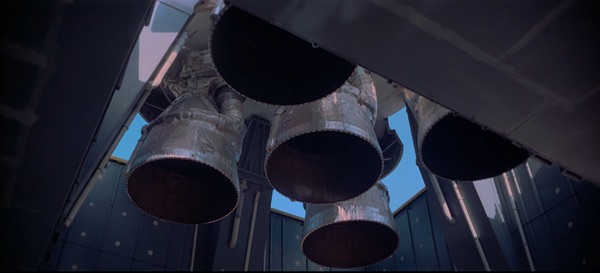

Long after the last Saturn V lifted off, NASA and industry studied other uses for the F-1 engines that powered its first stage. (credit: NASA)

The Saturn V’s F-1 engine is probably the most legendary rocket engine ever built. After a problematic early start that destroyed several test stands, the powerful engine went on to send 12 astronauts to the lunar surface. Later, as NASA planned on retiring the Apollo hardware, astute leaders recognized that they might need it again. This resulted in the F-1 Production Knowledge Retention Program. This was a project at Rocketdyne, the company that built the F-1 engine, to preserve as much technical documentation and knowledge about the engine as possible. According to an inventory of records, the Knowledge Retention Program produced 20 volumes of material on topics such as the engine’s injector ring set, valves, engine assembly, and checkout and thermal insulation and electrical cables, among others.
https://www.thespacereview.com/article/3724/1

95) Defanging the Wolf Amendment
by Jeff Foust Monday, June 3, 2019


A pair of images from NASA’s Lunar Reconnaissance Orbiter of the landing site of the Chang’e-4 lunar lander (in middle), with the arrow pointing to the location of the lander's Yutu-2 rover. (credit: NASA/GSFC/Arizona State University)

Later this month the House of Representatives will start consideration of appropriations bills for fiscal year 2020. Those bills will include the commerce, justice, and science (CJS) bill, which the House Appropriations Committee favorably reported May 22.
https://www.thespacereview.com/article/3725/1

96) The end of the Egolauncher
by Dwayne A. Day Monday, June 3, 2019


Stratolaunch’s giant aircraft on its first, and perhaps only, flight in April. (credit: Stratolaunch)

Making predictions sometimes is not very enjoyable even—or perhaps especially—when they come true.

According to a Reuters article published Friday, Stratolaunch is about to cease operations and close up shop, selling off its assets. Whether this includes selling the record-setting Roc aircraft remains to be seen. It is hard to imagine any buyer for that aircraft, and it may prove too large for any museum. This is a sad end to an interesting project, but many people, myself included, never expected Stratolaunch to ever be successful. Stratolaunch seemed like the pet idea of a billionaire with so much money that he did not need to worry about market viability. When that billionaire, Paul Allen, died late last year, those of us skeptical about the company assumed that Allen’s trustees would finish and fly the aircraft, and then close up shop, and now it’s happening.
https://www.thespacereview.com/article/3726/1
« Ostatnia zmiana: Grudnia 13, 2024, 10:18 wysłana przez Orionid »

Polskie Forum Astronautyczne

Odp: The Space Review
« Odpowiedź #344 dnia: Grudnia 07, 2021, 21:50 »