22/VI 2004 [68-71]68)
The cost of medium liftby Michael K. Robel Tuesday, June 1, 2004
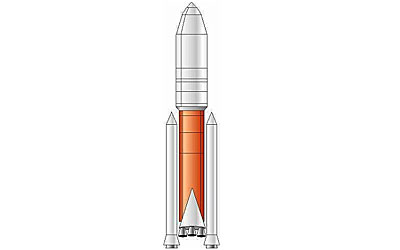 An argument can be made for the effectiveness of a shuttle-derived heavy-lift booster like Ares. (credit: Encyclopedia Astronautica)
The recent article “The myth of heavy lift” asserts the US does not need a heavy-lift launch vehicle because of their expense and that the capabilities of existing medium-lift vehicles are sufficient for our current needs.
In order to sustain a manned space flight program, the US needs to pursue a balanced program with a family of vehicles providing several capabilities, a built-in modernization program, and not committing itself to a start and stop method of development that results in several non-compatible types of vehicles and spacecraft (Mercury, Gemini, Apollo, and Shuttle) that do not directly build on the strengths of the predecessor programs. Just as the Air Force does not limit itself to a single fighter or bomber, NASA should not limit itself to a single booster to support manned space flight.
https://www.thespacereview.com/article/150/169)
Floating to spaceby Jeff Foust Tuesday, June 1, 2004
JP Aerospace unveils a unique way of getting into orbit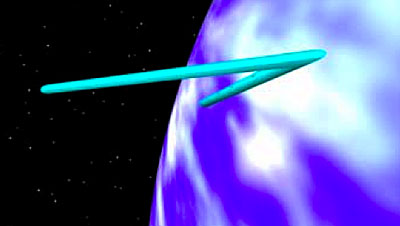 An illustration of a giant airship that would travel from a station in the upper atmosphere to orbit. (credit: JP Aerospace)
In the entrepreneurial space arena, JP Aerospace has always stood out a bit. More than just a group of amateurs, yet not quite a full-fledged company, the volunteer-based organization bills itself as “America’s OTHER Space Program”. Since its formation over 20 years ago by John Powell, the organization has dabbled in a wide range of projects, from high-altitude balloon-borne structures to rockets, including a balloon-launched vehicle that vied unsuccessfully for the Cheap Access to Space (CATS) Prize several years ago.
https://www.thespacereview.com/article/151/170)
Is space equity poised for a boom?by Sam Dinkin Tuesday, June 1, 2004
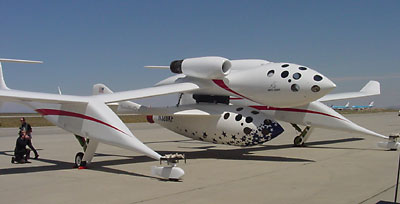 While SpaceShipOne has proven itself from a technical standpoint, do Burt Rutan and Paul Allen have what it takes to be a commercial success? (credit: J. Foust)
Many of the great booms were transportation or communication related. There was a South Seas shipping boom, a railroad boom, an automobile boom, a personal computer boom, a fiber optics boom, a cell phone boom and an Internet boom.
The Ansari X Prize and the FAA’s Office of Commercial Space Transportation (AST) have been doing a high-profile job of promoting space. Billionaires Paul Allen, Elon Musk, and Jeff Bezos—who are some excellent names from a couple of the last booms—have been investing in space.
https://www.thespacereview.com/article/152/171)
America’s RLV industry in 2004by Taylor Dinerman Tuesday, June 1, 2004
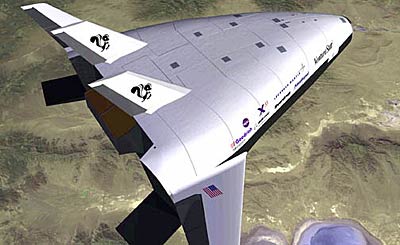 With the failure of efforts like the X-33, NASA is getting out of thr RLV development business. However, the military and the private sector are pressing ahead. (credit: NASA)
The bad news is NASA is getting out of the RLV business. The good news is NASA is getting out of the RLV business. Whatever the reasons, the failed X-30, X-33, X-34, 2nd generation RLV, OSP, and NGLT programs indicate that there is little sustained interest in the NASA culture for building Earth-to-orbit vehicles. The best thing for everyone involved is for NASA, in the future, to stick to its own exploration knitting and leave rocket science to those who are really interested in it.
https://www.thespacereview.com/article/153/123/VI 2004 [72-75]72)
Space technology and the next DCIby Taylor Dinerman Monday, June 7, 2004
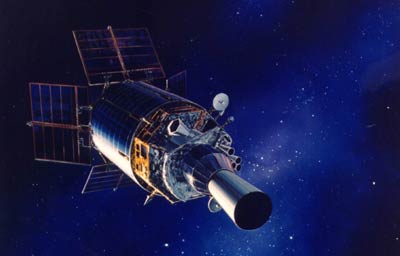 Although the intelligence community may have relied too much on satellites in the recent past, they still play a critical information-gathering role; the question is how well the data are interpreted. (credit: Northrop Grumman)
The unexpected resignation of George Tenet means that the administration and Congress will have to find, nominate, and confirm a new Director of Central Intelligence (DCI). One has to doubt that getting a new person in place with less than five months to go before what looks to be a very tight, or at least unpredictable, election is going to be almost impossible. We can expect that the CIA and much of the intelligence community are going to be on autopilot between now and next January.
https://www.thespacereview.com/article/154/173)
Space tourism co-opby Sam Dinkin Monday, June 7, 2004
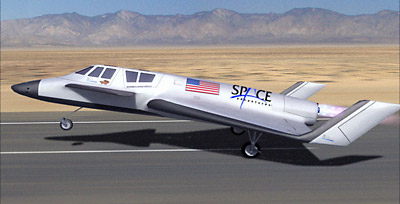 Could a co-op of investors fund the development of suborbital vehicles and get rides into space as part of the deal? (credit: XCOR Aerospace/Space Adventures)
In Brazil when inflation was high, families would join car co-ops. The car co-op would hold a lottery and buy a car for one of the families. Every month, a new family would get a car. In this way, inflation was managed and families paid monthly payments of varying amounts as prices spiraled up. They would all share the credit risk of each other and the price risk of gyrating car price inflation.
Right now, a similar situation exists for space tourism vehicles. Many firms have the technical expertise to produce a suborbital rocket that can reach Ansari X-Prize altitude. They do not necessarily have the financial backing to:
Get a commercial license with AST;
Undergo an extensive testing regime to garner credibility;
Face the substantial risk that demand will be sufficient to pay for the project; and
Live with the regulatory risk that FAA proper will take over (though this may be taken care of with the passage of HR 3752)
(Technical risk does not even make it into the list.)
https://www.thespacereview.com/article/155/174)
Ronald Reagan’s space policy legacyby Taylor Dinerman Monday, June 7, 2004
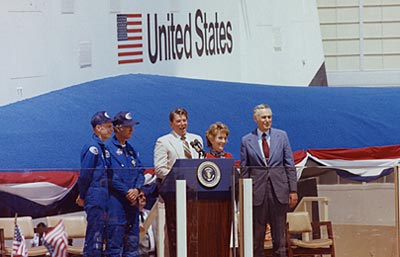 Ronald Reagan speaking after the landing of the shuttle Columbia on mission STS-4 in 1982. (credit: NASA)
No President in my lifetime, not Eisenhower, not Kennedy, and certainly none of the others, could inspire the American people as Ronald Reagan could. Remember the story of Pandora’s Box. When she opened it, all the misery of the world flew out—greed, hatred, pain and suffering. She closed the box, but then she heard a small voice that said, “Let me out. I am hope!” In 1980, at a moment of near despair in America, our nation was being humiliated by the hostage takers in Iran. The Soviet Union was moving from triumph to triumph in Asia, Africa and Latin America. Terrible things came out of the 1970’s, but the last thing to emerge from that decade was a great soul that brought us the gift of hope.
https://www.thespacereview.com/article/156/175)
Little spaceport on the prairieby Jeff Foust Monday, June 7, 2004
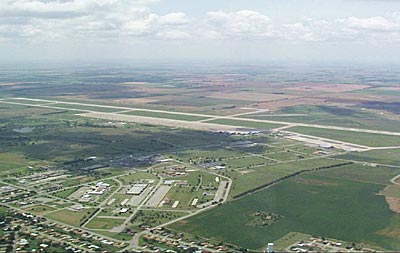 An aerial view of Oklahoma Spaceport, including its distinctive long runway. (credit: OSIDA)
To the typical driver, it’s a sign that, if noticed, is bound to generate some curiosity, or at least some befuddlement. For those truckers and tourists headed west on Interstate 40 in western Oklahoma, bound for Amarillo, Albuquerque, and points beyond, they’ll find the sign shortly before the exit for Highway 44 and the small town of Burns Flat: “Exit 53: Oklahoma Spaceport”. A spaceport? In Oklahoma?
Well, sort of. There is no launch activity today at the former Clinton-Sherman Air Force Base that serves as the site of the spaceport, and it may be two or three years at the earliest before spacecraft use the spaceport. However, much of the infrastructure needed for a spaceport, including one of the longest runways in the country as well as assorted ground facilities, is in place. Moreover, there is strong support by the state government, which has been the driving force behind efforts to convert the old air base into a spaceport. The question remains, though, just how much business any spaceport there could attract.
https://www.thespacereview.com/article/157/124/VI 2004 [76-79]76)
Pioneering the way outby Gregory Anderson Monday, June 14, 2004
International cooperation and private-sector cooperation will make the development of lunar bases like this more likely. (credit: NASA)Humanity is on the verge of an achievement that may be unique in the galaxy. The technology base we have built now allows us to extend the journey begun in the African savanna long ago into the Solar System. As is the human way, exploration will be followed by bases, true communities, and commerce. Before any of that can happen, however, we must find the economic and political structures that will support the technology.
https://www.thespacereview.com/article/158/177)
Scientists and the exploration visionby Jeff Foust Monday, June 14, 2004
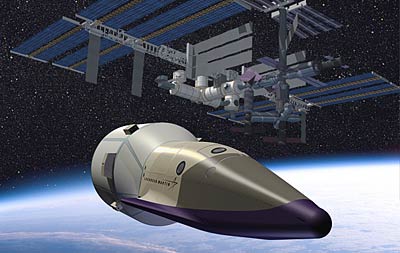 The long development time of the CEV is just one of the issues scientists and others have with the exploration vision. (credit: Lockheed Martin)
In the five months since President Bush unveiled a new space initiative that has since become officially known as the Vision for Space Exploration, there has been endless discussion about and debate over its merits. That debate will likely intensify later this week when the President’s Commission on Moon, Mars, and Beyond (also known as the Aldridge Commission after its chairman, Pete Aldridge), issues its long-awaited final report on how to implement the vision. The various organizations and constituencies involved with or otherwise affected by the exploration plan are sure to make themselves heard all summer long.
https://www.thespacereview.com/article/159/178)
How many winners?by Sam Dinkin Monday, June 14, 2004
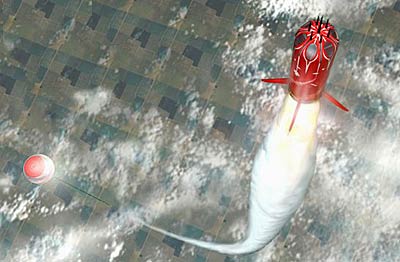 How many ventures, like the da Vinci Project, can successfully serve the suborbital space tourism market? (credit: da Vinci Project)
With so many entrants into the Ansari X Prize competition, one might think that there are going to be 20 suborbital tourism concerns within a few years. How many will there be in twenty years? The answer is likely to be three. Ever heard of the Big Three automakers? For years there were three major TV networks. Three media buyers. Three major telephone long distance carriers.
https://www.thespacereview.com/article/160/179)
In defense of the beleaguered spysatby Dwayne A. Day Monday, June 14, 2004
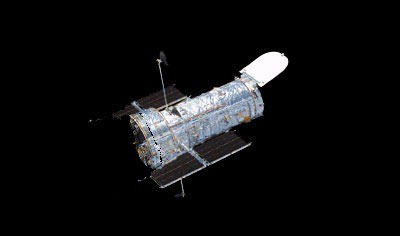 No unclassified images of the KH-11 spysat exist, but some believe it bears a strong resemblence to the Hubble Space Telescope. (courtesy Dwayne Day)
During the height of Cold War arms control in the 1970s and 1980s, America’s spy satellites were superheroes, capable of simultaneously defending democracy and defying the laws of physics.
Of course back then nobody could really talk about them. The United States government did not even admit that it operated intelligence satellites. Instead they were concealed behind the catchall term “national technical means” and the organization that operated them, the National Reconnaissance Office, was secret. But everybody knew that the satellites were up there, silently circling the globe and taking photographs of Soviet ICBM silos and submarine piers and nuclear weapons bunkers. The ABM Treaty, the SALT I Treaty, and the Intermediate Nuclear Forces Treaty were all backed up by these national technical means that were a crucial part of the policy that Ronald Reagan once summarized succinctly as “trust, but verify.” As a result, journalists tended to view these secretive spy satellites with a certain degree of awe. They didn’t know what the satellites were capable of, but it was apparently formidable.
https://www.thespacereview.com/article/161/125/VI 2004 [80-84]80)
81)
82)
83)
84)
26/VI 2004 [85]85)
27/VI 2004 [86-92]86)
87)
88)
89)
90)
91)
92)
28/VII 2004 [93-97]
 Wątek: The Space Review (Przeczytany 187519 razy)